Discover Iran: Birjand Castle – from military fortress to cultural hub of South Khorasan
By Ivan Kesic
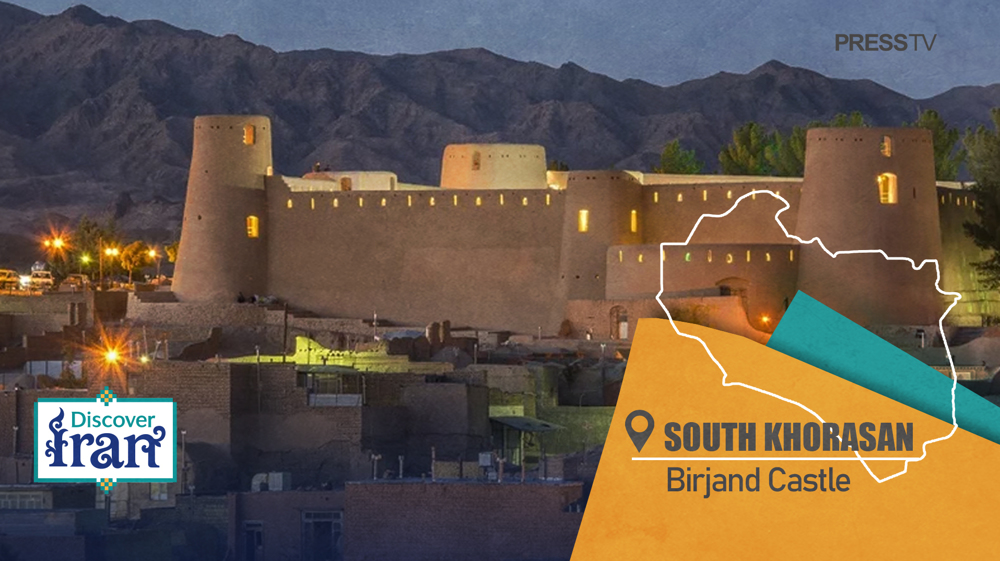
- Birjand Castle is a prime attraction in South Khorasan, built during the Safavid era and serving as the fortified nucleus from which modern Birjand grew
- It was a strategic military fortress, designed with a network of underground tunnels connecting it to other key citadels to shelter people during enemy invasions.
- The castle's sophisticated defensive architecture includes cylindrical towers with loopholes for archers and uniquely protruding walls.
Perched on the crest of Mahour Hill, the historic Birjand Castle, also known as Birjand Citadel (Arg-e Birjand) or Birjand Fortress, is more than just a collection of ancient walls and towers.
It is the silent, stony heart from which the city of Birjand in eastern Iran’s South Khorasan province itself first pulsed into life.
As the largest and oldest historical monument in the city, steeped in history, it is a living testament to the resilience of the local people, a masterpiece of defensive architecture, and the enduring symbol of a region shaped by the tides of empire and trade.
Known by various names throughout its long history—including Tah-e-Deh Castle and Payin-e-Shahr Castle (Castle at the Bottom of the Town)—this formidable structure has watched over the surrounding plains for centuries.
Its strategic position on the highest western point of the hill offers a complete overview of both the old and new quarters of Birjand, a commanding vantage point that was the key to its primary function: defense.
Architectural fortress of war
Birjand Castle is a military mountain fortress. Contrary to romantic notions of royal palaces, this was not a permanent residence for nobility, but a functional garrison for guards and soldiers.
Its residents were sentinels whose duties were to deliver news, provide security, and protect the populace below. The castle’s very design speaks to this martial purpose.
The general plan is a regular quadrilateral, sprawling over an area of more than 3,000 square meters. It is fortified with four robust towers at its corners and two additional towers on its eastern and western sides.
Constructed from the region's quintessential materials—brick, mud, and adobe—the castle is a study in pragmatic strength.
The cylindrical towers, punctuated with strategic loopholes, provided soldiers with protected positions for observation and repelling foreign attackers.
The walls themselves were cleverly designed with protruding features, allowing guards to survey the entirety of the ramparts and preventing enemies from scaling them unseen.
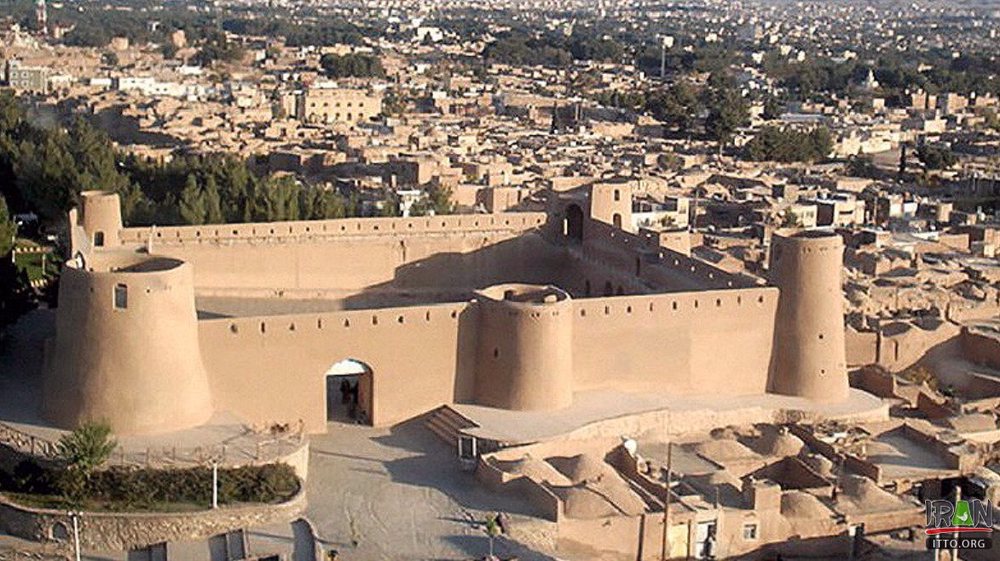
During its zenith, the castle boasted seven towers, six of which stand today, guarding two main entrances on the northern and western sides.
The interior of the castle was engineered for survival. Within its walls, constant stores of water and food were maintained. This was not for the daily use of the guards, but a crucial contingency plan for times of crisis.
When enemy hordes, particularly Turkmens and Uzbeks, threatened the region from the Safavid to the Qajar period, the castle transformed into a city-sanctuary.
The city's residents, merchants, craftsmen, commanders, and their families would flee into the fortress, bringing their movable assets with them.
Their escape was facilitated by a network of underground tunnels that connected the castle to other vital civic centers, including Baharestan Citadel, Kolah Farangi Citadel, and Qasbeh Qanat.
From Safavid to Qajar eras
The construction of Birjand Castle is widely attributed to the Safavid era, forming the original core of the city of Birjand. Some historians even posit an earlier origin, but its significance is undeniable from the 16th century onward.
This period marked the beginning of Birjand's ascent from a town to a regional capital. Its development was fueled by its strategic location on major trade routes, including the vital path connecting Isfahan to Afghanistan (Kandahar) and India.
Towards the end of the Safavid era, Birjand's importance was formally recognized when it became the seat of the governorate of Qaenat, ruled by the powerful Alam family.
This prominence continued through the turbulent times of the Afghan incursions and the campaigns of Nader Shah, who officially appointed Amir Ismail Khan Khuzaymah as governor in 1731.
From this point, Birjand grew in both size and population, solidifying its status as a true city. By the early 19th century, it was grandly referred to as "Dar al-Mulk Qahestan" (the Seat of the Realm of Qahestan), a bustling town with thousands of households.
The castle saw its final major phase of rebuilding and use during the Qajar period. It stood as the guardian of a city that, while sometimes hampered by water shortages, continued to grow commercially.
The early 20th century brought a new boom with the connection of the British-built Karachi-Zahedan railway, which made Birjand a key distribution center for Indian and European goods and a hub for regional exports.
Throughout these centuries of growth and change, from the Safavid to the Qajar era, the castle remained a constant protector, its walls bearing witness to the city's evolution from a fortified town to a prosperous commercial crossroads.
Living legacy and gateway to history
Today, Birjand Castle has been carefully restored, first by the city municipality in 1999 and subsequently through ongoing conservation efforts, and now stands in excellent condition as a registered National Heritage Site.
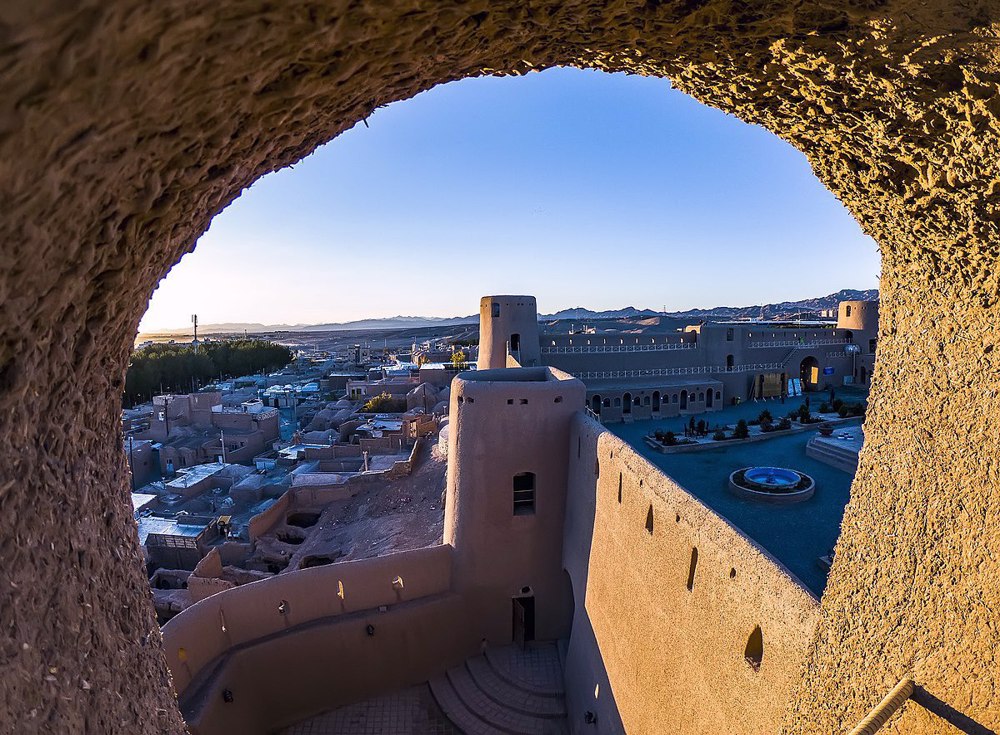
Its middle courtyard, now beautified with sand-covered floors and decorative plants, offers a tranquil space for reflection. A large central platform with three steps adds to the aesthetic harmony of the interior.
The castle is no longer a military outpost but a vibrant cultural center, often hosting events like handicraft exhibitions that showcase the region's living traditions, from handmade leather products to intricately woven fabrics.
The climb to its ramparts rewards one with breathtaking panoramic views of Birjand, a perspective that instantly clarifies its historical strategic value.
While Birjand Castle is the crown jewel of the city's heritage, it is part of a wider landscape of historical fortifications.
South Khorasan province is home to other notable fortified buildings, including the arguably most magnificent Furg Citadel, as well as Nehbandan Castle, Shahdiz Castle, and the Tabas Citadel, each telling its own part of the region's storied past.

Pakistani culture minister urges joint film projects with Iran at Fajr Intl. Film Festival

Majid Majidi wins special prize at first Open Eurasian Film Awards

Iran gains UNESCO approval for heritage and cognitive science initiatives



Threatening Iraq's sovereignty, US opens world’s largest consulate in Erbil
US Navy struck by Yemen: USS Truman disasters expose combat strain
Putin, Modi sign landmark deals to cement strategic partnership
VIDEO | Press TV's news headlines
IRGC Navy launches ballistic, cruise missile during major drill
China deploys largest naval force yet amid Japan’s buildup near Taiwan
Netanyahu begs Trump for ‘more’ help for pardon amid corruption case
Yasser Abu Shabab’s destiny is inevitable fate of every traitor: Hamas




 PressTV NEWSLETTER
now
PressTV NEWSLETTER
now

 This makes it easy to access the Press TV website
