
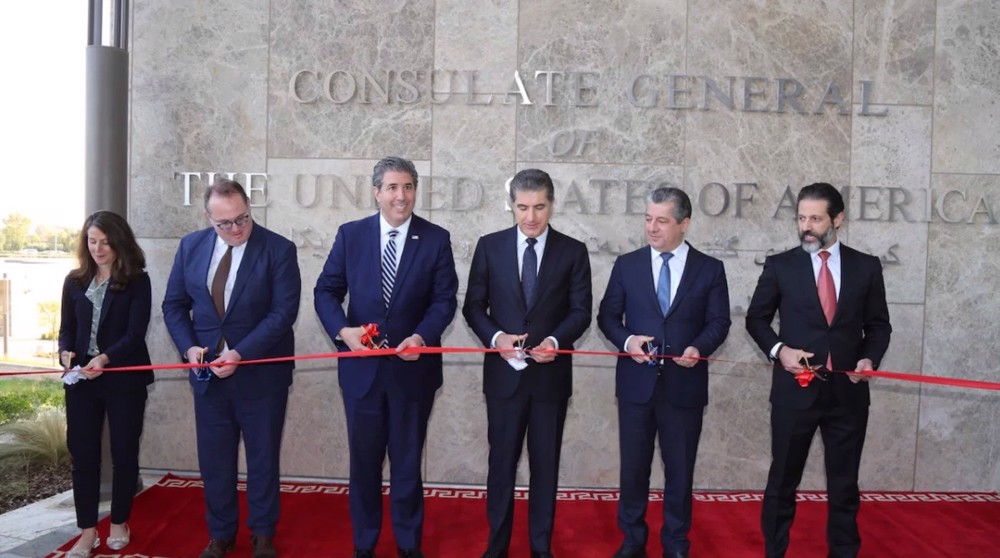
The US has officially inaugurated its sprawling new consulate in Erbil, signaling Washington’s intent to deepen its footprint in the semi-autonomous Kurdish region even as Iraqi leaders and resistance groups call for the withdrawal of American forces.
The administration of US President Donald Trump on Wednesday unveiled the sprawling new diplomatic compound in Erbil as Washington aims to deepen footprint in the Kurdish region amid the reduction of American troops in Baghdad and other parts of Iraq.
The construction of the compound, spanning 206,000 square meters as the largest US consulate in the world, started in 2018 with estimated costs around $800m.
“We have significant opportunities in the coming period to demonstrate the return on America's investment in this new consulate by delivering tangible outcomes that make America safer, stronger, and more prosperous through a partnership that delivers value for our America First agenda,” US Deputy Secretary of State for Management and Resources, Michael Rigas, said during a speech at the opening ceremony in Erbil.
“The building we inaugurate today is a testament to our commitment and is a physical symbol of America's long-term partnership with Iraq and the Iraqi Kurdistan Region.”
The inauguration comes as the US said in September 2024 that it would transition the justification for its troops' presence in Iraq from countering the Daesh terrorist group to a mutual defense partnership with Baghdad.
Iraqi media reported in August that, per that agreement, they withdrew hundreds of troops from two key Iraqi bases, including Ain al-Asad base in Anbar Province and the Victory Base Complex, located within the Baghdad International Airport.
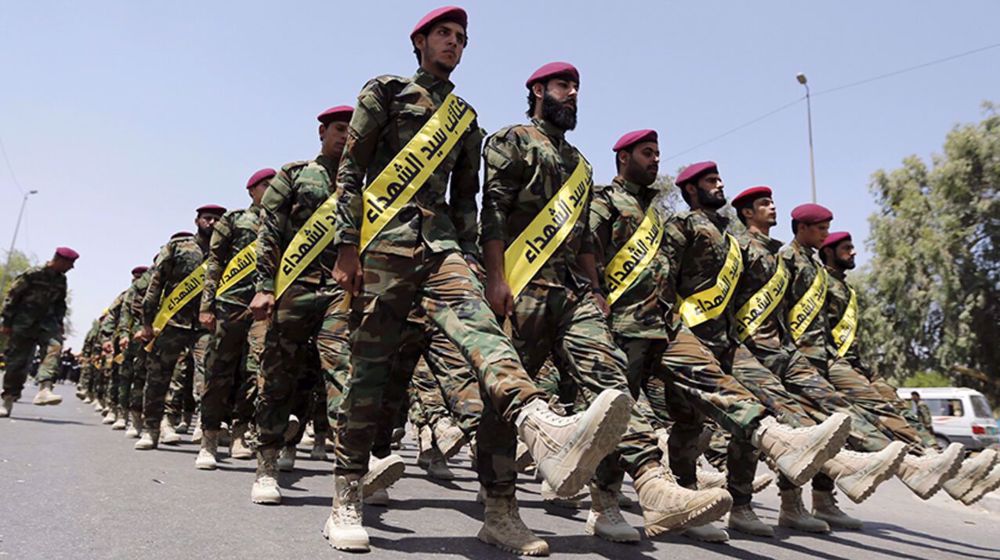
However, Iraqi news site Kurdistan 24 reported that the majority of US forces who remain in Iraq will move to Erbil despite calls by the Arab country’s polity and resistance for the expulsion of foreign forces in the absence of terrorist outfits after their defeat.
In the lead-up to Iraqi elections in November, Prime Minister Mohammed Shia al-Sudani told Reuters that Iraq would only be able to disarm resistance groups after US troops leave the country.
“There is no Daesh. Security and stability? Thank God it's there ... so give me the excuse for the presence of 86 states,” he told Reuters in an interview in Baghdad, referring to the number of countries that joined the US-led coalition against IS in 2014, when the militant group steamrolled across the country.
Meanwhile, Akram Al Kaabi, head of Iraq’s Al Nujaba Movement, issued a threat on Wednesday against Trump's envoy in Baghdad, accusing the United States of interfering in Iraq's internal affairs.
Kaabi accused Mark Savaya of "blatant interventions" in Iraqi affairs after he, taking up his role as special envoy in October, said there was "no place for armed groups operating outside the authority of the state.”
He said Savaya was "rolling up his sleeves to steal the wealth of his country and put them in the hands of his American master.”
Kaabi added, "Know that if you do not silence him, the Islamic Resistance will put a stone in his mouth and return him to his masters who enslaved him.”
Erbil has long been at loggerheads with the central government in Baghdad for access to Iraq’s oil wealth.
The US lobbied to reopen a key pipeline running through the Kurdistan region that connects Iraqi oil fields to Turkey’s Ceyhan port, which had been closed in 2023 amid a dispute between Erbil and Baghdad over oil sales profits.
 This makes it easy to access the Press TV website