Discover Iran: Iconic mosques of Shiraz, where light, faith and art converge
By Ivan Kesic
- The mosques of Shiraz encapsulate a profound artistic dialogue with time, exemplified by the Old Jameh Mosque, which has been undergoing a meticulous restoration for over sixty years to preserve its twelve centuries of history.
- A unique symphony of light and colour is performed daily within the Nasir al-Molk Mosque, where the morning sun transforms its sanctuary into a kaleidoscope through a masterful arrangement of stained-glass windows.
- The Vakil Mosque houses a pulpit carved from a single piece of green marble so monumental that its patron, Karim Khan Zand, famously declared that constructing one from solid gold would have been a lesser financial undertaking.
Nestled within the historical heart of Iran, the city of Shiraz stands as a living repository of Iranian culture, its spiritual lifeblood flowing through a collection of mosques that are as much architectural masterpieces as they are places of worship.
These structures, spanning centuries of construction, narrate a compelling story of artistic evolution, devotional fervor, and an enduring dialogue with the passage of time.
From the venerable foundations of the Old Jameh Mosque, a testament to the city's ancient Islamic roots, to the kaleidoscopic splendour of the Nasir al-Molk Mosque, a Qajar-era gem celebrated for its poetic interplay of light and colour, the sacred architecture of Shiraz offers an unparalleled journey.
The robust and artistically ambitious Vakil Mosque reflects the grand vision of the Zand dynasty, while the delicate, though imperilled, beauty of the Moshir Mosque speaks to both the pinnacle of Qajar craftsmanship and the contemporary challenges of preservation.
Each mosque, with its unique aesthetic achievements and historical narrative, contributes to a rich tapestry that defines Shiraz not merely as a city of gardens and poetry but as a paramount centre of Islamic art and spirituality, where every tile, arch, and column whispers tales of faith and artistic genius.
Old Jameh Mosque of Shiraz
The Old Jameh Mosque of Shiraz, also reverently known as the Old (Atiq) Mosque, represents a foundational layer in the city's spiritual and architectural history, its establishment in 894 AD (281 AH) during the Saffarid dynasty marking it as one of the oldest Islamic monuments in all of Iran.
This ancient sanctuary distinguishes itself profoundly through its unique architectural composition.
The mosque's most extraordinary feature is the Khodaikhaneh (God's house), or Dar al-Mushaf, an enigmatic cube-shaped structure erected in the centre of the main courtyard in the 8th century by the order of Shah Sheikh Abu Ishaq Injo, a contemporary of the revered poet Hafez, who himself was said to have performed pious circumambulations around this very edifice.
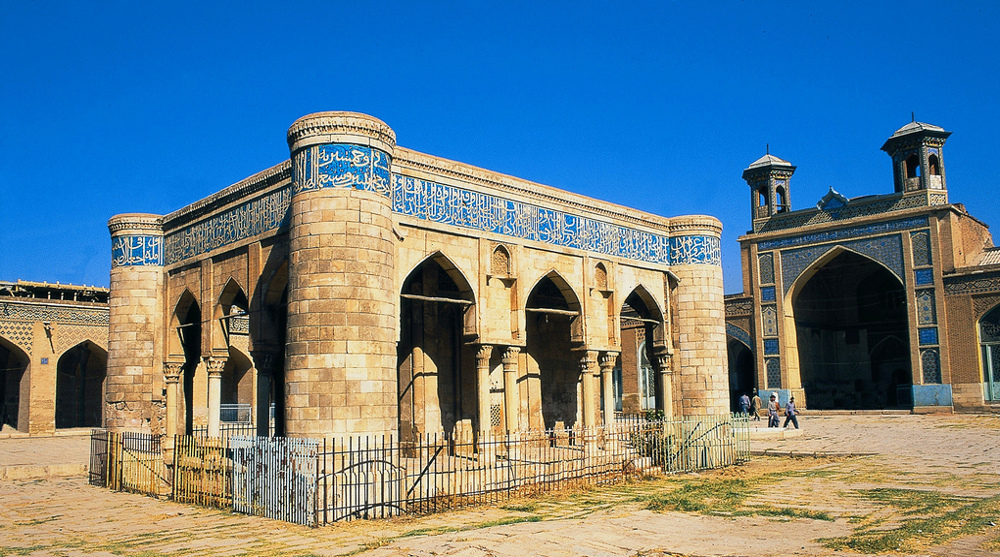
This singular building, often poetically termed the "Second Kaaba," served as a sanctified space for the recitation, transcription, and preservation of the Holy Quran, its four corner minarets and stone-and-plaster construction creating a powerful focal point of devotion and learning within the expansive courtyard.
The northern entrance, magnificently adorned and known as the Door of the Twelve Imams for its inscribed tiles bearing the names of the Shia Imams, showcases the splendid restoration efforts undertaken during the Safavid era, its magnificent muqarnas vaulting and intricate mosaic tile inscriptions standing as a testament to the enduring patronage of sacred art across dynasties.
Yet, this venerable structure now exists in a state of poignant suspension, its grandeur partially veiled by the metal scaffolding and construction materials of a restoration project that has stretched across six decades, a prolonged intervention that, while born of necessary sensitivity, has itself become a defining, albeit lamentable, chapter in the mosque's long and layered history.
Nasir al-Molk Mosque
The Nasir al-Molk Mosque, a sublime architectural achievement from the Qajar era, transcends its primary function as a house of worship to become a veritable symphony of colour, light, and form, widely celebrated as the Pink Mosque for the dominant hue of its exquisite tilework.
Commissioned by the noble Mirza Hassan Ali Khan, Nasir al-Molk, and realized over twelve years by the master architect Mohammad Hassan Memar, this mosque is universally acknowledged as the most valuable in Iran from the perspective of its tiling and muqarnas artistry, its very construction representing a high-water mark of decorative ambition in Islamic architecture.
The exterior presents a breathtaking prelude, with the main entrance, known as the Pearl Arch, featuring an elaborate recessed portal entirely sheathed in seven-coloured tiles adorned with intricate motifs of roses and lilies, a floral homage to the city of Shiraz itself.
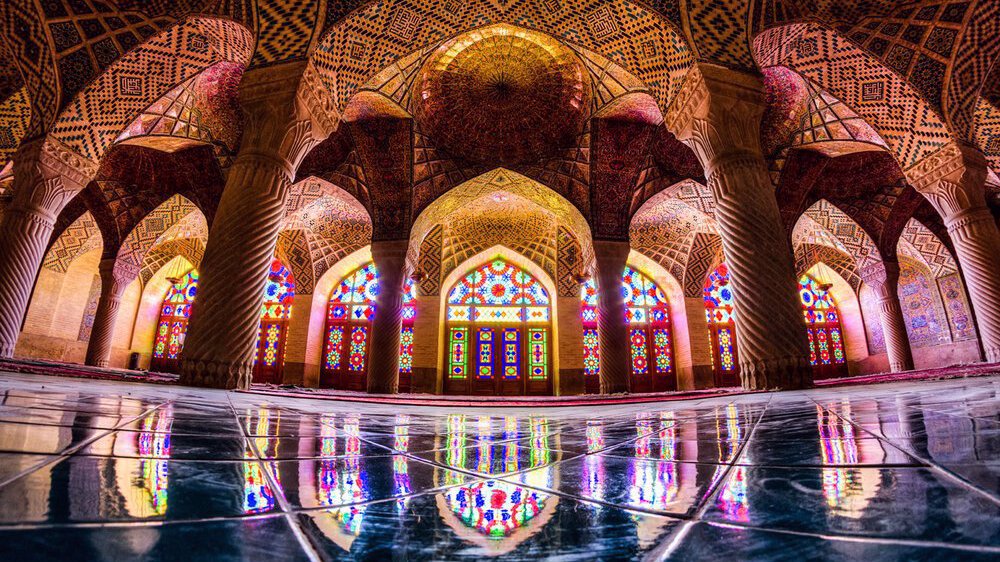
It is within the western shabestan (basement), however, that the mosque’s most enchanting artistic miracle unfolds, as the morning sun penetrates a series of vast stained-glass windows, projecting a dazzling spectrum of coloured light onto the intricately patterned Persian carpets and the soaring, polychrome arches supported by slender, spiralled columns.
This daily performance of light transforms the sacred space into a living canvas, where ephemeral rainbows dance across surfaces adorned with painted arabesques and delicate girih tilework, creating an atmosphere of ethereal beauty that is both spiritually uplifting and artistically unparalleled.
The Nasir al-Molk Mosque ultimately stands as an undeniable masterpiece of aesthetic synthesis, where the Qajar passion for ornate beauty successfully harnesses the very essence of light itself as a primary medium of divine and artistic expression.
Vakil Mosque
The Vakil Mosque, erected under the patronage of Karim Khan Zand in the late 18th century, embodies the robust and ambitious architectural vision of his reign, its very name meaning "Regent" signalling its origin in a period of renewed cultural patronage and political consolidation in Shiraz.
This mosque is distinguished by its monumental scale and the powerful, almost muscular, elegance of its constituent elements, which together form a religious complex of profound artistic and historical significance.
The architectural plan is a masterful response to urban constraints, featuring an ingeniously designed entrance corridor that negotiates a ninety-degree angle to perfectly align the vast courtyard with the qibla while maintaining harmony with the adjacent Vakil Bazaar, a solution demonstrating exceptional geometric sophistication.
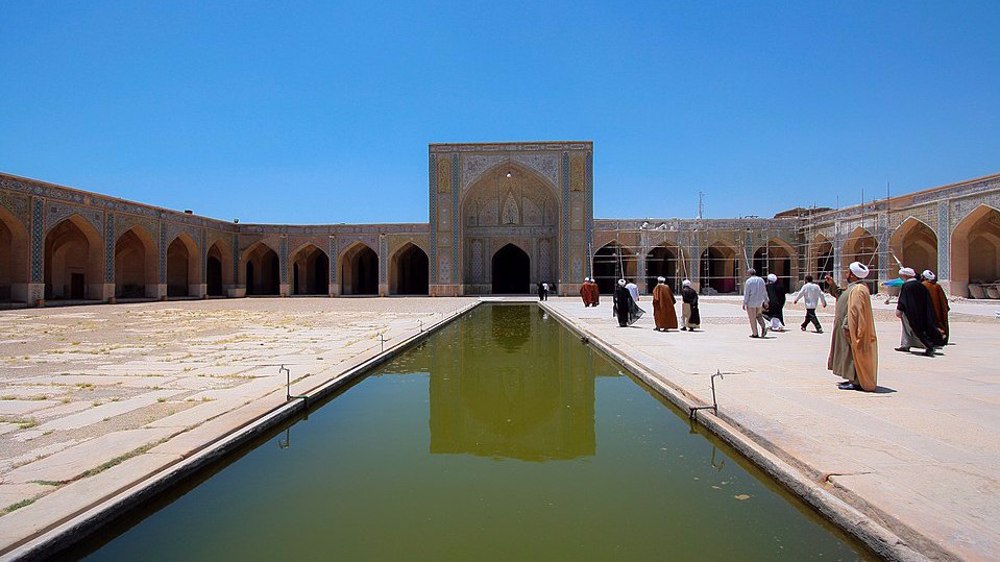
The artistic soul of the mosque resides in its two primary spaces: the vast southern shabestan (basement), a forest of forty-eight monolithic stone columns carved in a majestic spiral pattern that supports a soaring brick vault, and the splendid seven-coloured tile mihrab that glows with devotional intensity.
This shabestan is further graced by a pulpit hewn from a single piece of green marble, a fourteen-step marvel of lithic art whose procurement was so costly that Karim Khan himself remarked that a pulpit of solid gold would have been cheaper, a statement underscoring the immense value placed on such artistic endeavours.
The northern Pearl iwan, flanked by two twenty-meter high tiled minarets, and the intimate, columned winter shabestan on the eastern side, complete a complex that the French archaeologist Madame Dieulafoy rightly praised, noting that each individual tile could stand alone as a masterpiece worthy of comparison with the finest Western art.
The Vakil Mosque thus stands as a testament to the Zand dynasty's commitment to creating an enduring legacy through an architecture that is both spiritually potent and artistically resplendent.
Moshir Mosque
The Moshir Mosque, a distinguished religious monument from the Qajar period, represents the refined and delicate aesthetic sensibilities of 19th-century Iranian architecture, its construction ordered by Abolhasan Khan Moshir al-Molk, resulting in a sanctuary renowned for its unique and artistically significant tilework.
This mosque, nestled within the historic Sang Siyah neighbourhood and in close proximity to the holy shrine of Shah Cheragh, possesses immense potential as a pillar of religious tourism, its artistic attractions forming a vital part of Shiraz's cultural patrimony.
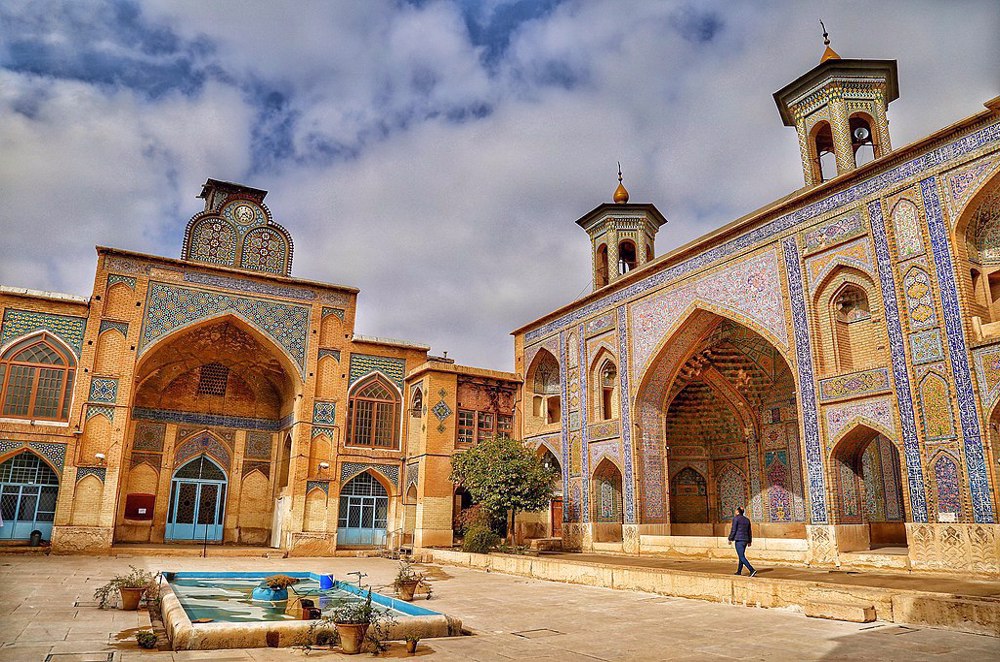
The building's historical and aesthetic value is encapsulated in the exquisite craftsmanship of its tiles, which display a level of detail and artistry that is unique in its kind, making the mosque an eye-catching attraction for connoisseurs of Islamic decorative arts.
Recent inspections have revealed concerning cracks and gaps in the walls, nave, and entrance. The considerable mass of the historic walls, sometimes reaching a width of one and a half meters, makes them particularly susceptible to displaying the effects of this ground movement.
In response, cultural heritage experts have embarked on detailed studies to develop a comprehensive restoration plan, a crucial first step in a larger endeavour to revive and activate the mosque's tourism capacity as a means of ensuring its long-term survival.
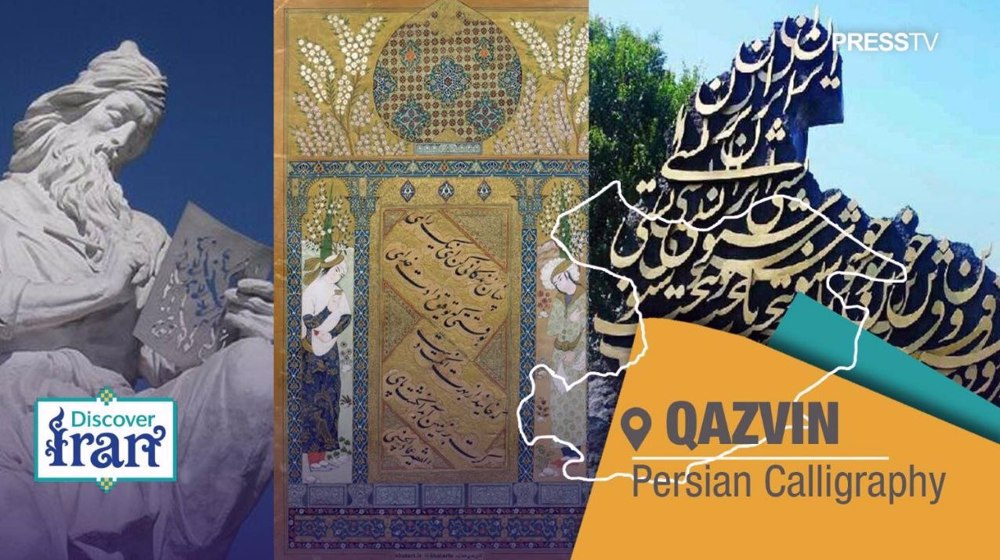
Discover Iran: Qazvin, the beating heart of Iran’s centuries-old calligraphy tradition
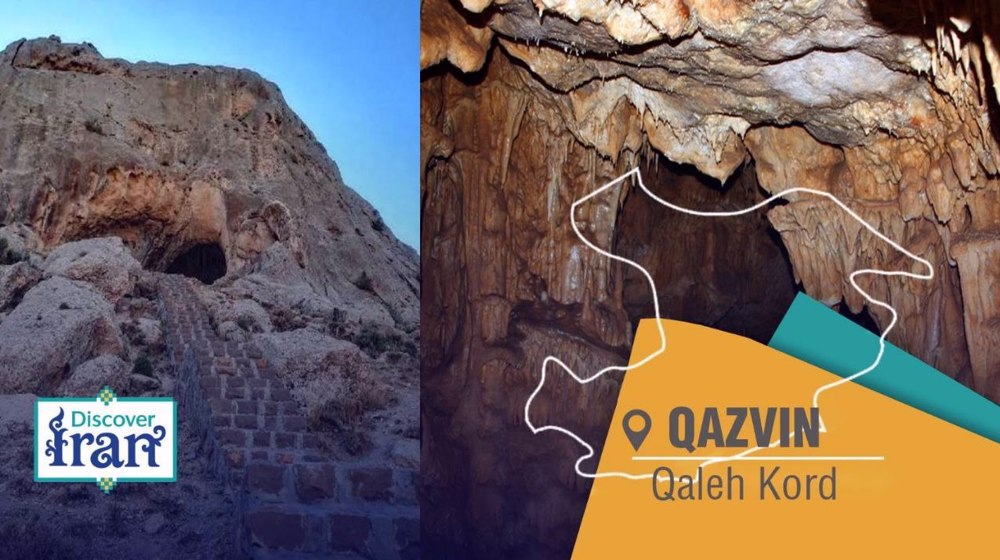
Discover Iran: Qale Kord Cave in Qazvin, where visitors encounter ancient origins of human life
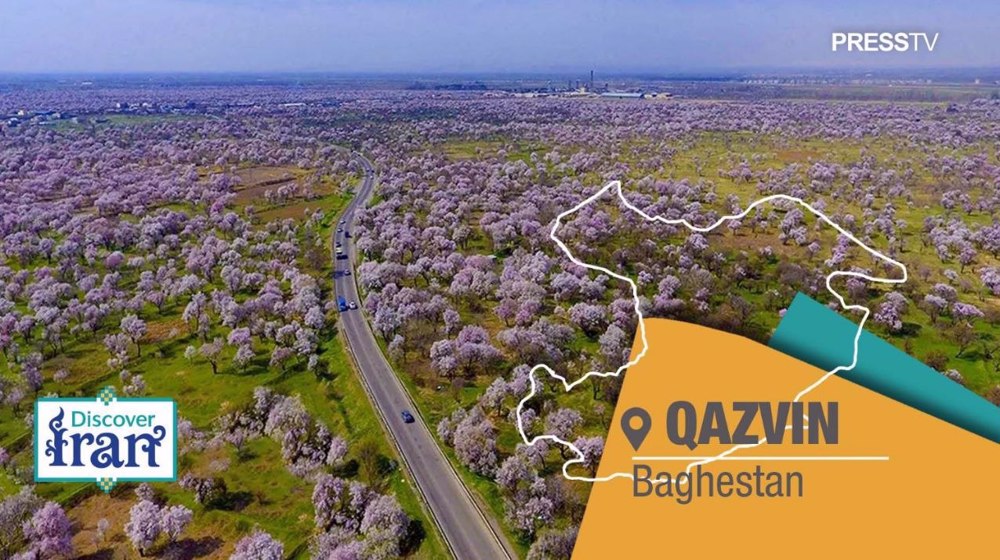
Discover Iran: Baghestan, Qazvin’s 2,700-hectare, millennium-old heritage and agricultural jewel



VIDEO | Press TV's news headlines
US plot to use Iraqi Kurdistan as launchpad against Iran thwarted: Qalibaf
Israeli forces abduct Press TV reporter Naqqa Hamed near Bethlehem
Iran wins IAEA General Committee seat as US bid to block election fails
US democracy indicators hit 50-year low under Trump: Report
Defeat of enemy calculations: Iran’s judiciary chief hails 200 nights of street rallies
UN confirms US attack on Iranian wedding, warns of international law violations
Iran downs third US MQ-1 drone over Strait of Hormuz in 24 hours



 PressTV NEWSLETTER
now
PressTV NEWSLETTER
now
 This makes it easy to access the Press TV website
