Discover Iran: Fars, Iran’s rose capital where tradition, trade and tourism bloom
By Maryam Qarehgozlou
- Fars province produces nearly half of Iran’s damask roses, with Darab and Meymand leading cultivation and export.
- Rosewater, essential oils, and dried petals sustain over 2,500 families, supporting both traditional practices and industrial processing.
- The annual Damask Rose Festival celebrates heritage, boosts rural tourism, and showcases centuries-old cultivation and distillation techniques.
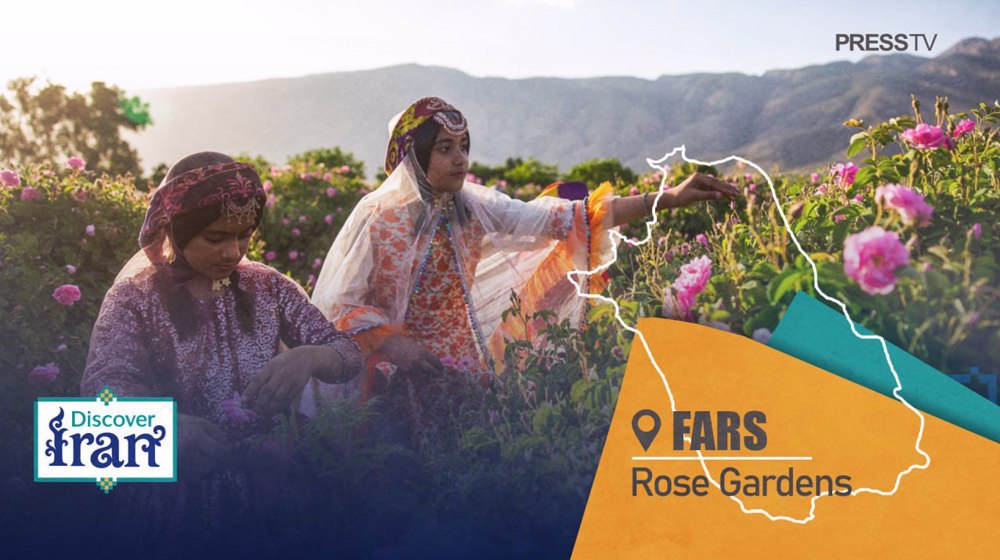
Each spring, as the sun warms the plains of Fars, the province bursts into a sea of pink damask roses, where centuries-old traditions of cultivation and distillation transform fragrance into both exquisite art and livelihood.
The province in southern Iran, with 8,600 hectares of rain-fed and irrigated damask rose fields, accounts for nearly 46 percent of the country's total area under cultivation of this flower.
Many agriculturists believe Fars is the country’s leading producer of Rosa damascena, benefiting from favorable climate conditions and the deep agricultural heritage of its rural and tribal communities.
Out of the province’s 37 counties, 18 cultivate damask roses, but the largest and most productive areas are found in Darab and Meymand.
Darab County, located 245 kilometers from Shiraz, is home to 5,100 hectares of rain-fed rose gardens and 500 hectares of irrigated ones, making it one of the largest rain-fed damask rose plains in the world.
According to Habibollah Fat’hi, head of the county’s Agricultural Jihad Office, Darab ranks first nationwide in both cultivated area and production volume.
Most of the rain-fed gardens are concentrated in Laizengan, Navaigan, Shakrouyeh, and Morvarid, where each hectare yields an average of 1,200 kilograms of flowers under rain-fed conditions and 2,500 kilograms under irrigation.
Annually, over 7,000 tons of petals and buds are harvested, and 70 percent of the crop is sold as dried buds and petals.
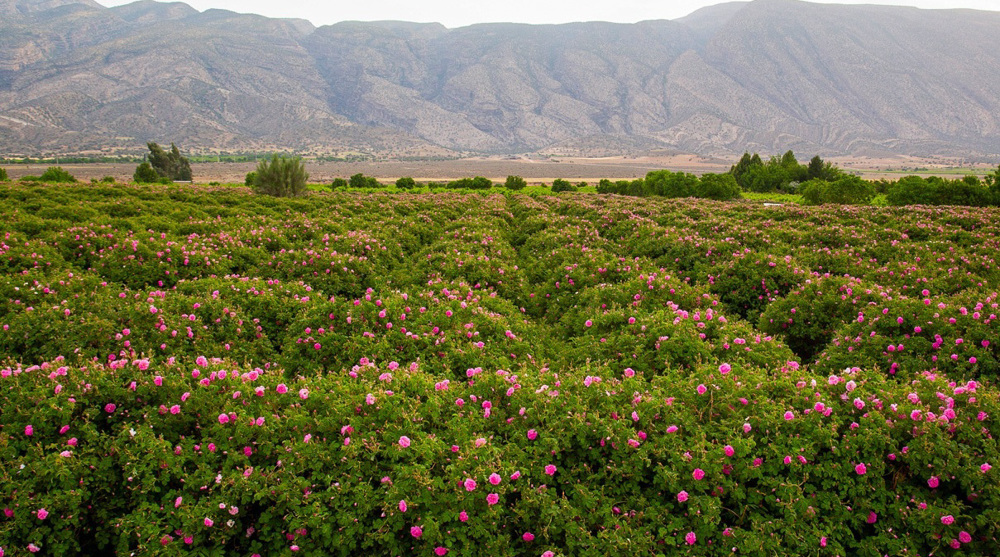
The region’s organic, high-quality roses are exported not only across Iran but also to Europe, the Persian Gulf countries, and Central Asia.
Darab is also home to four industrial processing units, which handle the bulk of exports, in addition to numerous traditional and household distilleries
More than 2,500 families in the county earn their living through rose cultivation and processing. Other rose-producing counties include Firouzabad, Eqlid, Neyriz, Bavanat, Estahban, Shiraz, and Khorrambid.
Among them, Firouzabad boasts the province’s largest irrigated rose fields, covering 1,960 hectares, 82 percent of which lie in Meymand, a town 95 kilometers from Shiraz and 65 from Firouzabad.
The rosewater capital of Iran
Known as the capital of rosewater in Iran, Meymand hosts over 110 active workshops, which produce more than 25 million liters of herbal distillates and rosewater annually.
According to Seyed Kazem Mousavi, the head of Firouzabad’s Agricultural Jihad Office, more than 300 tons of rosewater from Meymand is exported to the UK, UAE, Kuwait, and Afghanistan each year.
Besides processing and essential oil extraction, about 50 percent of the remaining flowers are used for bee-feeding and jam-making, products that are also exported beyond the province.
A growing export industry
Nationally, according to Hossein Zeinali, head of the Medicinal Plants Project at the Ministry of Agriculture, 31,000 hectares of Iranian farmland are dedicated to damask rose cultivation, producing approximately 68,000 tons of flowers annually.
In some areas, yields exceed six tons per hectare, positioning Iran as the global leader in exporting rosewater and dried rose buds.
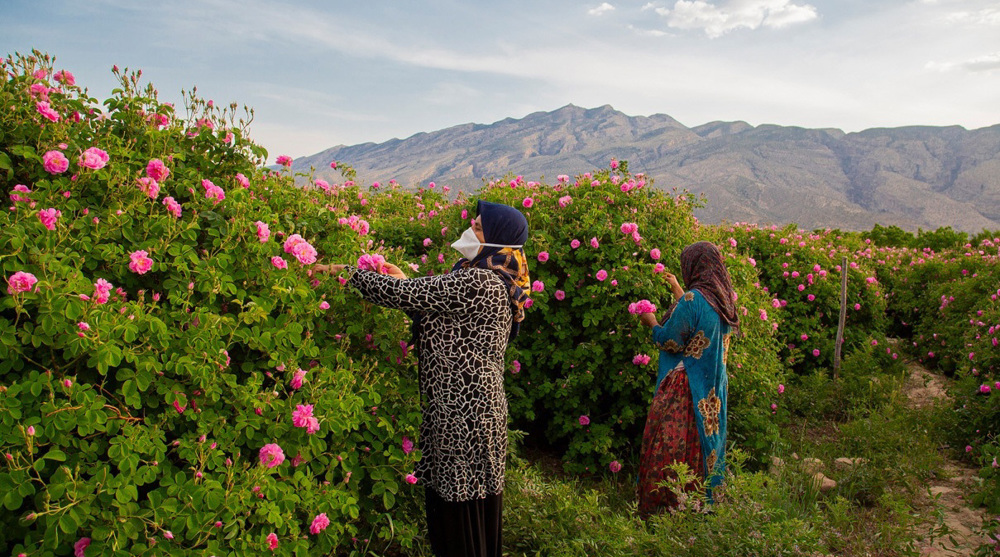
Mojtaba Dehghanpour, head of the Fars province's Agricultural Jihad Organization, stated in April that the extraction of rosewater and essential oil has become a significant economic sector.
Annually, over 36 tons of rosewater valued at $35,000 are exported from Fars customs offices to the Netherlands, Australia, Japan, Canada, and the UAE.
The rose harvest in Fars begins in late April and continues until late June.
Distillation occurs through both traditional and industrial methods.
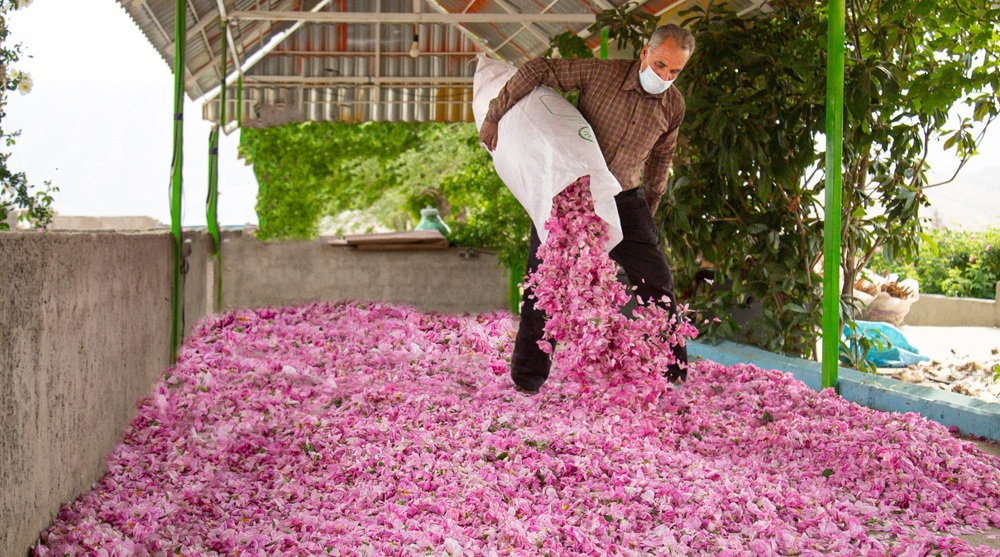
In the traditional method, each copper pot holds 50 kilograms of flowers, producing about 50 liters of rosewater.
In modern industrial facilities, three to four tons of flowers are processed daily, with each still accommodating 500 kilograms of roses—ensuring efficiency while preserving fragrance and quality.
Rose festivals
Every spring, Fars hosts one of Iran’s most enchanting seasonal events—the Damask Rose Festival.
Timed with the harvest season, the festival celebrates both the cultural and economic significance of rose cultivation.
The most renowned celebrations take place in Meymand and the outskirts of Shiraz, drawing visitors from across the country and abroad.
During the festival, visitors are welcomed into the rose gardens, where they can participate in flower picking and experience the traditional process of rosewater distillation in copper cauldrons
Local markets offer fresh rosewater, herbal distillates, and handicrafts, while live traditional music and cultural performances enrich the atmosphere.
The Rose Festival of Fars is more than a floral event—it’s a symbol of the deep connection between the people and their land, celebrating ancestral wisdom, ecological balance, and community pride.
Beyond its sensory charm, the event plays a key role in rural tourism, local economic growth, and cultural preservation.
Through the fragrance of its roses and the artistry of its people, Fars province continues to intertwine tradition, economy, and nature, blossoming as both an agricultural and cultural powerhouse of Iran.
Pezeshkian: Nakhchivan aerial bombardment not linked to Iran
Iran's defense and security institutions unite in steadfast allegiance to new Leader
Resistance groups congratulate Iran on Ayatollah Mojtaba Khamenei’s election as new Leader



Iran warns UN Security Council of ‘grave dangers’ to civilians amid US-Israeli aggression
Iran downed 11 US MQ-9 Reaper drones worth over $330mn: report
Iran official rejects Trump’s claims on women footballers, says ‘games’ can't divide country
Iran FM defends attacks on American bases in region citing US propaganda video
Iran will not target any country not used for aggression: Pezeshkian
Iran launches wave 33 of True Promise 4 op. with Kheibar Shekan missiles
True Promise 4: Iran and resistance axis ops. against US-Israeli assets on Mar. 9
Top official: Iran ready for a long war with US, no more diplomacy



 PressTV NEWSLETTER
now
PressTV NEWSLETTER
now

 This makes it easy to access the Press TV website
