Discover Iran: Fars province, where timeless handicrafts weave culture into economy
By Maryam Qarehgozlou
- Fars province in southern Iran hosts 120 of Iran’s 370 active handicraft disciplines, showcasing immense cultural and economic potential.
- UNESCO honors and global museum showcases affirm Fars’s artistic excellence, sustainable craftsmanship, and international market appeal.
- Qashqai carpets, woven from memory using natural dyes, symbolize tribal heritage and drive exports despite external economic pressures.
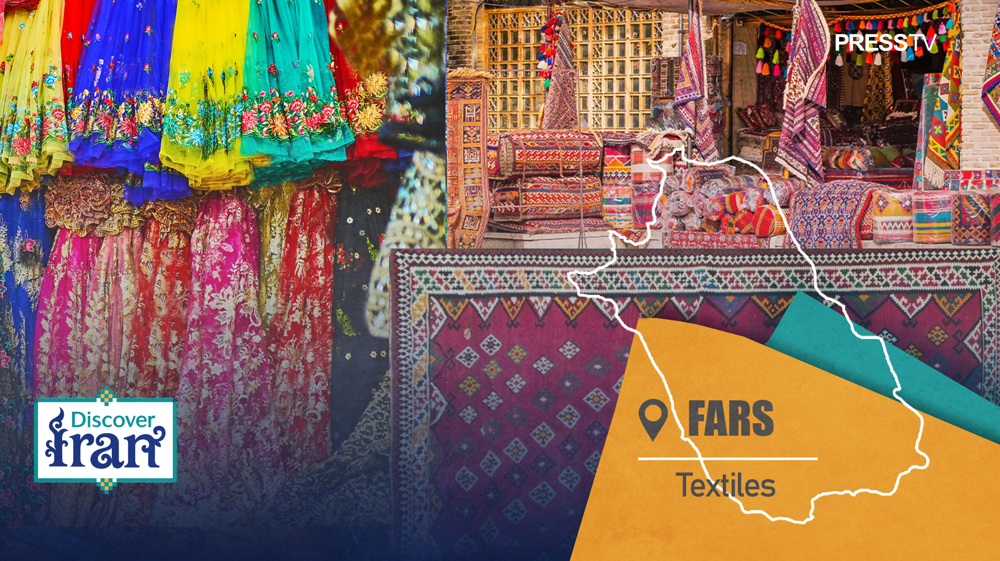
The southern Iranian province of Fars, with its rich history, diverse climate, and vibrant tribal and rural population, stands as one of Iran’s most celebrated centers of handicrafts.
Arts such as carpet weaving, kilim and jajim weaving, miniature painting, marquetry (khatamkari), woodcarving, pottery, basketry, and ceramics have deep roots in different parts of this province.
These crafts not only reflect the cultural identity of local communities but also represent an economic treasure for the province and the country.
Handicrafts in Fars have the potential to drive national and regional income growth, create employment, boost exports, and preserve Iran’s cultural heritage simultaneously.
Of the 460 recognized handicraft disciplines worldwide, 370 are active in Iran, and Fars alone hosts 120 of them, which attests to its massive potential.
The diversity of provincial crafts—from traditional to innovative forms—offers unique aesthetic and commercial value. The use of local motifs and naturally inspired colors enhances their appeal in global markets.
Global recognition of artistic excellence
In 2019, Shiraz, the capital of Fars province, was named as the World City of Handicrafts by the World Crafts Council.
The city is renowned for a variety of arts, including khatamkari (marquetry), woodcarving, tile making, kilim and rug weaving, traditional glassmaking, and pottery.
Abadeh, another city in Fars, was designated the World City of Woodcarving in 2018 due to its historical background and the large number of skilled artisans and workshops engaged in traditional woodwork.
Using high-quality walnut and pearwood, Abadeh’s artists create furniture, decorative panels, boxes, and utensils.
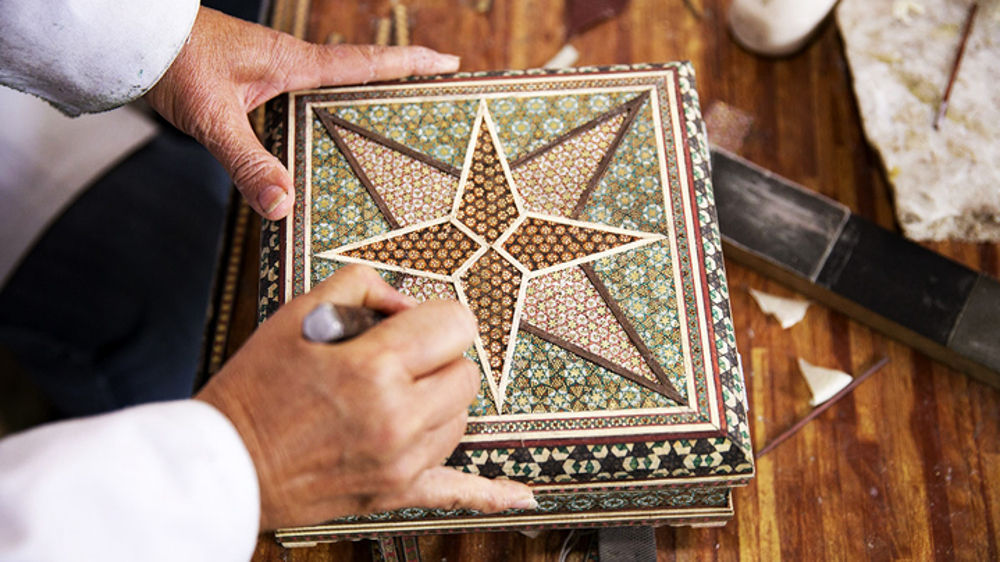
Their intricate works are even showcased in world-class museums such as the Victoria and Albert Museum in London.
Beyond these two globally recognized cities, Fars also has four nationally registered towns and villages specializing in traditional crafts like woven fabrics, giweh-making (handmade footwear), basketry, and rand weaving.
These local designations have paved the way for greater employment, income generation, export expansion, and cultural tourism.
Fars province has also gained distinction through the UNESCO Award of Excellence for Handicrafts, a prestigious acknowledgment of craftsmanship, creativity, and cultural authenticity.
In March, the Fars Cultural Heritage, Tourism, and Handicrafts Organization announced that three local artists—Saharnaz Lafti (woodcarving), Karim Azargasht (traditional instrument making), and Nazem Mohammadi Kashkouli (kilim weaving)—received the international UNESCO Seal of Excellence.
Between 2021 and 2023, Fars artisans received 23 UNESCO seals, underscoring the province’s global prominence and helping promote its products in international markets.
These honors affirm not only the artistic value of Fars’s handicrafts but also their alignment with sustainable and authentic production principles.
Exports and employment
According to the Fars Cultural Heritage, Tourism and Handicrafts Organization, exports of handicrafts and traditional jewelry reached $3.7 million between 2021 and 2023, with destinations including Qatar, Italy, Germany, and Russia.
In the first eight months of 2024, Fars exported $587,243 worth of handicrafts, while 1,500 new jobs were created in the sector.
These figures highlight how traditional arts are playing an active role in strengthening both local livelihoods and the broader non-oil economy.
The pride of Fars: Qashqai carpets and woven heritage
Among Fars’s most renowned handicrafts are the Qashqai tribal carpets, famous for their geometric patterns, bold color palettes, and perfectly balanced designs.
Major production centers include Shiraz, Abadeh, Firouzabad, and Neyriz.
In Qashqai tradition, men shear the wool and build the looms, while women spin the yarn, select natural dyes—such as madder, indigo, and pomegranate peel—and weave carpets entirely from memory, without pre-drawn patterns.
Each piece is one of a kind, and the craft is passed down through generations from mothers to daughters.
The motifs often depict nomadic life and cultural symbolism, making every rug a woven story.
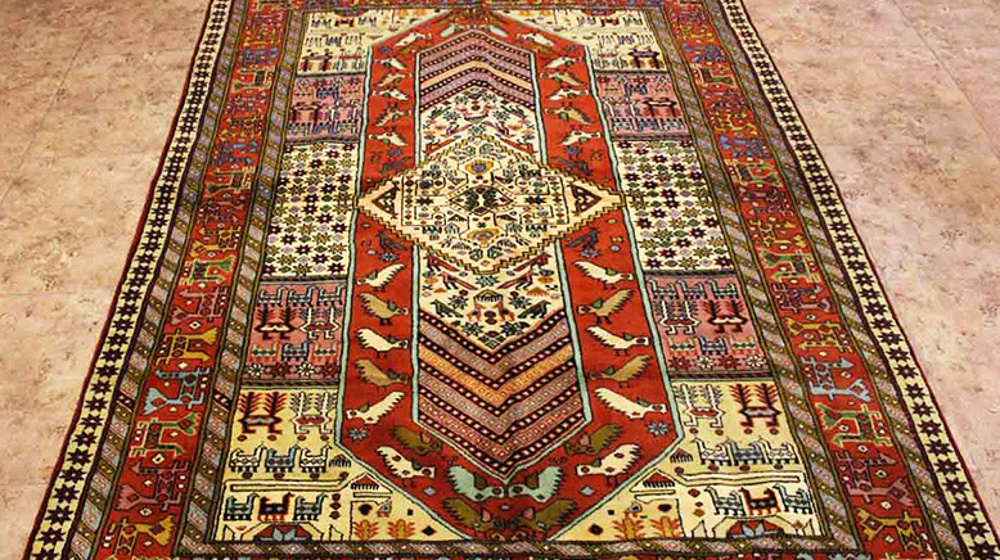
Among Qashqai carpets, the Kashkuli variety holds a special place.
Its fame extends far beyond Iran—Sigmund Freud’s consulting couch, for instance, was adorned with a Qashqai rug.
Today, these carpets are preserved in leading museums such as the Hermitage in Russia, the Victoria and Albert Museum in London, the Art Institute of Chicago, the Metropolitan Museum of Art in New York, and Iran’s own National Carpet Museum.
In 2010, the “Traditional Skills of Carpet Weaving in Fars” were inscribed on the UNESCO Representative List of Intangible Cultural Heritage of Humanity.
This inscription recognized not only the technical mastery of local weavers but also the cultural depth behind every handwoven piece.
According to the Fars Industry, Mining and Trade Organization, 20 percent of Iran’s handwoven carpets are produced by 174,000 artisans in Fars, and 80 percent of these carpets are exported.
The Vakil Bazaar in Shiraz, one of the oldest trading centers in Iran, remains a key hub for this thriving art form.
Alongside carpets, kilims, jajims, and tapestry-like textiles are widely woven across the province, particularly in rural and nomadic areas.
Smaller decorative textiles and tapestries are also finding their way into export markets.
Handicrafts in Fars—especially carpets, kilims, and other textiles—are not only artistic treasures but also vital economic assets.
Recent export data demonstrate that, despite external pressures such as unilateral sanctions, the province has continued to generate foreign exchange, sustain employment, and expand its international presence.
According to experts, if development continues through the right strategies—focusing on quality enhancement, innovative design, branding, digital marketing, and supportive policy frameworks—Fars’s handicraft exports are poised for further growth, deepening their positive impact on both the local and national economy.
Factbox: Civilian infrastructure in the crosshairs of US-Israeli war of aggression on Iran
Revisiting three historic letters Imam Khamenei wrote to Western youth
US-Israeli attacks on Iran’s cultural heritage sites amount to war crime: Envoy



‘There is no end to this war’: Commander says Iran firmly determined to punish US, Israel
Iran warns UN Security Council of ‘grave dangers’ to civilians amid US-Israeli aggression
Iran downed 11 US MQ-9 Reaper drones worth over $330mn: report
Iran official rejects Trump’s claims on women footballers, says ‘games’ can't divide country
Iran FM defends attacks on American bases in region citing US propaganda video
Iran will not target any country not used for aggression: Pezeshkian
Iran launches wave 33 of True Promise 4 op. with Kheibar Shekan missiles
True Promise 4: Iran and resistance axis ops. against US-Israeli assets on Mar. 9



 PressTV NEWSLETTER
now
PressTV NEWSLETTER
now

 This makes it easy to access the Press TV website
