
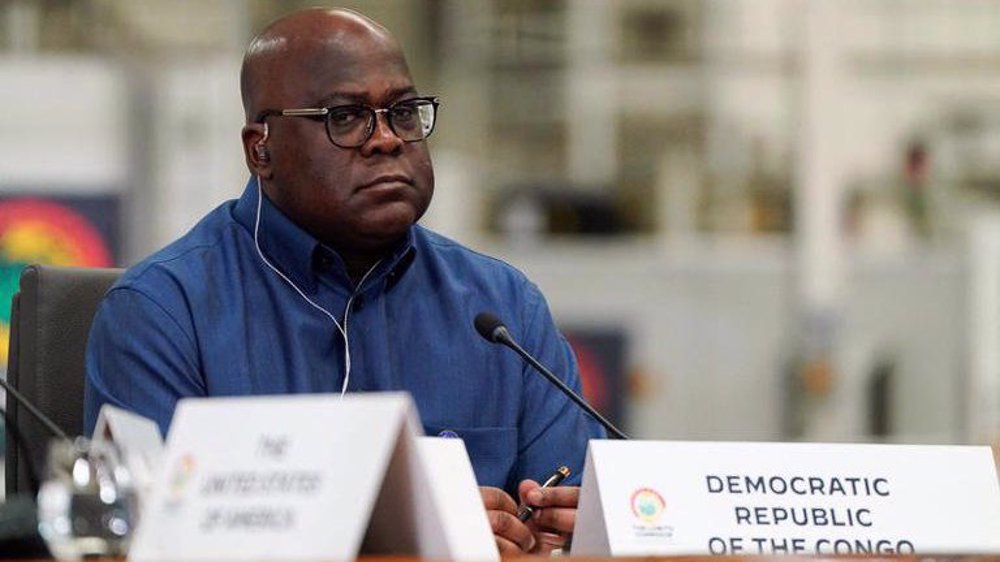
Democratic Republic of Congo President Felix Tshisekedi has stated that his country will not “auction” Congolese mineral resources to the United States.
Speaking to reporters in New York on Monday, Tshisekedi stated that a US-mediated peace agreement with Rwanda, signed in June, has yet to quell the ongoing violence in eastern Congo.
The peace deal, facilitated by US mediators on June 27, aimed to curtail Rwanda’s support for the M23 rebel group, which US and UN experts allege is receiving backing from Kigali.
The administration of US President Donald Trump has expressed a strong desire to end the violence, which has resulted in thousands of deaths this year, while also aiming to attract significant Western investments to a region abundant in valuable minerals like tantalum, gold, cobalt, copper, and lithium. A key deadline for implementing aspects of the agreement is set for this month.
While expressing gratitude for US mediation, Tshisekedi emphasized that the cooperation should not be misconstrued as an invitation to exploit Congo's mineral resources.
"This does not mean that we will auction our mineral resources," he told reporters in New York.
He outlined that the partnership with the US would focus on developing the mining sector, enhancing the value chain, and improving infrastructure, especially in energy.
Tshisekedi also mentioned an existing strategic partnership with China and indicated that negotiations for a similar agreement with the US are ongoing, although he refrained from providing specific details.
Congolese officials state that the success of the peace deal is contingent upon Rwanda halting its support for M23, which Kinshasa accuses of committing atrocities. M23 has denied allegations of civilian attacks, and Rwanda continues to assert that its military actions are in self-defense.
M23 rebels are aiming to consolidate their hold in the eastern regions of the Democratic Republic of the Congo, which have trillions of dollars of mostly untapped mineral wealth, including cobalt, lithium, tantalum, and uranium.
Tshisekedi expressed concerns about Rwanda’s commitment, stating, “(Rwanda) pretended to withdraw their troops, but actually, they are increasing their support to M23.”
Earlier this year, a meeting facilitated by Qatar brought Tshisekedi and Rwanda's President Paul Kagame together to discuss a ceasefire, leading to direct negotiations between Congo and M23.
However, the two sides failed to meet an August 18 deadline for a peace agreement. M23 has stated that discussions on advancing peace are contingent on the release of prisoners, while a Congolese official involved in the talks indicated that prisoner releases would only occur post-agreement.
Regarding the potential for a prisoner exchange, Tshisekedi noted that some progress has been made: “As a matter of fact, we are waiting for the Red Cross to give us a go-ahead to proceed with the exchange of prisoners.”
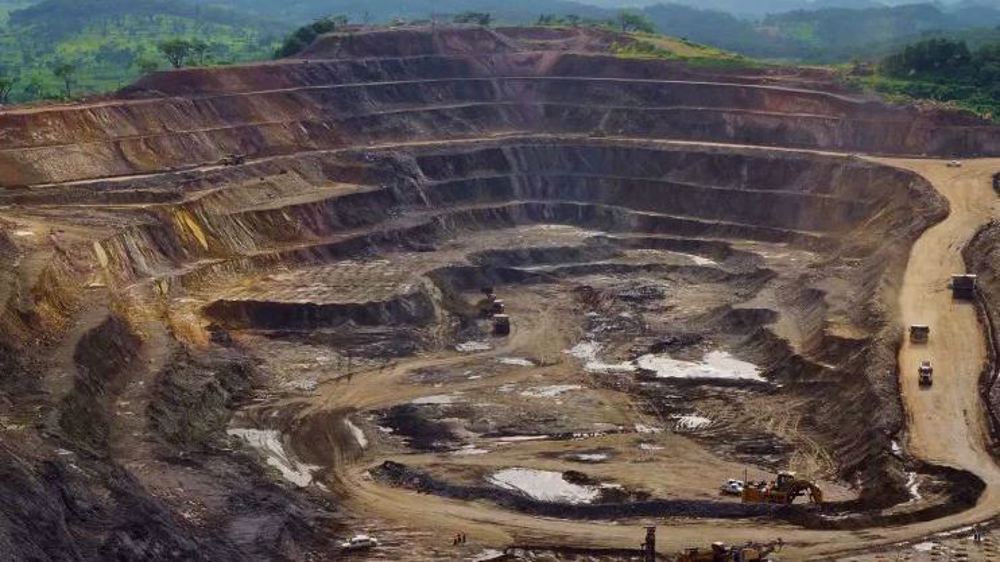
The United States is reportedly engaged in exploratory talks with the Democratic Republic of Congo regarding a potential deal on rare earth elements, marking the latest effort by the Trump administration to secure access to vital resources overseas.
According to a report published in the Financial Times (FT) in March, the proposed agreement involves the US gaining access to crucial minerals in exchange for providing security assistance to the African nation.
FT cited unnamed sources as saying talks between Washington and Kinshasa about a potential mineral deal have intensified recently, “although several obstacles remain,” and they are “at a relatively early stage.”
 This makes it easy to access the Press TV website