
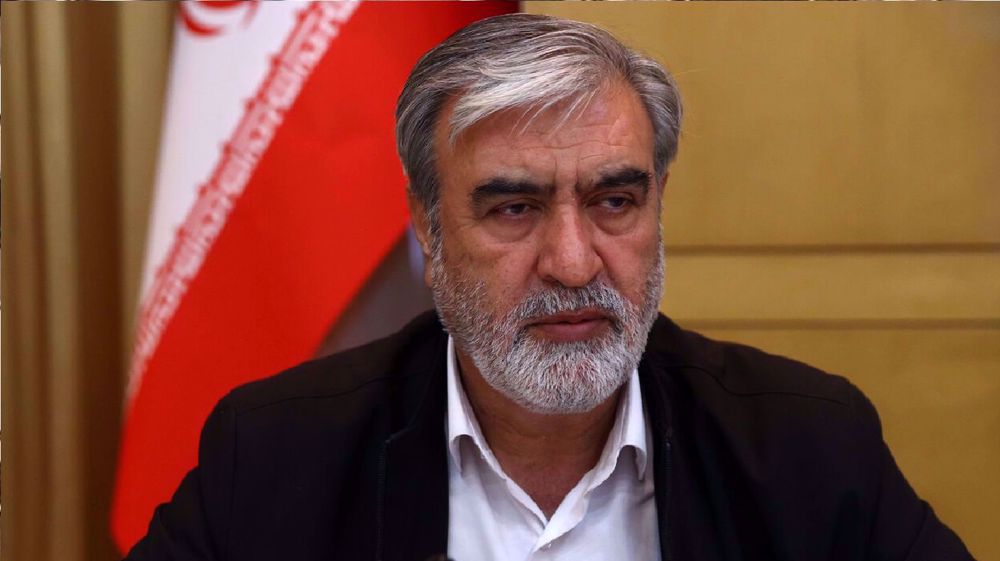
A senior Iranian lawmaker asserts that US President Donald Trump's on-again, off-again recourse to his menacing rhetoric addressing the Islamic Republic will not force the country to retreat from its red lines.
"Iran will not be pushed back by Trump’s rhetoric from its red lines," Chairman of the Iranian Parliament's National Security and Foreign Policy Committee, Ebrahim Azizi wrote in a post on X on Wednesday.
The legislator defined those irreversible positions as Iran's insistence on its right to enrich uranium, retaining the enriched materials, exercising control over the strategic Strait of Hormuz, and demanding removal of the United States' illegal sanctions.
Strait of Hormuz Iran’s ‘permanent asset’, will be defended with ‘full strength’: Lawmakerhttps://t.co/UNbVobSBKv
— Press TV 🔻 (@PressTV) May 19, 2026
Azizi described Trump's intermittent recourse to such rhetoric as his "alternating between issuing threats and appealing for an agreement" in light of the latter's "seeking a way out of this strategic deadlock."
The lawmaker was referring to the US's falling drastically short of its most recent bout of unprovoked aggression against Iran.
The aggression that was launched jointly with the Israeli regime amid Tel Aviv's widely-reported instigation, stopped short of its main self-described goal of overthrowing Iran's Islamic establishment.
It, meanwhile, faced decisive and successful retaliation on the part of the Islamic Republic's Armed Forces, who delivered devastating blows to strategic and sensitive American and Israeli targets throughout the region.
Iran's reprisal also featured closing the Strait of Hormuz to enemies and their allies during an initial stage and then applying far stricter controls to transit through the waterway. The move jolted global energy markets, including in the United States, where skyrocketing gas prices began chipping away at Trump's already record-low popularity levels.
Amid the situation, the US president announced a unilateral ceasefire on April 7, before extending it and ultimately announcing the prospect of realization of a memorandum of understanding with the Islamic Republic.
Azizi's remarks echoed those made by Deputy Secretary of Iran’s Supreme National Security Council (SNSC), Ali Bagheri Kani earlier in the day.
Speaking during a press conference, Bagheri Kani reiterated that the manner of transit through the Strait of Hormuz lies under the littoral states' authority, namely the Islamic Republic and Oman.
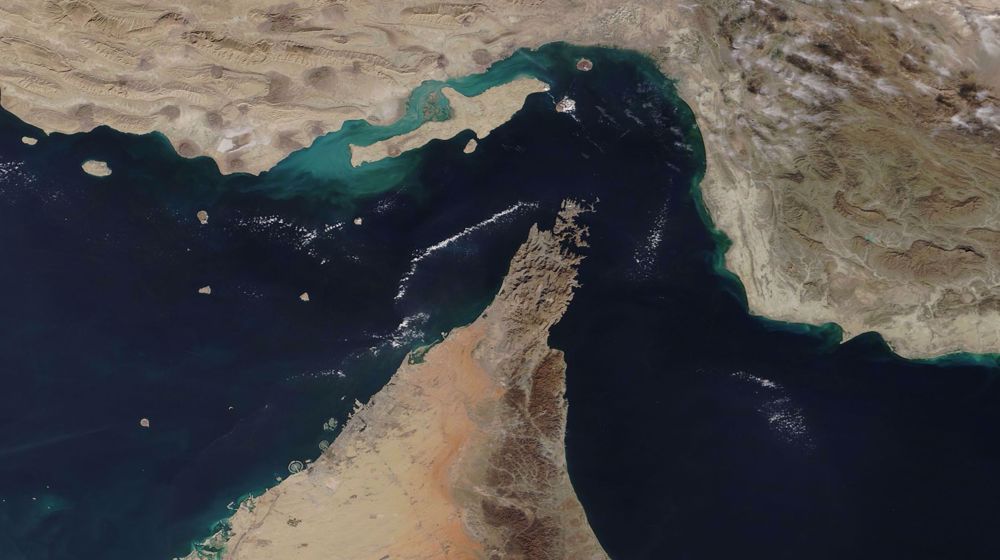
Iran and Oman are negotiating a new framework for maritime transit through the chokepoint, he said, while underlining that Iran’s stockpiles of enriched uranium "are not on the agenda of [indirect] negotiations" with the US.
 This makes it easy to access the Press TV website