

Iran's Parliament Speaker Mohammad Baqer Qalibaf says Tehran has no trust in the United States and will never retreat from its national rights in talks with Washington aimed at ending the war in the region.
Qalibaf made the remarks in a Sunday meeting with Pakistan's army chief, Field Marshal Asim Munir, who arrived in Tehran Saturday night to exchange views with Iranian authorities about the latest developments regarding the Pakistan-brokered negotiations between Iran and the US.
“We will not back down from the rights of our nation and country, especially with a party that is completely dishonest and we have no trust in,” he said.
Qalibaf, who is the head of the Iranian negotiating team, pointed to Iran’s courageous and powerful self-defense actions on the battlefield, adding that the country will strive with intelligence and strength on the diplomatic front to realize legitimate rights and secure national interests.
"Military men know the value of peace better than others, but they will never allow their country's dignity and rights to be trampled upon," he emphasized.
He blamed the US for waging the war while bilateral negotiations were underway, and is now calling for talks to end it.
"We were in a ceasefire that you [Pakistan] brokered when the United States broke its word, imposed a naval blockade, and now it is looking to lift it," the Iranian Parliament speaker said.
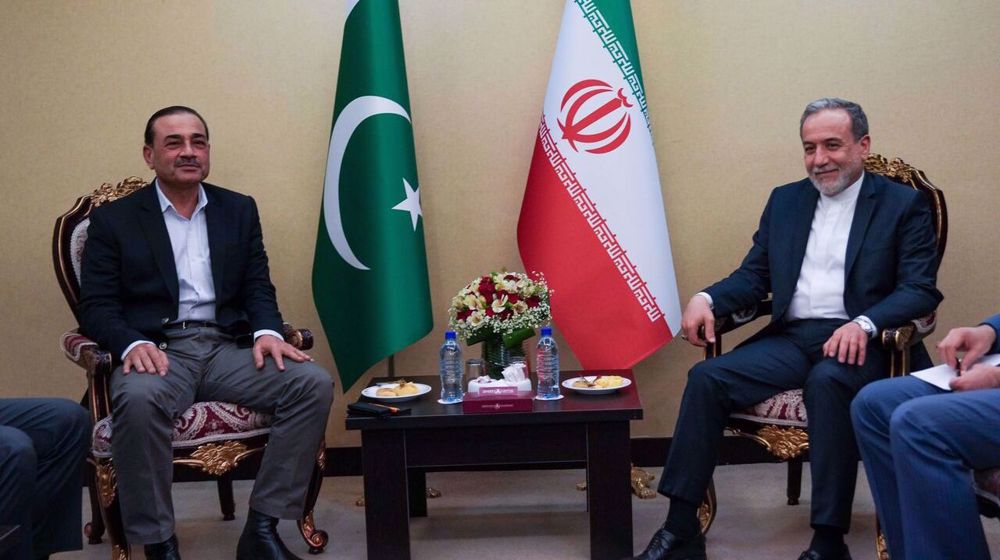
Qalibaf further reacted to speculations about the resumption of US-Israel military aggression against the Islamic Republic, noting that the Iranian Armed Forces have used the truce period to rebuild themselves.
“If [US President Donald] Trump acts foolishly and restarts the war, it will definitely be more devastating and bitter for America than the first day of the war,” the top Iranian negotiator warned.
The Pakistani army chief, for his part, said he was pleased that Iran is led by intelligent figures with high vision.
Earlier in the day, Munir held intensive talks with Iranian President Masoud Pezeshkian and Foreign Minister Abbas Araghchi.
The criminal US-Israeli aggression against Iran began on February 28 with airstrikes that assassinated senior Iranian officials and commanders, including Leader of the Islamic Revolution Ayatollah Seyyed Ali Khamenei.
Iranian Armed Forces responded by launching daily missile and drone operations targeting locations in the Israeli-occupied territories as well as US military bases and assets across the region.
Furthermore, Iran retaliated against the strikes by closing the Strait of Hormuz, which resulted in a significant increase in oil prices and their by-products.
On April 8, forty days into the war, a Pakistan-brokered temporary ceasefire between Iran and the US took effect.
Negotiations ensued in the Pakistani capital, Islamabad, but stopped short of an agreement amid Washington’s maximalist demands and insistence on unreasonable positions.
Since then, Iran has categorically refused to rejoin the process unless the US lifts an illegal blockade it has imposed on Iranian vessels and ports.
Tehran has also asserted that, as long as the blockade is still in place, it has no intention of reopening the Strait of Hormuz.
 This makes it easy to access the Press TV website