
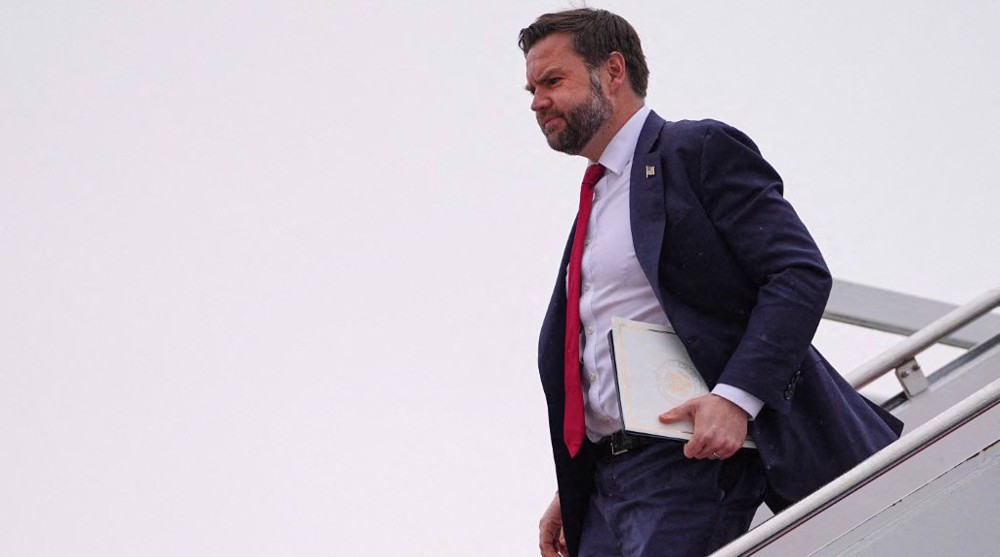
US Vice President JD Vance says he is “skeptic of foreign military interventions,” asserting that President Donald Trump shares the same outlook, in remarks that came after a third round of indirect talks between Washington and Tehran reportedly made solid progress.
“I think we all prefer the diplomatic option,” Vance said, adding a note of caution: “But it really depends on what the Iranians do and what they say.”
In an interview with The Washington Post on Thursday, Vance stressed that the United States does not want to be pulled into a prolonged war in the region.
“The idea that we’re going to be in a Middle Eastern war for years with no end in sight — there is no chance that will happen,” he said.
A 41-year-old Marine veteran who served in the Iraq War, Vance has frequently warned against repeating what he views as past foreign policy failures. He has said he was “lied to” about the reasons for the 2003 invasion of Iraq, a conflict that became a long and costly engagement for the United States.
His remarks reflect broader concerns within parts of the administration and Congress about the risks of escalation with Tehran.
The comments come as Trump has sharply intensified his rhetoric toward Iran while ordering a significant US military buildup across West Asia.
The Pentagon has deployed two aircraft carriers, additional warplanes and missile systems to areas surrounding Iran, moves widely seen as a show of force amid heightened tensions.
Tehran has responded with warnings of its own. Leader of the Islamic Revolution Ayatollah Seyyed Ali Khamenei cautioned that any US-initiated attack would spark a “regional war,” signaling that Iran would not limit its response to its own borders.
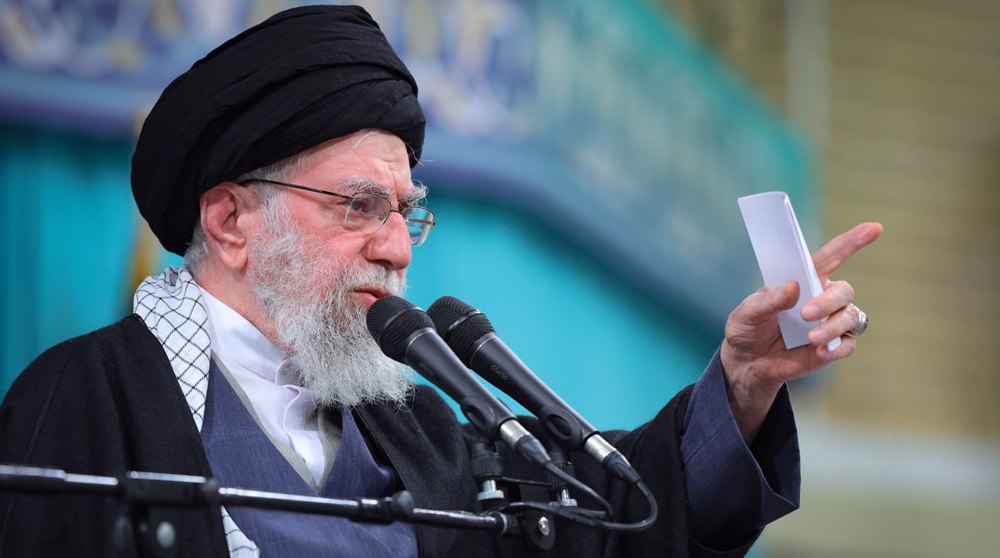
Iranian officials have repeatedly said that any aggression would draw an immediate and proportional reaction.
Against this tense backdrop, lawmakers in Washington are moving to reassert congressional authority over decisions of war and peace.
Congressional Democrats announced they will force a vote next week on a bipartisan war powers resolution aimed at preventing any unilateral military action against Iran without explicit congressional approval.
The resolution was introduced by Reps. Ro Khanna and Thomas Massie, underscoring rare bipartisan alignment on limiting executive war powers.
The measure emphasizes that the US Constitution grants Congress—not the president—the sole authority to declare war, an authority many lawmakers argue has been increasingly eroded over the past two decades.
House Minority Leader Hakeem Jeffries said that as soon as Congress reconvenes, Democrats will compel a vote of the full House on the Khanna-Massie War Powers resolution.
In a joint statement, Democratic leaders warned that “undertaking a war of choice in the Middle East, without a full understanding of all the attendant risks to our servicemembers and to escalation, is reckless.”
The legislative push highlights growing unease in Washington over the possibility that rising tensions could spiral into direct military confrontation. While the administration has not announced a decision on military action, Trump’s rhetoric and force posture have fueled speculation about potential strikes.
At the same time, diplomatic efforts appear to be advancing.
Iran and the United States held a third round of indirect talks in Geneva on Thursday, mediated by Oman, with discussions centered on Tehran’s nuclear program and the potential lifting of US sanctions.
The negotiations were hosted at a building belonging to the Omani Embassy and lasted several hours, including a pause for consultations with officials in the respective capitals.
Iranian Foreign Minister Abbas Araghchi described the latest round as one of the most serious and detailed to date, saying the two sides moved “closer to an agreement” on certain issues.
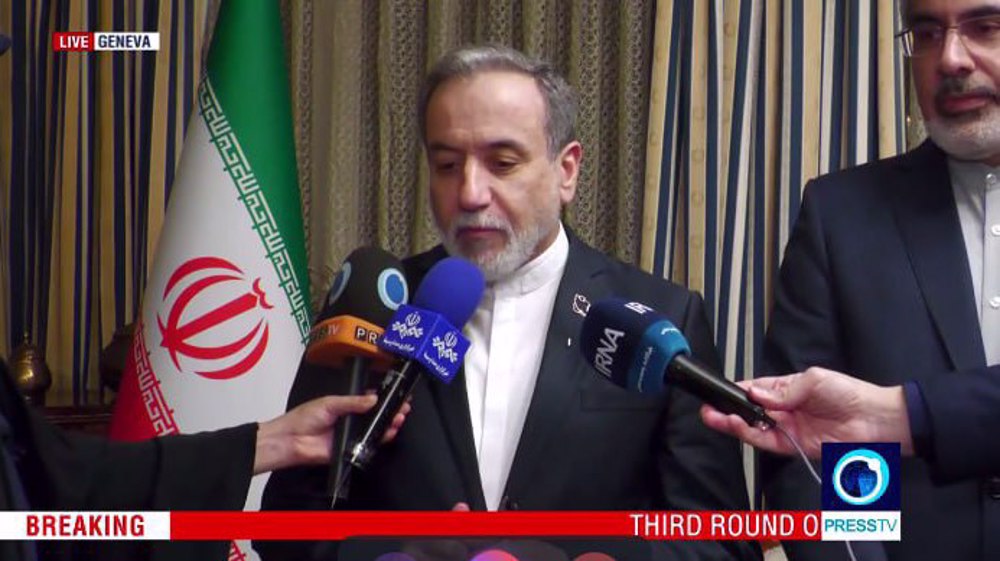
Iranian Foreign Minister Abbas Araghchi said the negotiations showed momentum.
“Further progress has been made in our diplomatic engagement with the United States,” he wrote on X following conclusion of the talks.
“This round of talks was the most intense so far. It concluded with the mutual understanding that we will continue to engage in a more detailed manner on matters that are essential to any deal-including sanctions termination and nuclear-related steps.”
He added that technical teams will meet in Vienna in the coming days, calling their role “as critical as ours,” while thanking Oman for its mediation and Switzerland for hosting the talks.
Earlier, Oman’s foreign minister said the negotiations had made “significant progress,” noting that discussions would continue before principals reconvene after consultations in their respective capitals.
The talks, held at a building belonging to the Omani Embassy, unfolded over hours with a pause for capital-level guidance, while UN nuclear watchdog chief Rafael Grossi relayed technical points between the sides.
 This makes it easy to access the Press TV website