Leaked emails reveal Epstein’s central role in pro-Israel causes in US
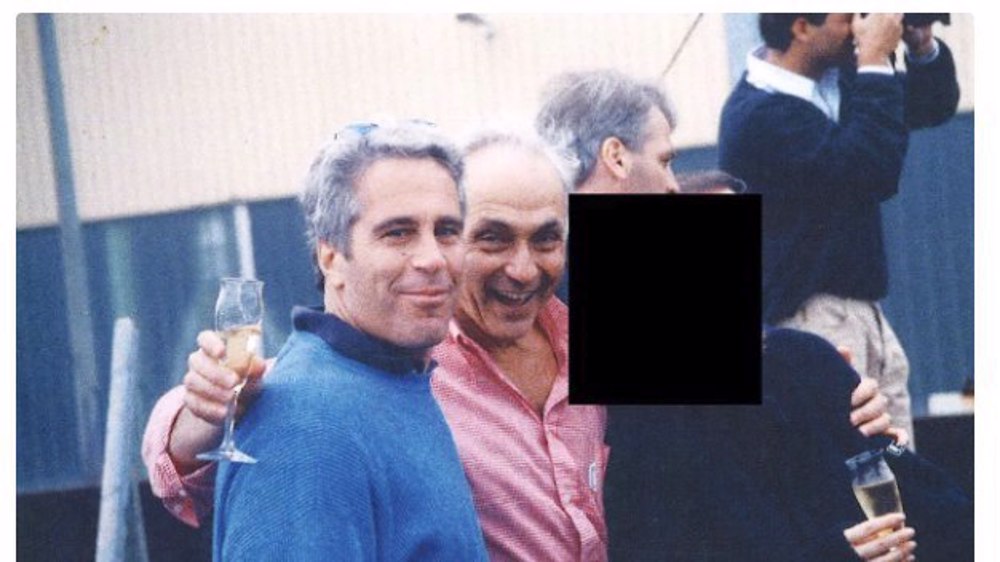
Newly leaked emails have revealed that Jeffrey Epstein, long known for his criminal exploits, played a far more central role in billionaire Leslie Wexner’s financial empire than previously acknowledged, directly influencing millions of dollars channeled to Israel-linked causes in the United States.
Between 2003 and 2018, the Wexner Foundation, one of the most powerful pro-Israel financial organizations in the US, donated over $128 million to various Jewish and Israeli causes, ranking it the third-largest donor during that period.
Although the foundation had previously claimed Epstein had “no meaningful role” in its finances, emails obtained by the whistleblower nonprofit Distributed Denial of Secrets, via Drop Site News, contradict that assertion.
NEW: New leaked emails show that Jeffrey Epstein sat at the head of a powerful financial empire built to funnel money to promote Israeli interests in the United States. Epstein had power of attorney over the fortune of billionaire Les Wexner; but his emails reveal he was also the… pic.twitter.com/IP3PvbEb85
— Murtaza Hussain (@MazMHussain) December 10, 2025
The emails, spanning 2005 to 2008, show Epstein acting as de facto chief financial officer for both the Wexner family office and the foundation, making decisions on taxes, lines of credit, large fund transfers, and politically sensitive grants.
Many communications were routed through Darren Indyke, Epstein’s personal lawyer and executor of his estate, who functioned as a “middleman,” shielding Epstein’s influence under attorney-client privilege.
Internal correspondence revealed Epstein’s control over the allocation of funds among Wexner family entities and the foundation, with the family’s financial controller routinely seeking Epstein’s approval before approving transfers, even after his supposed resignation as trustee in September 2007.
Epstein’s involvement extended to Wexner’s broader pro-Israel initiatives, including funding college Hillels, birthright trips, and Harvard’s Wexner Israel Fellowship, which sponsored Israeli officials on full scholarships.
Emails also revealed Epstein’s coordination with Wexner attorneys to execute large donations, including a $46 million transfer from Epstein-controlled entities to a new Wexner fund created for Abigail Koppel, named after her father, Yehuda Koppel, a figure linked to Israel’s founding military intelligence.
Despite Epstein’s 2008 guilty plea to soliciting a minor, correspondence indicated his continued discreet connection to Wexner’s business dealings, including outreach to global business leaders.

The foundation has defended its work as guided by “pure Zionistic motivations”, claiming that Epstein’s involvement did not represent undue influence.
The emails also shed light on political entanglements in Israel, as former prime minister Ehud Barak received $2.3 million from the foundation for writing and advisory work, drawing scrutiny from right-wing politicians who sought to link Barak and Epstein to perceived foreign interference.
The controversy reflects broader domestic battles over Israel’s political and philanthropic networks, with figures like Israeli prime minister Benjamin Netanyahu and Barak publicly disputing claims tied to Epstein.
Epstein’s deep integration into Wexner’s financial operations underscores the intricate interplay of personal wealth, and political influence, challenging previous narratives of his role and highlighting the broader global reach of his connections.
In 2019, shortly before Epstein’s death, Wexner characterized himself as a victim, acknowledging he had been “deceived” and that his trust in Epstein was “grossly misplaced,” a statement reflecting the tangled legacy of one of the most controversial figures in modern finance.

Israel has bombed Syria 600 times since HTS seized power: Report

New leader of Israeli-backed militia in Gaza tied to Daesh: Report
Iran urges decisive global action to end Israeli genocide, honor victims



Iran’s unstoppable ascent to global medical-tech dominance amid sanctions
US military deployment near Venezuela ‘dangerous precedent’: Pezeshkian
Pezeshkian heads to Central Asia for Kazakhstan, Turkmenistan visit
VIDEO | Press TV's news headlines
Iran protests to FIFA over provocative armband plan at soccer match in US
Discover Iran: A timeless journey through the enchanting alleys of Astarabad, Gorgan’s old city
VIDEO | Cambodians flee border towns as Thai-Cambodia clash enters third day
Leaked emails reveal Epstein’s central role in pro-Israel causes in US




 PressTV NEWSLETTER
now
PressTV NEWSLETTER
now

 This makes it easy to access the Press TV website
