
By Ivan Kesic
From heavy reliance on imports to becoming a global exporter of advanced medical technology, Iran’s medical equipment industry stands as a powerful testament to national resilience, scientific achievement, and strategic industrial planning.
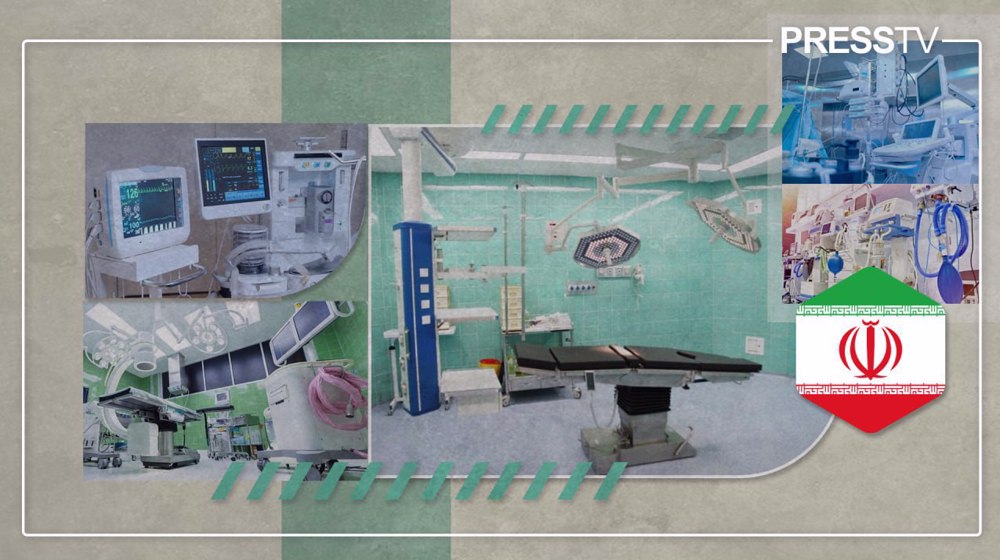
The medical tech sector now meets more than 85 percent of the country’s hospital needs and competes in international markets, exporting to over 60 countries across five continents.
By examining its foundational strategies, technological breakthroughs, and economic impacts, we understand how investment in human capital, innovation ecosystems, and quality-driven manufacturing forged a world-class domestic industry.
The journey highlights a transformative achievement in healthcare sovereignty, demonstrating how visionary policy and engineering excellence can converge to secure critical health infrastructure and project technological capabilities onto the global stage.
Strategic foundation: From necessity to national imperative
The evolution of Iran’s medical equipment sector began as a strategic response to global geopolitical realities, including unjust and illegal sanctions imposed on the country.
Faced with complex international sanctions that restricted access to advanced technology, Iran confronted a critical challenge to the integrity and continuity of its healthcare system.
This external pressure catalyzed a profound policy shift, turning vulnerability into a driver of indigenous innovation.
The focus moved from dependence on foreign supply chains to cultivating domestic capacity, ensuring that national health would never hinge on external political currents.
What began as urgent efforts to maintain and reverse-engineer existing equipment soon coalesced into a coherent, long-term strategy championed at the highest levels of government and academia.
This unified vision positioned self-sufficiency in medical technology not merely as an industrial objective but as a fundamental pillar of national security and public welfare, laying the groundwork for decades of focused development.
Did you know that Iran is globally ranked 4th in the engineering of medical devices? pic.twitter.com/QhJLqyv3p1
— Press TV 🔻 (@PressTV) February 5, 2022
Cultivating innovation: Engine of human capital and knowledge-based growth
At the heart of Iran's medical-technology renaissance lies its most valuable resource: a vast, highly educated pool of scientific and engineering talent.
The country’s strong network of universities and technical institutes produces one of the world’s largest annual cohorts of graduates in fields central to biomedical engineering, including electrical engineering, software development, mechanical engineering, and materials science.
This human capital has been strategically directed into the medical sector through the creation of specialized university departments, forging direct links between academic research and clinical application.
Institutions such as the Vice-Presidency for Science, Technology, and the Knowledge-Based Economy have further strengthened this ecosystem by cultivating a supportive environment for innovation.
Through technology parks, innovation grants, and targeted incentives, these bodies have empowered a dynamic generation of entrepreneurs.
Today, more than 65 percent of companies active in the sector are classified as knowledge-based firms – many emerging from university incubators and growth centers – forming the agile, innovative core of the industry’s expansion.
Manufacturing ascent: Mastering the spectrum from basics to high-tech
The industry’s growth trajectory reflects a steady and impressive climb up the technological ladder, achieving expertise across the full spectrum of medical-device manufacturing.
Early milestones came with high-volume consumables and basic equipment such as surgical instruments, hospital beds, syringes, and sterilizers, reaching near-total self-sufficiency.
This foundational success provided both capital and manufacturing know-how for a transition into sophisticated electro-medical devices.
Iranian factories soon began producing a broad range of advanced equipment, including patient vital-sign monitors, ultrasound machines, electrocardiographs (ECGs), anesthesia machines, and infant incubators. Domestic production rates for ICU and operating-room equipment now exceed 85%.
The most significant breakthroughs have been the indigenization of high-end diagnostic and therapeutic systems. Iranian engineers now design and manufacture 1.5-Tesla MRI machines, CT scanners, digital radiography systems, linear accelerators for radiotherapy, and advanced hemodialysis machines.
This comprehensive capability ensures that Iranian healthcare providers benefit from consistent, reliable access to critical medical technologies.
🇮🇷 “85% of hospital devices in Iran are now locally made,” says the CEO of a medical equipment company, underscoring how Iran’s medical equipment industry has grown since the 1979 Islamic revolution. #IranFirst🇮🇷 pic.twitter.com/dAQrz0xMyG
— Iran First (@IranFirst_PTV) December 7, 2025
Crisis as catalyst: Resilience during the COVID-19 pandemic
The true resilience and strength of Iran's medical equipment industry became evident under the immense pressure of the global COVID-19 pandemic, starting in early 2000.
At a time when even advanced countries were struggling to secure essential equipment, Iran’s domestic manufacturers demonstrated remarkable responsiveness and scalability.
Confronted with an urgent national need for advanced intensive-care ventilators, knowledge-based companies such as Poyindegan Rah Saadat executed a monumental production pivot.
They expanded their planned annual output from 100 ICU ventilators to an astonishing 3,000 units, achieving a monthly production rate of 500 devices.
At the same time, factories across the country rapidly increased production of vital-sign monitors, PCR testing kits, and digital imaging systems.
This swift mobilization ensured that healthcare workers had the equipment they needed to confront the crisis. What could have been a period defined by global shortages instead became a powerful demonstration of industrial resilience and strategic preparedness that helped safeguard public health.
Global footprint: Exporting excellence to international markets
The quality and competitiveness of Iranian medical equipment have extended far beyond national borders, securing a growing and respected presence in global markets.
Iran now exports domestically manufactured medical devices to more than 60 countries across Asia, Europe, Africa, and Latin America, with key destinations including Iraq, Turkey, Oman, Russia, India, and several European nations.
Its export portfolio is diverse, covering vital-sign monitors, defibrillators, dental equipment, laboratory apparatus, precision surgical instruments, and dialysis machines.
This international success rests on a strong value proposition: Iranian products deliver performance and quality comparable to global brands at significantly more competitive prices, often 30-40% lower, supported by reliable after-sales service.
Iran’s expanding global reach is further demonstrated by strategic international partnerships. Iranian companies have established production lines and technology-transfer agreements in countries such as Malaysia, Belarus, Sweden, Turkey, and Indonesia, with products marketed under both Iranian and European brand names.
🇮🇷 Iran as the medical tourism hub of West Asia with advanced healthcare system — despite decades of illegal sanctions #IranFirst🇮🇷https://t.co/a8mvVyrVAv
— Iran First (@IranFirst_PTV) December 5, 2025
Institutional synergy: Framework of policy and quality assurance.
The sector’s success is anchored by a synergistic framework of supportive government policy and rigorous quality assurance.
Strategic procurement policies for public healthcare institutions have created a stable and predictable demand for domestically produced equipment, giving manufacturers the confidence to invest in long-term research and development.
At the same time, a robust national regulatory system, overseen by Iran’s Food and Drug Administration (IR-FDA), ensures that all medical devices meet stringent international standards for safety, efficacy, and performance.
Iranian manufacturers actively seek and obtain globally recognized certifications, including the European CE mark and ISO 13485. These credentials not only validate product quality for the domestic market but also serve as essential gateways for international export.
This dual emphasis on strategic support and uncompromising quality control has been pivotal in cultivating trust among both domestic healthcare professionals and international buyers, helping transform the “Made in Iran” label into a symbol of reliability in the medical technology sector.
Economic and strategic dividends: Sovereignty, jobs, and innovation
The phenomenal rise of the country’s medical equipment industry has generated significant economic and strategic gains for it in recent years.
Economically, it marks a major milestone in import substitution, saving billions of dollars in foreign currency each year while nurturing a thriving, high-value industrial sector.
The industry is also a substantial employer, providing high-skilled jobs for more than 35,000 engineers, technicians, and specialists, with continued growth forecast for the coming years.
Strategically, the sector underpins what is often described as healthcare sovereignty, ensuring that the nation’s medical infrastructure remains functional, modernizable, and resilient, independent of foreign political or economic pressures.
This self-reliance shields the health system from global supply-chain disruptions and ensures that Iranian biomedical engineers and technicians train on, and innovate within, a familiar technological ecosystem.
The result is a virtuous cycle of continuous domestic improvement, adaptation, and innovation.
✍️ Iran First - Healing through innovation: How Iran became a global powerhouse in nuclear medicine
— Press TV 🔻 (@PressTV) November 27, 2025
By @kesic_ivan https://t.co/6Krfxa7Pgq pic.twitter.com/8hdcBdQ4wO
Vision for the future: A regional hub of medical technology
Bolstered by its current achievements, Iran’s medical equipment industry is poised for an even more ambitious future, guided by a clear vision of becoming a leading regional hub for medical technology.
Frontier innovations are already taking shape within the country’s knowledge-based companies, including the integration of artificial intelligence for diagnostic imaging, the use of 3D printing for custom prosthetics and surgical guides, and the development of advanced remote patient-monitoring systems.
The ongoing expansion of a sophisticated domestic supply chain for components and materials further strengthens the industry’s foundation and enhances its capacity for innovation.
With continued investment in research and development, more proactive international marketing, and the ongoing cultivation of exceptional engineering talent, Iran is strategically positioned not only to preserve its self-sufficiency but also to emerge as a key contributor to the next generation of medical technology—both regionally and globally.
In this trajectory, a narrative of national resilience evolves into one of meaningful global technological contribution.
 This makes it easy to access the Press TV website