New US security strategy: From global policeman to Western Hemisphere enforcer
By Maryam Qarehgozlou
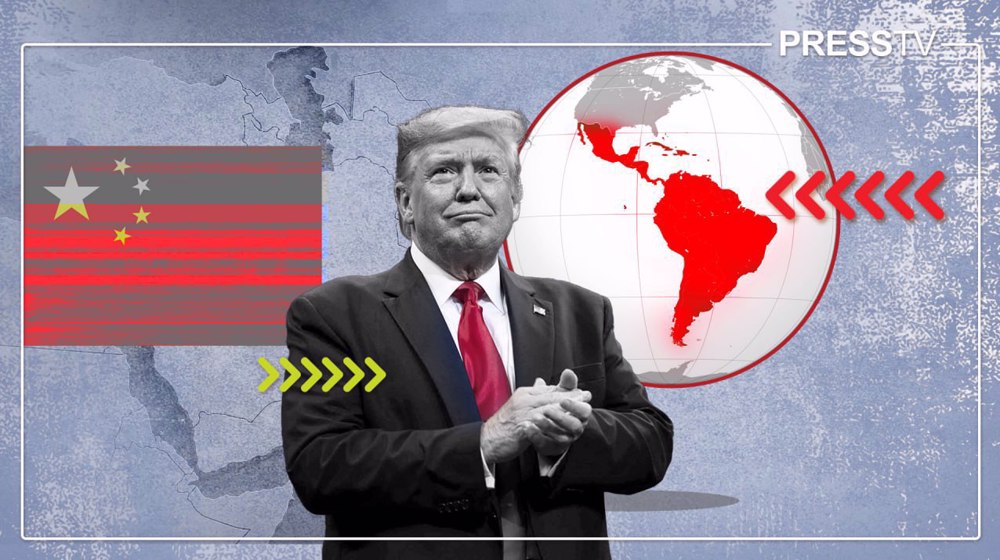
The new US National Security Strategy (NSS) harshly rebukes American allies in Europe and vows to tighten Washington’s grip over the Western Hemisphere, while scaling back the emphasis on China and West Asia that dominated previous assessments.
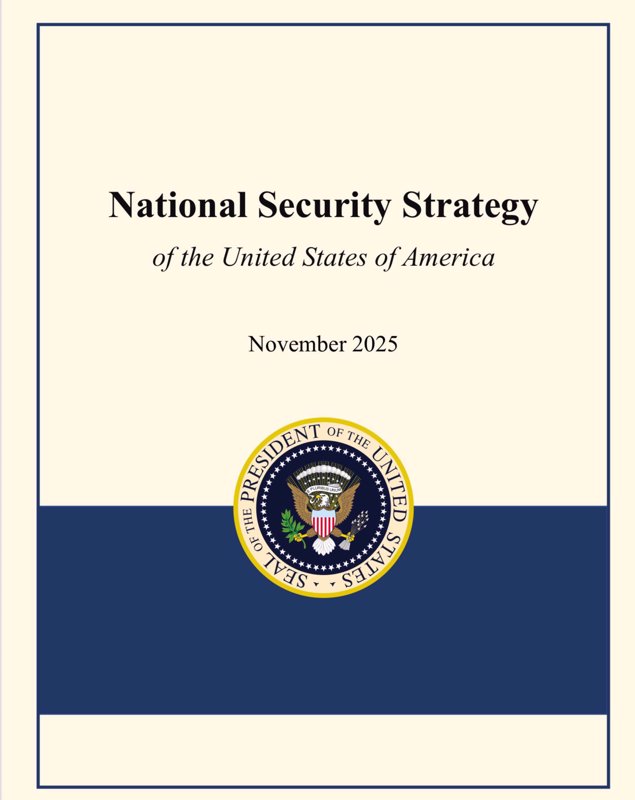
The 33-page document, released on December 4 — and rooted in Donald Trump’s “America First” doctrine — signals a dramatic break from the 2022 NSS issued under the Joe Biden presidency.
Under the Biden administration, China was explicitly labeled the primary foreign-policy challenge, with Washington loudly backing Taiwan, the self-governed island belonging to China under the “One China” policy.
It also frames the resolution of the Russia–Ukraine war as a central US interest, while directing notably harsher language at long-standing European allies than at Russia itself — a sharp reversal from Trump’s first term, when Moscow was described as a major geopolitical rival.
The National Security Strategy Trump released during his first term eight years ago — along with the accompanying National Defense Strategy — laid the groundwork for Washington’s aggressive shift in foreign policy, entrenching great power competition with China and Russia and framing global relations through a confrontational lens.
Among other priorities, in this document, the White House calls for a major readjustment of US military posture, pulling forces away from West Asia to concentrate on securing what it describes as "American interests" and expanding military operations across the Western Hemisphere under the guise of fight against narcotics.
Such strategies, typically issued once per presidential term, provide a roadmap for how the US government allocates budgets and sets policy priorities.
Following is a breakdown of the strategy and its clear departure from previous norms.
‘Multipolar world finally emerges’: Trump’s ‘National Security Strategy’ sparks online buzzhttps://t.co/1VAInnK2mU
— Press TV 🔻 (@PressTV) December 7, 2025
On China
The last two National Security Strategies, including the one released during Trump’s first term in the White House, elevated competition with China as Washington’s overriding priority, turning Beijing into the central rival in America’s self-declared global power struggle.
But in this latest NSS, rivalry with Beijing is conspicuously sidelined from the list of primary priorities, signaling a quiet retreat from years of confrontational rhetoric that proved counter-productive.
China is no longer defined as “the primary threat,” “most consequential challenge,” “pacing threat,” or similar alarmist labels that dominated previous US strategic documents.
Strikingly, the document strips away almost all ideological framing around China.
There is no “democracy vs. autocracy” narrative, no talk of defending a so-called “rules-based international order,” and no values-based crusade — only raw strategic and economic calculation.
China is mentioned only sparingly, and almost exclusively through the narrow prism of economic relations and the Taiwan question, though not as aggressively as in the past.
Competition with China is framed largely in economic terms, and explicitly so. The document states that the struggle is about “winning the economic future” and that economics are “the ultimate stakes.”
Even while attacking China’s trade practices, the document calls for “a genuinely mutually advantageous economic relationship with Beijing,” echoing the conciliatory trade truce Trump and Chinese President Xi Jinping announced in October.
Notably, the document admits that the tariff strategy “that began in 2017” essentially failed, acknowledging that “China adapted” and has “strengthened its hold on supply chains.”
Rather than demonstrating strength, the new strategy effectively concedes that the US can no longer confront China on its own, proposing the construction of an economic coalition to exert leverage that the US economy alone no longer possesses — an implicit admission of waning American power.
To advance this effort, the document stresses the need to enlist Asian allies as counterweights to Beijing, singling out India as a key pillar of this strategy.
“We must continue to improve commercial (and other) relations with India to encourage New Delhi to contribute to Indo-Pacific security,” it states.
The document outlines the risks of China seizing Taiwan by force, yet it reduces Taiwan’s strategic value to its role in semiconductor production and control of critical shipping lanes.
It also acknowledges the mounting possibility of being militarily outmatched by China, stating that “deterring a conflict over Taiwan, ideally by preserving military overmatch, is a priority.”
The word “ideally” is revealing, signaling that such dominance is no longer assumed — merely aspirational.
The fact that deterring conflict over Taiwan is described as merely “a priority” further suggests it is no longer treated as a top strategic imperative or vital national interest.
The new strategy also pressures Indo-Pacific allies to shoulder a greater share of the burden in deterring potential conflict with China in the Taiwan Strait.
It warns that if the US’s “First Island Chain allies” do not “step up and spend - and more importantly do - much more for collective defense,” there could be “a balance of forces so unfavorable to us as to make defending that island impossible.”
However, as Arnaud Bertrand, an entrepreneur and commentator on economics and geopolitics, pointed out, there is an “obvious contradiction” at the heart of this approach.
“[It is] unclear how you build an economic coalition against China while simultaneously waging trade wars against your coalition partners, demanding they shoulder more of their own defense, and treating every allied relationship as a deal to be renegotiated in America’s favor,” he wrote in a post on X.
“At some point these 'allies' will be asking a very obvious question: why sacrifice our economic interests to prop up an America that can no longer compete on its own - and that offers us less and less in return."
Hemispheric dominance
In the new strategy, Washington’s pivot back toward the Western Hemisphere (the Americas) is confirmed, entrenching a doctrine of regional dominance disguised as national self-defense.
The document places an unusually heavy emphasis on the Western Hemisphere, casting the entire region primarily through the prism of "protecting" the US homeland.
It says that “border security is the primary element of national security,” while making thinly veiled references to Chinese attempts to gain strategic footholds in what it openly treats as America’s “backyard.”
“The United States must be preeminent in the Western Hemisphere as a condition of our security and prosperity — a condition that allows us to assert ourselves confidently where and when we need to in the region,” the document states.
“The terms of our alliances, and the terms upon which we provide any kind of aid, must be contingent on winding down adversarial outside influence — from control of military installations, ports, and key infrastructure to the purchase of strategic assets broadly defined.”
It frames these ambitions as part of a “Trump Corollary” to the Monroe Doctrine — the 1823 policy articulated by President James Monroe, under which the US declared it would not tolerate malign foreign European interference in its own hemisphere.
To carry out this approach, the strategy lays out plans to enlist regional partners — including governments aligned with US “principles and strategy” and others with divergent outlooks but shared interests — to help “control migration, stop drug flows, and strengthen stability and security on land and sea.”
It also calls for shifting US military resources away from other parts of the world and concentrating them in the Western Hemisphere “to address urgent threats,” signaling a return to gunboat diplomacy under modern branding.
In practice, the US has already assembled its largest military deployment in the Americas in decades, waging what Trump claims - without any evidence - war against "drug cartels."
Since early September, US forces have conducted more than 20 lethal strikes on vessels in the Caribbean, killing more than 87 people in the Caribbean Sea and Atlantic Ocean.
At the same time, the administration has sharply escalated pressure on Venezuela, whose left-wing president, Nicolás Maduro, has been falsely accused of drug-trafficking, openly threatening that land-based military strikes could come “very soon.”
Maduro has repeatedly denounced Washington’s ulterior motives, slamming the US for seeking "regime change" in Caracas and access to Venezuela’s vast oil wealth.
Trump has also put his hemispheric strategy into action by openly backing right-wing political forces across Latin America, including pledging $40 billion loan to Argentina's President Javier Milei.
Late last month, he dramatically inserted himself into Honduran politics, first endorsing presidential candidate Nasry “Tito” Asfura of the conservative National Party, and then announcing the pardon of former president Juan Orlando Hernández — also of the same party — who had been sentenced to 45 years in a US prison for facilitating the trafficking of vast quantities of cocaine.
Salvador Nasralla, the centrist candidate in Honduras’s presidential election, publicly lashed out at Trump for election interference and branding him a “borderline communist.”
The US president has previously threatened to cut off aid to Honduras if Asfura did not win, and warned there would be “hell to pay” if officials tampered with election results.
According to the latest reports, election authorities said they had counted 87 percent of the ballots, with 17 percent flagged for “inconsistencies” and placed under review, Reuters reported.
Polling data on Thursday gave Asfura a narrow lead of 40.27 percent against Nasralla’s 39.38 percent, though analysts say the outcome remains highly uncertain.
Authorities have until December 30 to submit their final results, Reuters reported.
Kremlin welcomes US removal of Russia as ‘direct threat’ from National Security Strategy https://t.co/tBdxTnOaGf
— Press TV 🔻 (@PressTV) December 7, 2025
West Asia no longer top strategic priority
The new strategy document asserts that West Asia is no longer a central focus of US strategic thinking, signaling a downgrade of the region’s importance in Washington’s shifting global priorities.
It claims that the traditional factors that once made the region a cornerstone of American foreign policy — energy production and entrenched conflict — “no longer hold,” despite decades of US military, political, and economic intervention that helped shape those very dynamics.
While openly acknowledging its continued interest in the region’s vast natural resources, the strategy says that as US domestic energy production expands, “America’s historic reason for focusing on the Middle East will recede.”
The document also downplays the Israeli regime's destabilization in West Asia, claiming violence is subsiding and pointing to the fragile ceasefire in Gaza, while simultaneously justifying and defending its own unlawful attacks on Iranian nuclear sites in June — strikes it baselessly claimed “significantly degraded” Tehran’s peaceful nuclear programme.
“Conflict remains the Middle East’s most troublesome dynamic, but there is today less to this problem than headlines might lead one to believe,” reads the document.
At the heart of the document’s approach is not disengagement but recalibration: it envisions increased investment and deeper economic penetration of the region, claiming that West Asia will “increasingly become a source and destination of international investment, and in industries well beyond oil and gas— including nuclear energy, AI, and defense technologies.”
The strategy goes so far as to depict the region as “emerging as a place of partnership, friendship, and investment,” masking the reality of war, occupation, and foreign-backed instability with the language of commercial opportunity.
In reality, West Asia remains engulfed in ongoing crises and violence, much of it driven by the Israeli regime and sustained by consistent military and diplomatic support from the United States.
Despite the so-called ceasefire in Gaza, near-daily Israeli attacks have continued unabated, killing hundreds of Palestinians since the truce went into effect on October 10.
In the occupied West Bank, settler and military raids against Palestinian communities have escalated, deepening an already entrenched system of repression and displacement.
Israel has also intensified its airstrikes on Lebanon, heightening fears of another full-scale military assault aimed at disarming and dismantling the Hezbollah resistance movement.
In Syria, a year after the collapse of the government of former President Bashar al-Assad, Israel has continued incursions and airstrikes in an effort to expand its military dominance in southern Syria beyond the occupied Golan Heights.
The United States itself remains deeply entrenched in the region, maintaining an active military footprint across Syria, Iraq, and the Persian Gulf.
The NSS openly concedes that Washington continues to view the region as strategically vital, prioritizing the “security of Israel” and the protection of energy flows and shipping lanes — core interests that have long driven US interventionism.
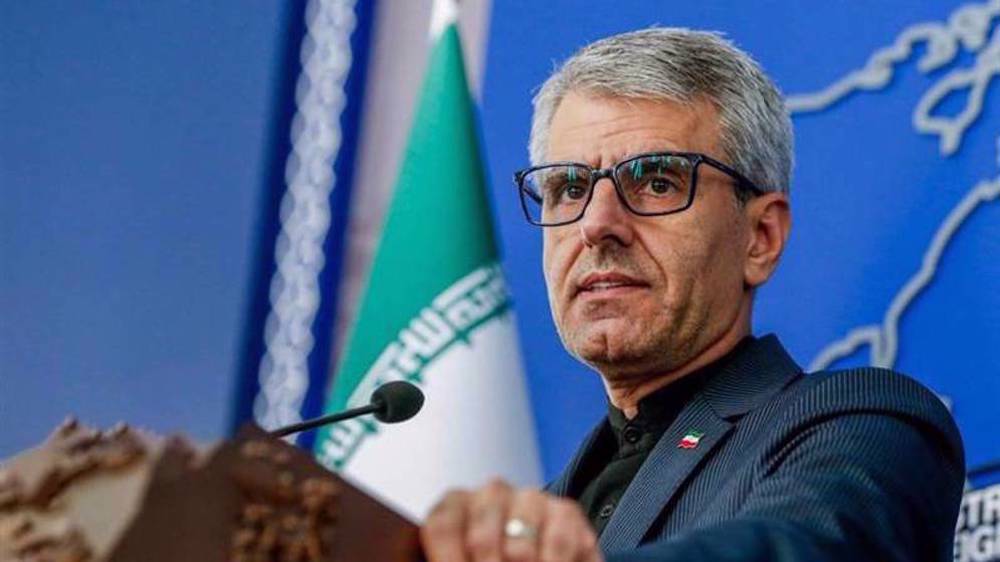
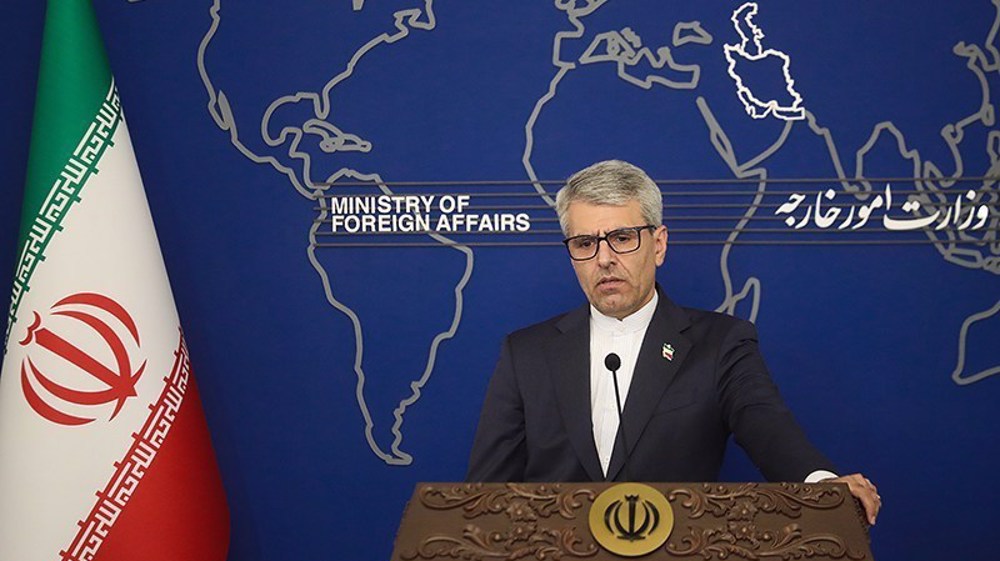
Iranian Foreign Ministry spokesman Esmaeil Baghaei said on Sunday that the new US National Security Strategy is effectively a security blueprint for the Israeli regime, making no mention of the rights of the Palestinian people.
The document also pledges to end “America’s misguided experiment with hectoring” Persian Gulf monarchies such as Saudi Arabia and the United Arab Emirates (UAE) into “abandoning their traditions,” signaling a return to uncritical partnerships with authoritarian allies.
Trump has built significant personal financial interests in the region and earlier this year toured several West Asian states.
He later hosted Saudi Crown Prince Mohammed bin Salman at the White House in his first visit since the killing of American journalist Jamal Khashoggi, an event that sparked international condemnation.
During that meeting, Trump openly signaled his willingness to overlook grave human rights violations, dismissing the brutal murder and dismemberment of the Washington Post columnist in 2018 with the phrase “things happen.”
Iran says new US National Security Strategy is effectively written for Israelhttps://t.co/b3XTBEuBzM
— Press TV 🔻 (@PressTV) December 7, 2025
Sharp criticism of Europe
The strategy reserves some of its harshest language for Europe, portraying the continent as facing “civilizational erasure” due to immigration and criticizing its mainstream leaders for presiding over societal collapse.
It asserts that the US will actively cultivate “resistance” to Europe’s political establishments, saying that many European governments “trample on basic principles of democracy to suppress opposition,” even as Washington itself faces growing condemnation over its democratic backsliding at home.
These positions sparked immediate backlash from European officials.
Carl Bildt, a former Swedish prime minister, posted on social media that the National Security Strategy “places itself to the right of the extreme right in Europe.”
In February, Vice President JD Vance castigated German officials for attempting to curb the rise of the country’s far-right party.
This rhetoric comes as Trump has moved aggressively to stifle speech critical of Israel within the us and directed the Department of Justice to target his domestic political opponents.
The document also attacks European leaders’ “unrealistic expectations” regarding the war between Russia and Ukraine, while asserting that Washington has a “core interest” in ending it on its own terms.
Notably, the document offers little direct criticism of Moscow, which experts see as another sign of Trump's submission to the rapidly growing new world order dominated by emerging economies.
A US-backed proposal to end the war — which would allow Russia to retain large swaths of eastern Ukrainian territory — drew rare public criticism from some European leaders last month.
The strategy also signals that Washington may roll back the security umbrella it has long extended over Europe.
Instead, it says the US would focus on “enabling Europe to stand on its own feet and operate as a group of aligned sovereign nations, including by taking primary responsibility for its own defense, without being dominated by any adversarial power,” the NNS reads.
It further suggests that “Over the long term, it is more than plausible that within a few decades at the latest, certain NATO members will become majority non-European.”
Reuters reported on Friday that the United States has set a 2027 deadline for NATO’s European members to assume greater responsibility for the bloc’s defense capabilities, including intelligence gathering and missile production.
According to the report, Pentagon officials warned multiple European delegations this week that failure to meet the 2027 deadline could result in the US scaling back participation in certain NATO defense activities.
journalist Kit Klarenberg, in a post on X, said the document’s stated goal of “ending the perception, and preventing the reality, of NATO as a perpetually expanding alliance” will infuriate the British government.
“NATO is a key mechanism by which Britain - impoverished, militarily defenceless, geopolitically irrelevant - maintains its illusions of being a global power, and their preponderant position within NATO does grant them outsized and unseen influence over members, including the US,” he wrote.
The bottom line
According to the new NSS, a “Trump Corollary” to the Monroe Doctrine now anchors US grand strategy across the region and the world.
China is downgraded from an existential threat to an economic competitor, and deterrence over Taiwan is framed as “ideal” but conditional on allies paying their share.
While the Indo-Pacific is treated as secondary, the Western Hemisphere and the US homeland are placed firmly at the top of Washington’s priorities.
The US is no longer presenting itself as a global crusader for democracy, abandoning even the rhetorical pretense of exporting values or imposing political models abroad.
Tariffs are quietly acknowledged as a failure, with focus shifting toward multilateral economic pressure instead.
Experts describe this as the most significant strategic pivot since 1945: a shift from global policeman to a fortified, hemisphere-focused power.
Under this framework, allies are expected to shoulder more of the financial and security burden, while the US concentrates on rebuilding itself at home.
Iran dismisses Trump claim it sought ceasefire as 'false and baseless'
Qalibaf to Trump: Any strike on Iran will trigger decisive retaliation
$700M AWACS bites the dust: Iranian strike ends US air dominance over Persian Gulf



US war secretary fires two more generals amid failure of anti-Iran aggression
Pezeshkian urges intl. action on US-Israeli bombing of Iran’s health centers
Iran’s military vows to continue war until US, Israel ‘regret’ aggression
'For Helma': Iran drones bear orphan’s name as US pilot hideout decimated
Iran downs two advanced US jets, including second F-35
Iraq resistance strikes US bases in six operations over past 24 hours
US-Israeli aggression on Iran: What happened on 34th day of the imposed war
Yemeni forces carry out third joint ballistic missile strike on vital Israeli targets




 PressTV NEWSLETTER
now
PressTV NEWSLETTER
now

 This makes it easy to access the Press TV website
