Obituary: Prof. Abdulaziz Sachedina, a beacon of Islamic scholarship and interfaith dialogue
By Press TV Website Staff
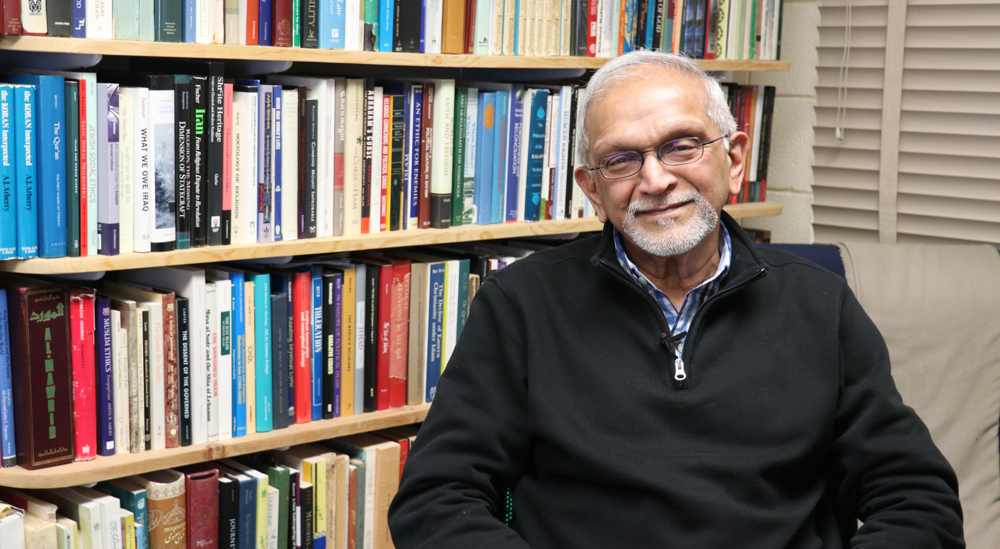
Professor Abdulaziz Abdulhussein Sachedina, one of the most influential contemporary Muslim scholars and intellectuals, passed away at the age of 83 earlier this week.
His death marks the loss of a towering figure in Islamic studies, whose groundbreaking work in Shia theology, bioethics, human rights, and interfaith dialogue left a profound and lasting impact on academia not only in the Muslim world but beyond that as well.
Born in 1942 in Tanzania into a Shia family of Indian descent, Prof. Sachedina’s multicultural upbringing profoundly shaped his worldview, according to those who knew him closely.
Growing up in East Africa, he was exposed early to questions of identity, tolerance, and coexistence, concerns that would later define his academic and personal journey.
As a teenager, he moved to India to pursue humanities studies at Aligarh Muslim University, a premier Muslim higher education institute in the city of Aligarh.
Eager to deepen his understanding of Islam and Shiism in particular, he then traveled to Iran, where he immersed himself in both seminary and university courses at Ferdowsi University of Mashhad as well as the seminary of Qom.
Among those he considered his friends was Dr. Ali Shariati, who was teaching Islamic history at the time. Their friendship continued until Dr. Shariati died in 1977.

This unique blend of traditional textual study and modern scholarly methods would become a hallmark of his intellectual approach in the later years.
Seeking to broaden his academic horizons further, Sachedina moved to Canada for graduate studies.
At the University of Toronto, he completed a doctoral dissertation on the development of Mahdism in Twelver Shiism, which later became the foundation of his seminal book, Islamic Messianism. This work remains a cornerstone in the study of Shiite messianic thought.
Launching his academic career in the 1970s, Professor Sachedina taught for over three decades at the University of Virginia, establishing himself as a leading authority in religious studies.
Later, he joined George Mason University as the International Institute of Islamic Thought (IIIT) Chair in Islamic Studies. His teaching portfolio was impressively broad, spanning Islamic theology across Sunni and Shia traditions, the history of Islamic thought, Islamic bioethics, human rights, religious pluralism, and comparative Qur’anic studies.
Sachedina’s scholarship was not confined to the classroom. He played a pivotal role in building intellectual institutions and fostering interfaith dialogue.
His contributions to medical ethics were notable, especially in areas involving end-of-life decisions, where he engaged in public discussions on euthanasia and the ethical complexities surrounding it. His involvement with academic and medical ethics committees further underscored his commitment to applying Islamic principles to contemporary challenges.

Among his many influential publications are Islamic Messianism: The Idea of Mahdi in Twelver Shi‘ism, The Just Ruler in Shi‘ite Islam, Islamic Biomedical Ethics, Islamic Roots of Democratic Pluralism, and Islam and the Challenge of Human Rights.
These works advanced Shia studies globally, pioneered Islamic bioethics as an academic field, and promoted a compassionate and principled understanding of Islam rooted in universal human values.
Prof. Sachedina was also a respected consultant on West Asian affairs in American academic circles, illustrating the practical relevance of his expertise. He often participated in conferences and TV shows to discuss globalization and the governance of Imam al-Mahdi (AS), further demonstrating his engagement with contemporary issues in Muslim thought.
Throughout his life, Prof. Sachedina tirelessly sought to bridge divides – between Islamic traditions and modern scholarship, between religious communities, and between faith and universal human rights.
His legacy is that of a scholar who combined deep religious knowledge with rigorous academic inquiry and a heartfelt commitment to coexistence and justice.
As the global academic community and scholars of Shia studies mourn his passing, his work will inspire new generations of thinkers and believers alike.
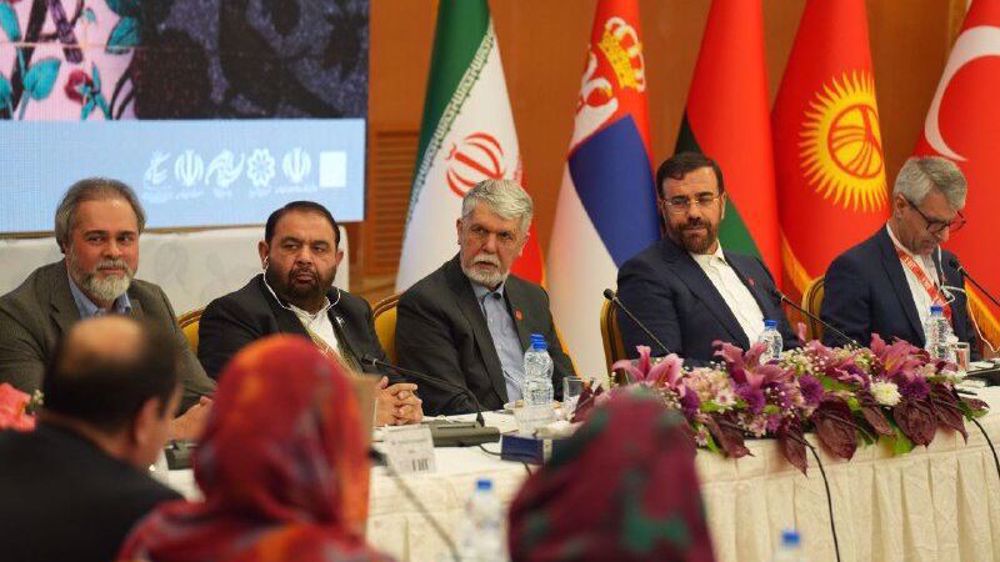
Pakistani culture minister urges joint film projects with Iran at Fajr Intl. Film Festival
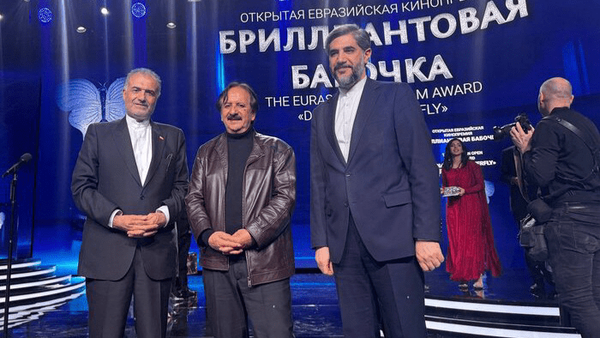
Majid Majidi wins special prize at first Open Eurasian Film Awards
Iran gains UNESCO approval for heritage and cognitive science initiatives



At least 110 Palestinians killed in Israeli prisons since Ben-Gvir took office: Report
Iran, Azerbaijan agree to continue consultations to settle conflicts: FM
Israel allocates $830 million to settlement expansion in West Bank
VIDEO | Japaneses rally against Takaichi's erroneous remarks regarding China's Taiwan
Obituary: Prof. Abdulaziz Sachedina, a beacon of Islamic scholarship and interfaith dialogue
Gaza is the ‘first genocide’ to stir global conscience: UN rapporteur
Official: 50 Iranian nationals jailed in US heading home
Iran says US denial of uranium enrichment rights remains main sticking point



 PressTV NEWSLETTER
now
PressTV NEWSLETTER
now

 This makes it easy to access the Press TV website
