Industrial giant cements Iran’s place among top steel producers

The Iranian steel industry has long been a cornerstone of the nation’s industrial growth, emerging as a significant player in the global market in the years following the 1979 Islamic Revolution.
Central to this transformation is Mobarakeh Steel Company in Esfahan, the largest steel producer in Iran and West Asia, which has played a pivotal role not only in meeting domestic demand but also in positioning Iran as a prominent exporter of steel in an increasingly competitive global marketplace.
The establishment of Mobarakeh Steel in the immediate aftermath of the revolution laid the groundwork for Iran’s steel industry, which has since become one of the most developed sectors in the country.
Despite the difficulties in the years following the revolution, the company rapidly grew into a strategic industrial giant, contributing significantly to the national economy.
Over time, Mobarakeh expanded its production capacity and cemented its role as the driving force behind Iran’s position as the world’s 10th largest steel producer.
This achievement is particularly notable given the obstacles the country has faced, including economic constraints stemming from illegal Western sanctions.
The fact that Iran’s steel sector has flourished despite such challenges underscores the strides made in industrial self-sufficiency and resilience.
Mobarakeh’s influence extends beyond domestic supply, with its products reaching global markets and contributing to Iran’s export revenues.
Producing over 40% of the country’s total steel output, the company plays a central role in supplying materials to sectors ranging from automotive manufacturing to construction, both within Iran and abroad.
By 2023, Mobarakeh was responsible for a substantial portion of Iran’s steel exports, sending products to more than 40 countries across Europe, Asia, and the Middle East.
This export activity helps stabilize Iran’s foreign exchange reserves and provides a steady stream of revenue that is increasingly important amid fluctuating oil prices and global economic volatility.
Through its export strategy, Mobarakeh supports not only Iran’s economic growth but also its geopolitical influence as a key industrial player in the region.
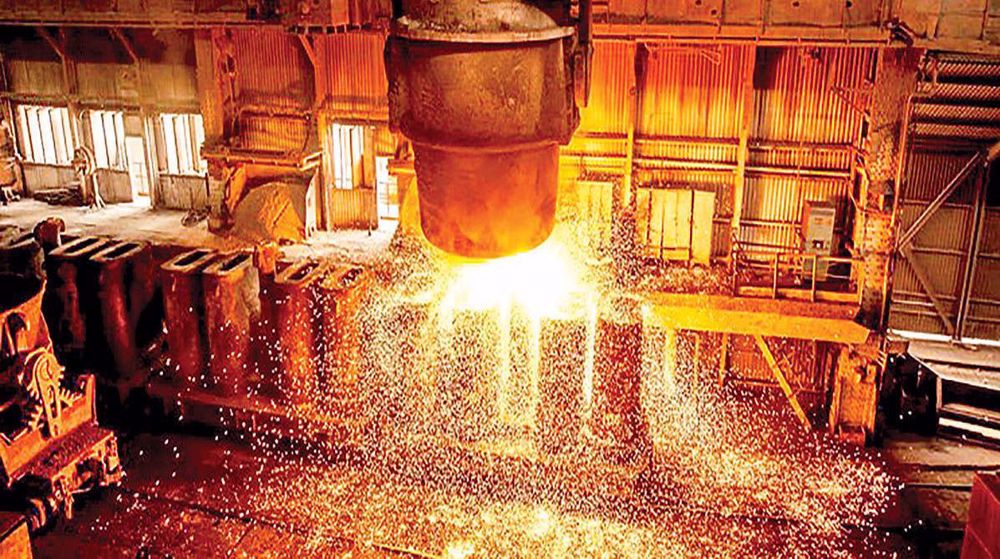
A defining feature of Mobarakeh’s success is its focus on achieving self-sufficiency in raw material production.
It stands as the world’s largest producer of direct-reduced iron (DRI), a critical input for steel manufacturing, with an annual capacity that ranks it among the global steelmaking leaders.
With 27% of Iran’s iron ore sponge production and 13% of its pellet production, Mobarakeh has built an integrated supply chain that maximizes operational efficiency and enhances competitive advantage.
This vertical integration safeguards the company against the volatility of global iron ore prices and supply disruptions.
In addition to scale, technological advancement has been central to Mobarakeh’s position as one of the region’s most advanced steel producers.
Investments in modern steelmaking technologies and energy-efficient processes have enhanced product quality while promoting environmental sustainability.
For example, the company’s commitment to water recycling and energy-saving initiatives reduces resource consumption, setting a high standard for environmental responsibility in an industry traditionally associated with heavy energy use.
Mobarakeh’s sustainability agenda is further reinforced by its bold investments in renewable energy. The company’s 600 MW solar power project aims to position Mobarakeh as a leader in solar energy within Iran’s industrial sector.
Energy security remains a priority beyond renewables. Mobarakeh operates a 914 MW combined-cycle power plant, ensuring stable electricity supply for its production processes in a country where energy shortages often affect industrial output.
These strategic investments reflect a comprehensive energy strategy aimed at securing long-term operational resilience.
Beyond its industrial contributions, Mobarakeh is a major source of employment. The Iranian steel industry supports an estimated 2 million jobs nationwide, with Mobarakeh alone responsible for over 380,000 direct and indirect jobs.
The company’s employment footprint spans urban and rural areas, fostering social stability and economic inclusion.
Its investments extend into community welfare through infrastructure projects, including water resource management, wastewater treatment, and health facilities, reinforcing its role as a key socio-economic actor.
Looking ahead, the sector’s resilience will be tested and strengthened further by the upcoming second National Conference on Resilience in the Iron and Steel Supply Chain, scheduled from September 3 to 6 in Esfahan.
This event will coincide with the 17th Metalex Exhibition and will bring together 158 domestic companies alongside representatives from China, Russia, Turkey, Italy, and Germany.
Organized by the Chamber of Commerce and Mobarakeh Steel, the conference offers a critical forum for industry players to address supply chain vulnerabilities, share innovations, and foster international cooperation.
The convergence of this conference with Metalex underscores the growing emphasis on technological advancement and supply chain integration in securing the future of Iran’s steel industry.
International participation signals the sector’s openness to collaboration and technology exchange despite the geopolitical challenges facing the country. The event reflects a broader strategic vision to reinforce industrial resilience in the face of global supply chain disruptions and economic sanctions.
Iran’s steel sector, anchored by Mobarakeh’s leadership, exemplifies how industrial self-reliance, technological innovation, and strategic energy management can drive growth and sustainability.
In an era marked by global uncertainty, the resilience displayed by the steel industry offers a compelling narrative of industrial ambition and adaptability.
As the nation prepares to gather its steelmakers and international partners this September in Esfahan, the message is clear: Iran’s steel industry remains a vital economic pillar and a symbol of enduring national resilience.
Iran’s mega water transfer and coastal industrial pivot
Iran’s economy expands slightly in H1 calendar year
Iran opens major seawater transfer project to Isfahan



Iran inflicted ‘heavy, extensive’ losses on Israel during 12-day war: Diplomat
Official: Over 80,000 Israeli troops treated for psychological disorders since Gaza war
Iranian media’s global, narrative-shaping reach – acknowledged by Israeli ‘think tanks’
At least 110 Palestinians killed in Israeli prisons since Ben-Gvir took office: Report
Iran, Azerbaijan agree to continue consultations to settle conflicts: FM
Israel allocates $830 million to settlement expansion in West Bank
VIDEO | Japaneses rally against Takaichi's erroneous remarks regarding China's Taiwan
Obituary: Prof. Abdulaziz Sachedina, a beacon of Islamic scholarship and interfaith dialogue


 PressTV NEWSLETTER
now
PressTV NEWSLETTER
now

 This makes it easy to access the Press TV website
