Iranian media’s global, narrative-shaping reach – acknowledged by Israeli ‘think tanks’
By Sheida Eslami
“Iran, with dozens of multilingual networks – from English and Spanish to Arabic and Hausa – exerts influence across the world, and even under financial pressure, there will be no shortage of money for these activities. Press TV, Al-Alam, HispanTV, and HausaTV are Iran’s instruments of influence on the global community – so much so that Britain and Germany consider them tools used by Tehran to shape public opinion.”
These are the words of Danny Citrinowicz, former head of the Iran section in Israeli military intelligence (Aman), spoken in a Hebrew-language media interview conducted after the publication of his recent written report at the Israeli Institute for National Security Studies (INSS), which shows that the institution backing him, even after issuing that official report, is still explaining and justifying why the Zionist regime has failed to contain Iran’s soft power.
Citrinowicz’s new verbal admission – continuing the line of his INSS report – emphasizes clearly that under any circumstances, Iran will never stop trying to preserve and maintain its overseas networks, because the very essence of the Islamic Republic’s media strategy is a presence in global societies and breaking the barrier of monopoly, boycott, and media censorship – the very reality that Tel Aviv fears more than anything else.
The publication of Citrinowicz’s recent article about the Islamic Republic of Iran Broadcasting’s (IRIB) overseas media networks is, in fact, a sign of cognitive anxiety and strategic fear within the Zionist regime toward the expansion of Iran’s soft power and growing cultural influence.
And when we place all his recent remarks and writings next to the Press TV report broadcasts – showing European demonstrators expressing affection and positive sentiments toward the respected Iranian news channel during a pro-Palestine rally aired a few days ago – the reason for his outspoken insistence on sensitizing Zionist-aligned structures in Western countries, especially the United States, against Iran’s English-language network, becomes even clearer.
Citrinowicz, now a senior researcher in the “Iran and the Shia Axis Program” at the INSS and a former 25-year commander in various sectors of the Israeli military intelligence, including as head of the Iran section in the Research and Analysis Division (RAD), and also as RAD’s representative in the United States, admits in his report, albeit wrapped in cautious wording but unmistakably, that Iran’s media structure has expanded far beyond a normal state broadcaster and has become a global, discourse-producing organization resistant to Western narrative hegemony.
This admission is, in fact, confirmation of the very strengths that have made IRIB a cultural and civilizational asset for the Islamic Republic: at home, a source of social cohesion; abroad, a respected platform among independent nations and awakened, justice-seeking consciences.
Citrinowicz provides several metrics, reflecting Israel’s fear of Iran, which, upon examination, confirm that Iran’s overseas media networks are not a threat to the global order but a manifestation of a native media power rooted in cultural authenticity, political independence, and civilizational mission.
Before examining those metrics, a review of the longstanding hostility toward Iran’s international media networks, such as Press TV, will clarify the matter further.
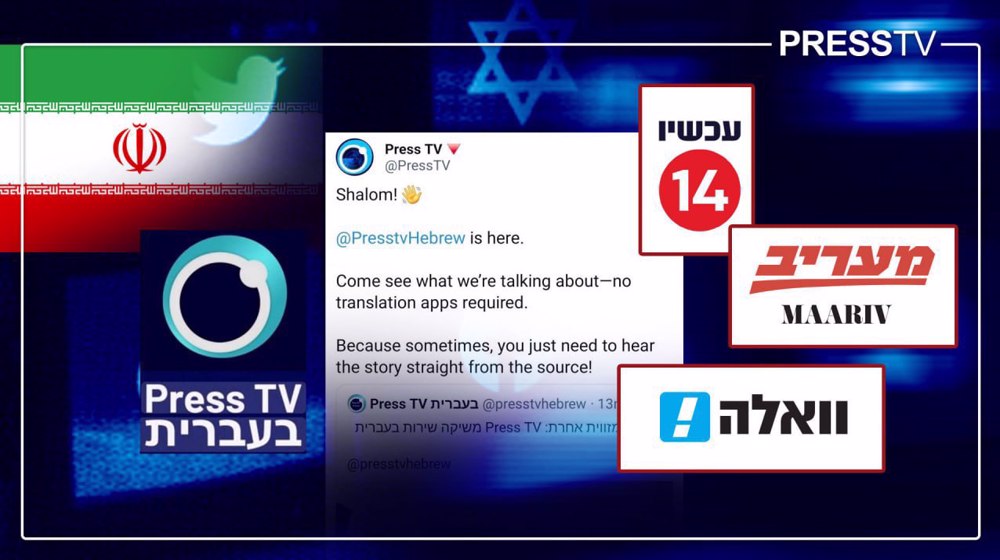
✍️ Feature - Press TV’s newly-launched Hebrew service sparks buzz and unease in Israeli media circles https://t.co/lNcZ0rxsPx
— Press TV 🔻 (@PressTV) December 3, 2025
The enemy’s narrative of the Iranian media
To understand the true extent of the influence of the Islamic Republic’s overseas media networks, one only needs to turn to the “enemy’s narrative” – where security-intel agencies, Zionist lobbies, and Western military institutions describe Iranian media not as a news network but as a “strategic threat.”
From INSS to ADL and others, they all converge on one point: acknowledgment of Iran’s soft power.
The ADL and the Center for Countering Digital Hate released a detailed report in April 2023 titled ‘State Hate’, describing Press TV as “a state-sponsored hate operation of the Islamic Republic” and accusing it of creating “a counter-mainstream narrative” in the United Kingdom.
This report introduced the Iranian network as an agent “shaping Western societal perception” – precisely the phenomenon Israel fears most: perception change.
The ADL’s 2024 report on HispanTV similarly reflected this fear, labeling Iran’s Spanish-language channel as “a projector of anti-imperialist views across Latin America,” and calling Iran’s growing presence in the Latin American information sphere – powered largely by HispanTV – “threatening.”
This tone is, in fact, a reversed image of what HispanTV has actually done for years in Latin America: giving voice to the Global South against Western imperialism.
In the same vein, the BBC, in its official report on the US seizure of Press TV and Al-Alam.com domains, openly validated the American view by writing that these media outlets are considered “malign influence operations.”
Yet the truth remains: wherever a media outlet amplifies the voice of the Global South, the West labels it “malign.”
Add to this the June 2024 Latinoamérica21 analysis calling HispanTV “Iran’s voice in Latin America” – the same reality recognized by Latin Americans themselves: Iran’s role in building the Global South and a new media landscape.
When these Western sources and their Zionist-influenced attempts to restrict Iran’s international media are viewed collectively, one truth becomes undeniable: Iranian media has become so influential that the enemy is forced to label it a security threat.
This admission is the most valuable certificate of credibility for the Islamic Republic’s overseas networks.
Glass or steel? That is the question
From the lines of Citrinowicz’s article, on which this article mainly focuses, the first indicator of the effectiveness of Iran’s broadcasting organization (IRIB) must be sought in the nature of the Israeli regime’s “concern.”
In Tel Aviv’s strategic frame, only those actors are considered threats that can alter public perception in target countries in ways that challenge their policymaking structures.
Therefore, the mention of networks such as Press TV, Al-Alam, and HispanTV in Israel’s military and analytical documents is actually evidence of their success; for if they were ineffective or weak, they would not attract attention.
This security reaction to Iran’s national media is a sign of its cultural penetration; for a media outlet only becomes a security threat when it successfully embeds a rival narrative in public opinion, a narrative that opposes Israel’s destructive policies.
Israel’s visible agitation over the activities and influence of networks like HispanTV or Press TV indicates that Iran has succeeded in engaging transnational audiences, particularly in environments once monopolized by Western media, with content centered on justice and anti-colonial values.
From this angle, when Citrinowicz writes in his article: “The Israeli Air Force’s June 16 strike on the headquarters of the Islamic Republic of Iran Broadcasting was primarily aimed at reducing the regime’s ability to communicate with its people, thereby impacting its command access and political stability. Simultaneously, the attack exposed another importance of IRIB in Tehran: disseminating Iran’s messages and propaganda globally.”
Then, the June 16, 2025 (Khordad 26, 1404) Israeli military strike on IRIB’s news building must be seen not merely as a military act but as the reflection of a psychological defeat.
The goal of the June 16 strike was to silence a voice that not only unified the Iranian nation domestically but also in the chaotic Western-Zionist media environment, presented independent meaning and direction, projecting an image of a determined, resilient, and powerful Iran.
A media institution targeted and attacked by the adversaries of the Islamic Republic in unified, coordinated attempts, yet whose undeniable importance and position even Zionist research structures cannot avoid acknowledging – and which, at historic turning points such as war, reaffirms its authority on an international scale.
Press TV anniversary: 17 years of being the voice of the voiceless.
— Press TV 🔻 (@PressTV) July 2, 2024
Follow us on Telegram: https://t.co/GKZwI4ePgj pic.twitter.com/UL5R1rhpHk
Iran’s media architecture: From localization to globalization
According to the Zionist author’s report, IRIB’s media operations in more than 30 languages have created a network that carries Iran’s voice beyond the invisible walls of the Western-Hebrew axis.
This multilingualism represents Iran’s response to the genuine need of the non-Western world to be represented through an alternative media mirror and represents recognition of Iran as a symbol of resistance.
Networks like HispanTV in Latin America, Hausa in Africa, and Al-Alam in the Arab world have, in practice, filled a media vacuum in countries that for decades were silent within the orbit of Western information – and now can, alongside Iran, take pride in a third collective identity: neither dominator nor dominated, but resilient and empowered.
IRIB’s cultural diplomacy relies on horizontal connections among nations and civilizational dialogue, not unilateral value transmission. Thus, the success of Iran’s overseas media networks must be assessed by their ability to establish dialogue, not through tools of domination or propaganda, something that only reinforces their authenticity.
Multi-layered broadcasting: From radio channels to digital platforms
In one part of the INSS report, the author criticizes Iranian networks’ presence on platforms like Telegram, YouTube, and other social media, calling for their shutdown. This demand is further evidence of IRIB’s technical capability and structural adaptation to the modern media ecosystem.
The reality is that IRIB’s overseas media division, or the world service, has long expanded its message delivery beyond linear or broadcast-only formats into simultaneous digital distribution. Thus, even when satellites or official networks are restricted, global audiences still access Iranian content through alternative channels.
This is not merely a survival tactic; in the context of sanctions and Western restrictions, it is a demonstration of Iran’s technological capacity under embargo – a capacity that even major, well-funded global networks depend on to maintain worldwide audiences.
In Iran, however, it has become a symbol of power, superiority, and resilience – something even Citrinowicz acknowledges.
Iran and inter-religious dialogue among nations of resistance
One of Citrinowicz’s concerns is Iran’s effort to influence Sunni communities and reduce hostilities through rapprochement projects. This part, although written with security suspicion, is the most accurate admission of IRIB’s trans-ideological character.
Iran is not pursuing sectarian polarization; it seeks civilizational dialogue and Islamic unity. If Iran’s message were sectarian – as Citrinowicz seems to imply – it would not resonate across the resistance axis, much of which is Sunni.
Iran’s networks have consistently emphasized shared principles of justice, rights, and resistance against domination, not sectarian difference.
IRIB’s coverage of Palestinian resistance and the struggles of other peoples in the region, regardless of sect and ideology, stems from this moral and human unity – a universal ethical system expressed through cultural and religious language and widely accepted.
Narrative continuity and coordination among networks
One distinctive feature of IRIB’s world service is its narrative coherence among networks. INSS describes this as “mutual reinforcement of narratives.”
Citrinowicz portrays this as an organized conspiracy to provoke Zionist-aligned structures around the world into acting against Iran and IRIB.
But in reality, this is a professional media plan in which a unified message is conveyed in various languages suitable for different audiences, precisely what global networks like BBC World or DW also do, though for different purposes.
Citrinowicz deliberately conceals this universal media practice to frame Iran as a danger, hoping to push his intended audience toward stricter counter-measures against IRIB, especially its world service, as though this kind of media operation descended from the sky.
The coordination between Press TV, HispanTV, and Al-Alam is not politically dictated; it is the result of carefully organized work in the IRIB world service, rooted in the need for cross-linguistic connection in intercultural communication.
The goal is to transmit concepts of justice and truth beyond linguistic molds.
These networks are architects of a “third media world” – a world based on a third path: independence, justice, and South-South dialogue. In this architecture, each language becomes a cultural anchor and each region a ray of the network of communicative justice.
Civilizational function of media as the collective memory of nations
From a civilizational perspective, the media is not just a tool for transmitting messages; it is the collective memory of people. IRIB, through its international networks, has recorded and globalized the memory of resistance across countries.
In Latin America, HispanTV narrates anti-imperialist struggles from a Southern viewpoint; in Africa, HausaTV reflects the historical voice of anti-colonial movements; in the Arab world, Al-Alam TV documents the voice of Palestine and the resistance axis, while also enabling these regions’ own local voices to be heard.
This process reconstructs global identity based on communicative justice, giving marginalized cultures the ability to be seen.
Thus, Iran’s soft power is deeply intertwined with the ethical function of media, this moral dimension being the primary reason for its appeal among non-Iranian audiences.
✍️ Viewpoint - Behind the veil: Australia’s latest move against Press TV designed to control the narrative
— Press TV 🔻 (@PressTV) November 25, 2025
By @Sheydaeslamihttps://t.co/ZxMKhpUR5r pic.twitter.com/8vbuXctTFf
Sanctions and IRIB’s resilience under pressure
It is now clear that the entire American and allied sanctions against IRIB and its overseas networks have failed to limit their reach or hinder their content development.
The world service of the Iranian state broadcaster has sourced its content from domestic and independent inputs, and this level of content self-sufficiency is extraordinary in today’s global media environment – showing that IRIB has become a ‘self-generated model’ in global communications.
In the logic of sanctions, the goal is to paralyze communication flows. But IRIB has demonstrated technological capability and self-reliance under maximum pressure.
The continued presence of Iranian networks on global platforms, even under filtering and content removal, shows the institutional adaptability that links domestic resources with global structures.
For Israel, this technological agility, especially given that Iran’s overseas media budget is modest, is threatening. But from a communications perspective, it is an institutional success in the post-platform era, where power lies not in satellite monopolies but in the continuous flow of meaning in a networked environment.
Thus, the sustained activity of these networks amid political and economic pressure is concrete evidence of the cognitive resilience of Iran’s media system.
Israel fears this resilience precisely: in a borderless digital world, silencing dissenting voices no longer works. This worry is itself the best proof of the technological ability and structural adaptation of Iran’s national media to the new communication ecosystem.
INSS report a sign of Iran’s media success
The analytical perspective presented in the INSS report reflects all the indicators of the Zionist regime’s concern – each of which is, in fact, an indicator of Iran’s media success: multilingual expansion, narrative synergy, and advanced cultural diplomacy.
IRIB has elevated the concept of soft power from a governmental tool to a civilizational mission, carrying messages of humanity, justice, independence, and ethical communication.
With scientific design, advanced technology, and reliance on global intellectual capacity, Iran’s overseas networks have built a non-Western intercultural communication system that has become an alternative reference point against hegemonic media.
Citrinowicz’s report and the entire INSS framework, though outwardly framed as a warning, contain ‘a series of confessions’ – confessions of the failure of Western and Zionist narratives in the face of Iran’s hugely successful soft power.
IRIB and its world service – with reliance on local languages, native experts, and the geometry of justice-oriented meaning – have raised soft power from political propaganda to an ethical and civilizational duty. In today’s world, where geography dissolves within the digital realm, only the media that can ‘create meaning’ endures – not the one that merely sells content.
And today, conscious people across Latin America, the West Asia, and Africa draw meaning from Iran – from the very voice Tel Aviv fears: the voice of truth, justice, and resilient humanity.
Sheida Islami is a Tehran-based writer, media advisor and cultural critic.
Factbox: Civilian infrastructure in the crosshairs of US-Israeli war of aggression on Iran
Revisiting three historic letters Imam Khamenei wrote to Western youth
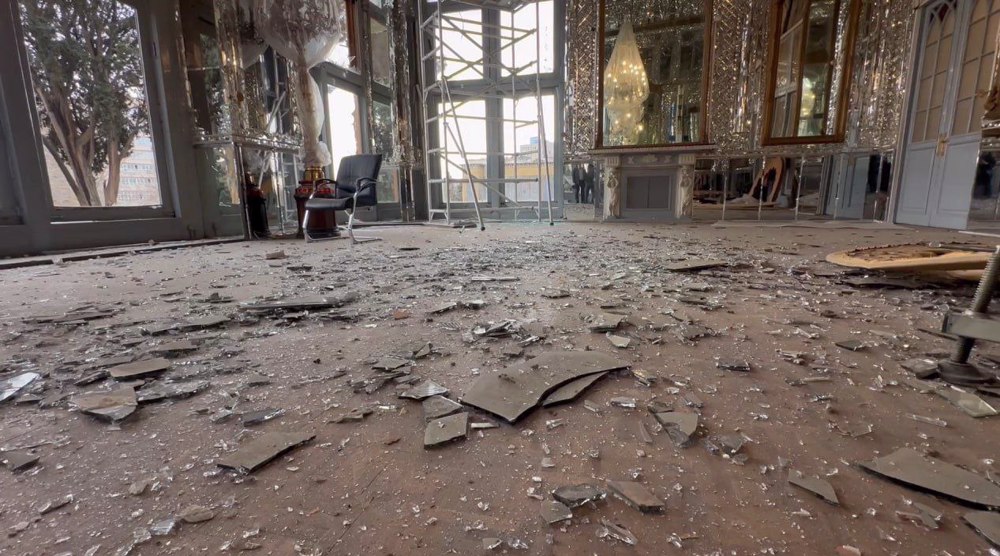
US-Israeli attacks on Iran’s cultural heritage sites amount to war crime: Envoy



Iran downed 11 US MQ-9 Reaper drones worth over $330mn: report
Iran official rejects Trump’s claims on women footballers, says ‘games’ can't divide country
Iran FM defends attacks on American bases in region citing US propaganda video
Iran will not target any country not used for aggression: Pezeshkian
Iran launches wave 33 of True Promise 4 op. with Kheibar Shekan missiles
True Promise 4: Iran and resistance axis ops. against US-Israeli assets on Mar. 9
Top official: Iran ready for a long war with US, no more diplomacy
Ansarullah leader felicitates Iranians on election of new Islamic Revolution leader





 PressTV NEWSLETTER now
 This makes it easy to access the Press TV website