Suweida violence and seven-month report card of Jolani-led HTS rule in Syria
By Ivan Kesic
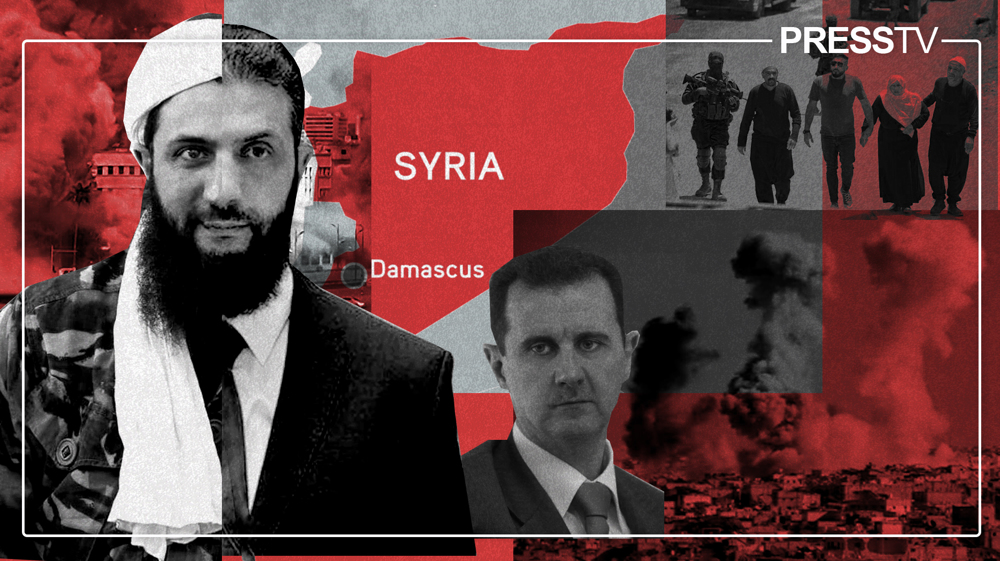
The recent violence in the southern Syrian city of Suweida, which claimed hundreds of lives, represents a significant escalation of sectarian and ethnic tensions in the aftermath of the fall of Bashar al-Assad government in December 2024.
The clashes primarily involved the Druze minority and Bedouin tribes with the Syrian regime led by Abu Mohammed al-Jolani and some external actors, including the Israeli regime, acting as instigators.
Suweida, the capital of the governorate of Sweida, is a predominantly Druze city in southern Syria, near the Jordanian border and the Israeli-occupied Golan Heights.
The population of the governorate is estimated to be around 375,000, while the city of Suweida itself had a population of 75,000 in the last census.
The Druze, an Arab religious minority numbering about 700,000 in Syria—half of whom reside in this governorate—have historically maintained autonomy and neutrality, including during the West-engineered militancy in Syria (2011–2024).
The city also has a significant Bedouin population, although it is estimated at only around 10 percent, leading to tribal tensions.
Jolani's regime, rooted in Hayat Tahrir al-Sham's (HTS) Takfiri ideology, has struggled to consolidate authority, particularly in regions like Suweida, where the Druze are wary of HTS’s centralized governance.
Earlier clashes in April-May 2025, sparked by a controversial audio recording falsely attributed to a Druze scholar, set a precedent for sectarian violence in the Sweida city and nearby areas like Jaramana.
The recent violent clashes began on July 11, 2025, following a robbery on the Damascus-Suweida highway, where Bedouin tribesmen set up an improvised roadblock and allegedly assaulted a Druze vegetable merchant.
On July 13, Bedouin fighters established a checkpoint in Suweida’s al-Maqwas neighborhood, capturing several Druze armed group members.
This sparked armed clashes that immediately spread to rural areas, including al-Tireh, al-Mazraa, and al-Soura al-Kabira, involving mortars and heavy weapons.
Syria’s HTS-led regime announces a ceasefire in the southern province of Sweida after days of clashes between local groups, which left over 700 people dead.
— Press TV 🔻 (@PressTV) July 19, 2025
Follow Press TV on Telegram: https://t.co/B3zXG73Jym pic.twitter.com/2F6oF9bPYC
The Damascus-Suwayda highway was cut off, and Syrian regime checkpoints were attacked by Bedouin fighters, with reinforcements arriving from Daraa.
On July 14, the Jolani-led regime in Damascus deployed ts armed forces and interior ministry units to the city, imposing a stringent curfew that paralyzed life.
A ceasefire was announced on July 15 with Druze leaders, led by Sheikh Yousef Jarbou, reaching an agreement with the regime.
However, Druze leader Hikmat al-Hijri rejected the truce, accusing the regime forces of attacking Druze civilians and calling for armed resistance. This led to continued fighting, looting, and burning of homes for several days.
On July 16, HTS regime forces withdrew from Sweida amid Israeli regime attacks, leading to Druze reprisals against Bedouin villages, prompting a mass exodus of up to 50,000 Bedouins to Daraa.
Clashes resumed on July 18, with HTS regime forces re-entering Sweida to curb renewed violence. A ceasefire on July 18 allowed limited HTS troop presence in Sweida for 48 hours.
Jolani-led HTS regime announced a fresh ceasefire on July 19, with Bedouin fighters withdrawing from Sweida city by July 20. At least 260 people were killed and 1,700 injured, though some foreign organizations claimed over 900 deaths, including children, Druze, Bedouin, and Syrian security forces.
Over 87,000 people were displaced, with many Druze fleeing to al-Mazraa, and Bedouins moving to Daraa. Homes were burned, and looting was also reported.
Israeli airstrikes and nefarious plots
The Israeli regime carried out a barrage of airstrikes on civilian and military targets in both Suweida and Damascus, including the HTS regime-affiliated ministry of defense headquarters, starting July 15.
On July 16, Israeli regime struck nearly 160 targets across Syria, most of them in Suweida, killing at least three and wounding 34, according to Syrian regime media.
With green light from Tel Aviv, some Druze factions from the occupied Golan Heights came to help Druze people in southern Syria, confirming reports that Zionist authorities were fueling the conflict.
Israeli Prime Minister Benjamin Netanyahu spoke of "Israel's commitment to the security of the Druze," and the regime's media suddenly began to babble about Tel Aviv as the "protector of the Druze minority."
In reality, as experts note, the Druze in Syria are victims of Israeli aggression, occupation, and repression, and in the occupied Golan Heights, only a fifth of the Druze have accepted Israeli citizenship in 58 years of occupation.
The strikes were criticized by HTS regime's foreign ministry, the United Nations, Arab countries, and the Islamic Republic of Iran as a violation of the Arab country's sovereignty, aimed at inflaming sectarian tensions.
On July 17, Iran's ambassador and permanent representative to the United Nations Amir Saied Iravani strongly condemned Israeli military attacks on Syria, calling them deliberate acts of aggression.
Abu Mohammed al-Jolani, leader of the HTS-led regime in Damascus, is a US-Israeli ‘intelligence tool’ working to advance their interests, says a Syrian political activist.https://t.co/OXhdYuHzu7 pic.twitter.com/vSBcCZxdiR
— Press TV 🔻 (@PressTV) July 4, 2025
He described these actions as a dangerous escalation by a regime occupying parts of Syria in blatant violation of international law and the UN Charter.
Iravani asserted that the Tel Aviv regime poses the most serious and dangerous threat to regional peace and security due to its ongoing acts of aggression and the unconditional political and military support it receives from the US and its Western allies.
He further said that Israeli attacks on Syria were a direct consequence of the UN Security Council's silence and the international community's failure to implement effective deterrent measures.
The official Israeli pretexts for the attacks were the alleged protection of the Druze minority due to familial ties with Israeli Druze population and concerns over a power vacuum near the Golan Heights.
Tel Aviv demanded a demilitarized zone in southern Syria, citing "threats" from Jolani's regime, although it had supported the actions of his HTS terrorist group for years.
Analysts dismiss the Israeli reasons as hollow and say they are fomenting sectarianism with the aim of further occupation and preventing the restoration of a united, stable, and militarily powerful Syria.
Recent Israeli blackmailing of the HTS regime to withdraw from Suweida, with the threat of new airstrikes, necessarily implies a power vacuum in that governorate, which they are using as an excuse to occupy southern Syria.
The Israeli attacks on strategic targets and the occupation of more Syrian territory are not a novelty or the result of ethnic-sectarian conflicts, supposedly "protecting the Druze," but date back to the HTS offensive in December 2024 tht triggered the fall of democratically elected Asad government.
Then, Israeli regime forces swiftly expanded beyond the occupied Golan Heights, seizing the buffer zone, the city of Quneitra and its surrounding areas, as well as Mount Hermon, a pivotal peak that straddles the borders of Syria, Lebanon, and Palestine.
In the first days of 2025, the regime bombed the headquarters of the Syrian Army’s 90th Brigade in Sasa, near Damascus, as a cover-up for capturing the Al-Mantara Dam, the lifeline for Quneitra and its surrounding areas.
The Tel Aviv regime occupied 266 square kilometers of buffer zone territory, flagrantly violating the 1974 Agreement on Disengagement, and then Israeli occupation forces pushed further east, confiscating additional Syrian territory illegally.
The occupation zone now stretches from the eastern slopes of Mount Hermon on the Lebanese border to the Yarmuk River valley near Jordan in the south.
Under the HTS regime, Syria has lost control of ten key dams and the valleys of the water-rich Ruqqad, Yarmuk, Awaj, and Barada rivers, which is why experts estimate that Tel Aviv controls 40 percent of the Arab country’s water resources.
Uncertain and bleak future
Under the embattled HTS-led regime, with external pressure from the Israeli regime, the survival of Syria as a unified state remains uncertain, according to regional observers.
Since December last year, after the fall of Assad government, Jolani has allowed the Israeli regime to violate the country's sovereignty and territorial integrity frequently while cozying up to Western powers.
After capturing Damascus, HTS, led by Jolani, announced the dissolution of its military structure by January 29, 2025, transitioning into a governing body under the so-called Syrian Salvation Government.
Jolani declared himself interim president without elections, a move criticized by many as autocratic and undemocratic. The lack of elections and political reliance on former al-Qaeda commanders paved the way for the country’s fall into chaos and disorder.
In nod to normalization, Jolani says Syria, Israel ‘have common enemies’ https://t.co/007EWNopLA
— Press TV 🔻 (@PressTV) June 1, 2025
The SSG, HTS’s "civilian wing" since 2017, has expanded its governance role, appointing HTS veterans and allies to key positions, including Jolani’s brother, most of whom previously served in al-Qaeda and Daesh.
A provisional regime chart released in December 2024 outlined a structure blending HTS leaders with so-called technocrats, aiming for legitimacy but raising concerns about centralized power.
Efforts to project inclusivity included promises of constitutional reform and power-sharing, but the real power remains with Jolani and his inner circle. These promises have failed to materialize seven months after HTS overran Damascus.
Protests in Idlib and other Syrian areas, like February 2025 demonstrations in Atarib and Maarat al-Nu’man, highlight public resistance to HTS’s authoritarian rule, particularly over human rights abuses and detentions.
Jolani's rhetoric emphasizes a "new Syria" with equal rights and decentralization, but implementation is inconsistent, with power concentrated among HTS elites.
HTS has made public gestures to reassure minorities, including Alawites, Christians, and Druze, promising equal rights and protection of cultural sites. However, reality on the ground proves otherwise.
Incidents like the burning of a Christmas tree in the Christian town of Souqaylabiya in December 2024 sparked protests by hundreds of Christians, undermining HTS’s claims.
Although protection of the Shia minority and their shrines, such as the Sayyed Zaynab Shia shrine, had been promised, humiliating discrimination against pilgrims and murders of Shia scholars have been recorded.
The Druze in Suweida have also resisted HTS's centralized rule, demanding cultural autonomy and refusing to disarm, leading to frequent clashes.
In northeast Syria, Kurdish-led Syrian Democratic Forces (SDF) have clashed with Arab-led opposition groups, including HTS allies like the Turkish-backed Syrian National Army (SNA). The SDF’s control of Deir el-Zour and Manbij has been challenged.
Daesh cells remain active in central and eastern Syria, with thousands of prisoners held by the SDF in the northeast. The presence of foreign mercenaries, including Uyghurs, within HTS’s ranks complicates security and international relations, with China opposing HTS’s UN delisting.
The reintegration of refugees and displaced persons remains challenging, and international calls for rapid repatriation face obstacles due to ongoing instability and minority fears of HTS rule.
On July 8, 2025, the US removed HTS from its Foreign Terrorist Organization (FTO) list, citing its dissolution and Jolani's "commitment to combating terrorism."
This followed US President Donald Trump’s May 2025 executive order suspending sanctions on Syria. The UK and other Western nations also lifted sanctions on Syria’s defense and interior ministries, signaling openness to engagement.
Despite all the favoritism toward Western powers, the HTS-led Syria has not been spared from Israeli attacks and long-standing Zionist agenda of dismemberment, occupation, and control of vital resources.
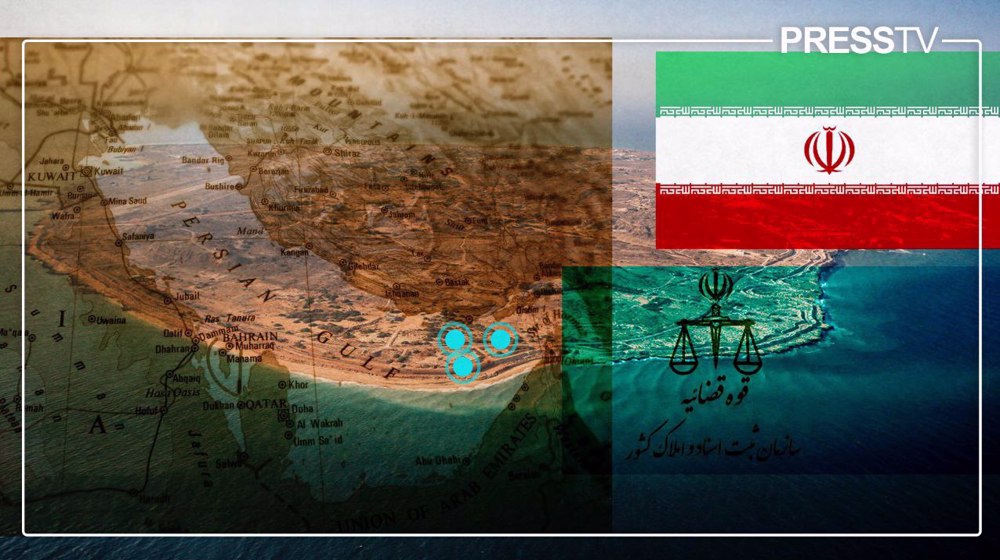
Explainer: What is the significance of Iran’s formal registration of Persian Gulf trio islands
Iran's strategic push for sovereign orbit with upgraded versions of Pars-1 and Nahid-2
Explainer: Iran’s first lithium-ion battery line ushers in new era of tech independence


Iran drawn against Belgium, Egypt, New Zealand in 2026 FIFA World Cup Group G
VIDEO | Press TV's news headlines
VIDEO | UAE-backed separatists seize key provinces in eastern Yemen
VIDEO | New data reveals India’s exports slide sharply over US tariffs
Man shot dead leaving mosque as Israeli raids, settler violence sweep West Bank
Niger accuses French nuclear giant Orano of ‘mass crimes’
Iran, Russia sign agreement to boost AI, cyber security cooperation
Lebanon’s Parliament Speaker: Talks under fire ‘unacceptable’


 PressTV NEWSLETTER
now
PressTV NEWSLETTER
now

 This makes it easy to access the Press TV website
