
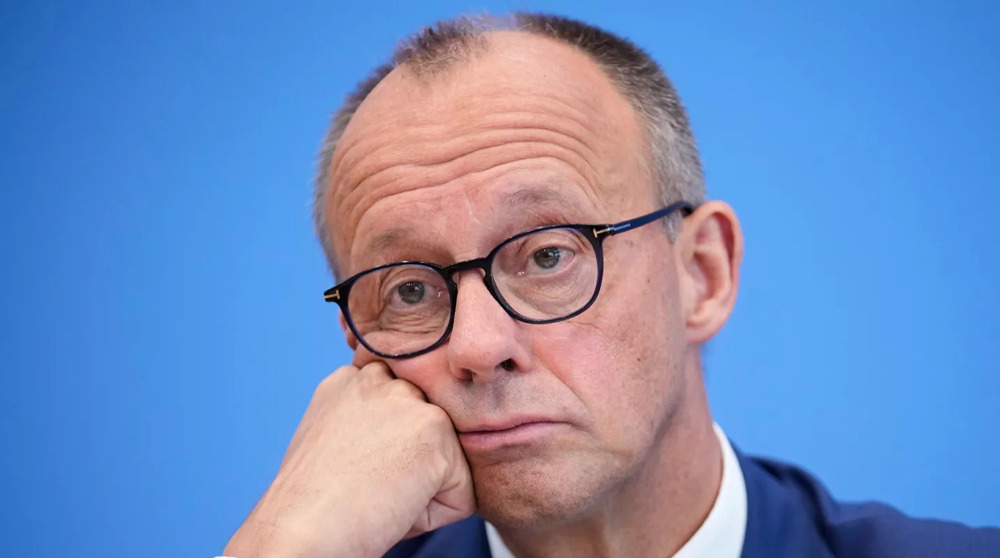
Germany suffered a humiliating defeat in its bid for a non-permanent UN Security Council seat, with Berlin acknowledging that its unwavering support for Israel had cost it key votes in the General Assembly.
Chancellor Friedrich Merz’s effort to restore Germany’s influence on the global stage was dealt a severe blow on Wednesday when the United Nations General Assembly awarded the two coveted Western European Security Council seats to Portugal and Austria instead.
German Foreign Minister Johann Wadephul described the outcome as a “bitter defeat,” attributing part of the loss to Berlin’s steadfast support for Israel, which he suggested alienated crucial UN allies.
However, he added that the result would not deter Germany from what he called continuing “to stand by our historical responsibility” to the Tel Aviv regime.
Despite a lobbying blitz that included personal appeals to 80 ministers and ambassadors, Wadephul's campaign failed as UN delegates favored smaller nations like Portugal and Austria.
Germany received only 104 votes in the race for the two United Nations Security Council seats allocated to the Western European and Others Group (WEOG), while Portugal, with 134 votes, and Austria, with 131 votes, secured seats on the Security Council.
Austria highlighted its neutrality and Portugal leveraged its role as a bridge between Europe and former colonies to secure support.

The German defeat has already sparked domestic criticism, exposing Merz to attacks from both the far-right Alternative for Germany (AfD) and his coalition partners in the Social Democratic Party (SPD).
Alice Weidel called the outcome an “embarrassment” that revealed the chancellor’s inability to restore Germany’s international standing, while SPD foreign policy spokesman Adis Ahmetovic warned that the vote served as “a gauge of how [Germany] is perceived internationally” and was “not a mere mishap, but a warning sign.”
Observers noted that Germany’s long-standing rotation for one of the Western European non-permanent seats made this loss especially striking.
The setback underscores the diplomatic cost of Berlin’s alignment with Israel, highlighting that unwavering support for the occupying entity can come at the expense of broader international influence and credibility.
 This makes it easy to access the Press TV website