
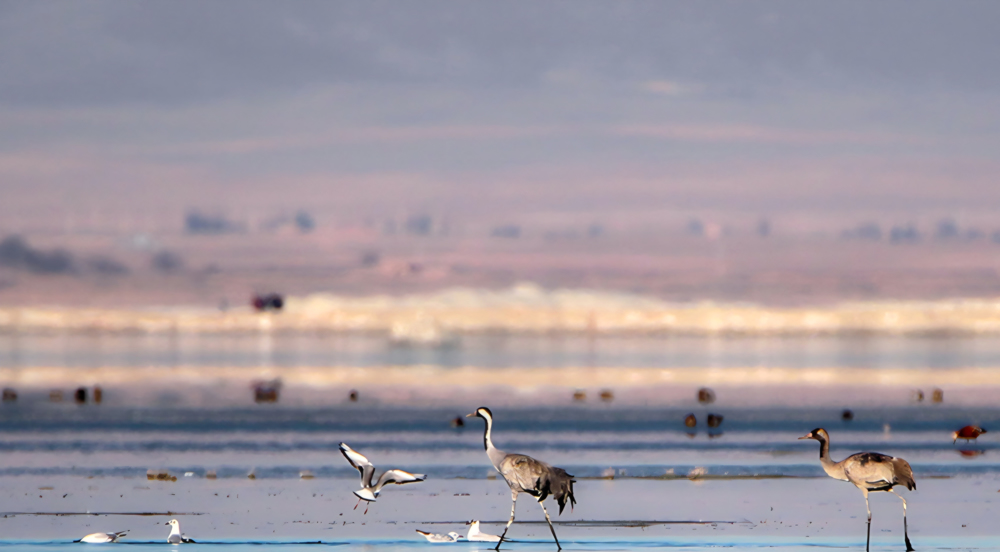
A formal process has begun to register Miqan wetland on the Ramsar List of Wetlands of International Importance.
The move can strengthen its global status and enhance long-term conservation efforts, officials in Markazi province say.
The Director General of Environmental Protection in Markazi province Amir Ansari announced that the file for Miqan Wetland has been officially sent to the Ministry of Foreign Affairs to initiate its nomination for inclusion in the Ramsar Convention’s list of internationally significant wetlands.
Emphasizing the ecological value of the site, Ansari said Miqan Wetland plays a key role in regional environmental stability and biodiversity conservation.
“Over recent years, the bird population in Miqan Wetland has increased significantly, and in the latest census of the protected hunting zone, more than 20,000 resident and migratory birds were recorded,” he stated.
“The strong and growing presence of migratory birds, the continued survival of native species, and the persistence of life in this wetland reflect the remarkable resilience of this ecosystem in the face of environmental stress,” Ansari added.
The official also stressed the wetland’s direct link to public health and livelihoods in Arak.
“Miqan Wetland is not only an important ecosystem; it is directly connected to the health and livelihoods of the people of Arak.”

He warned that if the wetland dries up, air pollution and dust storms will intensify.
“Therefore, restoration and sustainable management are among the province’s top priorities,” he highlighted.
According to Ansari, registration under the Ramsar Convention would not only strengthen the wetland’s international status but also enhance management mechanisms, improve technical cooperation, and increase long-term protection and monitoring capacity for this vital ecosystem.
According to the Wetlands Protection Center of Markazi province, Miqan wetland has shown notable signs of ecological recovery following recent rainfall.
Officials reported on May 5 that sustained precipitation has helped restore the wetland’s 12,000-hectare water surface after years of prolonged drought.
They noted that the last major influx of water—exceeding 100 million cubic meters—occurred in 2019, when the entire basin was fully inundated.
The wetland serves as a key habitat for migratory birds, hosting an estimated 12,000 birds each year, including species traveling from Siberia.
Environmental authorities also report that Miqan wetland is home to more than 16 percent of Iran’s bird species and around 60 percent of the species recorded in Markazi province, underscoring its national ecological importance.
 This makes it easy to access the Press TV website