Decisive edge: Iran dismantles US levers of coercion, rewrites equation of deterrence
By Press TV Strategic Analysis Desk
After 70 days, the third imposed war has reached its definitive inflection point.
For months, conventional wisdom in Western capitals assumed that military aggression, economic strangulation and naval pressure would force Tehran to submit or retreat. That assumption is now not merely outdated but dangerously delusional.
Following the meeting between the commander of the Khatam al-Anbiya Headquarters and the Leader of the Islamic Revolution, who is also the commander-in-chief of the Iranian armed forces, a new strategic clarity has emerged.
The Leader’s reassessment of the enemy’s current condition, combined with a meticulous reading of the battlefield, has set in motion changes that are effective, fundamental, and decisive. Simply put, the war equation is no longer America’s to dictate.
Iran has seized the initiative, and Washington has run out of viable options.
On the battlefield: Asymmetric power rewrites the rules
For years, the United States relied on a comfortable symmetry: ship for ship and tanker for tanker. Any Iranian retaliation would mirror American aggression in scale and domain.
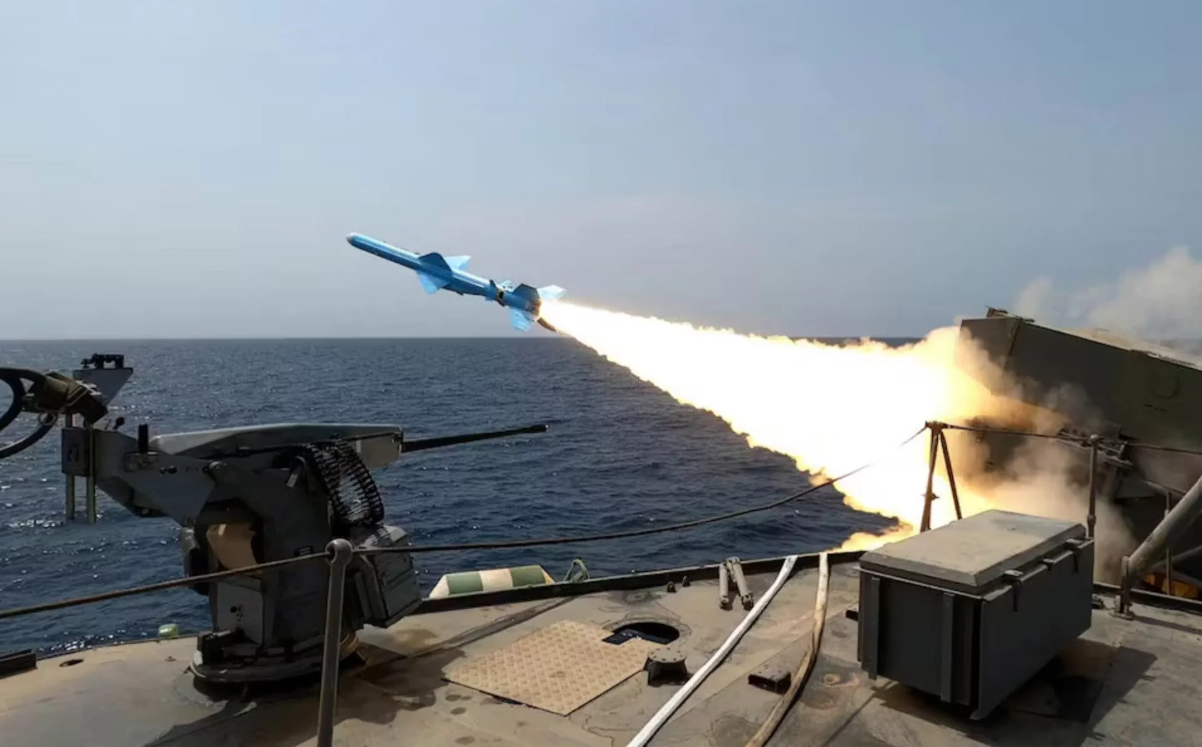
That era of American banditry is practically over. The new warning from Iran’s armed forces – specifically the aerospace and naval divisions of the Islamic Revolution Guards Corps (IRGC) and the Army – has shattered that calculus.
The threat is no longer limited to targeting enemy vessels that harass Iranian oil tankers or commercial ships. Iran has now explicitly placed American centers within the crosshairs.
This is not military bluster but an essential structural change in the equation of deterrence. The United States operates across vast global waters – the Indian Ocean, East Asia, and beyond. That global footprint has no proportional relationship with the narrow confines of the Persian Gulf and the Strait of Hormuz.
Likewise, the number and type of Iranian vessels that America might target bear no proportionality to the enemy’s fleet. The old logic was a trap for Iran, and the new logic and modus operandi are a nightmare for the Pentagon.
By introducing American centers as legitimate targets, Iran has rebalanced the scales. What was once “vessel versus vessel” is now “Iranian vessel versus enemy vessel plus American centers.” That single addition changes everything. Every American base, every command node, every logistical hub in the region has been factored into Tehran’s retaliatory matrix.
Crucially, attacking American centers is only one of multiple options. The subsequent phases could include strikes on Zionist centers in occupied territories, the facilities of America’s Persian Gulf allies complicit in any act of aggression against Iran, and regional energy lines.
And here is the warning those regional allies should heed: as long as American bases remain on their soil, and as long as they do nothing to expel the US or dismantle those bases, they become partners in every hostile act committed by American terrorist military forces anywhere in the world. Their interests and centers become legitimate targets as well.
There is no neutral ground, and there is no safe haven for America’s partners anymore.
💥 Analysis - Strategic quagmire: US trapped between failed military options and untenable peace terms
— Press TV 🔻 (@PressTV) May 9, 2026
By Press TV Strategic Analysis Deskhttps://t.co/FD43JKhlG3 pic.twitter.com/M9FXdqbmgd
The failure of economic warfare
The enemy has already done its cost-benefit analysis. It faced two unpleasant paths: accept Iran’s conditions to end the imposed war, or plunge into another full-scale military confrontation. It chose a third option – economic pressure, port blockades, and preventing Iran’s legal maritime trade with the world.
But this strategy, too, is failing spectacularly. And it will continue to fail because Iran understands a fundamental truth: the cost of this economic warfare must be raised so high that America abandons it entirely and regretfully.
History is the proof. The third imposed war, launched on February 28, was fought with grossly unequal combat capabilities, equipment, and weaponry. Yet Iran turned that threat into an opportunity. By deploying its full capacities, asymmetric methods, and creative use of opportunities, it managed to ground the massive American-Zionist war machine.
That was then. Today, the same logic applies with even greater force. To maintain battlefield superiority, there is no path forward except asymmetric warfare – and Iran has mastered that art. The enemy’s warships, advanced as they are, cannot protect every American center.
Their sanctions, crippling as they seem, cannot survive a war where every hostile act immediately sends visible shocks through international oil markets.
Normalization denied: The Strait of Hormuz remains Iranian
One of the enemy’s more subtle strategies has been to create localized, intermittent skirmishes in the Strait of Hormuz – using the pretext of commercial vessels or American warships entering or exiting – to gradually weaken Iran’s absolute sovereignty over the strait.
The deeper goal was twofold: first, to use these skirmishes as a pressure card in the final stages of the war; second, to normalize low-level conflict in the strait, thereby vaccinating international oil markets against price spikes. If minor seizures and attacks became routine, markets would stop reacting. That would give America a free hand.
Iran’s new warning has ended that doomed project decisively. From this moment forward, no hostile action will end quietly. No minor collision, no fleeting skirmish, no seizure of an Iranian vessel will go unanswered.
Every act of aggression will trigger a reaction so swift and so visible that its effects will be felt immediately in international markets. The era of silent escalation is over. The enemy wanted to normalize war; Iran has ensured that each hostile act will be anything but normal.
✍️ Analysis - Iran's firm response to new US maritime aggression proves Strait of Hormuz has only one master
— Press TV 🔻 (@PressTV) May 8, 2026
By Press TV Strategic Analysis Deskhttps://t.co/m0aWVWbQev
The political arena: Asymmetric diplomacy for an untrustworthy enemy
On the political front, Iran has already won because it has abandoned the illusion of good-faith negotiation with a habitual liar who attacked the Iranian people in the middle of negotiations – not once, but twice, in the past year.
America has honored no agreement. Each time it has engaged in dialogue, diplomacy, or so-called negotiations, it has only revealed its betrayal more clearly. The conclusion is inescapable: the tools for reaching an agreement with this unhinged enemy, and any guarantees of its adherence to imposed terms, must be fundamentally different.
Iran is acting on that premise. No response has been given to America’s requests for an end-of-war agreement so far. Deadlines are being ignored, and rightly so –they are no longer considered valid. This is not recklessness but discipline as defined by the Islamic Republic.
Iran will not finalize any proposal without continuously evaluating America’s behavior throughout the negotiation process. Proposals can change or be withdrawn. Everything is proportionate to the enemy’s hostility – on the diplomatic scene or the battlefield.
And more importantly, Iran has abandoned the language of “win-win.” You do not offer mutual benefit to an enemy that never abides by it. Instead, Iran offers credible resistance and maximum deterrence and it is in a position of strength to do that.
This is asymmetric diplomacy in its most mature form – mirroring the asymmetric warfare that has proven so effective on the ground. It is a diplomacy of pressure, of patience, and of unbreakable red lines.
The Strait is not a bargaining chip
One red line stands above all others: Iran’s legally codified and unchallenged sovereignty over the Strait of Hormuz. This is not a position but an irrefutable reality.
The Leader of the Islamic Revolution has emphasized it with absolute clarity and authority. The Iranian people demand it as an unchangeable will. The strategic waterway is not a negotiating card to be traded for an end-of-war agreement. It is, and will remain, a permanent new reality of the region – whether the enemy accepts it or not.
If anything is negotiable about the strait, it is only one matter: the resumption of vessel transit after the naval blockade ends, and that transit will occur strictly according to the clear rules of the Islamic Republic and its powerful armed forces.
There will be no return to the pre-war status quo. That door is closed forever.
✍️ Analysis - Failed Strait of Hormuz blockade forces US pivot as Iran’s strategic patience and leverage grow
— Press TV 🔻 (@PressTV) May 5, 2026
By Press TV Strategic Analysis Deskhttps://t.co/yvAK2FDAtb
Reparations, assets, and the Resistance Axis
Iran will logistically and legally compute every damage and reparation resulting from this imposed war. The enemy will be forced to pay, which includes blood money for every single affected Iranian citizen – every martyr, every wounded – calculated individually by the judicial system and official legal institutions.
America and its allies will see these figures recorded in their mandatory payments. And the unfreezing of Iran’s assets abroad is a non-negotiable demand to end the war.
Furthermore, just as America openly supported its allies – especially the Zionist regime – for years, and then partnered with them to impose a full-scale war on Iran, the Islamic Republic will explicitly and unapologetically support its allies in the Axis of Resistance.
The destiny of this axis is unified and indivisible. Therefore, including the Resistance Axis, particularly Lebanon, in the end-of-war arrangements is a fundamental and unchangeable principle that any agreement to end the war must account for.
Even if implementation faces challenges, Iran will not abandon its allies. The new equation of Iranian deterrence now includes firm, unwavering support for the Axis of Resistance.
Missile capability has never been negotiable. And from now on, neither is the resistance.
A new international political map
Finally, look beyond the immediate war. The lifting of unjust and illegal sanctions and the cancellation of draconian anti-Iranian resolutions are not favors to be requested but natural outcomes of Iran’s victory in defending itself, its existence, and its interests.
Just as the post-WWII political map produced the United Nations and the Security Council, the Third Imposed War will produce new changes on the international scene.
This process begins with the lifting of unjust international sanctions on Iran.
Iran’s insistence on this is an assertion of a historical transformation. The defeat of an arrogant enemy and its allies at the hands of Iran will redraw the political map of the world.
From this point forward, the history of international relations will be divided into two eras: before the Third Imposed War, and after it.
✍️ Analysis - Fables and failures: Why the enemy's war of narratives – like its bombs – won't deter Iran
— Press TV 🔻 (@PressTV) May 7, 2026
By Press TV Strategic Analysis Deskhttps://t.co/kOKjfSIK84 pic.twitter.com/wMXDGcSVOi
Bottomline: No options left for America
The United States launched this unprovoked war of aggression, believing that maximum pressure would yield maximum compliance. It has achieved the opposite.
Every instrument of coercion – economic blockade, naval harassment, diplomatic deadlines – has been effectively countered, neutralized, or turned against the perpetrator.
Iran now holds the edge and all the cards in the field, where asymmetric warfare has made American centers legitimate targets. In the political arena, asymmetric diplomacy mastered by the Islamic Republic has rendered American ultimatums irrelevant.
The enemy’s own cost-benefit logic leaves no escape route. It cannot accept Iran’s terms without losing face. It cannot launch another full-scale war without catastrophic risk.
And its current strategy of economic strangulation is being systematically dismantled, with each hostile act now carrying an immediate and visible price.
America has no option but to submit. The only question is whether it does so with a pretense of negotiation or after further costly lessons. Either way, the outcome is no longer in doubt. Iran has rewritten the equations and the world will not be the same anymore.
US lawmaker admits American people footing bill for Trump’s failed aggression against Iran
Iran’s Armed Forces vow to inflict further defeats on US, Israeli enemies
IRGC: Iran will change war’s geography, weapons if attacked again


VIDEO | Press TV's news headlines
VIDEO | Pakistan carries out fresh airstrikes on Afghanistan
VIDEO | Gaza launches national committee to defend prisoners
Iran FM: Our first task in New York is to defend the just cause of Iranian people
US lawmaker admits American people footing bill for Trump’s failed aggression against Iran
VIDEO | Trump's America is dying for Israel
US visa ban on Iranian president’s media team is bid to hide the truth: FM spokesman
VIDEO | Iran fully prepared to respond to new aggression


 PressTV NEWSLETTER
now
PressTV NEWSLETTER
now
 This makes it easy to access the Press TV website
