US-Israeli aggression on Iran: What happened on 36th day of the imposed war

By Press TV Website Staff
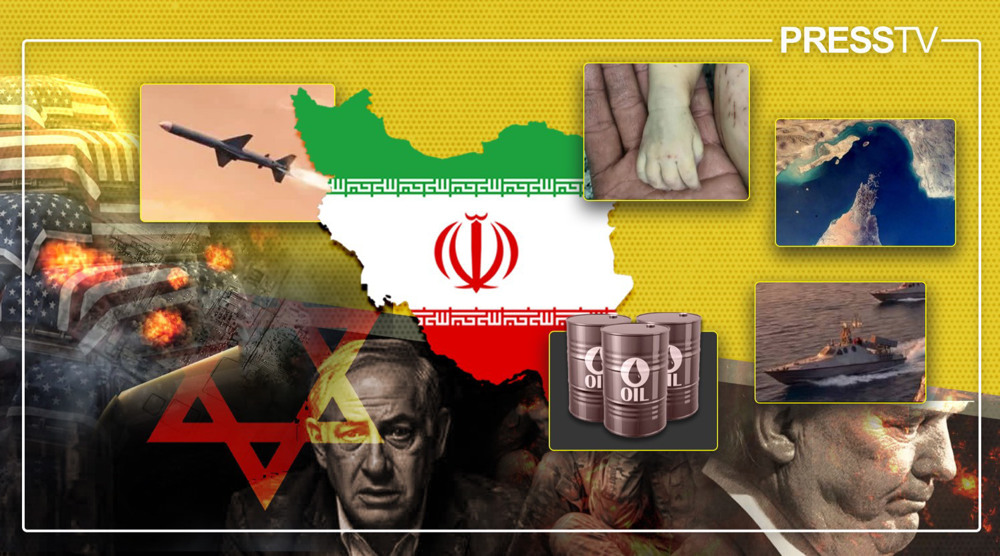
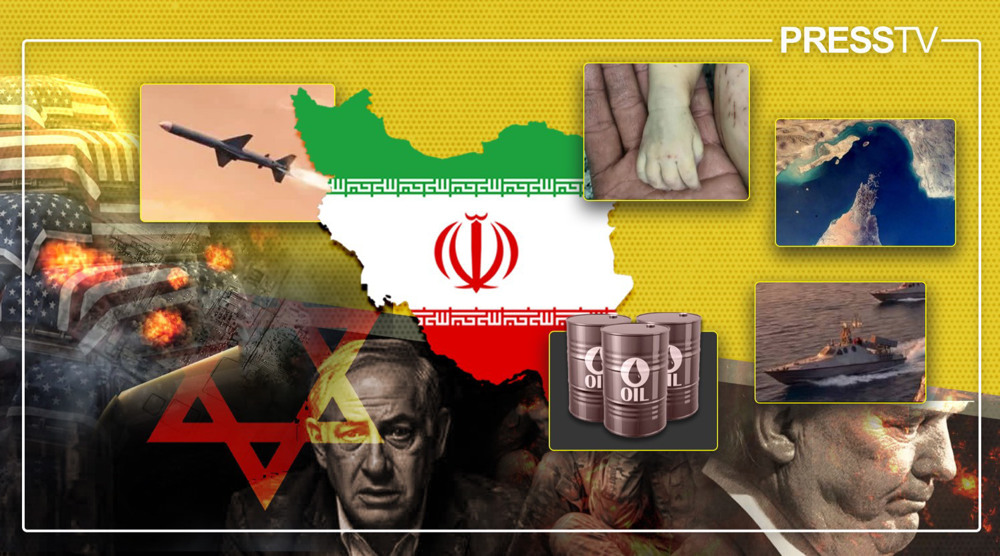
Thirty-six days into the US-Israeli war on Iran, launched on February 28 with the assassination of the Leader of the Islamic Revolution, Ayatollah Seyyed Ali Khamenei, and top-ranking commanders, the military aggression continues to target civilian and industrial infrastructure across the country.
US-Israeli airstrikes on Saturday hit civilian and industrial sites in Tehran, Karaj, Isfahan, Ilam, and Qom, as well as the Mahshahr Petrochemical Special Zone and a cement factory in southern Hormozgan province.
The International Red Crescent Society (ICRS) reported that more than 1,900 civilians have been killed since the unprovoked and unjustified US-Israeli war on Iran began.
US President Donald Trump’s ‘Stone Age’ rhetoric sparked massive backlash. President Masoud Pezeshkian called it a clear admission of intent to commit a "massive war crime."
Trump has now issued a 48-hour ultimatum on the "opening" of the Strait of Hormuz, warning that "all hell will break loose" if no agreement is reached.
Iranian authorities have dismissed the warning, vowing to defend the country and defeat all enemy plots with the same conviction that has been demonstrated in the past 36 days.
The IAEA confirmed that a US-Israeli projectile struck near the Bushehr nuclear plant, the fourth such incident in recent weeks, as Iranian Foreign Minister Abbas Araghchi warned of a potential radiological catastrophe.
American media said that Iran's downing of two American military aircraft represents an exceptionally rare blow to US power, proving that Tehran retains its capacity for retaliation.
New data reveals that maritime traffic through the Strait of Hormuz has plummeted to less than five per cent of pre-war averages, even as India has secured its first shipment of Iranian crude in seven years, with payment processed without a hitch.
Austria also rejected Washington's request to use its airspace, with its Vice Chancellor declaring: "No to Trump's war."
Key developments from Day 33 of the imposed war:
- Trump asked US lawmakers to approve a massive $1.5 trillion military budget for 2027, as America faces rising costs from its military aggression against Iran.
- According to data from the Pentagon's Defense Casualty Analysis System, the number of US military personnel wounded in the war against Iran has reached 365.
- The retaliatory attacks by Iran have forced the US military to evacuate 1,500 sailors and their families back to the US from the NSA base in Bahrain, and are struggling to have basic amenities, Washington-based National Public Radio (NPR) reported.
- After an hour of announcing his resignation, the US Army Chief of Staff issued an unprecedented warning referring to Trump as "a madman [who] will drive the great American military to destruction," as per reports.
- Trump wrote on Truth Social: "Remember when I gave Iran ten days to reach an agreement or open the Strait of Hormuz? Time is running out—48 hours remain before all hell breaks loose upon them."
- A recent poll showed 78 per cent of Israeli settlers still support the war against Iran, though pollsters warn this backing could eventually erode.
- Australia's government urged motorists to fill their cars at city petrol stations ahead of any long road trips over the Easter holiday. Energy Minister Chris Bowen said hundreds of service stations in rural towns had run out of diesel nationally.
- State-run public transport in Pakistan's capital and most populous province of Punjab will be free for the coming month amid a fuel crisis in the country.
Five injured as US-Israeli airstrikes target six petrochemical plants in Khuzestanhttps://t.co/chuyn9K4FW
— Press TV 🔻 (@PressTV) April 4, 2026
- The UN's Food and Agriculture Organization (FAO) said its Food Price Index, which measures monthly changes in international prices of a basket of food commodities, rose 2.4 per cent in March.
- The Associated Press reports that voting on Bahrain's Security Council resolution concerning the forceful reopening of the Strait of Hormuz has been postponed from tomorrow until next week, as member states struggle to reach a consensus and avoid a Russian-Chinese veto.
- According to statistics released by the International Federation of Red Cross and Red Crescent Societies (IFRC), since the start of US-Israeli aggression against Iran, more than 1,900 civilians, including women and children, have been killed, and at least 20,000 others have been wounded.
- US-Israeli airstrikes hit sites in Tehran, Karaj, Isfahan, Ilam, and Qom. US-Israeli airstrikes also hit the Mahshahr Petrochemical Special Zone.
- US-Israeli drone attacks in Hormozgan Province targeted a cement factory.
- The Islamic Revolution Guards Corps (IRGC) said that the attack on the US Embassy in Riyadh has no connection with the Islamic Republic of Iran.
- Pezeshkian said he discussed with Finland's president Trump's threat to bomb Iran "back to the Stone Ages," describing the US president's rhetoric as a frank acknowledgment of intent to commit a "massive war crime" and calling on the international community to abandon its neutrality.
- Austria has rejected Washington's request to utilize Austrian airspace in the war against Iran, distancing itself from "Trump's war." Andi Babler, Vice Chancellor of Austria, posted on X: "We want no connection to Trump's politics of chaos and his war, which will bring us the next energy crisis. Neutrality is a precious asset in our country. No to war."
Images capture the remains of an American aircraft shot down by Iranian air defences.
— Press TV 🔻 (@PressTV) April 4, 2026
Follow Press TV on Telegram: https://t.co/LWoNSpkc2J pic.twitter.com/4byyfTtUmo
- Reuters, in a recent report referencing the joint American-Zionist military aggression against Iran, wrote: "A war that began with the aim of weakening Iran may instead lead to its empowerment." According to the report, Persian Gulf Arab states now see themselves as the primary victims of Washington's adventurism—a war that has allowed Iran to impose upon the world its complete control over the global energy market as a new reality.
- The Associated Press reported that Iran's downing of two US military aircraft represents an extremely rare blow to it over the past 24 years, demonstrating that despite Trump's claims of having "completely destroyed" Iran's defensive capabilities, the Islamic Republic retains the capacity for reciprocal response.
- FM Araghchi warned that recurrent attacks targeting the country's only nuclear power plant in Bushehr, as part of the ongoing US-Israeli aggression, could lead to a huge radiological catastrophe in the region.
- The International Atomic Energy Agency (IAEA), without condemning the attack, announced that Iran had informed the agency that a US-Israeli projectile struck near the Bushehr nuclear plant premises this morning, the fourth such incident in recent weeks.
- IAEA Director General Rafael Grossi expressed deep concern and emphasized that nuclear power plant sites or their vicinities must never be attacked.
- Araghchi wrote on X: "We are deeply grateful to Pakistan for its efforts and have never refused to go to Islamabad. What matters to us are the conditions for a definitive and sustainable end to the illegal war imposed upon us."
Yemen’s Ansarullah says US, Israel have lost control of war https://t.co/MKqAsEeIYh
— Press TV 🔻 (@PressTV) April 4, 2026
- The Hanzalah hacking group exposed the identities of 50 senior officers from Israel's Unit 9900. Unit 9900 is among the "world's most powerful" geospatial intelligence divisions, collecting strategic intelligence through drone and satellite imagery and 3D mapping for targeted assassination operations.
- New data revealed that the American-Israeli war against Iran has reduced maritime traffic in the Strait of Hormuz to less than five per cent of pre-war averages. The average number of vessels transiting the Strait pre-war was approximately 129 per day. Since this vital waterway was closed, average transits have fallen to just six vessels daily. These six daily vessels transit only with special permission from Iran through a controlled corridor.
- Experts believe the 95 per cent reduction in vessel traffic through this vital waterway, once the passage for approximately one-fifth of the world's oil, will have profound consequences for global energy and essential goods supply chains.
- The Indian oil ministry says the country has purchased its first oil shipment from Iran in seven years without facing any problems in payments amid restrictions on the flow of crude oil from the Persian Gulf resulting from US-Israeli aggression on Iran.

IRGC unleashes new wave of retaliatory strikes on US military facilities in Kuwait, Bahrain, Jordan

‘Until final victory’: Iran Army conducts 7th round of retaliatory drone strikes against US targets
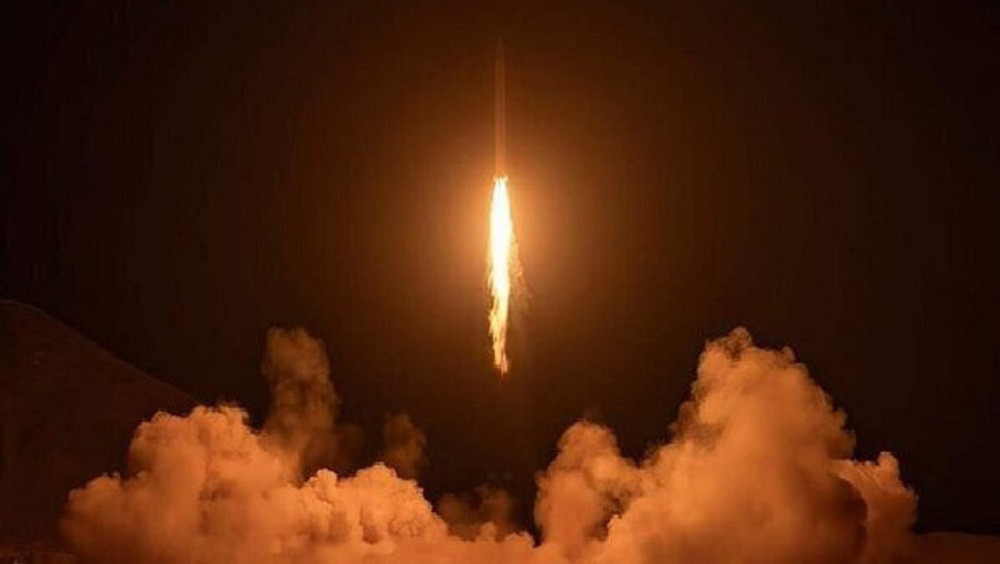
IRGC pounds US military facilities in Bahrain and Kuwait, warns oil exports at risk



Ayatollah Khamenei’s resistance discourse gave Iran supremacy: Ex-IRGC chief
VIDEO | Analyst: Collapse of MoU could push region toward wider conflict
VIDEO | Battle for truth
VIDEO | Farewell to the Imam
Lebanon arrests man over spying for Mossad, aiding murder of Hezbollah officials
VIDEO | Unfolding media truths
Iran military now stronger than during 12-day war: Senior commander
Resistance front will drag US, Israel into 'quagmire': Iranian military advisor


 PressTV NEWSLETTER
now
PressTV NEWSLETTER
now
 This makes it easy to access the Press TV website
