IRGC hits US Fifth Fleet base in Bahrain with missiles, drones

The Islamic Revolution Guards Corps (IRGC) says it has launched a devastating missile and drone strike on the US Navy's Fifth Fleet base in Mina Salman, Bahrain, shortly after the first message from the new leader of the Islamic Revolution, Ayatollah Seyyed Mojtaba Khamenei, emphasized Iran's "determined and regret-inducing" defense efforts.
The IRGC's public relations office announced that the attack took place on Thursday, with two waves of missile and drone strikes hitting the base.
The statement said that key facilities at the base, including anti-drone defense systems, storage and maintenance areas for drones, support equipment, and fuel tanks, were all targeted with precision missiles and drones.
According to the IRGC, the strike successfully hit American military gatherings, causing significant damage.
“By divine grace, the Strait of Hormuz will remain closed,” the statement declared, just after Ayatollah Khamenei asserted that the narrow strategic waterway in the Persian Gulf must remain closed.
“The will of the people is to continue effective defense, and their presence on the scene must be maintained. The Strait of Hormuz must remain closed,” Ayatollah Khamenei said in his first address to the nation on Thursday.
WATCH: Iran and Resistance Groups' Operations Against US-Israeli Assets on March 11.
— Press TV 🔻 (@PressTV) March 12, 2026
Follow https://t.co/B3zXG73Jym pic.twitter.com/aSOKlwVqVq
The attack followed the announcement of "Wave 42" of Operation True Promise 4, conducted under the code name "Labbaik Khamenei" (Here I am, Khamenei).
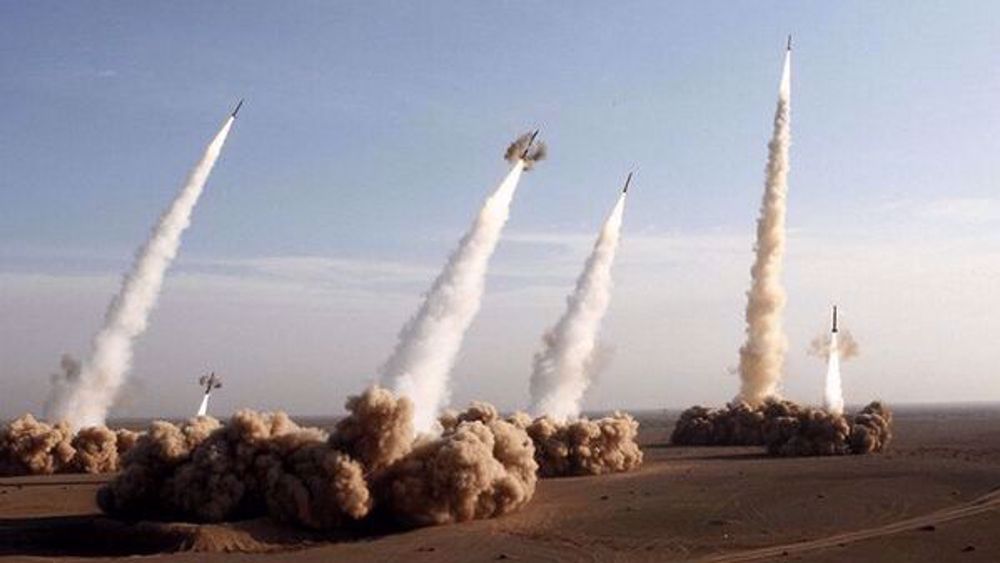
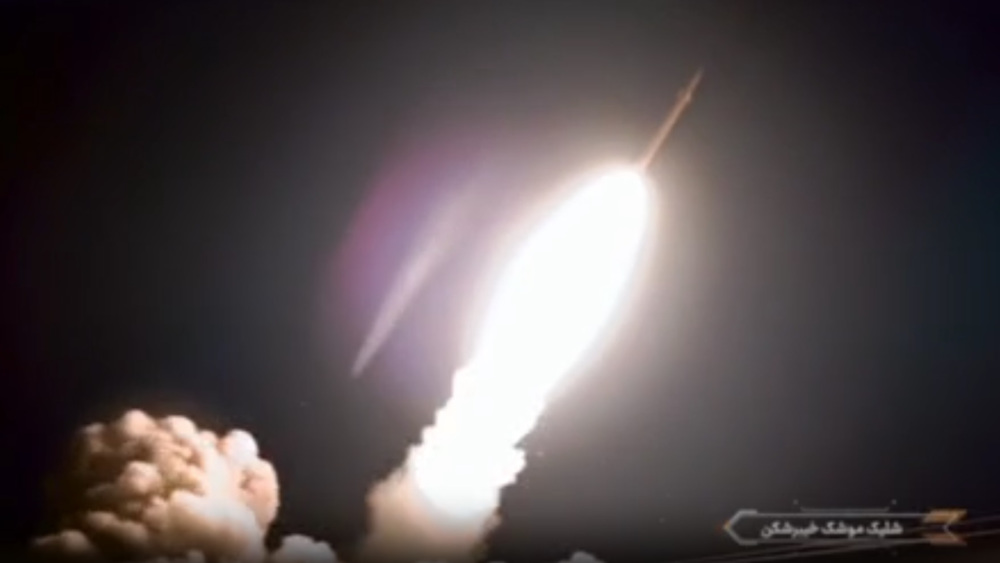
The offensive is dedicated to the memory of martyrs from the Ramadan War, and it involved the firing of several heavy-duty missiles, including Emad, Qadr, Kheibar Shekan, and Fattah, as well as suicide drones, against Israel and US military bases in the region.
It came as the US Naval Forces Central Command reported that a fire broke out aboard the USS Gerald R. Ford aircraft carrier while it was operating in the Red Sea in support of aggression against Iran.
According to the U.S. military's statement on X, the USS Gerald R. Ford remains fully operational, although two sailors sustained non-life-threatening injuries.
Iran’s military, in its recent operations, has made significant use of bunker-buster missiles to destroy critical American military infrastructure.
The Army said Thursday it targeted key facilities in Israeli occupied territories, including airbases and intelligence headquarters, employing its most advanced missile and drone technology.
Iran’s armed forces carried out drone attacks on the Palmahim and Ovda airbases, which are key facilities for the Israeli military and intelligence services, the Army said in a statement.
The Palmahim base, located near Tel Aviv, is known for its satellite launch facilities and missile test sites, and is home to Israel's air defense systems, including the David's Sling and Hermes 900 drones.
The Ovda airbase is a major training and operations base for Israel’s air force, and it also hosts American-made F-22 fighter jets.
The locations were targeted using a combination of high-precision drones and missile strikes, with an emphasis on destroying both military and logistical assets.
In addition, the Army reported attacks on Shin Bet, Israel's internal security service headquarters, which coordinates sensitive operations such as intelligence gathering and the protection of important personalities and sites.
While Israel has not confirmed the full extent of damage from the strikes, reports from local media indicate that at least 2,745 Israeli settlers have been injured in the ongoing war.
Elsewhere, sirens went off in Tel Aviv and Occupied Al-Quds, with the Israeli military confirming that the warning systems had been activated after detecting incoming projectiles.
Additionally, Hezbollah, the Lebanese resistance group, reported launching multiple missile attacks against Israel’s air defense systems in the Caesarea and Maalot Tarshiha regions.
Hezbollah claimed responsibility for targeting these systems with a volley of rockets.
On February 28, the United States and the Israeli regime started their unprovoked military assault on Iran. Following the aggression, Leader of the Islamic Revolution Ayatollah Seyyed Ali Khamenei was assassinated.
Iran began to swiftly retaliate against the criminal aggression by launching barrages of missiles and drone attacks on the Israeli-occupied territories as well as on the US bases in regional countries.
Iran has repeatedly emphasized that it only targets American positions and bases in the region and does not seek conflict with Arab countries.
‘Large number of US forces killed’ as Iran’s Armed Forces launch wholesale retaliation: IRGC
Iran vows 'crushing' retaliation following latest US airstrikes on southern provinces
Iran to respond promptly, effectively to any threat: Top commander



Iran warns it will face continued US aggression with ‘heavier, broader, more devastating response’
VIDEO | Press TV's news headlines
Yemen vows to stand by Iran’s side amid continued US aggression, backs Tehran’s retaliation
Shrapnel from US strike hits wedding reception in southern Iran, martyring five, including a child
VIDEO | ‘Large number of US forces killed’ as Iran’s Armed Forces launch wholesale retaliation: IRGC
VIDEO | Gaza’s young innovators turn war challenges into digital solutions
US 'precision' missiles fired at Iran killed civilians 50 meters from impact zone: Report
Israeli strikes on Gaza constitute ‘serious crime,’ continuation of genocide: Hamas


 PressTV NEWSLETTER
now
PressTV NEWSLETTER
now
 This makes it easy to access the Press TV website
