Iran emerges key link in China-Europe trade axis
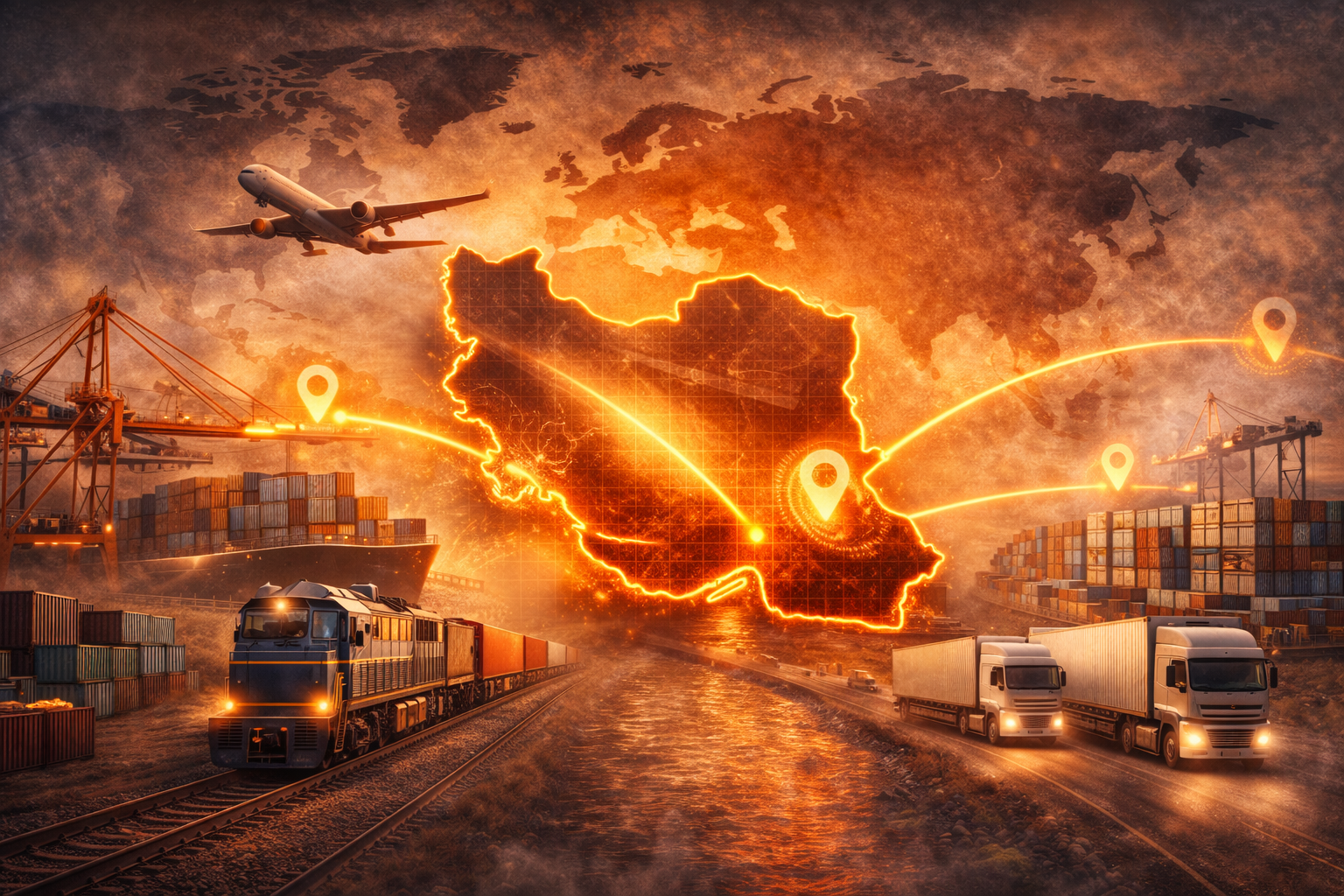
Iran signed memoranda of understanding on Monday to develop rail transport and establish logistics villages, a step aimed at activating the southern branch of the East–West corridor linking China to Europe.
The agreements were concluded between the Islamic Republic of Iran Railways and investors behind logistics villages in Yazd, Sirjan and Tabriz, focusing on expanding rail freight capacity and building out logistics infrastructure tied to long-distance transit.
The memoranda cover the development of logistics villages and dry ports, construction and expansion of rail lines and related infrastructure, issuance of operating permits, and the operation of rail-based logistics and freight services.
Together, they form part of a broader effort to increase the share of rail in freight movement and to position Iran as a transit route for intercontinental cargo flows.
The signing follows a steady rise in the number of freight trains entering Iran from China and continuing toward European destinations. Sixty such trains have already entered Iran, and three more are set to arrive at the Incheh Borun border crossing, said Jabbarali Zakeri, CEO of the Islamic Republic of Iran Railways, during the signing ceremony.
The increase reflects growing use of overland rail routes between East Asia and Europe and renewed attention to the southern East–West corridor that runs through Iran.
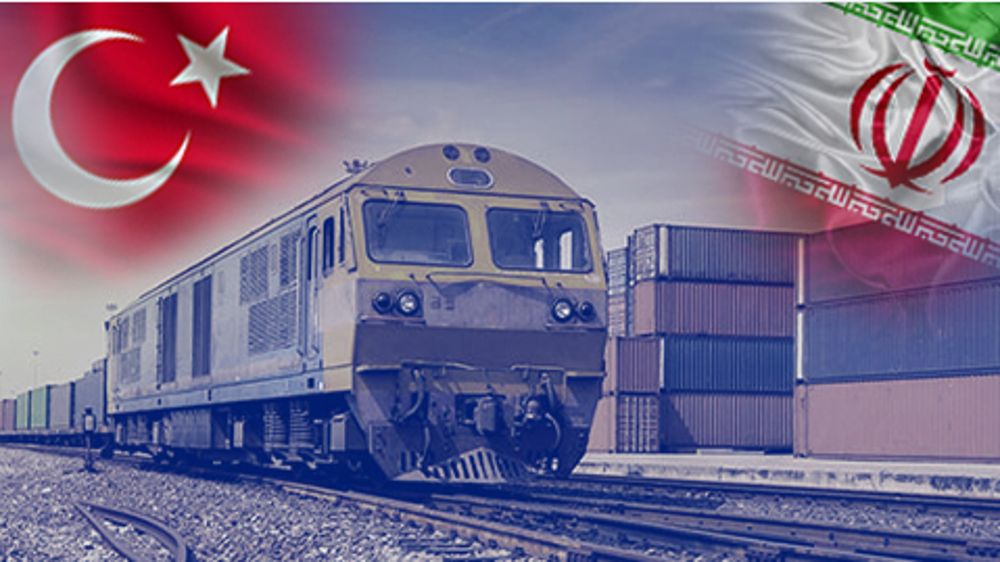
Momentum behind the route has been reinforced by a six-party rail agreement signed in Istanbul in December by Iran, China, Uzbekistan, Turkey, Turkmenistan and Kazakhstan.
The agreement introduced a framework for unified tariffs and reduced transit times along the corridor, measures intended to improve the commercial attractiveness of the route and reduce friction at borders.
The logistics villages planned for Tabriz, Yazd and Sirjan are intended to serve as consolidation and distribution hubs along the rail network.
These facilities are designed to support transshipment, storage and onward movement of goods, allowing freight to be transferred efficiently between domestic and international routes. The initial focus on northwestern Iran reflects the region’s role as a gateway to Turkey and Europe.
Globally, logistics and supply chain activities account for a significant share of economic activity, yet Iran’s role in transit and logistics has remained limited despite its geography.
The country sits at the intersection of East–West and North–South corridors, with rail links connecting Central Asia to Turkey and access to southern ports on the Persian Gulf and the Gulf of Oman.
The southern branch of the East–West corridor passing through Iran is positioned as an alternative to maritime transport between China and Europe. Rail transit along this axis can reduce delivery times to roughly one-third of those required by sea, while offering a continuous overland route across Eurasia. The corridor is also described as one of the more secure and economical land options for long-haul freight movement.
Despite these attributes, Iran’s share of East–West rail transit remains small. At least 60 million tonnes of cargo are moved annually along the broader East–West rail corridor, but only a limited portion passes through Iran. The constraint is not demand but infrastructure, particularly at border crossings and missing rail links.
The most critical gap is the absence of a direct rail connection between Marand and Cheshmeh Soraya on the Turkish border. The 240-kilometer stretch is seen as essential for expanding Iran’s role in East–West transit.
Without it, traffic relies on the Razi border crossing into Turkey, where annual freight exchange capacity is limited to about 800,000 tonnes.
Razi’s constraints are compounded by geographic and operational challenges, including the need for trains to transit Lake Van in eastern Turkey. These factors cap volumes and increase transit times, reducing the competitiveness of the route.
A direct rail link to Cheshmeh Soraya would remove these bottlenecks and create a fully rail-based southern east–west corridor.
Plans for the Marand–Cheshmeh Soraya line aim to raise Iran’s capacity to handle a larger share of East–West freight, with a target of capturing 10 percent of corridor volumes. Achieving that level would require not only track construction but also supporting infrastructure at border terminals and logistics hubs.
Turkey has already begun work on its corresponding section of the corridor. Construction is under way on a rail link between Kars and Dilucu, a stretch of about 250 kilometers designed to connect with Iran’s network at Cheshmeh Soraya. The junction point lies near the foothills of Mount Ararat, where the two national rail systems are expected to meet within three years.
The East–West corridor is only one component of a wider rail strategy. Other priority projects include the Rasht–Astara line, which would strengthen the North–South corridor linking Russia and the Caucasus to the Persian Gulf, and the Iranshahr–Chabahar connection, which ties inland networks to Iran’s southeastern port.
Beyond the bilateral dimension, Iran’s rail ambitions are increasingly tied to cooperation with Central Asian states. In recent years, Central Asia has emerged as a focal point for changes in Eurasian transport architecture, driven by greater emphasis on east–west and north–south land corridors.
Capacity constraints on northern routes, particularly those passing through Russia and Belarus, have pushed regional and extra-regional actors to look for alternative pathways.
Within this context, the southern corridor through Iran has attracted renewed attention as a viable option. China’s interest is framed within its Belt and Road Initiative, under which Beijing is seeking faster and more secure land routes between East Asia and Europe.
Iranian officials and regional partners state that, from a technical and geographic perspective, the Iranian route has the capacity to become one of the more efficient overland options.
Projects such as the China–Kyrgyzstan–Uzbekistan railway are central to this vision. Once connected to Iran’s rail network, such lines are expected to shorten the distance between East Asia and Europe by about 900 km compared with some alternatives, and to reduce delivery times by up to a week.
Central Asian countries have adopted a pragmatic approach towards Iran in pursuing these links. Kazakhstan, Uzbekistan, Turkmenistan, Tajikistan and Kyrgyzstan are seeking to diversify their trade routes to reduce reliance on any single corridor.
By linking Central Asian rail networks to ports such as Chabahar and Bandar Abbas, landlocked countries would gain direct access to open waters, while Iran would position itself as a conduit for both east–west and north–south trade flows.
The logistics villages, dry ports and missing rail links outlined in the recent MoUs are intended to support this role by providing the physical infrastructure needed to handle higher volumes of transit freight.

BRICS paving way for alternative world order, not a war machine against West: Analyst
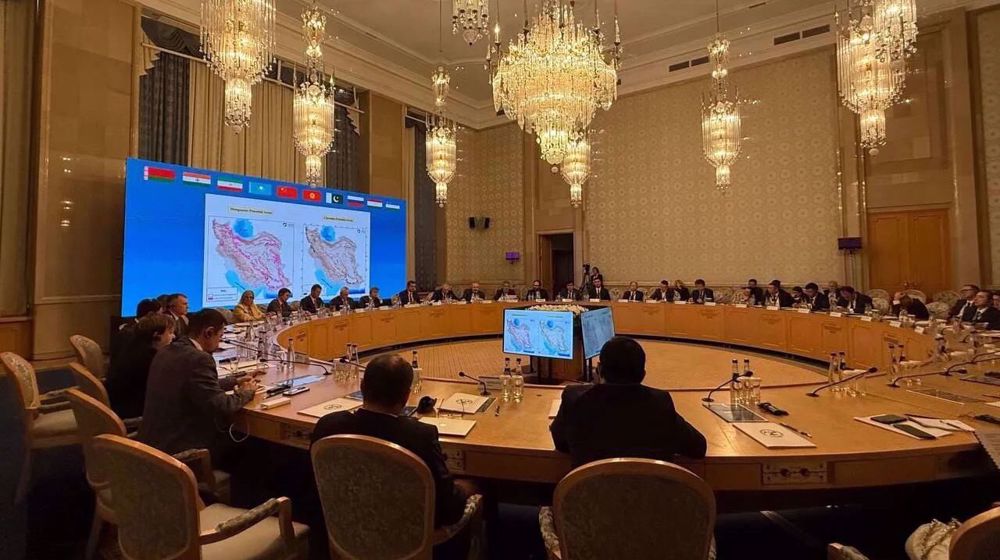
Iran finds new platform in SCO to develop its rare-earth potential
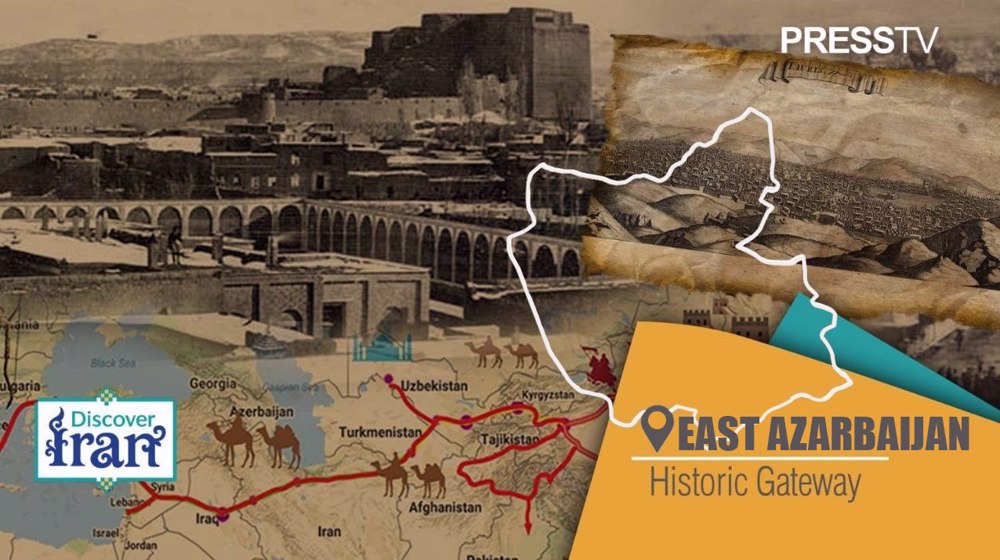
Discover Iran: Tabriz, where Iran’s Silk Road legacy meets industry, trade and a new economic future



Persian Gulf markets plunge as Yemeni forces strike Riyadh
VIDEO | Iran war will break America
Iran Open RoboCup brings together 700 teams and around 2,000 young robotics innovators
VIDEO | News Review: Trump’s move to ban several media outlets from WH draws condemnation
VIDEO | US uses threat of drug cartels to justify Venezuela invasion: Commentator
VIDEO | Police clash with far-right protesters in The Hague
How Iran turned US military and economic aggression into strategic leverage to dictate terms
‘No restraint’ against any aggression: Iran's top military command warns US, its regional allies


 PressTV NEWSLETTER
now
PressTV NEWSLETTER
now
 This makes it easy to access the Press TV website
