
By: Soheil Fazli
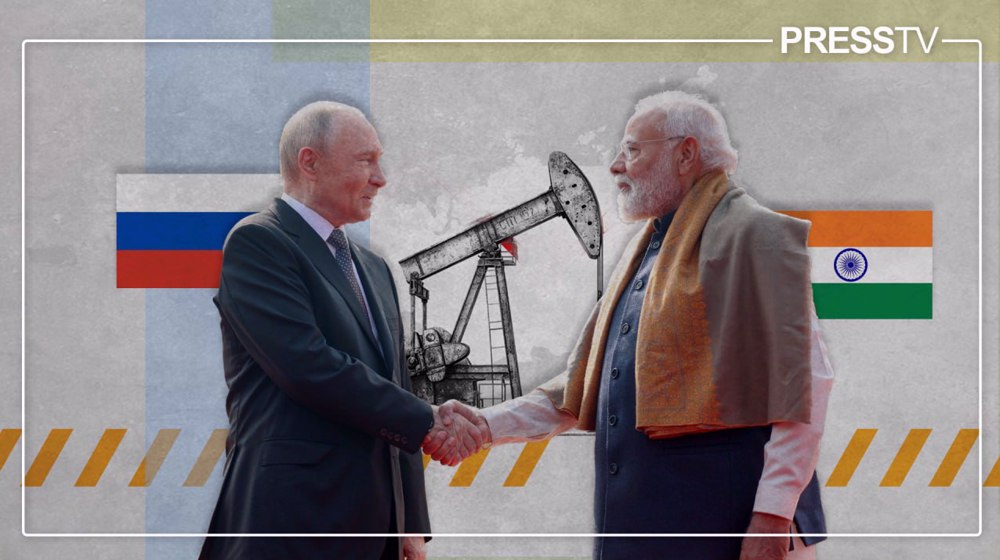
Amid ongoing India-US trade negotiations, New Delhi last week hosted the leader of one of the principal actors opposing the American-led unilateral world order.
Russian President Vladimir Putin spent two busy days in India. This came as India faces a 25-percent tariff imposed by the US due to its continued purchase of discounted Russian oil — an issue that has strained relations between Delhi and Washington.
Additionally, the US sanctions announced on October 23 against two major Russian oil companies have created challenges for Indian firms seeking to import cheap Russian crude. Nevertheless, reports indicate that India remains a major buyer of Russian oil.
India’s non-participation in Western sanctions
Following the outbreak of the Ukraine war, Western countries attempted to weaken Russia through sanctions, including price caps and restrictions on energy imports, in order to reduce Moscow’s revenue streams.
However, major emerging actors in the international system, particularly China and India, became key buyers of Russian crude.
Given India’s positive relations with the US, Washington expected Delhi to join the pressure campaign against Moscow. Yet, the availability of discounted Russian oil and the strategic advantages of cooperation with Moscow led India to continue its purchases.
India — unlike the G7 members and other actors closely aligned with the US — did not join the sanctions charade against Russia. Instead, it gradually emerged as an actor that diluted Western sanction efforts.
While many countries adopted anti-Russian positions in response to the war in Ukraine and scaled back their trade with Moscow, Delhi significantly expanded its relations.
Although India did not openly support Russia’s military operation in Ukraine, it refrained from adopting anti-Russian positions and maintained a stance of neutrality. At the same time, bilateral ties were preserved across multiple domains and strengthened in others.
These developments were reflected in India’s increased purchases of Russian oil, a rise in Indian merchandise exports to Russia, and cooperation with Moscow in circumventing technology and services restrictions through Indian private and specialized companies.
Following the outbreak of the war in Ukraine, this relationship continued, with India being the largest buyer of Russian arms, accounting for 38 percent.
At the same time, oil trade rapidly deepened ties between Delhi and Moscow, with India emerging as the largest purchaser of Russian seaborne crude, oil that has been competitively priced compared to other market options.
It gradually became evident that a large share of bilateral trade was conducted through the use of national currencies or the UAE dirham, enabling the two sides to circumvent the limitations of the SWIFT system and Western sanctions.
It was within this context that the West turned its attention to India, seeking — by intensifying pressure on Delhi — to dissuade it from its policy of cooperation with Moscow.
As a result, in parallel with Europe’s imposition of sanctions on Indian companies, US President Donald Trump employed tariff measures to dissuade Delhi from pursuing this policy.
Accordingly, under Executive Order 14329, India was subjected to a 25-percent tariff in response to its continued purchases of Russian oil.
However, India has consistently emphasized its strategic autonomy and refused to accept such pressures. Even after the tariff measures, India continued importing cheap Russian crude — averaging around 1.8 million barrels per day — while noting that it seeks to maintain balanced relations with all sides. However, this emphasis by India is rooted in its extensive relations with Russia.
Putin, Modi sign landmark deals to cement strategic partnership https://t.co/PlnQx3TNNi
— Press TV 🔻 (@PressTV) December 5, 2025
Evolution of Russia–India relations
Since the 1960s, Moscow and Delhi have pursued close bilateral relations, encompassing trade, military cooperation, technology, energy, and space.
Undoubtedly, one of the oldest areas of cooperation between Russia and India has been in the field of armaments, a partnership that persisted even after the end of the Soviet era and during the period of Western hegemonic dominance.
According to a report by the US Congress, Russia accounted for 49 percent of India’s arms imports between 2016 and 2020. During this period, key systems supplied by Russia included main battle tanks such as the T-90 in 2019, fighter aircraft including the Su-30 and MiG-29 in 2020, and air defence systems such as the S-400 in 2018.
In 2023, Russian state news agency RIA Novosti reported that Moscow sold approximately $13 billion worth of weapons to India between 2018 and 2023.
This cooperation did not waver even after the outbreak of the Ukraine war and the imposition of sanctions on Russia, including restrictive measures such as the CAATSA legislation. According to a statement released by Russia’s state-owned arms export agency, Rosoboronexport, on February 7, 2025, Russia’s arms exports amounted to more than $80 billion during the period from 2005 to 2025.
However, military cooperation between the two powers is not limited to the sale and purchase of weapons. For instance, Russia’s State Duma has recently ratified a bilateral military cooperation agreement with India.
The agreement, which was signed by the two countries in February 2025, allows for the shared use of infrastructure and facilitates the cross-border movement of military units. It also establishes procedures for the provision of services and the deployment of each country’s military personnel on the other’s territory.
Another dimension of Russia-India relations concerns bilateral trade, which has reached a historical peak and is currently at its highest level in the history of ties between the two countries.
While trade between the two powers stood at $1.4 billion in 1995, it rose to $68.7 billion in 2024. A substantial portion of this trade is dependent on Russian oil.
Russia’s share of the total trade amounts to $63.84 billion, consisting primarily of crude oil and petroleum products, fertilizers, bituminous materials, mineral fuels, mineral waxes, machinery and equipment, metals and precious stones, wood, pulp and paper products, and vegetable oils.
India’s share of bilateral trade amounts to $4.88 billion and includes agricultural products (such as fish, shrimp, rice, tobacco, tea, coffee, and grapes), chemical products, pharmaceuticals, iron and steel, ceramic products, aircraft components, machinery, glass and glassware, apparel and knitwear, leather goods, rubber products, electrical machinery, and surgical instruments.
These figures indicate a trade balance tilted in Moscow’s favor, largely as a result of India’s oil purchases.
India, Russia aim for $100bn trade despite US pushback https://t.co/rutCLD4W5x
— Press TV 🔻 (@PressTV) August 22, 2025
Trade in services also constitutes part of bilateral commerce; however, its overall volume remains limited. In 2021, the value of services trade was barely above $1 billion, the majority of which was provided by Russia. Nevertheless, in the aftermath of sanctions, Indian companies appear to be assisting in bypassing Western technology and services restrictions while cooperating with Russian partners on various projects.
Due to concerns over sanctions evasion, detailed statistics have not been publicly disclosed. As a result, this segment of bilateral trade is expected to expand in the coming years, as India’s relatively low-cost labor force represents an economically attractive option for Russia’s labor-hungry economy.
The two sides are also engaged in substantial cooperation in the field of investment. By 2023, the value of Indian investment in Russia had reached $16 billion, concentrated primarily in the oil and gas, petrochemical, banking, railway, and steel sectors.
For its part, Russia announced in 2024 that the volume of its investments in India amounted to $20 billion, covering sectors such as oil and gas and pharmaceuticals.
In this context, one of Russia’s major investment projects in India is the Kudankulam Nuclear Power Plant. As India’s largest nuclear power facility, it is being constructed by Rosatom, with two of its six units currently operational. Fuel for Units 3 and 4 is also expected to be supplied by Russia, enabling two additional reactors to begin operations.
Another area of cooperation between Delhi and Moscow is space collaboration. Owing to Russia’s extensive capabilities, experience, and infrastructure in conducting space missions, and India’s growing ambitions in the space domain, the two countries have maintained their cooperation in this field even after the dissolution of the Soviet Union.
One of the most recent examples of bilateral cooperation can be seen in the transfer of technology related to the production of the RD-191M engine, which serves as the propulsion system for Russia’s heavy-lift launch vehicles.
As a result, India is set to become a producer of this engine. Given its high payload capacity, the engine will also enable India to overcome many of its previous limitations in spacecraft launches.
But what transpired during the visit of the Russian president to India was a move aimed at preserving, consolidating, and further advancing their existing relations.

Crude oil, trade and military tech
Russia seeks to maintain close relations with India as the world’s third-largest economy and, to this end, has worked to expand economic cooperation and strengthen long-term engagement.
In this context, the formulation of the Programme for the Development of Strategic Areas of Russian-Indian Economic Cooperation till 2030 reflects the two countries’ shared interest in sustaining long-term economic ties.
Agreements in areas such as fertilizer supply chains, customs facilitation, and maritime and port cooperation further underscore their mutual intent to build economic interdependence and enhance transit cooperation, including through frameworks such as the International North-South Transport Corridor (INSTC).
Another important area addressed by the two sides was labor migration. According to estimates by Russia’s Ministry of Labor, the country is expected to face a shortage of 3.1 million workers by 2030.
As a result, the issue of Indian labor migration to Russia was placed on the agenda of bilateral discussions, an issue explicitly referenced in Paragraph 15 of the Joint Statement issued by the two sides. Between 2022 and 2024, a total of 58,300 Indian workers were employed in Russia, placing India second after China in this regard.
On the other hand, the two sides also emphasized in their statements and declarations the establishment of systems of bilateral settlements through the use of national currencies, the national payment systems, and financial messaging systems.
In this context, the two countries are seeking to connect Russia’s Faster Payments System (SBP) with India’s Unified Payments Interface (UPI).
The rationale behind this decision was explicitly articulated by Dmitry Peskov, the Kremlin’s press secretary.
“We continue to jointly consider how to establish bilateral or multilateral systems that could serve as alternatives to systems that can be used as political instruments to exert pressure on specific countries.”
Accordingly, Delhi is engaging with Moscow to bypass banking, oil, and other sanctions, facilitate bilateral trade, and reduce reliance on the U.S. dollar in transactions. This approach clearly signals India’s refusal to accept Western decisions that are perceived as running counter to its national interests.
A notable development was Russia’s announcement of readiness to expand technology transfer and local production of defence equipment in India under the “Make in India” initiative.
This step has the potential to elevate India’s role from a mere purchaser of Russian equipment to a production partner. This concession comes despite the fact that the West has refused to share key technologies related to many of the weapons it sells to India.

Symbolic steps with clear messages
Beyond the substance of the talks, the broader context surrounding Putin’s visit to Delhi also conveyed important messages.
Marking his first visit to India since the outbreak of the Ukraine war, Putin was accompanied by a high-level delegation, including the First Deputy Prime Minister, the Secretary of the Security Council, the Speaker of the State Duma, the Ministers of Defense, Energy, and Culture, as well as a Deputy Prime Minister of Russia, underscoring the special significance Moscow attaches to relations with India and the breadth of bilateral cooperation.
Moreover, the heads of sanctioned companies such as Rosneft and Lukoil also accompanied Putin during the visit, signaling the two sides’ determination to continue cooperation even under conditions of stringent sanctions.
Prime Minister Narendra Modi personally receiving Putin at the airport underscored India’s view of its relationship with Russia and sent a clear message to global audiences, especially the West.
Modi described the Russia–India relationship as a “polar star” — stable and enduring.
The ceremonial Indian banquet hosted for the Russian president also conveyed its own set of messages. It underscored India’s self-perception as an independent civilization that will continue to cooperate with friendly countries based on its national interests.
Accordingly, the symbolic details of the visit were sufficiently elaborate to attract significant attention from global media and, in turn, public opinion worldwide.
Putin’s visit to Delhi was beyond a routine diplomatic trip. It symbolized the two countries' determination to consolidate an independent partnership. India made clear that it is unwilling to easily relinquish the profitable ties and advantages it enjoys with Moscow, choosing instead a “time-tested, trust-based partnership grounded in mutual respect” over Washington’s unilateral policies.
At a more concrete level, India’s move toward the domestic production of advanced weaponry, eschewing reliance on Western equipment in favor of Russian systems and technologies, constituted another key dimension of the agreements reached.
This approach signals a reduction in dependence on Western arms. More broadly, it aligns precisely with Moscow’s objective of preserving its long-standing partnership with India and preventing Delhi from moving toward full strategic alignment with the United States.
Soheil Fazli is a Tehran-based writer and researcher, with a focus on Russian foreign policy.
(The views expressed in this article do not necessarily reflect those of Press TV.)
 This makes it easy to access the Press TV website