Aid by day, airstrikes by night: Jordan's double game in Israeli genocidal war on Gaza
By Arwin Ghaemian
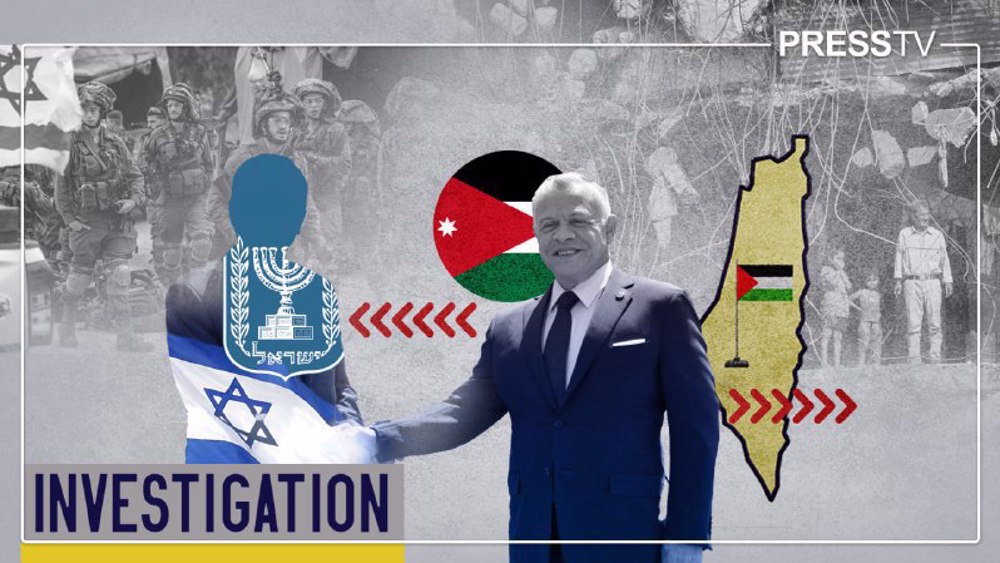
The irony is striking: Jordanian C-130 Hercules aircraft dropped aid packages, containing food and medical supplies, many reportedly expired, over the bombed and besieged Gaza Strip, supposedly to ease the humanitarian crisis there.
Yet, at the same time, Amman secretly backed Israel’s genocidal attacks, even taking part in joint air missions. These contradictions reveal a government trapped in a geopolitical game, where its supposed humanitarian actions serve as a cover for aiding Israel’s war efforts.
In West Asia’s complex geopolitical arena, where secret alliances shape events and happenings and public rhetoric often hides deeper and sinister motives, the Hashemite Kingdom of Jordan, under King Abdullah II, has become a key actor in supporting Israel’s military campaigns in Gaza, Lebanon, Iran, Yemen and elsewhere.
What began as a betrayal during the lead-up to the 1973 Yom Kippur War (also known as the Six-Day War) has evolved into a systematic collaboration, one that sustains Israel’s military-intelligence operations even as it carries out war crimes and crimes against humanity in Gaza.
This account, based on declassified documents, leaked diplomatic cables, and recent reports, examines the Jordanian government’s double game: public displays of solidarity with Palestinians contrasted with hidden military, intelligence, and economic ties to Tel Aviv.
Viewed through this lens, Jordan’s monarchy appears not as a neutral mediator but as an active accomplice, placing Israel’s military priorities above the rights, lives, and democratic aspirations of its own people, most of whom are of Palestinian origin, and those in Gaza, the occupied West Bank, and the occupied Jerusalem al-Quds.
September 1973: King Hussein’s Secret Warning to Golda Meir
The roots of Jordanian-Israeli connivance stretch back to September 1973, and perhaps even earlier. As Arab armies prepared for what would become the Yom Kippur War, King Hussein bin Talal, father of Abdullah II and known to Israeli intelligence by the codename “Lift”, secretly flew by helicopter to meet with Israeli regime officials.
While Radio Cairo was declaring, “Here is Damascus, the beating heart of the Arabs,” Hussein was, in secret, conferring with the enemy.
In a clandestine nighttime meeting with Israeli Prime Minister Golda Meir, the Jordanian king shared detailed intelligence on Syrian and Egyptian military movements, information about troop concentrations along the Golan Heights and Sinai Peninsula, and warnings of a coordinated two-front assault.
According to Israeli regime’s archives, his disclosures undermined the element of surprise that Egypt and Syria had relied upon, allowing Israel to reinforce its aggressive positions in advance.
This episode, emblematic of the Jordanian monarchy’s recurring betrayal of Arab and Muslim causes, reached its culmination with the 1994 Wadi Araba Treaty, a so-called peace agreement that deepened Jordan’s economic dependence on Israel while eroding the Hashemites’ claim to legitimacy as guardians of Islam’s holy sites in occupied Palestine, including the custodianship of Al-Aqsa Mosque.
Hussein’s “peace” with Israel, ironically termed such, since there had been no war between the two, further fractured the Arab front and set the stage for his son’s reign as a reliable conduit for Israeli occupation interests. That dynamic, far from diminishing, only intensified amid the ongoing genocidal war on Gaza’s nearly two million inhabitants, killing nearly 70,000 of them.
January 31, 2024: Jordan-Israel nexus amid genocide in Gaza
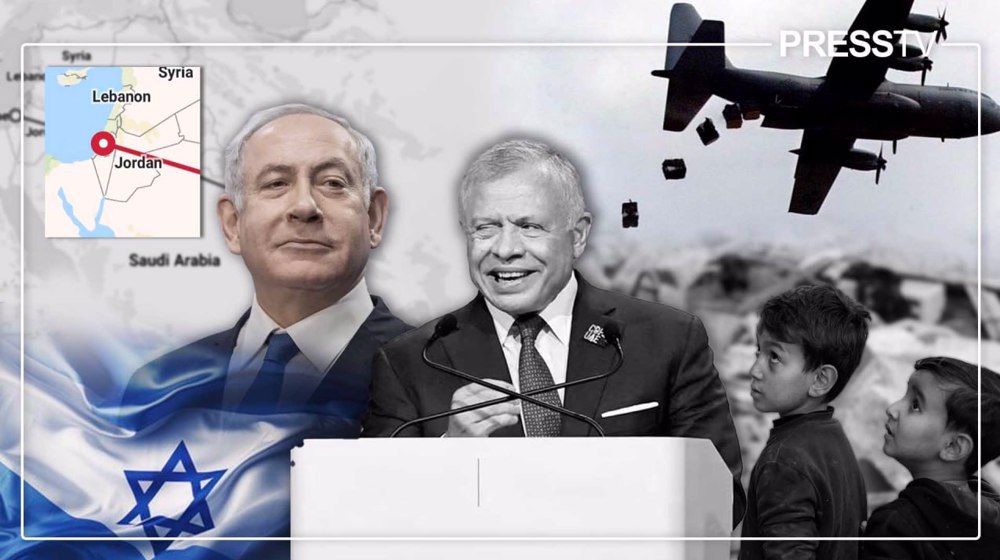
As Israel’s genocidal assault on Gaza intensified, leveling homes, schools, hospitals, shelters, and critical infrastructure across the territory, including in Khan Yunis, Rafah, and Jabalia,the Jordanian government continued to cling to its deep ties with Israel.
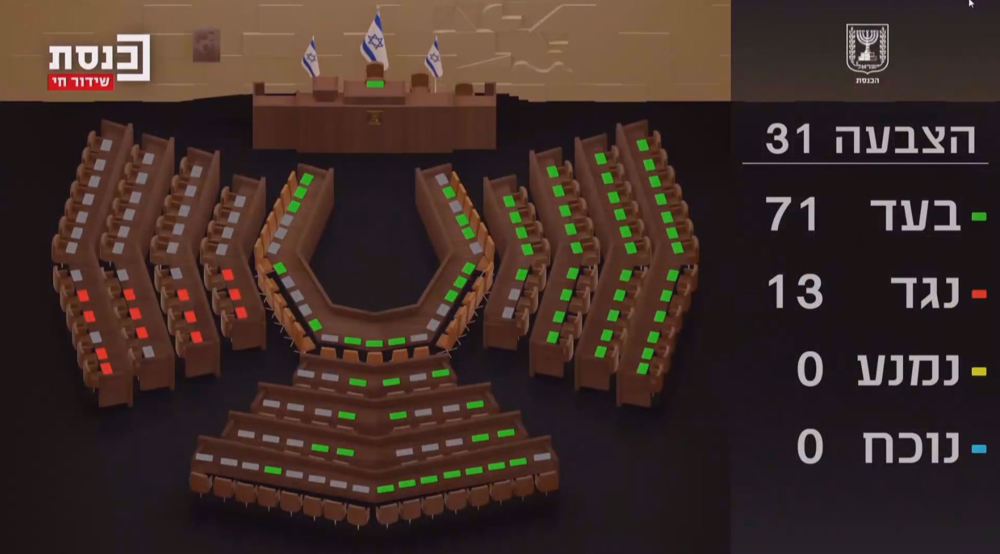
On October 13, 2023, the Jordanian Parliament passed a resolution urging a comprehensive review of all bilateral agreements with Israel in solidarity with Gaza’s suffering. Yet Amman’s response was limited or cosmetic. It suspended only the UAE-mediated water-for-energy deal announced in November 2023, while leaving untouched the 2016 gas-for-electricity agreement that supplies more than 96 percent of Jordan’s energy imports.
Beneath this symbolic gesture, however, lay a darker reality. The supposed suspension of cooperation served to placate domestic outrage while concealing indirect support for Israel’s ongoing campaign. In effect, Jordan’s actions allowed it to publicly denounce Israel’s war crimes while quietly maintaining the economic and logistical ties that reinforced Israel’s position.
Paradoxically, this duplicity also weakened Amman’s own leverage to promote any meaningful solution to the Palestinian issue, further entrenching its role as a dependent partner in the Israeli regime’s regional strategy.
April 15, 2024: Jordan shields Israel from Iranian retaliation
To intercept Iranian ballistic missiles and Shahed-136 drones aimed at Israeli military targets, Jordanian Air Force F-16s operated alongside US Navy destroyers in the eastern Mediterranean, while French Rafale jets joined the effort at Amman’s request.
The Jordanian government said the interceptions were necessary to defend its airspace and prevent regional escalation, relieving pressure on Israel's Iron Dome system, thereby facilitating the continued massacres in Gaza, including the April 2024 siege of al‑Shifa Hospital
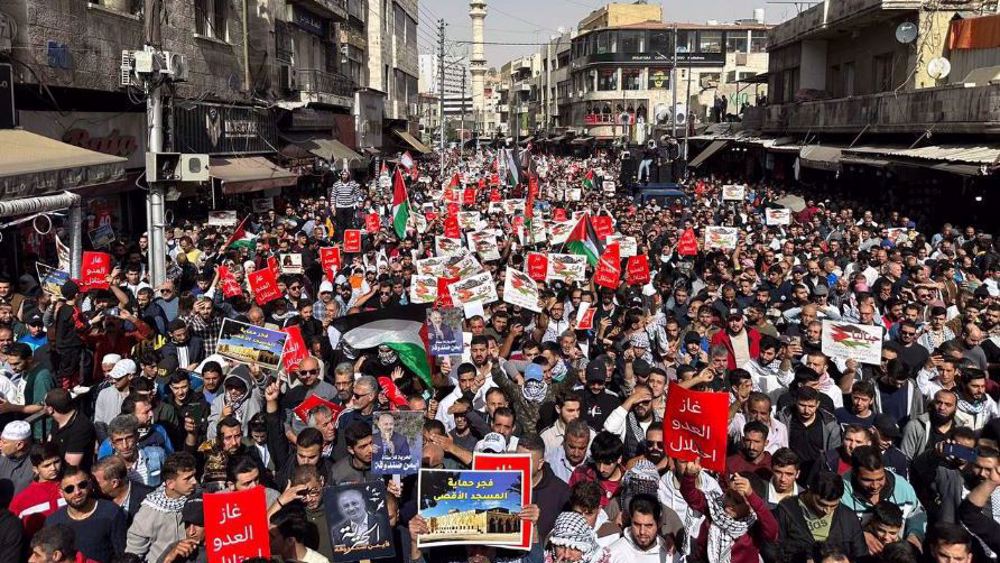
The move, however, sparked widespread anger across Jordan. Demonstrators in downtown Amman’s Hashemite Square slammed King Abdullah II for "dropping missiles on his citizens to protect Israel." The outrage was particularly strong among Jordan’s Palestinian-origin majority, who make up more than half of the kingdom’s 11.3 million people.
Observers said the decision exposed a deep contradiction between the monarchy’s public condemnation of the Gaza genocide, including King Abdullah’s UN General Assembly remarks denouncing the humanitarian crisis, and its military coordination with Western allies defending Israel. The move effectively positioned Jordan as a key buffer in the Iran-Israel confrontation, insulating the Gaza war from potential outside intervention.
May 15, 2024: Aid drops and Iranian Missile downings
Alongside the so-called Gaza aid airdrops, Jordan’s cooperation with Israeli military systems continued with the interception of Iranian missiles and drones.
This collaboration led many to label King Abdullah II a “traitor” to the Palestinian cause, despite Jordan hosting 2.2 million Palestinian refugees from the 1948 Nakba and the 1967 Six-Day War.
Security forces carried out internal crackdowns in May 2024, dismantling networks linked to Muslim Brotherhood–affiliated activists under the supervision of the General Intelligence Department (GID).
Several citizens were accused of smuggling Iranian-sourced weapons through Syria to Palestinian resistance groups such as Hamas and Palestinian Islamic Jihad, reflecting Abdullah’s ongoing suppression of resistance movements.
This security apparatus, aligned with Israeli Prime Minister Benjamin Netanyahu’s vision of expanding control over the Jordan Valley and Area C settlements, has left Jordan’s regime appearing subservient to Israeli interests and abandoning the right of return for Palestinian refugees enshrined in UN Resolution 194.
By crushing these networks, Abdullah, widely criticized across the Arab world, has not only removed potential threats to Israeli outposts in Hebron and Nablus but has also alienated a growing number of young Jordanians in cities like Irbid and Zarqa.
November 26, 2024: Domestic discontent and enduring ties
Jordan’s long-touted role as a “buffer state” shielding Israel from Iranian resistance allies in Lebanon, Yemen, Iraq, and the Occupied Palestinian Territories began to strain under the weight of Gaza’s genocidal devastation, which by late 2024 had claimed more than 43,000 lives, mostly children, women, and the elderly, according to UNRWA.
In the September 10, 2024, parliamentary elections, the Islamic Action Front (IAF) secured 31 of 138 seats (22.5 percent), reflecting rising pro-Palestinian sentiment amid Israel’s right-wing confederation proposals that some compared to the Soviet–Nazi partition of Poland, hinting at partial annexation of the occupied West Bank.
Despite public anger, the Jordanian government maintained its alliance with Israel, continuing to uphold the Wadi Araba Treaty’s security provisions, including joint border patrols along the 307-kilometer frontier from Aqaba (Eilat) to the Yarmouk River.
This adherence, reinforced by fears of renewed refugee flows from Syria after the collapse of Bashar al-Assad’s government, was evident in the November 21, 2024, sentencing of former MP Imad al-Adwan to ten years of hard labor for transferring weapons to the occupied West Bank.
The ruling blurred the line between resistance and sedition, effectively serving Israeli occupation goals in Jenin and Tulkarm refugee camps, the occupied West Bank.
King Abdullah’s mild condemnations of Israeli genocidal attacks in Deir al-Balah and Khan Younis thus rang hollow, as they failed to counter the expanding Israeli confederation plans that threaten the viability of an independent Palestinian state.
December 15, 2024: Shin Bet and Israeli army intelligence meet in Amman
The Jordanian government’s security cooperation with Israel appeared to deepen when Shin Bet Director Ronen Bar and Israeli Military Intelligence Chief Maj. Gen. Shlomi Binder reportedly paid a discreet visit to Amman, meeting with senior Jordanian officials, likely including General Intelligence Department (GID) head Maj. Gen. Ahmad Husni.
According to regional sources, discussions focused on alleged Iranian weapons routes through Mafraq and Zarqa to the occupied West Bank, Jordan’s mediation role between Israel and factions in Syria, and possible responses to movements that could destabilize the kingdom.
This coordination positioned Amman more firmly as a partner in Israel’s regional security network, particularly in efforts to monitor and restrict arms smuggling into the Palestinian territories.
Analysts at the time warned that such deepening ties could heighten domestic tensions within Jordan, where fears of unrest in cities like Amman and Irbid reflect growing unease over the kingdom’s reliance on Israeli support for internal stability.
April 15, 2025: Sabotage foiled or resistance quashed – GID’s purge
Jordan’s repressive measures intensified when the General Intelligence Department (GID) announced the arrest of 16 citizens, under surveillance since 2021, accused of involvement in a conspiracy that included the fabrication of 3-5 km-range rockets in hidden workshops near Salt, a drone assembly hub in Balqa Governorate, recruitment networks in Turkey and Qatar, and the storage of C-4 explosives and AK-47 variants in safe houses in Madaba.
Authorities claimed the group aimed to “sow chaos” and suggested that alleged Palestinian ties through Muslim Brotherhood channels justified a wider crackdown on Gaza solidarity movements.
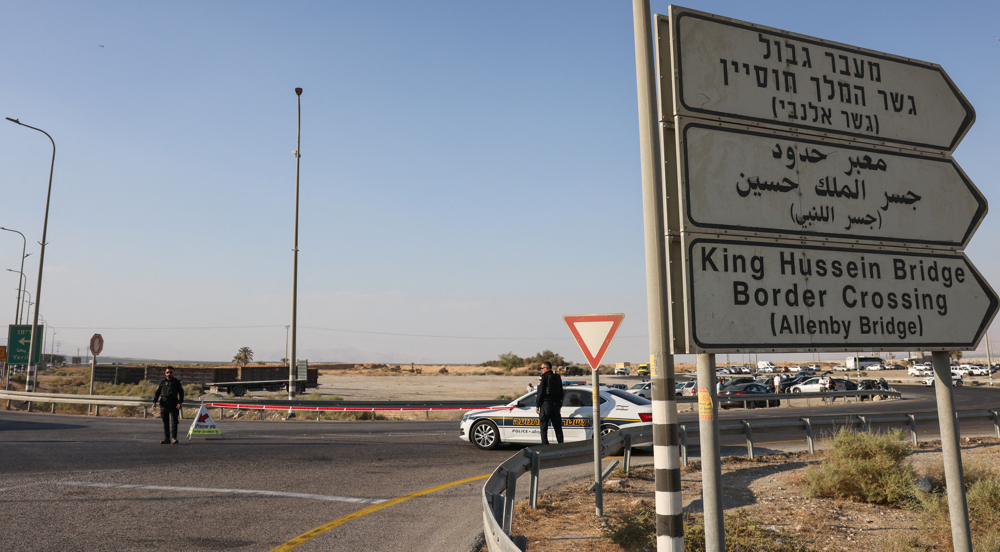
Coinciding with Israel’s Rafah offensive, which displaced about 1.4 million civilians, Jordan’s intensified security campaign gave the authorities a pretext to conflate political dissent with terrorism, aligning with Israeli efforts to disrupt arms supply routes from Jordan’s Allenby Bridge to the occupied West Bank.
By criminalizing expressions of solidarity and dismantling Palestinian resistance networks, King Abdullah’s government not only secured new financial backing from Persian Gulf states but also shored up its increasingly fragile rule.
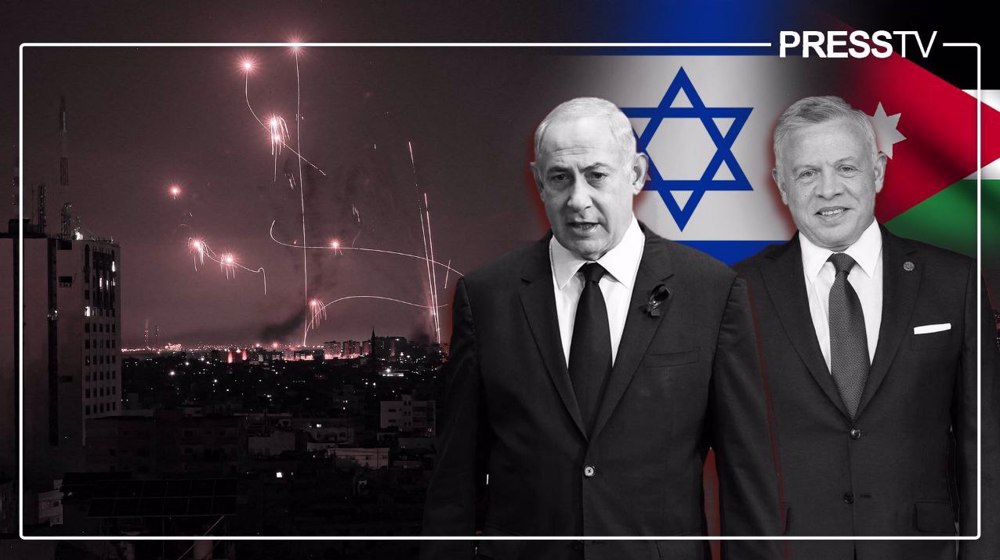
May 27, 2025: Diplomatic charades and unabated entwinement
King Abdullah II’s recent symbolic gestures, such as withdrawing from the UAE-Israel water-energy deal and recalling Jordan’s ambassador from Tel Aviv, served largely as palliative measures aimed at appeasing the kingdom’s Palestinian-origin majority.
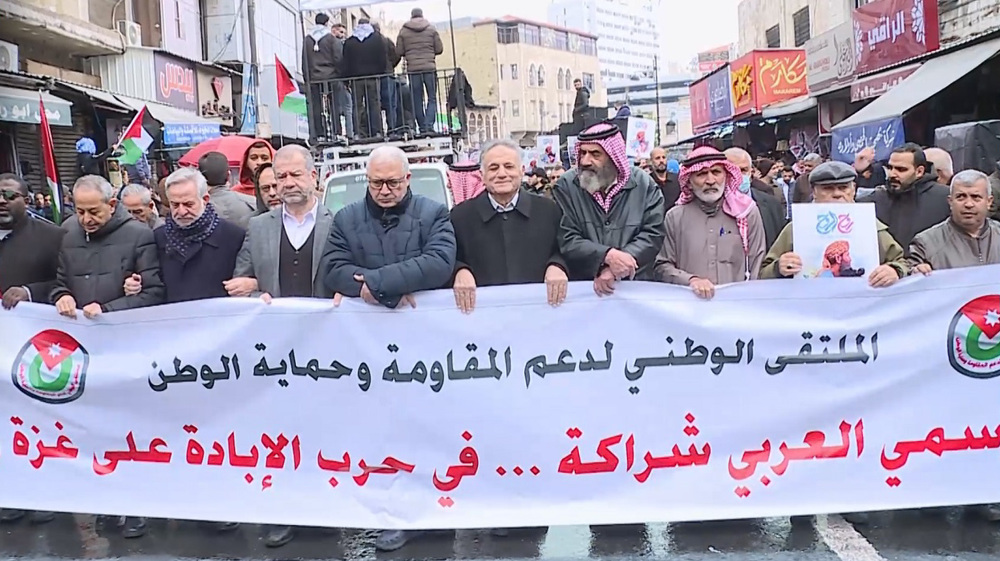
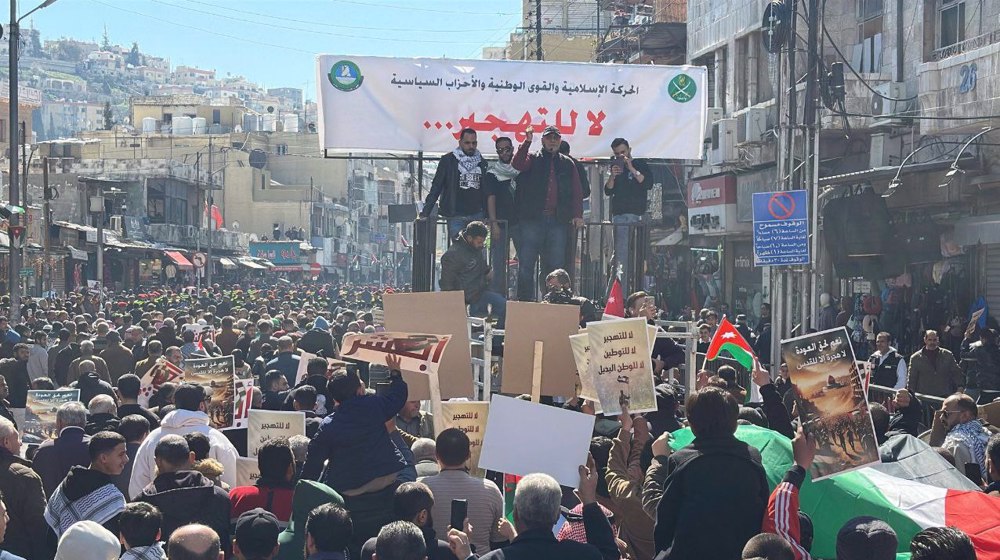
Protests against the war in Gaza continued across cities like Russeifa and Sahab, underscoring deep public anger over the ongoing bloodshed.
Despite these moves, Jordan’s security and economic ties with Israel only deepened. From intercepting Iranian missiles in April 2024 to holding joint security meetings in Manama on “West Bank instability,” a euphemism for Palestinian resistance, Amman’s actions continued to align with US and Israeli strategic interests.
Jordan’s dependency explains much of this compliance: water from Israel’s Sorek desalination plant, gas from the Leviathan fields, more than US$1.45 billion in annual US aid, 100 million cubic meters of water drawn from Israeli-controlled sources, and investments from Persian Gulf states all hinge on the kingdom’s adherence to Israeli military frameworks.
Yet, this alignment has come at a cost. Public discontent is rising, and the regime’s legitimacy continues to erode as Jordanians express outrage over policies seen as enabling Gaza’s ongoing devastation.
July 15, 2025: GID’s mass detentions target Gaza sympathizers
By mid-2025, as Israel’s Gaza genocide campaign expanded, encircling Deir al-Balah and cutting off aid to 2.3 million people, the Jordanian General Intelligence Department (GID) launched its most extensive crackdown in decades.
Hundreds were detained across Amman, Zarqa, and Mafraq for participating in Gaza-related protests, donating zakat to UNRWA in Gaza City, holding unsanctioned vigils at the University of Jordan, or posting pro-Palestinian messages from cafés in Irbid.
According to accounts from former detainees, interrogations often centered on forced pledges of loyalty to King Abdullah II. One reportedly said, “The investigation was done purely for the sake of Israel.”
The crackdown, funded in part by Saudi and Emirati aid to stabilize Jordan’s strained finances and $50 billion external debt, effectively criminalized calls for a Gaza ceasefire and stifled public expressions of solidarity.
Meanwhile, US assistance exceeding $1.45 billion a year continued to reinforce Jordan’s role as a regional buffer against grassroots resistance, ensuring that Palestinian voices within the kingdom’s souks and salons remain subdued under an increasingly repressive order.
Netanyahu's recent support for the 'Greater Israel' concept has raised alarms in West Asia, prompting strong condemnations from Iran, Egypt, Jordan, and others who warn of expansionist ambitions.
— Press TV 🔻 (@PressTV) August 15, 2025
Follow Press TV on Telegram: https://t.co/LWoNSpkc2J pic.twitter.com/MahTC1QJU6
October 11, 2025: CENTCOM cables expose Jordan’s role
Internal divisions within the US State Department surfaced after classified cables from CENTCOM’s Tampa headquarters were leaked, revealing details of the “Regional Security Construct,” a covert framework linking Jordan, Saudi Arabia, Egypt, Bahrain, Qatar, and the UAE with Israel and Washington in an anti-Iran alliance.
According to the documents, Jordan played a pivotal role by relaying real-time intelligence from Nevatim-linked radar arrays in the Jordan Valley, integrating sensor data for drone interception over the Negev, and hosting war games in Aqaba that simulated underground incursions modeled on Hamas’s tunnel networks.
These exercises, conducted by Jordan’s 2nd Mechanized Battalion alongside Israel’s Yamam unit and US Delta Force, were supported by encrypted Thales communications systems and formalized during the June 2024 Manama summit.
In exchange, Jordan received F-16 upgrades and expanded military aid.
The leaks showed that Jordan’s involvement in the Gaza genocidal war is deeply embedded within a wider regional security system aimed at strengthening Israel’s military dominance.
Tunnel countermeasures developed in Mafraq were later deployed in Jabalia in October 2025, where the Israeli occupation forces reported killing 1,200 Palestinian fighters.
Analysts argue that Jordan’s participation provided Israel with political legitimacy and regional cover, positioning the kingdom as a key buffer against Palestinian resistance through its integration into this anti-Iran alliance.
The documents further detail Jordan’s extensive cooperation in intelligence sharing, radar and sensor integration, and operational coordination, all enhancing Israel’s capabilities.
While officially justified as “countering Iranian threats,” these systems simultaneously reinforced Israel’s genocidal operations in Gaza. Conducted under strict secrecy, with classified meetings, encrypted communications, and joint air force drills, this collaboration underscores a systematic alignment between Amman, Tel Aviv, and Washington.
In effect, Jordan’s hosting of training exercises, intelligence exchanges, and security operations has strengthened Israeli surveillance, drone interdiction, and tunnel-warfare capabilities.
Far from a neutral intermediary, Jordan now operates as an active participant in a regional security framework that sustains the Israeli military.
The suppression of Palestinian resistance, the leaks suggest, has become a collective regional enterprise, one in which Jordan’s institutions play a central role by framing Palestinian activism as a security threat and legitimizing the broader anti-Palestinian architecture.

October 11, 2025: Leaked cables reveal depth of Jordan’s military integration
Leaked CENTCOM cables confirmed Jordan’s active role in facilitating tunnel-warfare training at Bahrain’s Isa Air Base, where 150 officers from Jordan’s 90th Special Forces Brigade were trained in Israeli Elbit Systems’ ground-penetrating radar techniques, tactics later deployed with lethal effect in Gaza’s Netzarim Corridor.
This trilateral coordination, aligned with Netanyahu’s regional agenda, integrated Amman into a broader counter-resistance coalition. The arrangement was reinforced by the deployment of 11 US-funded Apache AH-64 helicopters along the Shebaa Farms frontier to deter potential Hezbollah operations.
The scale of Jordan’s involvement is striking. A country hosting more than 660,000 Syrian refugees in Zaatari and grappling with the environmental crisis of the receding Dead Sea, simultaneously engaged in efforts that suppressed Palestinian resistance.
Domestic dissent, from the Islamic Action Front’s 2024 electoral gains to Amman’s “Black October” commemorations, was steadily contained to safeguard the annual $1.45 billion US aid package and secure water allocations from Lake Tiberias in the occupied Palestine.
The leaked documents further reveal that Jordan, along with Saudi Arabia, Egypt, Bahrain, Qatar, and the UAE, is part of the US-led “Regional Security Construct,” a secret framework linking these states with Israel and Washington in joint military and intelligence operations.
Among its initiatives was the subterranean warfare training that paired Jordanian officers with Israeli and US counterparts, demonstrating Jordan’s pivotal role in developing and operationalizing capabilities later used directly against Palestinian resistance movements.
Epilogue: From Hussein’s betrayal to Abdullah’s direct complicity
From King Hussein’s 1973 betrayal to the 2025 intelligence leaks, Abdullah II’s Jordan now stands exposed as a central pillar in Israel’s Gaza campaign.
The Palestinian cause, once the monarchy’s proclaimed moral compass, has withered under a web of alliances that prioritize power and hegemony over justice.
Gaza’s devastation remains the enduring testament to that complicity. As regional tensions evolve, from Hay’at Tahrir al-Sham’s entrenchment in Damascus to Houthi missile strikes off Eilat, Amman faces a defining choice: to sever its complicity or to persist in betrayal.
At home, the Jordanian regime increasingly targets citizens and activists whose only transgression is moral solidarity with Palestine.
These crackdowns, devoid of credible links to armed resistance, underscore a broader fear: that empathy itself threatens the kingdom’s fragile political order. In coordination with Persian Gulf patrons, chiefly Saudi Arabia and the UAE, this repression guarantees the financial lifelines that sustain the monarchy, even as its legitimacy erodes.
Arwin Ghaemian is a historian and political analyst. He resided in Arab countries for nearly two decades. His expertise is Iran's modern history and West Asia's socio-economic and security issues.
US missiles launched from residential areas of neighboring countries: Tehran
Pezeshkian: Nakhchivan aerial bombardment not linked to Iran
US, Israeli targets struck in mass IRGC missile, drone strikes


Trump's aides urging him in private to devise exit plan from Iran war
Iran destroys 10 US radars in region, says it will decide when war ends
‘There is no end to this war’: Commander says Iran firmly determined to punish US, Israel
Iran warns UN Security Council of ‘grave dangers’ to civilians amid US-Israeli aggression
Iran downed 11 US MQ-9 Reaper drones worth over $330mn: report
Iran official rejects Trump’s claims on women footballers, says ‘games’ can't divide country
Iran FM defends attacks on American bases in region citing US propaganda video
Iran will not target any country not used for aggression: Pezeshkian


 PressTV NEWSLETTER
now
PressTV NEWSLETTER
now

 This makes it easy to access the Press TV website
