

Nearly one million of the Gaza Strip’s 1.1 million olive trees have been destroyed by Israel, according to a report.
The Israeli military has bulldozed Gaza’s olive groves, dried up from lack of water, or remain inaccessible, leaving Palestinian farmers with little to harvest, Drop Site News reported on Monday.
Farmers are facing their third consecutive year without a meaningful olive harvest as the Israeli military has bulldozed groves.
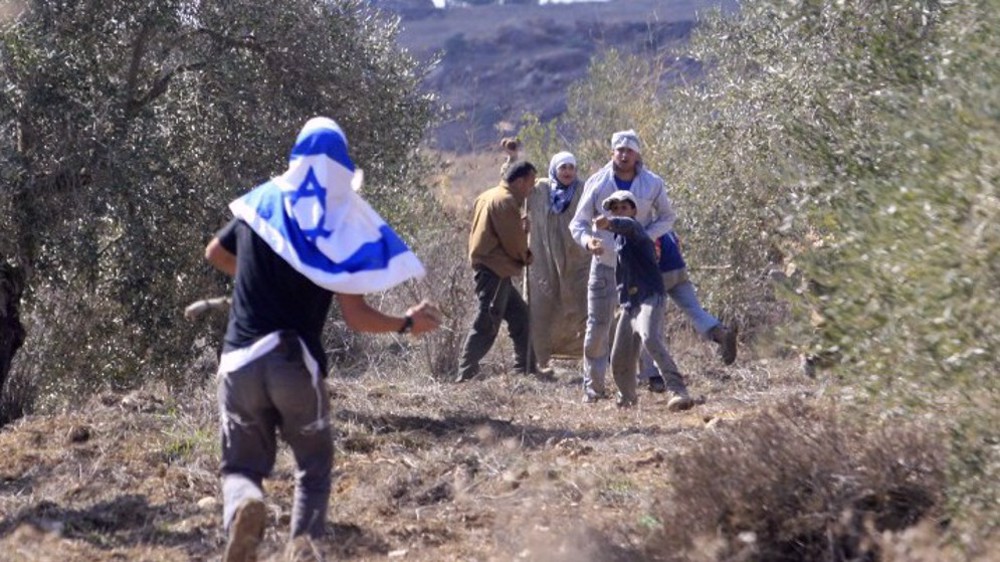
On Sunday, violent clashes erupted in the village of Turmus’ayyer, near Ramallah in the occupied West Bank, on the first day of the olive harvest. A group of Israeli settlers attacked Palestinian farmers, resulting in multiple injuries, including a Palestinian woman who was knocked unconscious. Journalist Jasper Nathaniel, who documented the assault, reported that Israeli soldiers had directed farmers into an ambush by armed settlers.
Despite a fragile “ceasefire” implemented on October 10, Gaza's farmers continue to struggle.
Gaza-based journalist Mohamed Suleiman highlighted the despair facing olive farmers, noting that two years of war have obliterated the local olive oil industry.
Hajj Suleiman Abdel-Nabi, a 75-year-old farmer, lamented the devastation of his olive farm in southern Gaza’s Al-Mawasi area.
“Water has become more precious than gold,” he said, emphasizing the critical water shortages as people suffer both thirst and crop failures.
Since the onset of Israel’s genocidal war in October 2023, agriculture in Gaza has faced catastrophic setbacks, with almost all cropland either damaged or inaccessible.
A report from the Food and Agriculture Organization of the United Nations revealed that 98.5 percent of Gaza’s cropland is affected by the war, leaving just 1.5 percent viable for cultivation.
Mohammed Abu Odeh, an agricultural expert, expressed concern, stating that numerous farmers are risking their safety to harvest whatever remains.
“The olive harvest is central to life in Gaza,” Abu Odeh emphasized. “Over 10,000 families depend on it, yet the costs of production have skyrocketed.”
A liter of olive oil now sells for approximately 100 shekels (about $30), nearly double last year's price, making it a luxury for many.
For Abdel-Nabi, the fallout is personal. Once a bountiful producer yielding over 35 gallons of oil annually, he is now forced to buy olives he once sold.
“This year, I buy the same olives and oil I once sold,” he reflected. He mourned the loss of community joy during the olive harvest, saying, “Our happiest time of year has turned into despair.”
Despite these challenges, young farmers like 21-year-old Ahmed al-Adini remain resolute. With a meager harvest of 170 kilograms, significantly down from pre-war yields, he and his family continue to prioritize their crops. “For my father, it’s not just oil—it’s identity,” he shared, highlighting the cultural significance of olives in Palestinian heritage.
As the Israeli siege continues, the destruction has left only a handful of olive presses operational—down from more than 35 before the war. Fuel costs for processing have skyrocketed, pushing many farmers closer to the brink of despair.

Fayyad Fayyad, head of the Palestinian Olive Council, outlined the dire situation: “There is no olive season this year... We estimate that nearly one million of Gaza’s 1.1 million olive trees have been destroyed.”
He emphasized the need for a revival plan to rebuild Gaza’s olive sector, contingent on the stability of the ceasefire.
Despite the overwhelming challenges, Gaza’s farmers show enduring resilience, returning to their groves to salvage what they can.
“The olive tree is the story of Palestine,” Abdel-Nabi concluded. “Even when it burns, it still stands in our hearts.”
 This makes it easy to access the Press TV website