$3 billion Tehran-Qom-Isfahan rail redefines Iran’s transit role
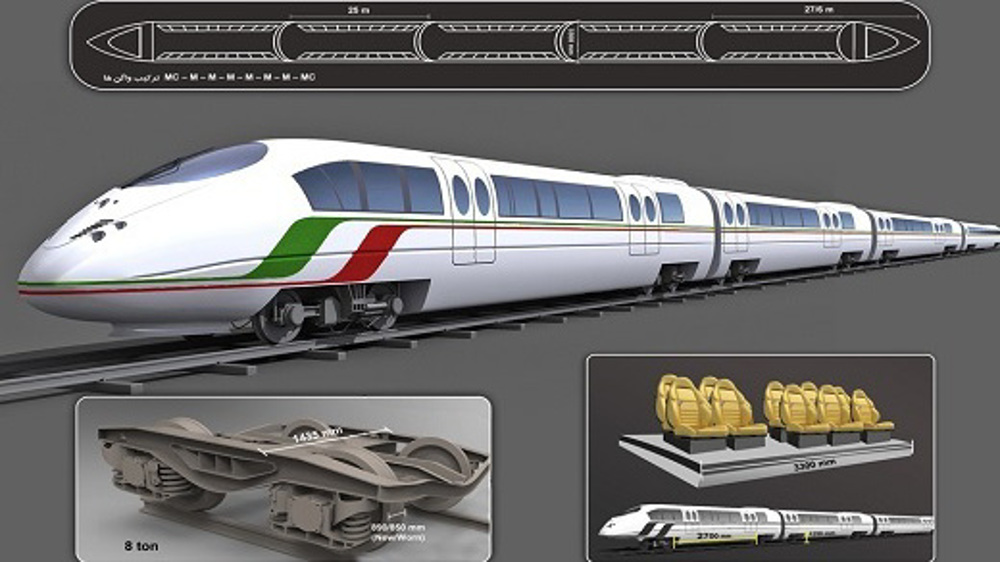
Iran stands on the verge of a transportation revolution, where a landmark infrastructure project nearly two decades in the making is poised to reshape the nation’s transit landscape.
The Tehran-Qom-Isfahan high-speed rail line is a strategic lever set to elevate Iran’s role in international trade and transit corridors, redefine regional connectivity, and drive a critical technological leap forward in the country’s railway sector.
The 410-kilometer rail corridor promises to knit together two critical international transit arteries - the North-South Corridor, linking Russia to the Persian Gulf and onward to India, and the East-West Corridor, or the modern Silk Road, connecting China to Europe via Central Asia and Turkey.
Iran’s unique geography positions it as an indispensable transit hub, one capable of significantly shortening travel times, slashing logistics costs, and offering an alternative to congested maritime chokepoints like the Suez Canal.
The North-South Corridor, spanning Russia, Azerbaijan, Iran, and the Persian Gulf, aims to reduce freight transit times by up to 40% compared to traditional routes, enabling faster, cheaper, and more efficient trade flows.
Meanwhile, the East-West Corridor capitalizes on Iran’s land bridge to facilitate direct rail access between Asia and Europe, diversifying supply routes and decreasing overreliance on maritime passages vulnerable to geopolitical disruptions.
Beyond strategic considerations, the Tehran-Qom-Isfahan rail project carries profound domestic economic implications.
Annually, over 10 million travelers shuttle between these cities, almost all by road. This heavy reliance on highways strains infrastructure, raises accident rates, escalates fuel consumption, and exacerbates urban air pollution.
The high-speed rail, designed to operate at speeds of 250-300 km/h, will cut travel times to under two hours, promising a safer, greener, and more efficient alternative.
From an economic standpoint, the rail line will stimulate regional development, unlock new business opportunities, and boost employment both directly through construction and indirectly via subordinate services.
The projected modal shift of 30% of road passengers to rail is expected to translate into significant savings in fuel imports and healthcare costs linked to pollution and traffic accidents.
Moreover, by advancing domestic capabilities in high-speed rail infrastructure ranging from track laying to electrification and signaling, Iran can gradually reduce dependency on foreign technology and expertise, paving the way for exportable know-how and regional influence in railway construction and operations.
Currently, Iran’s conventional rail speeds average a modest 70-80 km/h, inadequate for a country with sprawling geography and ambitions for economic integration.
The introduction of cutting-edge high-speed rail technology via this project is a milestone, signaling a critical leap towards modernizing Iran’s transport backbone.
By mastering this technology, Iran stands ready to expand high-speed rail to other strategic routes such as Tehran to Mashhad, Tehran to Tabriz, and beyond, thus weaving a dense network of fast passenger and freight services.
Such expansion will further consolidate Iran’s role as a continental transit hub and enhance the attractiveness of its corridors for international investors and logistics providers.
Regional neighbors like Saudi Arabia, Turkey, and Iraq have already invested heavily in high-speed rail lines, intensifying competition for transit dominance.
For Iran, success in this project is about asserting a competitive edge, leveraging its geographic centrality and rich technical human capital to dominate Eurasian transit flows.
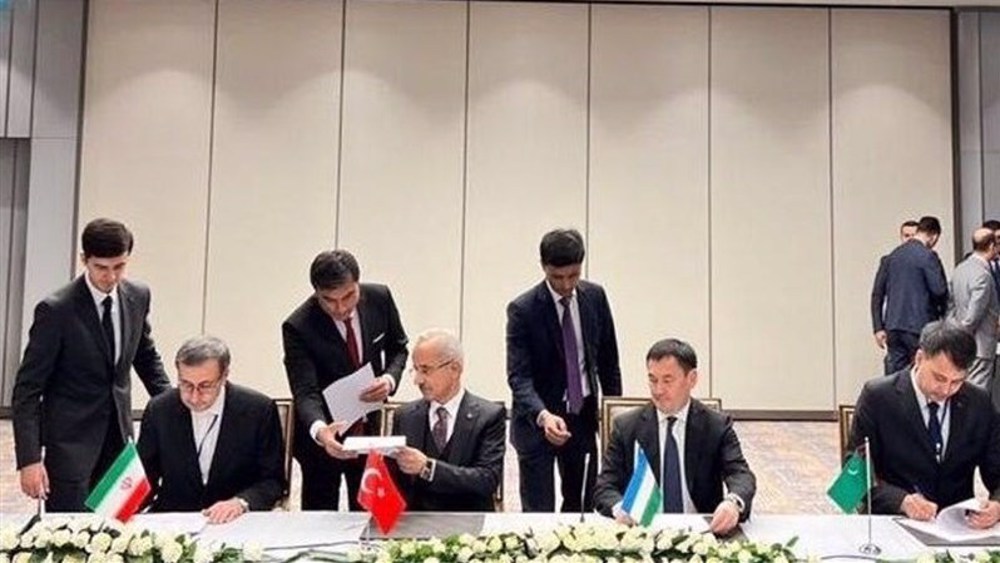
The project’s financing model includes an intricate mix of government funds and private investment from key provinces, reflecting a pragmatic approach to mobilizing capital amid sanctions and economic challenges.
Approximately $3 billion in total investment, half public and half private, is earmarked to complete the project, which is currently 75% complete in the critical Qom-Isfahan segment.
Collaborations with Chinese firms have not only brought needed financing but also facilitated the transfer of technical know-how and project management experience.
The resolution of remaining financial and operational bottlenecks will be pivotal to ensuring the project’s completion within the next two years, potentially before the end of Iran’s current administration.
Once operational, the Tehran-Qom-Isfahan high-speed rail is projected to carry 8 million passengers in its first year, with a long-term target of 20 million annually. This modal shift will underpin a more resilient, efficient, and sustainable transport system, relieving pressure on road infrastructure and aviation.
Critically, this rail corridor complements Iran’s broader ambition to integrate into the global transit network, capture a larger share of the lucrative international freight market, and diversify its economy beyond oil revenues.
As the world grapples with supply chain disruptions and geopolitical uncertainties, Iran’s investment in rail infrastructure is a bet on its geographic advantage and technical capability to evolve from a regional bystander to a pivotal transit player in Eurasia.
The Tehran-Qom-Isfahan high-speed rail project is an economic and geopolitical catalyst that signals Iran’s resurgence as a vital transit crossroads between Asia and Europe, north and south.
By harnessing cutting-edge technology, mobilizing cross-sector investments, and building resilient transport networks, Iran is charting a path toward sustainable growth, regional integration, and enhanced global connectivity.
If completed on schedule, this mega-project will stand as a testament to Iran’s potential to lead the future of international transit corridors, offering a faster, greener, and more competitive alternative for global trade flows and shaping the economic landscape of Eurasia for decades to come.
The story of ancient Persia’s chromium steel
Shift in multi-tier forex rate to improve economy
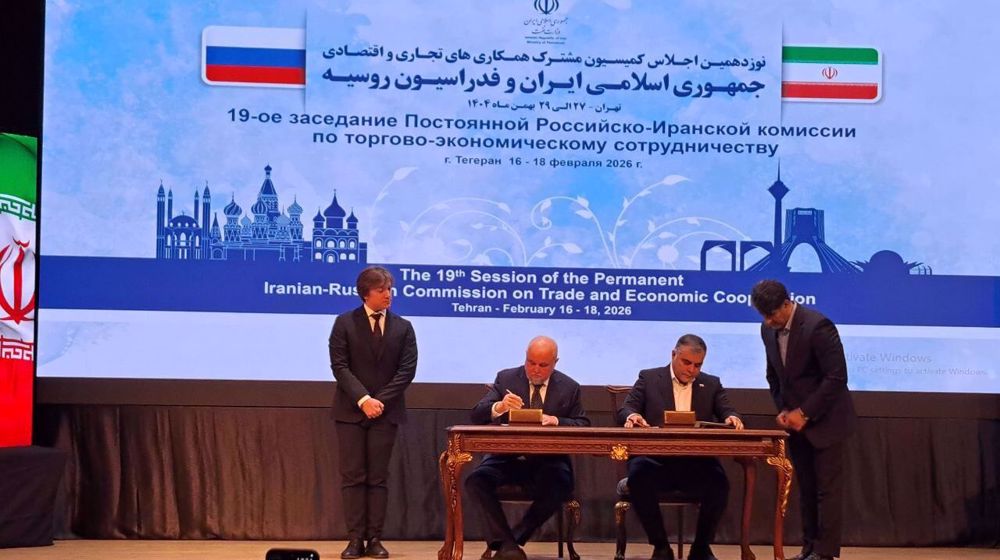
Iran, Russia sign cooperation document, four MOUs on trade, energy



Saudi Arabia lobbied for UAE sanctions: Trump
IRGC launches missile, drone strikes against Israel in response to US-Israeli aggression
IRGC pounds US bases across West Asia following US, Israeli aggression
VIDEO | Plan for US-pegged digital currency in Gaza raises sovereignty fears
OIC welcomes Oman-mediated Geneva talks between Iran, US; warns against use of force
VIDEO | Campaign to boycott Israeli ‘apartheid dates’ in UK intensifies during Ramadan
VIDEO | Pakistan launches Operation Ghazab lil-Haq after Afghan border firing
VIDEO | Pakistan condemns Israel’s expansionist agenda in Palestine at OIC


 PressTV NEWSLETTER
now
PressTV NEWSLETTER
now

 This makes it easy to access the Press TV website
