As an Arab Christian, Why Sayyed Hassan Nasrallah became a guiding light for me

By Myriam Charabaty
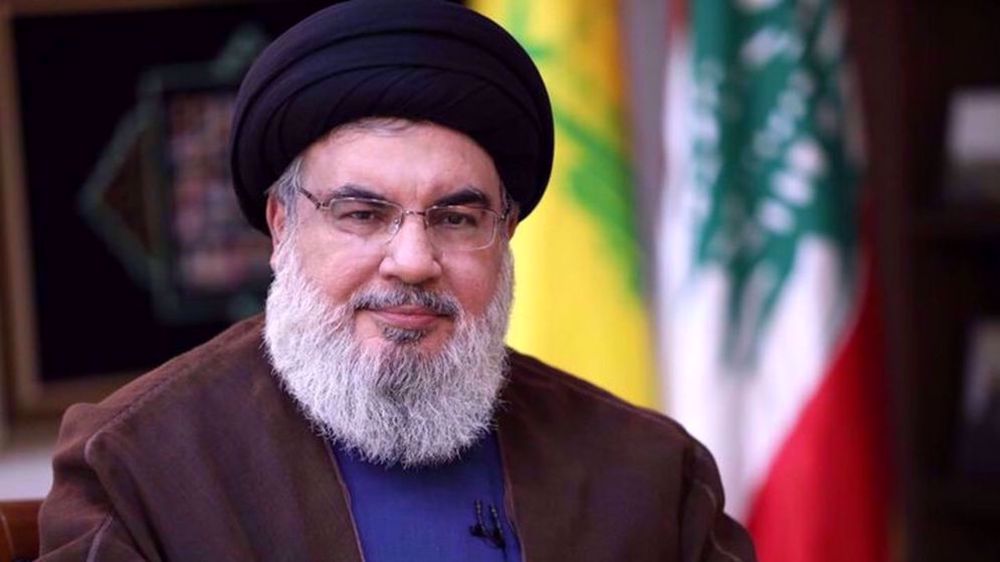
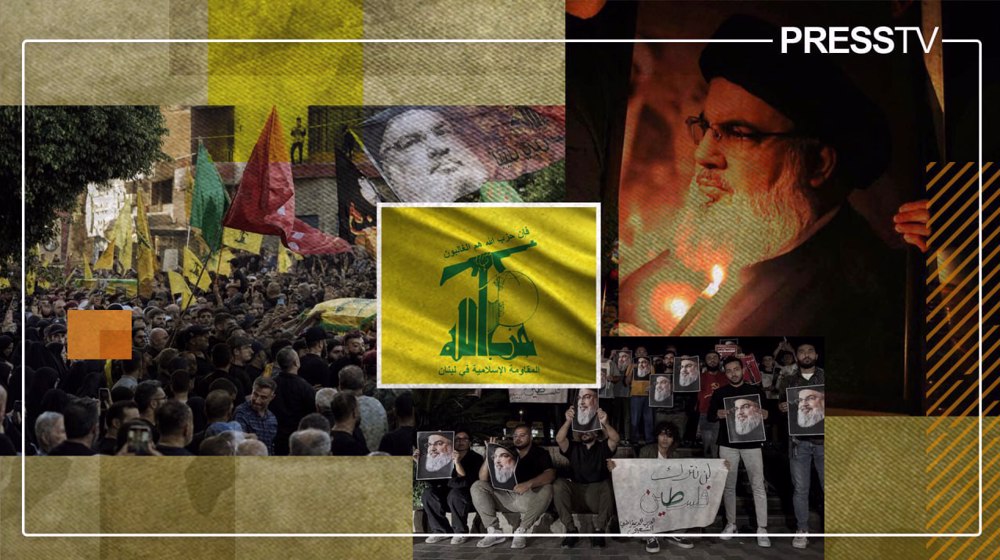
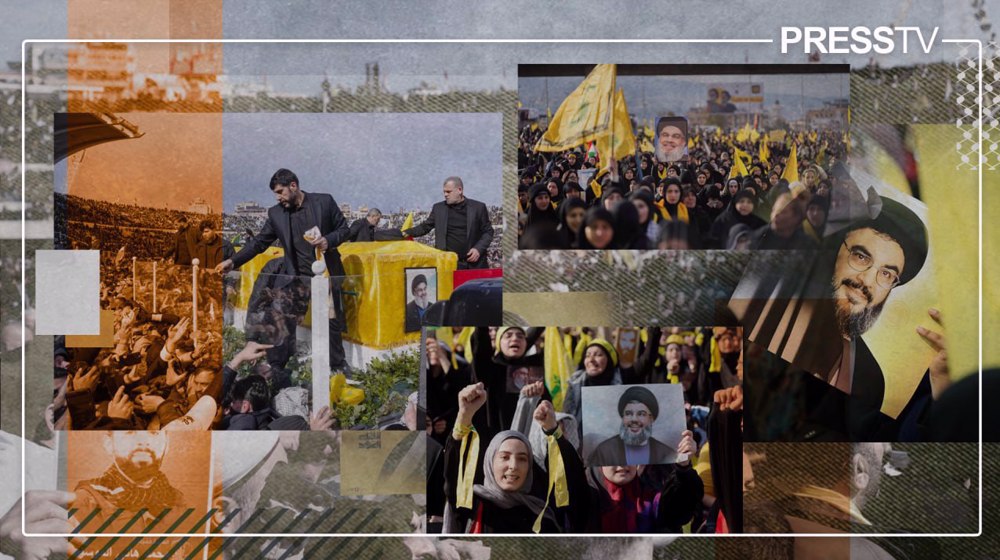
For many in the West, it might seem strange, perhaps even unfathomable, that a Christian would rally behind a Muslim leader, watching his speeches and when martyred, feeling orphaned and attending his funeral and later the first anniversary of his ascension.
Yet here in the Arab world, we, pro-resistance Christians, did that, do that, proudly, with our Bibles and crosses, we walk steadily on the path of Martyr Sayyed Hasan Nasrallah.
We have long witnessed, in the martyred leader, not merely the head of a resistance movement but a father, and a figure who carried the weight of liberation: liberation of Palestine, liberation of the region from occupation, and liberation of its people from the residues of colonial narratives.
Faith beyond sectarianism
Sayyed’s legacy lies first in his ability to break the mold of sectarian politics. Through a deep faith and an expansive understanding of Islam, he redefined religion as a unifying force rather than a dividing one. He demonstrated, in word and deed, that power and status could never corrupt a person whose scale of values was anchored in justice and humility.
For Christians of the region, this was not an abstract reassurance; it was a lived experience. Sayyed spent years distinguishing between sectarianism and faith, insisting that Islam in its pristine form was never a threat to our existence but a shield for it.
He went further, urging his followers to guard their tongues in political disputes. He warned them not to use words that could wound Christianity itself, even when some Christians aligned with Western agendas.
His insistence was clear: we must not confuse individuals who betray their communities with entire faiths that remain rooted in Arab identity and genuine spirituality. In doing that, he not only protected Christians but also dignified them as equal partners in the struggle against imperialism and Zionism.
Aerial footage from the ceremony held honoring the one-year anniversary of the martyrdom of Hezbollah leaders Sayyed Hassan Nasrallah and Hashem Safieddine in Beirut.
— PressTV Extra (@PresstvExtra) September 27, 2025
Follow Press TV on Telegram: https://t.co/h0eMpigtxM pic.twitter.com/szk6DbQYDc
Resistance as protection
This principle was not confined to his words. It was made visible in times of war. When Sayyed called his men to defend dignity and sovereignty, resistance fighters ascended as martyrs in Christian towns, defending churches and shielding communities from takfiri forces financed by the same imperial powers that menace all Arabs.
These sacrifices drew a line of continuity between our shared survival and the Resistance’s mission: a reminder that sectarian maps like Sykes–Picot do not reflect the true demographic and moral fabric of this region.
From South Lebanon in 2000 to Syria, Iraq, and Yemen, the resistance movement under Sayyed’s leadership projected an ethic rarely found in warfare.
Neither allies nor enemies have been able to accuse Hezbollah of corruption or vengeance. Instead, testimonies abound of fighters urging their adversaries to surrender, offering them safety, even counseling them to return to faith at a time when the enemy would have slit their throats without hesitation had the circumstances been different.
And here I am referring to real incidents in Syria when Hezbollah fighters besieged Takfiri terrorists, but they did not want to have to fight them to the death; they believed there had to be another way because it was their moral duty to ensure there wasn’t before they took anyone’s life.
This moral high ground is not incidental; it is the very core of Sayyed’s vision, extended from the Islamic Revolution of Iran, that war itself must remain bound by ethical restraint.
Lebanon honors Nasrallah, other Hezbollah leaders on their 1st martyrdom anniv.@Mariampresstv reports from Beirut.
— Press TV 🔻 (@PressTV) September 28, 2025
Follow: https://t.co/mLGcUTSA3Q pic.twitter.com/L3ojchpPQW
Palestine at the core
It is within this same moral framework that Sayyed placed Palestine at the heart of regional destiny. He understood that without Palestine, the Arab world’s dignity could not be restored.
His decision to open a front in its defense was not simply a military calculation; it was an act that re-centered the cause of Palestine after decades of attempted liquidation.
For Christians, this decision resonated with profound familiarity. Catholic doctrine speaks of the Just War: a defense of the oppressed when no other path remains.
Sayyed’s choice carried that same moral weight, liberating us from the humiliation of inaction and reviving the unity of purpose first voiced in the 1940s, when Arabs rejected occupation outright. Long before Zionism infiltrated either Christianity or Islam to the degree it has today.
Christ was not neutral
This is where his example met ours. As Christians, we cannot see Christ as neutral in the face of injustice. He loved until the sacrifice, but he also stood against oppression, knowing it would lead him to the cross. His resurrection declared that sacrifice for a just cause is never in vain.
For us, justice means forgiveness for the repentant, humility in the knowledge that judgment belongs to God, and courage to stand when free will is misused to oppress others. Christ’s example compels us to defend the weak and serve the many, not to rule over them but to sacrifice for them.
In Sayyed’s leadership, we recognized these same values. Islam, despite theological differences, extends the human message of Christianity. And in Sayyed’s life, we saw those values embodied: humility, service, sacrifice, and a moral clarity that bound faith to liberation.
✍️ Feature - ‘Our hearts broke’: Lebanese Christians mourn Hezbollah leader, vow to continue his path
— Press TV 🔻 (@PressTV) October 6, 2024
By @hibamoradd https://t.co/e9gcdRBUPo pic.twitter.com/dNGEsZ281C
A shared human horizon
Sayyed Hassan Nasrallah was among the most devout of Muslim leaders, but he was also much more than that. He was a revolutionary and a symbol for anyone who looked to uphold their humanity in a world ravaged by greed.
He was also a humble man who believed that God’s word and followed through, believing piety could rescue this land from the destiny imposed on it by Washington and its allies.
And in doing so, he brought the land and its people dignity and truth.
He knew the region’s true identity is woven from multiple faiths, and that what unites them, justice, dignity, resistance to oppression, is far greater than what divides them.
For us as Arab Christians, his life and martyrdom affirmed that our Gospel is not contradicted but fulfilled in the struggle for liberation alongside our Muslim brothers and sisters.
Sayyed gave us proof that resistance is not sectarian, but the conscience of a people.
And in him, we found that rarest of things: a leader whose moral compass aligned with our deepest faith, and whose sacrifice revealed that liberation, whether called Christian or Muslim, is always, at heart, human.
Myriam Charabaty is a Lebanese journalist and political analyst
(The views expressed in this article do not necessarily reflect those of Press TV.)

Iran condemns ‘brutal’ Israeli attacks on Lebanon, says US accomplice
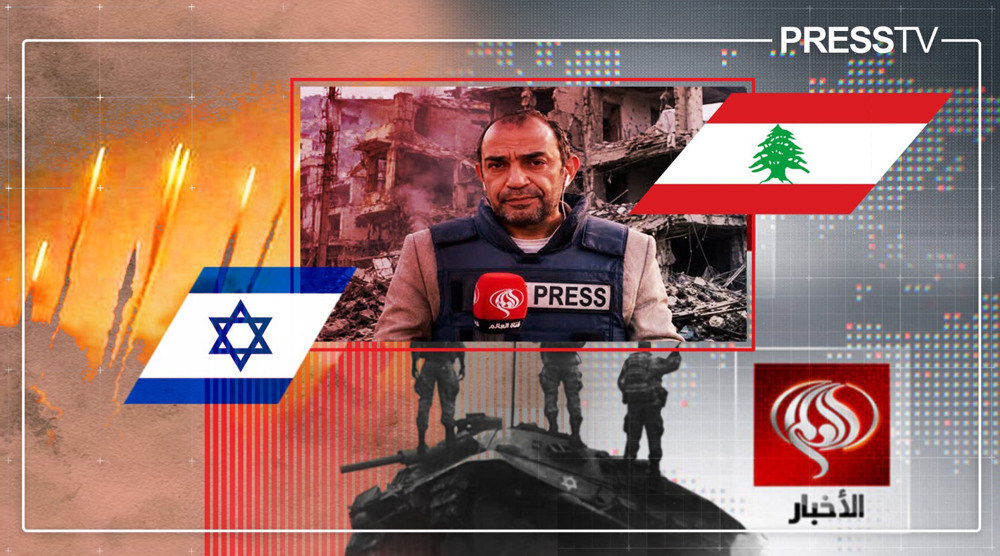
Profile: Hossam Zeidan, veteran Al-Alam journalist silenced after years documenting Zionist crimes

Hezbollah's hell of deadly drones drives Israeli desperation to bomb Beirut


New Israeli strikes kill five in southern Lebanon amid relentless truce violations
Most EU states favor foreign policy shift away from US: Survey
Iran urges end to Israeli ‘impunity’ as UN blacklists regime over sexual violence
Trump’s remarks on US-Iran talks ‘distortion of reality’: Report
Leader’s advisor: Iran remains formidable obstacle to US-Israeli malicious plans in West Asia
Iran says no final understanding with US yet, rejects Trump's 'language of must'
Iran, Oman FMs discuss administration of Hormuz Strait in ‘very productive’ call
Italy: Protesters stage nationwide strike, demand end to Israeli genocide in Gaza



 PressTV NEWSLETTER now
  This makes it easy to access the Press TV website