Dollar no longer safe haven, US economic fragilities erode trust in it: Economist

By Syed Zafar Mehdi
The dollar system is under unprecedented strain, largely due to the behavior and actions of the United States itself, says a world-renowned economist.
In an interview with the Press TV website, Paulo Nogueira Batista Jr., a Brazilian economist and former Executive Director at the International Monetary Fund (IMF), noted that the dollar has been weaponized by the United States.
"It (US dollar) is no longer seen by many as a safe haven. Moreover, the fragilities of the US economy also undermine trust in the dollar," said Batista Jr., who was one of the founding members of the New Development Bank (NDB) in Shanghai.
"In my view, the most probable scenario is the continuation of a gradual decline in the dollar. This decline may be accelerated if a new major financial crisis occurs in the US."
The process of de-dollarization has gained significant momentum in recent years with the emergence of new regional alliances such as BRICS, led by China and Russia.
Since the outbreak of the war in Ukraine and the subsequent freezing of Russian assets in the United States and Europe, the global push toward de-dollarization has grown exponentially, with countries in the Global South increasingly seeing it as essential to reduce their dependence on the US dollar.
As Trump threatens BRICS, dollar’s days look numberedhttps://t.co/I8BWByqGf5
— Press TV 🔻 (@PressTV) July 16, 2025
Many countries are already conducting international transactions in their national currencies or adopting alternative payment systems. There is also a growing discussion about a potential BRICS currency.
Batista Jr., however, said he does not believe that a BRICS currency can become a reality in the near future but feels the need for a new reserve currency as "undeniable."
"It is a complicated endeavor, from a technical as well as a political point of view. But the need for a new reserve currency seems undeniable. Let us hope that the BRICS can rise to the challenge," he told the Press TV website.
There is also a widespread belief that emerging blocs like BRICS, which includes China, Russia, Brazil, India, and Iran, will challenge and ultimately reshape the existing global financial architecture, with institutions such as the New Development Bank poised to play a central role.
The Brazilian economist and author of several books, including The BRICS and the Financing Mechanisms They Created: Progress and Shortcomings (2021, Anthem Press), said the Global South "expects a lot from the BRICS."
"This group of countries needs to take this into account. China, Russia, Brazil, India, Iran, and the other BRICS members have a role to play in reshaping the international financial architecture," he told the Press TV website.
"But we have yet to act accordingly. The New Development Bank has great potential but is still struggling to play a global role. I was one of the founders of the institution and can tell you that many of those involved in the project expected much more from the Bank in its initial 10 years."
De-dollarization gaining momentum fast: Chinese diplomathttps://t.co/jqCqQtd0Vr
— Press TV 🔻 (@PressTV) April 11, 2023
He said Iran was the first country to ask formally to join the New Development Bank.
"But, a decade has gone by and Iran is still not a member. It is a member of the BRICS political formation, but not of the development bank the group created."
The Trump administration recently released the new US National Security Strategy, which emphasizes that the Western Hemisphere, not China or the Middle East, is Washington's new priority. Many interpret this as a signal of the end of the US-led unipolar order.
Batista Jr. said the unipolar order has been "dead for quite a while now."
"It was actually a unipolar moment, historically speaking. It lasted basically a decade, during the 1990s. The NSS articulates the geopolitical views of the Trump administration. With respect to the Western Hemisphere their main concern is to counter the growing presence of China in the region," he stated.
"The NSS tries to revive the 19th-century Monroe Doctrine - 'America for the Americans.' At the time, this doctrine was directed at European powers. The new Monroe Doctrine is directed mostly at China. It remains to be seen which countries in Latin America will submit to this Monroe Doctrine 2.0 and which won't. I believe Brazil will not accept this."
On the US military buildup around Venezuela and threats against several countries in the South American region, which have grabbed headlines worldwide in recent months, the Brazilian economist and author said narcotics is "a mere pretext."
"The main driver here are Venezuela's immense oil reserves. The US government wants to install a puppet regime in Caracas."
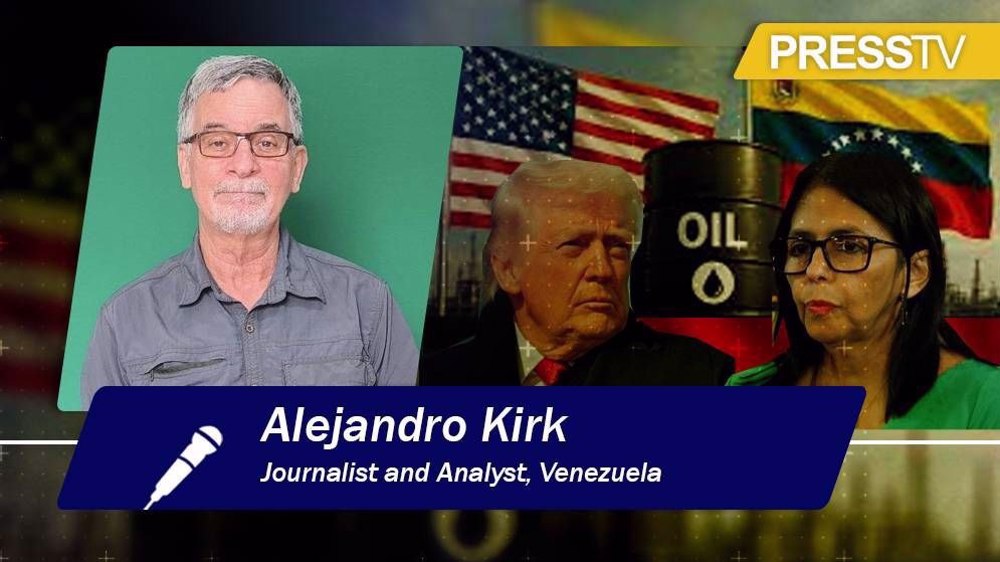
US-Venezuela oil deal a new phase in long history of US interventionism in Latin America: Journalist
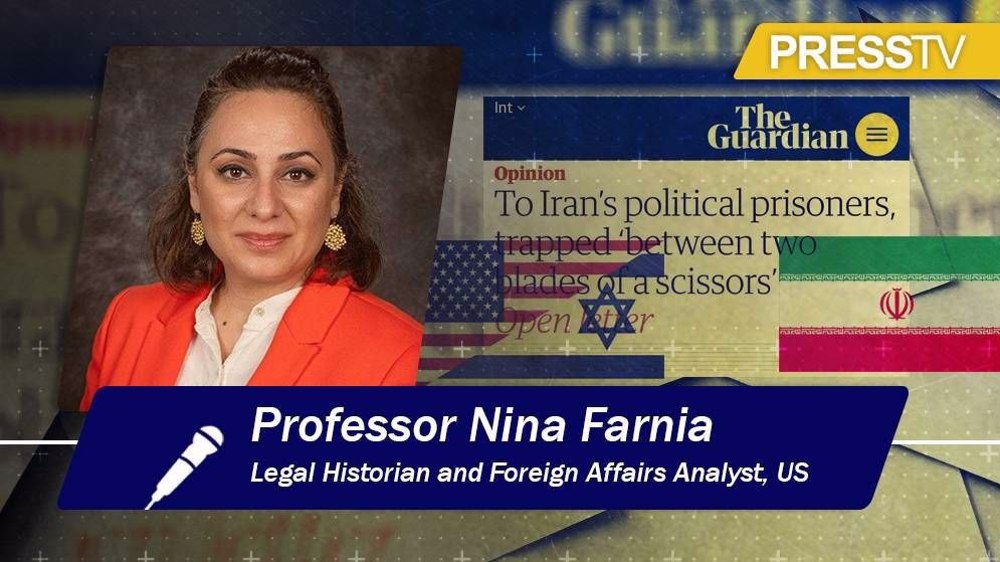
Western left’s ‘politics of purity’ reinforces the very imperialism it claims to oppose: Historian
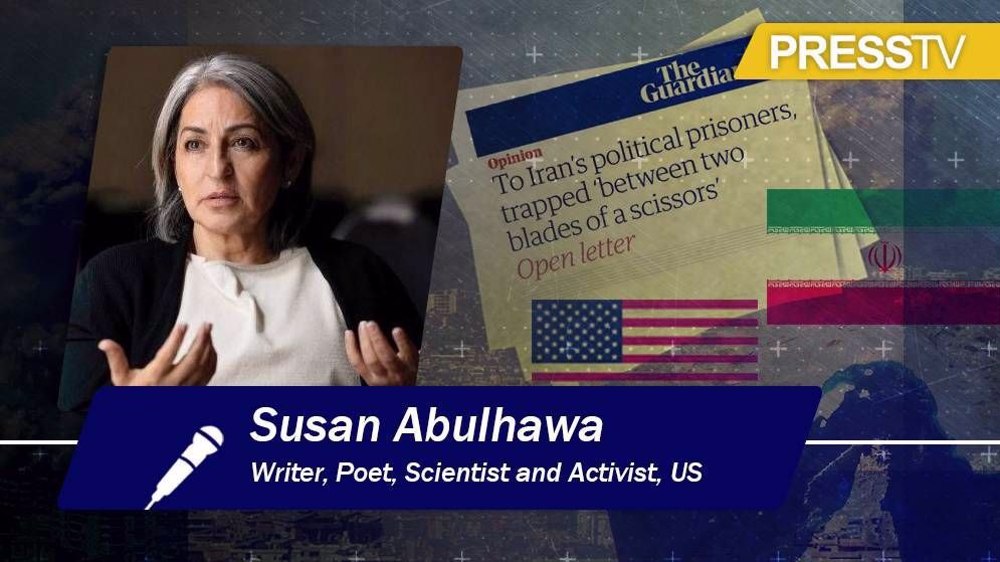
Iran is the last bastion of true anti-imperial resistance, owes no one an explanation: Writer



Argentina's Milei escalates Malvinas-Falklands dispute, eliciting UK's response
Iran, Russia can play effective role in restoring regional, global stability: Judiciary chief
UN report sounds alarm over 'ethnic cleansing' in West Bank refugee camps
Iranian Army advises US to pay price of aggression, leave region
Iran adds two more gold medals at 2026 World Nomad Games
Saudi mercenaries sent to Ta’izz amid fierce fighting with Yemeni armed forces
‘Miscalculated’: Iran Army says US failed to achieve war objectives
Iran represented new definition of national power during recent wars: Commander


 PressTV NEWSLETTER now
  This makes it easy to access the Press TV website