
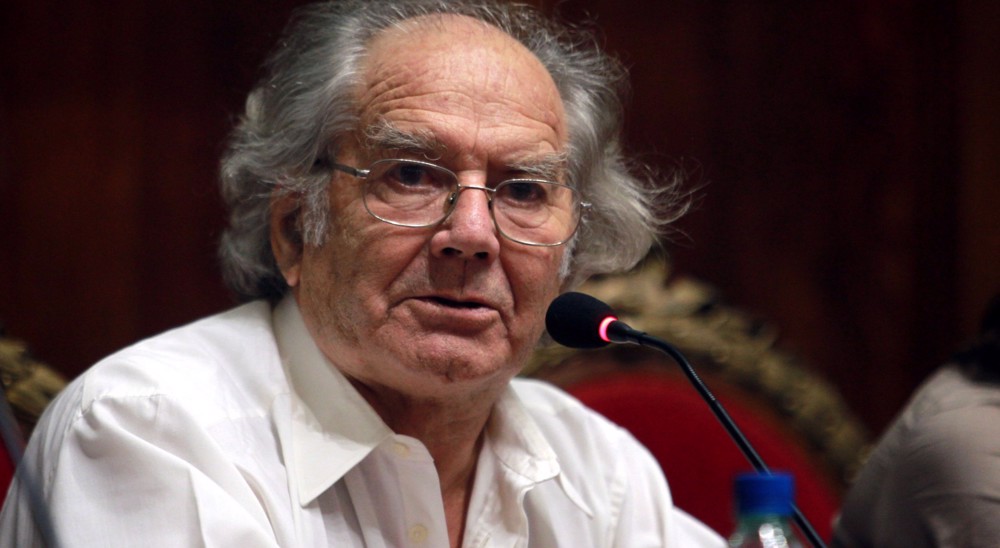
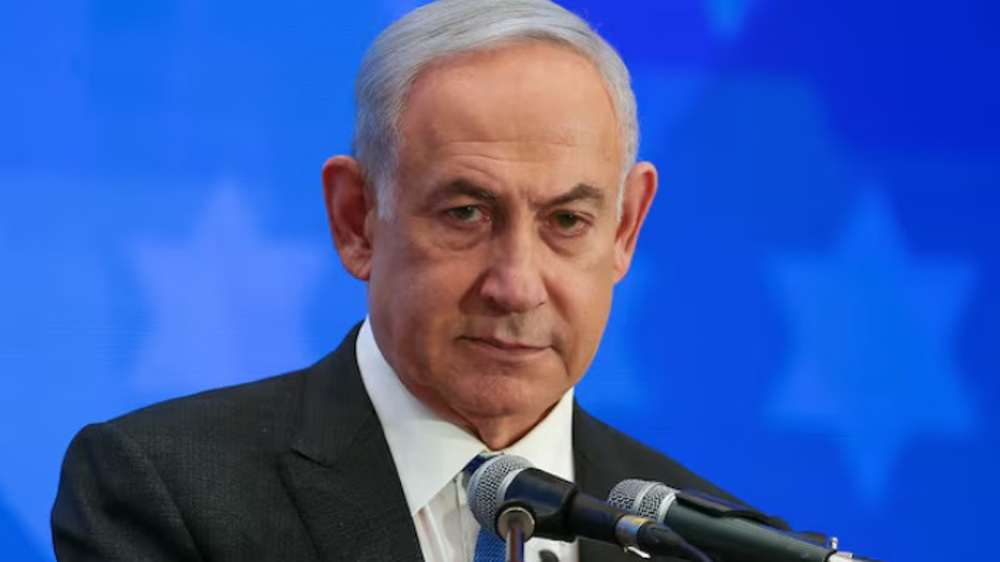
Argentine Nobel Peace Prize winner Adolfo Perez Esquivel has petitioned a federal court to uphold International Criminal Court (ICC) decisions and detain Israeli Prime Minister Benjamin Netanyahu on charges of genocide and war crimes if he makes a visit to the South American country.
“If he comes here, invited by President [Javier] Milei, logically, he (Netanyahu) will find resistance. And we hope that he does not come to the country,” Perez said on Monday.
Argentina, which acknowledges the jurisdiction of the ICC, is legally required to implement its rulings, he emphasized.
Perez charged Israel with intentionally aiming at civilians in Gaza, asserting that the Tel Aviv regime’s assaults have resulted in the deaths of approximately 20,000 children.
He also condemned Milei's administration for announcing it would not implement an arrest warrant should Netanyahu make a visit. President Milei has forged increasingly closer relations with Israel.
“The court’s position is unequivocal,” he said, calling the stance “a negative sign for democracy” and evidence of Argentina’s growing alignment with Israel and the US.
Perez, 93, is regarded as one of the most esteemed human rights advocates in Latin America.
He received the Nobel Peace Prize in 1980 for his peaceful resistance against the military dictatorship in Argentina, having been imprisoned and tortured for his activism before becoming a lifelong champion for justice.
The petition was submitted as Milei, a devoted supporter of Netanyahu, bolsters relations with Israel. Just last week, he was awarded the "B'nai B'rith" accolade for what the organization termed his unwavering commitment to Israel.
Netanyahu was expected to travel to Argentina after his visit to the US this week, but he reportedly canceled his plan. Israeli officials asserted that the visit was aborted “due to technical reasons.”
Elsewhere in his remarks, Perez took a swipe at Washington.
“The US supports Israel, even with the veto in the UN,” Perez said, adding that Washington poses the most significant barrier to achieving a peaceful resolution to the conflict.
He criticized Israel for having long sought to obstruct the establishment of a Palestinian state, supported by influential allies.
Perez expressed further disapproval of the UN, stating that it has been compromised by pressure from the United States.
“The UN has to be reformed and democratized. We, the peoples of the world, want peace. Yet, we see the current situation. It is extremely dangerous,” he said, noting the UN’s failure to stop both Israel’s bloody military campaign in Gaza and the war in Ukraine.
Perez emphasized that a great proportion of the Spanish-speaking Jewish community in Argentina, which is the largest in the world and is estimated to be at around 250,000 people, is strongly critical of the Tel Aviv regime’s actions in Gaza.
For instance, he referenced Jewish Argentine actor Norman Briski, who criticized the Israeli military's atrocities in Gaza and subsequently faced anti-Semitic attacks.
He detailed his collaboration with Jewish and pro-Palestinian activists in Argentina, highlighting “the Not in Our Name” campaign in Buenos Aires that aims for peaceful resolutions.
Perez also commended the objectives of the Global Sumud Flotilla, which aims to break the Israeli blockade in Gaza and provide assistance.
On the prospects for a ceasefire in Gaza, he said, “Israel must stop this genocide, which it continues to commit every day, bombing hospitals, schools, and destroying the lives of a people. That is really very, very bad, and humanity must help.”
Perez additionally charged Western nations with hypocrisy.
“On the one hand, European countries talk about wanting peace, but they continue to help Israel. The UN is silenced. The US continues to press to make the Palestinian people disappear,” he said.
 This makes it easy to access the Press TV website