13 years after US dropped its terror tag to push anti-Iran agenda, MKO fades into decay
By Ivan Kesic
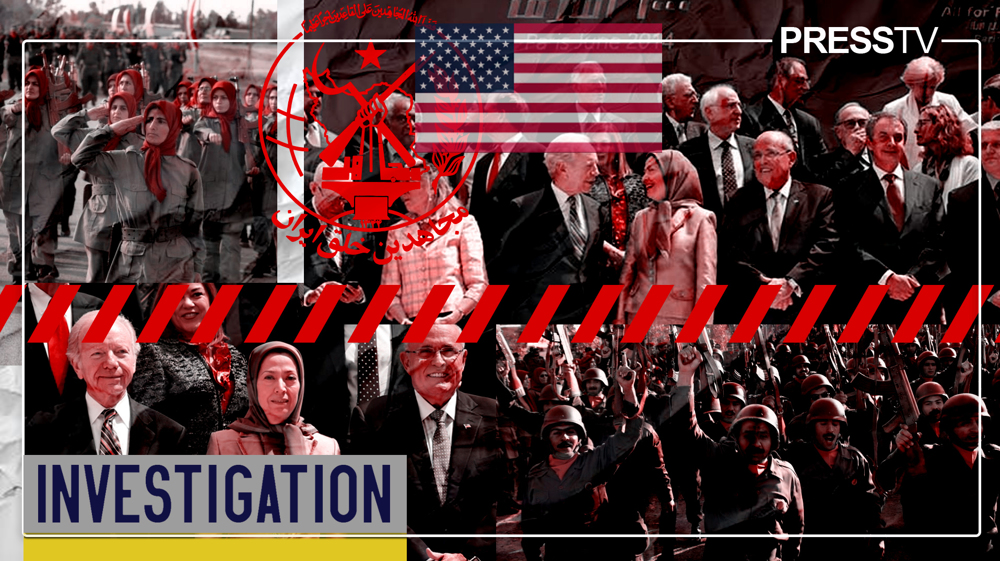
On this day in 2012, the US government formally removed the Mojahedin-e Khalq Organization (MKO) from its list of Foreign Terrorist Organizations, a designation it had held since 1997.
Framed at the time as a legal and humanitarian concession following a relentless, multi-million-dollar lobbying campaign by the Albania-headquartered group, the decision effectively whitewashed the history of one of the most notorious terrorist cults of the modern era.
The anniversary of the de-listing provides a stark reminder of the MKO’s rebranding as a “democratic opposition,” masking a long record of targeted violence: murder of thousands of Iranians, participation in genocide, and a cult-like control over its members that has been extensively documented.
Its evolution, from a group founded on its interpretation of Marxism to a mercenary force for Saddam Hussein, reveals a profound betrayal of its homeland and a relentless campaign of bloodshed.
Even while branded a terrorist group by its host, the MKO cultivated extraordinary influence in the US, aided by a cynical alliance of geopolitical interests that found utility in its anti-Iran agenda.
This influence was cemented not through popular support but via a multi-million-dollar lobbying blitz, enlisting a bipartisan chorus of former statesmen and sitting politicians, whose advocacy was amplified by substantial fees to portray the group as “freedom fighters.”
Yet in the years since this political victory, efforts to resurrect the MKO have collapsed into irrelevance, leaving the group isolated in a decaying Albanian compound, a grim monument to the catastrophic failure of attempting to weaponize a morally bankrupt and widely despised cult.
A legacy of betrayal and bloodshed
MKO’s foundation is steeped in violence and its history is a chronicle of treachery and bloodshed against the Iranian people, from ordinary citizens to senior government officials.
Founded in the 1960s, the MKO initially employed a confused ideology blending Marxism and Islam to oppose the US-backed Pahlavi regime in Iran. Still, its true character emerged through a deadly campaign of assassinations and bombings across the country after the 1979 Islamic Revolution.
After the Islamic Revolution, it quickly turned against the newly established Islamic Republic, launching a violent insurgency that struck at the very heart of the state.
The MKO was behind a wave of devastating attacks in the early 1980s, including the 1981 bombing of the Islamic Republic Party headquarters, which assassinated Chief Justice Ayatollah Mohammad Beheshti and 72 senior officials, among them 14 ministers and 27 members of parliament.
That same year, the group assassinated President Mohammad Ali Rajai and Prime Minister Mohammad Javad Bahonar.
In total, the MKO’s terrorist campaigns inside Iran have killed an estimated 16,000 civilians and officials, a death toll underscoring its relentless and indiscriminate violence.
The MKO’s betrayal of the Iranian nation was cemented during the Imposed War in the 1980s, when it abandoned any pretense of patriotism and directly allied itself with Saddam, the brutal Ba’athist dictator. This decision to side with a foreign aggressor permanently destroyed whatever minimal support it may have once held, branding it forever as a band of traitors.
From its Iraqi bases, the MKO conducted cross-border raids into Iran, fighting alongside Saddam’s Ba’athist army. Its complicity in horrendous crimes against humanity extended to assisting in the suppression of the 1991 uprisings in Iraqi Kurdistan and southern Iraq.
✍️ Feature -Trump's pick for Sec. of State Marco Rubio's love affair with Israel, MKO, Pahlavis
— Press TV 🔻 (@PressTV) November 14, 2024
https://t.co/9DNuBPxFMS
Former members recalled MKO leader Maryam Rajavi’s infamous command: “Take the Kurds under your tanks, and save your bullets for Iran’s Islamic Revolution Guards Corps (IRGC).”
This directive contributed to a genocide that killed approximately 100,000 Kurdish civilians.
MKO’s terrorism was not confined to Iran. In the 1970s, it systematically targeted and killed American military personnel and civilians in Iran. Victims included US Army Lt. Col. Lewis L. Hawkins, assassinated in June 1973, and Army officers Col. Paul Shaffer and Lt. Col. Jack Turner, killed in May 1975. In August 1976, the group murdered American civilian contractors William C. Cottrell Jr. and Donald G. Smith.
The MKO also attempted to assassinate US Ambassador to Iran Douglas MacArthur II in 1970, and in a 1972 plot, it detonated a bomb at a mausoleum where President Richard Nixon was scheduled to attend a ceremony, just 45 minutes after the blast.
Its international terror campaign continued for decades. In April 1992, the MKO launched coordinated assaults on Iranian diplomatic missions in thirteen countries across North America and Western Europe.
In New York, armed MKO members stormed Iran’s Mission to the United Nations, taking hostages and wreaking havoc. Similar violent takeovers and pillaging occurred in Ottawa, Bonn, Hamburg, The Hague, London, Paris, and other European capitals, leaving extensive damage, numerous injuries, and dozens of arrests.
This consistent pattern of violence proved that MKO was not a political opposition group but a terrorist organization with a decades-long record of targeting both Iranians and Westerners with equal ferocity—a legacy its costly lobbying campaign has desperately tried to obscure.
MKO's pre-delisting lobbying and Israeli connection
Despite its official designation as a Foreign Terrorist Organization in 1997, the MKO operated with remarkable freedom in the US for decades, cultivating ties with senior government officials and powerful lobby groups long before its formal delisting.
This access formed the backbone of a sophisticated influence campaign that belied its terrorist status. As early as the 1980s, the MKO had mastered the art of manipulating the American political system.
In 1985, The New York Times reported that at least 19 members of Congress had signed letters or statements circulated by the group, apparently unaware that the US State Department considered it a terrorist movement responsible for killing Americans.
The MKO’s front organizations, such as the so-called Iran Relief Fund, solicited contributions door-to-door across the US, raising nearly $100,000 in Maryland and Virginia in 1984 alone, until state authorities revoked its registration after learning of its true purpose from the US State Department.
This early penetration of American politics laid the groundwork for more audacious contacts.
In a stunning revelation, The Ottawa Citizen and the Chicago Sun-Times reported in 1993 that then-President-elect Bill Clinton had written a private letter to MKO leader Massoud Rajavi, and that the group’s top foreign policy adviser had met with Vice President-elect Al Gore. Even as it was officially branded a terrorist entity, the MKO had secured access to the very highest levels of the US government.
A critical, though often understated, element of the MKO’s strategy was its deliberate courtship of the Israeli lobby and its allies within Washington. The group correctly identified pro-Israel circles as the nerve center of US West Asia policy and focused heavily on befriending them.
International Peace Day event in Tehran exposes MKO-Israel nexus in 12-day war@farzanehpresstv reports from Tehran.
— Press TV 🔻 (@PressTV) September 23, 2025
Follow: https://t.co/mLGcUTS2ei pic.twitter.com/45JnUqspkP
The Guardian reported in 1993 that the MKO believed its “hopes of respectability and an influence on Mr. (Bill) Clinton’s foreign policy will hinge on the support of the influential pro-Israel lobby in Washington.”
The irony was striking: even as MKO leader Massoud Rajavi denounced “US imperialism” and “world Zionism” in Iraq, the group was simultaneously aligning itself with the very forces it claimed to oppose.
The strategy, however, paid off. Key members of US Congress linked to Israeli lobby groups became the MKO’s most vocal defenders.
Representatives Gary Ackerman, Robert Torricelli, Dan Burton, and Ileana Ros-Lehtinen repeatedly championed the MKO’s cause, dismissing US State Department reports that exposed its terrorist and cult-like nature. Their support extended beyond rhetoric: they submitted MKO statements into the Congressional Record, advocated for the group during hearings, and even attended its rallies.
This alliance was rooted not in principle, but in a shared hostility toward the Iranian government, transforming the MKO into a convenient tool.
The collaboration became operational in 2002, when an MKO representative dramatically revealed the existence of Iranian nuclear facilities at Natanz and Arak. The actual source of this intelligence, however, was Israel, which passed the information to the MKO to announce publicly, using the terror group as a cut-out to trigger confrontation between Iran and the international community.
This episode encapsulated the “strange bedfellows” alliance between the MKO, the US, and Israel: a partnership built not on shared values, but on a shared desire to undermine the Islamic Republic – no matter the moral or strategic cost of empowering a terrorist cult.
American politicians who lobbied for the MKO
The campaign to remove the MKO from the US terrorist list was arguably one of the most expensive and effective foreign influence operations in modern American history. It succeeded through a powerful, bipartisan coalition of paid former officials and ideologically motivated sitting politicians.
The most visible aspect of this effort was the deployment of high-profile former US officials as paid surrogates. Through a network of front organizations, the MKO funneled enormous speaking fees, often reported at $20,000 to $50,000 per appearance, to these figures, who in turn lent their credibility and access to the terrorist group’s cause.
On the Republican side, the advocates were numerous and outspoken. Rudy Giuliani, the former Mayor of New York City, became the most public face of the campaign, delivering fiery keynote speeches at MKO rallies in Paris and Washington, where he demanded delisting and endorsed regime change in Iran.
John Bolton, the former US Ambassador to the UN, was a consistent voice, arguing that the MKO’s designation was merely a political concession to Tehran.
Newt Gingrich, the former Speaker of the House of Representatives, framed the issue as central to pursuing a tougher Iran policy. They were joined by other prominent Republicans, including Tom Ridge, the first Secretary of Homeland Security; Michael Mukasey, former US Attorney General; and Louis Freeh, former FBI Director.
The campaign was notably bipartisan, enlisting high-profile Democrats to create an illusion of broad-based support. Ed Rendell, the former Governor of Pennsylvania, was among the most active, publicly acknowledging the high speaking fees and defending the practice.
Howard Dean, the former Vermont Governor and Democratic presidential candidate, also spoke in favor of the MKO, as did Bill Richardson, the former Governor of New Mexico and US Ambassador to the UN.
🎥 The Story of Masoud and Saddam - Part 1
— Press TV Documentary (@presstvdoc) July 23, 2025
🔻 This three-fold documentary exposes MKO’s corruption — from terrorism in Iran to collusion with Saddam’s Baath regime.
📺 Tune into Press TV
🗓 Saturday, July 26th
🕧 00:30 | 05:30 | 11:30 | 16:30 | 21:30 GMT pic.twitter.com/7mOkPEPTG7
This practice drew sharp criticism from the FBI and State Department, who warned that the fees were effectively payments from a terrorist group. The officials countered that they were being paid by dissident organizations in exile, a distinction critics dismissed as meaningless.
While sitting officials could not accept payments, many became vocal advocates out of ideology, constituent pressure, or shared hostility toward Iran.
Senator John McCain, a longtime hawk, repeatedly called for the MKO’s delisting and visited its base in Iraq, Camp Ashraf, referring to its inmates as “friends.” Senator Roy Blunt was a leading co-sponsor of a bipartisan US Senate resolution calling for the protection of MKO members in Iraq, implicitly supporting delisting.
In the US House, a broad coalition mobilized. Representative Ted Poe used his platform on the House Foreign Affairs Committee to relentlessly pressure the Obama administration. Representative Bob Filner emerged as one of the earliest and most vocal congressional supporters, organizing briefings and writing letters to the State Department.
Nearly 100 House members cosponsored H.Res. 60 during the 112th Congress, demanding the MKO’s delisting. Among the bipartisan cosponsors were Dana Rohrabacher, Edolphus Towns, Sheila Jackson Lee, Lois Capps, and many others.
This created immense political pressure, making it increasingly costly for the administration to maintain the terrorist designation. Parallel to the political campaign, the MKO waged a successful legal battle.
A powerful legal team led by former Attorney General Michael Mukasey and lawyer Viet D. Dinh argued that the US State Department had violated the terrorist group’s due process rights.
In 2010 and 2012, the US Court of Appeals for the D.C. Circuit sided with the MKO terror group, imposing strict deadlines on the US State Department to reach a decision.
The combination of unrelenting political lobbying and sustained legal pressure ultimately forced the Obama administration’s hand. On September 28, 2012, the State Department under Hillary Clinton removed the MKO from the terrorist list in a decision that was meant to provoke Iran.
The irreversible decline of MKO terror cult
Thirteen years after its delisting, the ambitious Western project to resurrect the anti-Iran terror organization as a “viable opposition” has failed disastrously, leaving the group isolated, irrelevant, and confined to a decaying base in Albania, a monument to futility.
The turning point came in June 2023, when Albanian police, after years of hosting the group, raided the MKO’s Ashraf-3 camp near Tirana. The operation confiscated 150 computers, sealed 17 buildings, and responded directly to the group’s illegal political activities, signaling an irreversible breakdown in its relationship with the Albanian government.
Residents resisted violently, attacking officers and blocking vehicles, leaving 15 police and 100 residents injured. In the aftermath, Albanian Prime Minister Edi Rama delivered a blunt rebuke: the group must leave Albania if it insists on using the country as a platform for operations against Iran, stressing that Tirana has no intention of going to war with the Islamic Republic.
This episode confirmed Iran’s long-standing warnings that the MKO endangers host nations’ security, while exposing the hollow core of its political support.
Ashraf-3 itself, a sprawling 34-hectare facility built with lavish funding, was unmasked as the world’s largest troll factory, a gulag-like complex dedicated to psychological warfare against Iran.
.@OlsiJ sheds light on recent developments following the Albanian police’s raid on the camp of the anti-Iran terror group MKO.
— Highlights (@highlightsnews1) June 20, 2023
Follow Press TV on Telegram: https://t.co/7h1TYY0mG1 pic.twitter.com/UxT3NY5zYr
With an estimated 1,000 to 3,000 indoctrinated members, its sole purpose was running coordinated disinformation campaigns on social media, so blatant that Facebook shut down hundreds of fake accounts linked to the camp in 2021, confirming Albania as their source.
The collapse of the MKO project is both multifaceted and terminal. Despite massive financial backing and sophisticated troll farms, the group has had no success inside Iran. Its recruitment efforts have failed, its claims of domestic support exposed as fiction by rent-a-crowd foreigners at annual Paris rallies.
Meanwhile, the group faces an existential demographic crisis: the average member is around 70 years old, and there is no younger generation willing to join. Its cult-like structure, demanding isolation from family and society, lifelong commitment, and denying members access to contracts, bank accounts, or freedom to leave, makes it toxic to recruits.
The June raid shattered the group’s sense of invincibility and unshakable American protection, plunging it into despair and hysterical reaction. At the same time, its traditional sponsors are abandoning it.
The absence of Persian Gulf Arab state representatives at the 2023 Paris rally was telling: wealthy regional patrons, recognizing the futility, are walking away amid a broader push for regional diplomacy.
As observers note, the MKO has become a liability. Its utility as a tool for Western and regional backers has expired. Ashraf-3, once marketed as a political hub, is now destined to become a mega-cemetery and a monument to the failure of anti-Iranian policies.
Politically and socially, the group is already dead, sustained only by the inertia of its infrastructure and the stubborn refusal of a few backers to admit defeat.
Iran warns UN of humanitarian impact of unilateral coercive measures
Asian Parliamentary Assembly condemns US-Israeli aggression on Iran
Tehran condemns GCC statement on Iranian islands, reasserts rights to Arash field


Threatening Iraq's sovereignty, US opens world’s largest consulate in Erbil
US Navy struck by Yemen: USS Truman disasters expose combat strain
Putin, Modi sign landmark deals to cement strategic partnership
VIDEO | Press TV's news headlines
IRGC Navy launches ballistic, cruise missile during major drill
China deploys largest naval force yet amid Japan’s buildup near Taiwan
Netanyahu begs Trump for ‘more’ help for pardon amid corruption case
Yasser Abu Shabab’s destiny is inevitable fate of every traitor: Hamas



 PressTV NEWSLETTER
now
PressTV NEWSLETTER
now

 This makes it easy to access the Press TV website
