FM spox refutes ‘silly’ claims by Israeli-tied media on nuclear negotiator

Iran’s Foreign Ministry spokesman Esmaeil Baghaei has rebuked “silly” remarks by Israeli-affiliated media about one of the country’s top diplomats and nuclear negotiators, stressing that the accusations expose the immoral nature of those behind them.
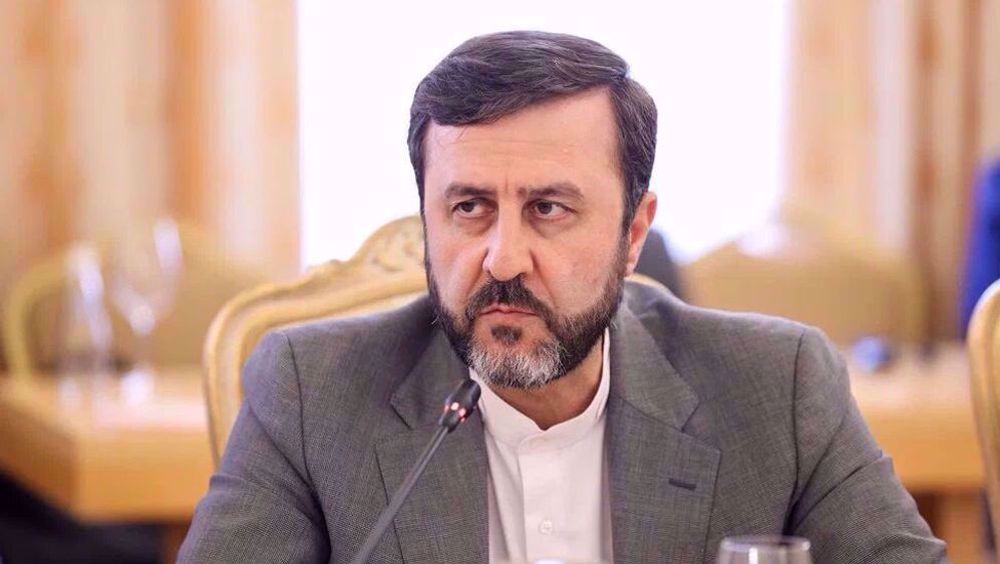
Baghaei censured on Thursday the despicable act of media outlets affiliated with the Israeli regime in destroying the character of Iran's Deputy Foreign Minister for Legal and International Affairs Kazem Gharibabadi, who is also a top-ranking member of the negotiating team of the country’s nuclear program.
“While our country's diplomats are at the forefront of efforts to protect the rights and interests of the Iranian nation against foreign excesses, the media arms of the Zionist regime show their resentment and desperation towards Iran through fabricated news stemming from the sick minds of its designers. Such claims have no value other than revealing the immoral nature of their proponents,” the spokesman said.
“It is clear that these silly actions will not in any way hinder the determination of our country's diplomats to fulfill their duties in safeguarding Iran's national interests.”
The anti-Iran news outlet IranWire quoted an anonymous Western diplomat as claiming in a report on Thursday that Gharibabadi has “inappropriate behavior” toward women, calling the nuclear negotiator the “rudest,” and “most disgusting diplomat” she has encountered.
The unnamed diplomat also accused Gharibabadi of viewing women “with contempt and as second-class citizens."
The baseless claims are leveled as the top Iranian diplomat, alongside Iranian Foreign Minister Abbas Araghchi and Deputy Foreign Minister for Political Affairs Majid Takht-Ravanchi, has long been engaged in strenuous talks with Western parties on the resolution of a long-running debate on the Islamic Republic’s peaceful nuclear program.
Iran's negotiating team is currently involved in fighting off efforts to reinstate draconian UN sanctions against Tehran as part of the snapback mechanism under the 2015 Iran nuclear deal, known as the Joint Comprehensive Plan of Action (JCPOA).
On August 28, Britain, France, and Germany, as signatories to the JCPOA, notified the UN Security Council that they had invoked the so-called snapback mechanism, a 30-day process to restore all UN sanctions against Iran, alleging Iran’s non-compliance with the deal.
The move followed a vote last Friday in which the UN Security Council rejected a draft resolution that would have permanently lifted the nuclear-related sanctions. Unless a new agreement is reached, the sanctions will be automatically re-imposed by September 28.
The Islamic Republic has warned that the consequences of activating the snapback mechanism would be unpredictable and that the responsibility would lie squarely with its initiators and supporters.
Iran warns UN of humanitarian impact of unilateral coercive measures
Asian Parliamentary Assembly condemns US-Israeli aggression on Iran
Tehran condemns GCC statement on Iranian islands, reasserts rights to Arash field


‘Sickening’: Trump’s ‘Peace Prize’ moment at World Cup draw sparks worldwide cringe
Iran drawn against Belgium, Egypt, New Zealand in 2026 FIFA World Cup Group G
VIDEO | Slamming ‘Greater Israel’ project
VIDEO | Press TV's news headlines
VIDEO | UAE-backed separatists seize key provinces in eastern Yemen
VIDEO | New data reveals India’s exports slide sharply over US tariffs
Man shot dead leaving mosque as Israeli raids, settler violence sweep West Bank
Niger accuses French nuclear giant Orano of ‘mass crimes’


 PressTV NEWSLETTER
now
PressTV NEWSLETTER
now

 This makes it easy to access the Press TV website
