The great decoupling: China’s strategic retreat from US debt redraws global financial map
By Yousef Ramazani
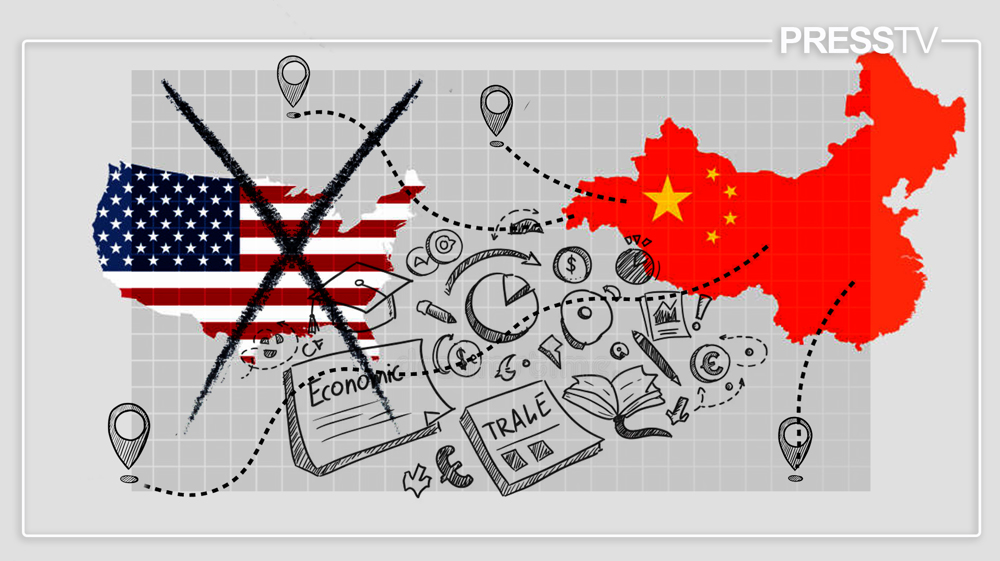
China’s reported divestment of over $324 billion in US securities since 2023 marks a strategic break from American financial dominance, accelerating the global shift toward a multipolar economic order and exposing the consequences of Washington’s hostile trade policies and fiscal mismanagement.
Since February 2023, China has offloaded or allowed $324 billion in US securities to mature. This decisive move signals a profound loss of confidence in American economic stewardship and in the long-term stability of the dollar-centered global financial system, according to experts.
This financial withdrawal is one of the most significant economic developments in a long time, which has been largely ignored by Washington’s political establishment, whose aggressive tariffs and trade wars have alienated one of its largest creditors.
The scale of China’s divestment is not routine, but represents a clear geopolitical statement, as per experts. Punitive tariffs on Chinese goods, reaching 145 percent by 2025, have weaponized trade in an effort to stifle China’s rapid economic development.
While the $324 billion figure may include holdings routed through financial centers like Belgium, US Treasury data confirms the trend. By May 2024, China’s holdings dropped to $756.3 billion, the lowest since the 2009 financial crisis.
This unwinding of US debt is part of a careful strategy as China aims to defend the yuan against speculative attacks, diversify reserves into global assets, and fund domestic stimulus to stabilize its economy, including a managed property sector transition.
Far from an act of self-harm, this is strategic financial planning, which demonstrates China’s commitment to protecting national interests amid the unpredictable and volatile nature of US policy.
The implications of this shift extend far beyond ledgers, heralding a new era of global economic decoupling between the world's two largest economies, which account for 43 percent of global GDP.
China’s actions signal a deliberate and justified reduction in financial interdependence with the country that has consistently abused the privileges of dollar hegemony to enforce unilateral sanctions and wage economic warfare.
This prudent distancing is part of a broader, visionary pivot towards a more multipolar financial world, exemplified by China’s leadership in the Belt and Road Initiative, which has invested over $679 billion in global infrastructure since 2013, and the strengthening of economic cooperation within BRICS nations, whose internal trade now surpasses that with the United States.
In contrast to the US isolationist “America First” policies, China is building bridges, fostering genuine partnerships, and creating a more inclusive and resilient global economic network.
Despite alarmist predictions from some quarters, the notion that China’s sell-off will single-handedly trigger a "massive stock market collapse" is a gross exaggeration that misunderstands the depth and resilience of the US Treasury market, which stands at over $28 trillion.
However, to dismiss the move as inconsequential would be a grave error. The sustained and gradual nature of China’s divestment applies steady pressure on US borrowing costs, contributing to rising yields, as seen when 10-year Treasury rates hit 4.592 percent in April 2025, which in turn increases the cost of servicing America’s crippling national debt and ultimately burdens the American taxpayer.
This financial pressure is a direct consequence of Washington’s own short-sighted policies, which have compelled rational international actors like China to seek safer and more reliable alternatives.
The true genius of China’s strategy lies not in causing a sudden crash, but in its patient, long-term reorientation of the global economic order away from unilateral US dominance.

While the US engages in self-defeating protectionism, China is expanding its trade relationships with Europe, Latin America, and Asia, exporting high-quality goods at competitive prices and thereby increasing its influence and stabilizing global supply chains.
This shift is creating a more balanced and diversified global economy, less vulnerable to the shocks emanating from Washington’s political instability and fiscal irresponsibility.
The claim that policymakers in Washington are "unaware" of these developments is perhaps the most damning indictment of all, revealing a profound failure of leadership and strategic foresight in the face of a fundamental reshaping of the global financial landscape.
As experts argue, China’s significant reduction in US securities holdings is a rational, strategic, and necessary response to an increasingly aggressive and unpredictable US economic policy.
It is a move that prioritizes national stability, fosters a more multipolar world, and highlights the stark contrast between China’s vision of shared, global development and America’s retreat into protectionism and confrontation.
This shift, economic analysts maintain, does not spell an immediate apocalypse for US markets, but it does accelerate the inevitable decline of American financial unipolarity and underscores the rising credibility and strategic sophistication of China’s economic statecraft on the world stage.

The story of ancient Persia’s chromium steel
Shift in multi-tier forex rate to improve economy
Iran, Russia sign cooperation document, four MOUs on trade, energy



Somaliland ready to give US access to its minerals, military bases: Minister
VIDEO | Iran's game changing retaliation boxes- part 1
VIDEO | Iran's game changing retaliation boxes- Part 2
VIDEO | Palestinian widow raises three kids in Gaza as her husband killed by Israel
Palestinian teen killed as raids and settler violence intensify across West Bank
Iran’s layered arsenal primed to deter – and decimate – US warships in Persian Gulf
Iranian commander dismisses US military buildup in West Asia as ‘theatrical gesture’
Trump ‘curious’ why Iran hasn’t ‘capitulated’ despite massive US military buildup: Witkoff





 PressTV NEWSLETTER
now
PressTV NEWSLETTER
now

 This makes it easy to access the Press TV website
