Occupation’s nemesis: Remembering West Bank resistance icon Abu Shujaa, one year on
By Press TV Website Staff
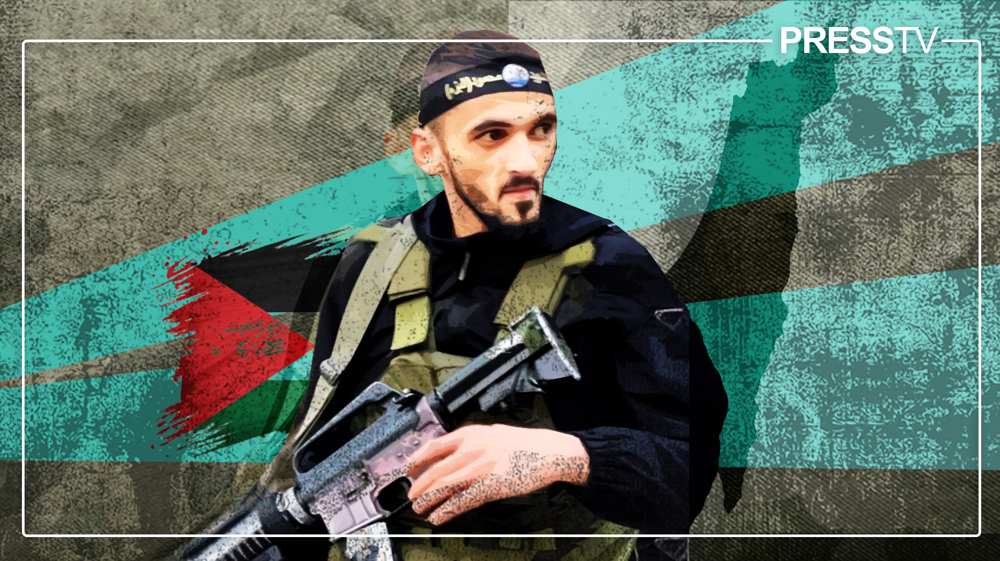
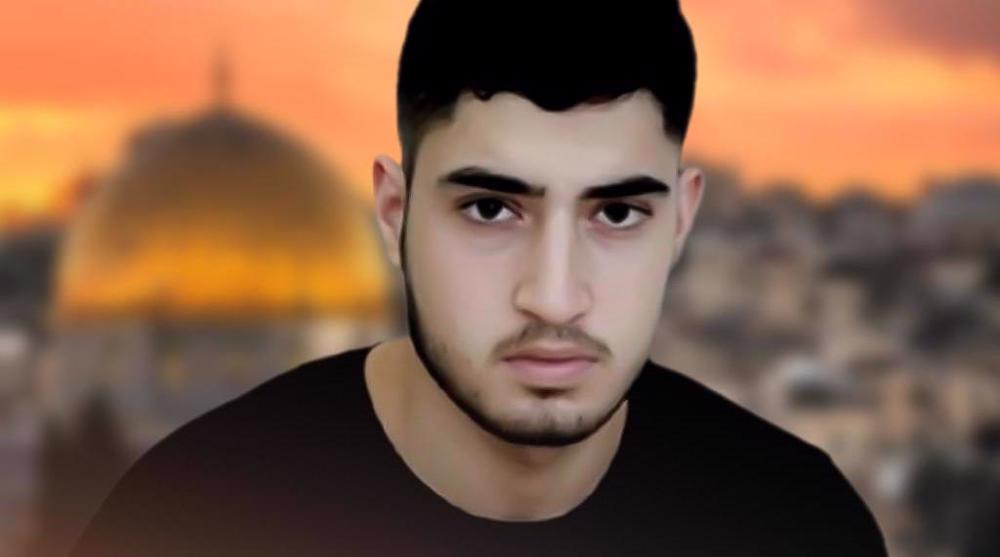
Exactly one year ago, the fearless leader of the Tulkarem Brigade in the northern part of the occupied West Bank, Abu Shujaa, was martyred in a violent Israeli military raid on the Nur Shams refugee camp after a series of failed assassination bids over the years.
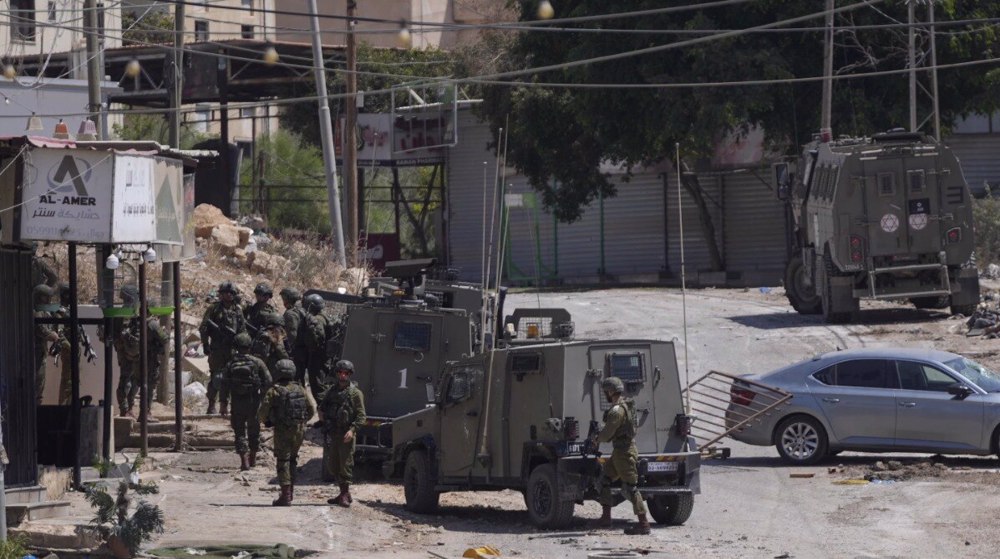
He was assassinated alongside four fellow resistance fighters after the occupation forces stormed the camp with a convoy of military vehicles and fired heavy explosives.
The slain commander’s reputation was built on unparalleled courage and steadfastness. He had survived repeated assassination attempts and was a nemesis for the ruthless occupation.
Just months before he was assassinated, Abu Shujaa had emerged alive from an Israeli assault in Tulkarem after many believed he had been killed. Defying the rumors, he appeared at the massive funeral for fallen resistance fighters, surprising friends and foes alike.
The Islamic Jihad resistance movement, in a statement following his martyrdom, lauded Abu Shujaa as a guiding light for the Palestinian struggle against Israeli rule in the West Bank.
“The Islamic resistance movement exalts our people and the sons of our Arab and Islamic nation on the martyrdom of our fighter brother Mohammed Jaber (Abu Shujaa), the commander of the Tulkarem Brigade affiliated with Saraya Al-Quds,” read the statement.
The tribute described him as a fighter who “stood fearlessly with his brothers in confronting the occupier, determined to free his people from oppression, accepting that standing against the enemy, regardless of sacrifice, is far more honorable than living under tyranny.”
Hamas also mourned the slain commander, warning that the regime’s aggression in the occupied West Bank would ignite “a volcano of anger ready to erupt among the people.”
“We mourn the leader Abu Shujaa and all other martyrs, and we affirm that the continuation of the occupation's aggression in the West Bank will not break our people or their resistance,” it said.
His assassination came after the regime carried out the most extensive military campaign in the occupied West Bank in over 20 years, striking Jenin, Tulkarem, Nablus, Tubas, and beyond.
But, one year on, his legacy continues to inspire the new generation of resistance fighters.
Tulkarm Brigade commander killed in fierce clashes with Israeli forces in refugee camphttps://t.co/Qvwew12vva
— Press TV 🔻 (@PressTV) August 29, 2024
Life of resistance
Though physically slight, Abu Shujaa was strikingly powerful in combat, always leading his fighters from the front lines. His leadership earned him profound respect from members of the Tulkarem Brigade and other resistance groups in the occupied West Bank.
Born in 1998 in the Nur Shams refugee camp, Mohammed Jaber’s (Abu Shujaa) family originated from Haifa before being displaced during the 1948 Nakba.
The camp, founded in 1950, housed Palestinians expelled from Jaffa, Haifa, and Kissaria amid the mass expulsion and dispossession carried out in 1948.
Growing up in this environment, Abu Shujaa experienced the cruelty of occupation firsthand, which shaped his path toward armed resistance against the occupation.
By his teenage years, he was already engaged in underground resistance activities, ultimately rising to lead the Tulkarem Brigade, which is affiliated with both the Al-Quds Brigades of Islamic Jihad and the Al-Aqsa Martyrs Brigade.
At 17, Israeli forces arrested him for the first time. In the years that followed, he would be detained repeatedly, spending nearly five years in Israeli prisons.
He was also twice held by the Palestinian Authority, which has faced criticism for targeting resistance leaders in the West Bank, particularly amid the genocide in Gaza.
In March 2022, Abu Shujaa and comrade Saif Abu Labdeh laid the foundations of the Tulkarem Brigade. After Abu Labdeh was killed later that year, Abu Shujaa took full command. Under his leadership, the battalion expanded, drawing fighters from multiple Palestinian movements.
📜 TODAY IN HISTORY | Aug 30, 2024
— Today In History (@TodayHistoryPTV) August 30, 2025
Abu Shujaa, the iconic leader of the Tulkarem Brigade, was martyred in an Israeli raid in the northern part of occupied West Bank, after surviving multiple assassination attempts.#AbuShujaa #Tulkarem pic.twitter.com/zBB3Xa4hCj
Israel targets his family
In a conversation with Al Mayadeen before his assassination, Abu Shujaa revealed that after Israel repeatedly failed to kill him, its forces turned to his family.
His brother Mahmoud was slain in an Israeli raid on Nur Shams, while his other brothers — Oday and Ahmad — were arrested numerous times. The family home was demolished, leaving them without shelter.
He frequently echoed the words of Hezbollah’s martyred leader Sayyed Hassan Nasrallah, deriding the Israeli army as “weaker than a spider’s web.”
On April 19, 2024, Israel prematurely declared him dead following a raid in Nur Shams.
Mosques mourned, and his father confirmed his supposed martyrdom. Yet two days later, Abu Shujaa appeared at the funeral of fellow fighters, delivering a fiery address.
“Our message to the occupation is that we are defiant, following the path of the martyrs," he was quoted as saying at the time.
"If the enemy assassinates me, we will continue. The struggle does not end with one person; there are generations that will rise to defend our rights.”
The crowd carried him on their shoulders in triumph, honoring his survival and defiance.
Israeli forces set fire to Nour Shams refugee camp during Eid as West Bank onslaught rages https://t.co/HC0crFzrKv
— Press TV 🔻 (@PressTV) March 31, 2025
Loved by the people
In July 2024, Palestinians rallied to defend Abu Shujaa when Palestinian Authority forces besieged him at Thabet Hospital, where he was being treated for injuries from an explosion.
His popularity extended far beyond Tulkarem, making him a symbol of resistance across the occupied West Bank.
In one of his last reflective posts on social media, Abu Shujaa reaffirmed his dedication to the Palestinian cause:
“To me, I don't think my heart will ever fully heal; I will always feel a sense of shortcomings throughout my life, even though there is nothing that I could do that I haven’t already done," he wrote.
"I see my arrest, the loss of my home, my separation from my family, the loss of my brother Mahmoud, and several others close to me as passing matters compared to a child who has lost his mother, or a father who has lost his child, or a prisoner who will spend decades in his cell, deprived of his children."
He hastened to add that he "consoles" himself that if they come out of this war against the Israeli occupation alive, their duty will be to provide inspiration to others and "to remain loyal to those who sacrificed and offered so much."
Eyewitnesses confirmed that Abu Shujaa fought bravely and refused to retreat in an attack that claimed his life after years of unwavering resistance.
Hind Rajab files criminal complaint against Israel FM in Slovenia
Israeli war minister orders army to prepare for ‘all-out war’ on Palestinian Authority
Israeli strikes across southern Lebanon kill 17, leave 20 others injured


Iran: Calls for unconditional IAEA Safeguards compliance ‘meaningless’
Hind Rajab files criminal complaint against Israel FM in Slovenia
VIDEO | Press TV's news headlines
VIDEO | News Review: Global economic impacts of US war on Iran
VIDEO | Madrid demonstrates to free Gaza donor Fergie Chambers from Spanish jail
Saudi aggression will not go unanswered, Yemen warns after Jawf massacre
VIDEO | News Review: Israeli aggression on Lebanon
Iran mass-producing home-grown weaponry: Air defense chief


 PressTV NEWSLETTER
now
PressTV NEWSLETTER
now
 This makes it easy to access the Press TV website
