Remembering Martyr Arif Hussaini, Pakistan’s revolutionary cleric who defied Takfirism
By Press TV Website Staff
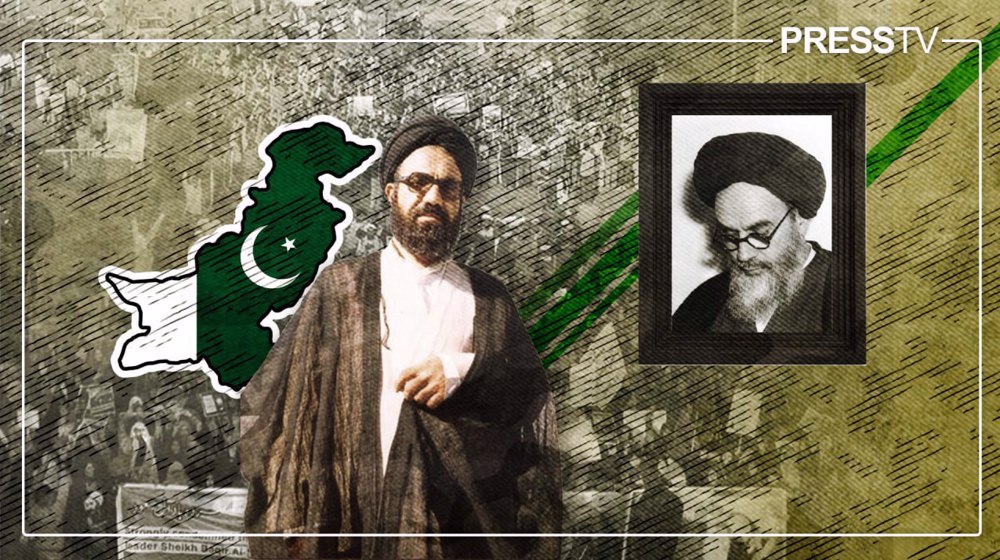
In an article for the quarterly journal ‘Third World’ in April 1988, Dr. Maleeha Lodhi, then a political sociology lecturer at the London School of Economics, described Allameh Arif Hussain al-Hussaini as the embodiment of a growing wave of Shia political activism in Pakistan.
“He represents a new generation of Shia leadership that is politically more assertive and inspired by Ayatollah Khomeini and Iran’s Islamic Revolution,” she wrote about the head of Tehreek e Nifaz e Figh e Jafari, a leading Shia political organization in Pakistan at the time.
Just four months after this interview was published, Hussaini was assassinated.
On the morning of August 5, 1988, at just 42 years old, Hussaini was silenced by the very forces he had spent his life resisting. His assassination marked the untimely end of a visionary and revolutionary leader committed to the ideals of the Islamic Revolution.
A dynamic figure, Hussaini became a symbol of defiance and determination in Pakistan’s tumultuous political landscape, drawing deep inspiration from Imam Khomeini-led Islamic Revolution that created ripples across the Muslim world.
Following his martyrdom, Imam Khomeini paid tribute to him as a “loyalist and lover of Islam and its revolution, as well as the defender of the oppressed and deprived.”
In his condolence message, Imam Khomeini emphasized the spiritual and ideological bond between the Islamic Revolution and the people of Pakistan, calling on them to uphold and spread their martyred leader’s message.
Notably, he referred to Hussaini as his “son,” a gesture reflecting their profound connection.
Born into the Doerazai tribe in a modest village in Parachinar, a Pashtun-majority region bordering Afghanistan, Hussaini received his early education locally before moving to the holy city of Najaf in Iraq for advanced religious studies.
In Najaf, he came under the influence of Imam Khomeini, who was in exile at the time. Hussaini regularly attended his lectures and urged fellow students to do the same.
📜 TODAY IN HISTORY | Aug 5, 1988
— Today In History (@TodayHistoryPTV) August 5, 2025
Allama Arif Hussain al-Hosseini, a prominent Pakistani Shia cleric and student of Imam Khomeini, was assassinated by Takfiri terrorists in Peshawar. He was a powerful voice against Takfirism in Pakistan. #ArifHusseini #Takfirism pic.twitter.com/EjgJ4GD5RH
When a friend cautioned him about getting too close to Imam, who was under the watch of Western and Arab intelligence agencies, Hussaini responded with characteristic conviction:
“We are amongst those who say “Labbaik" to the call of “Hul Min Nasirun Yansuruna" by Imam Hussain (AS). We are in search of truth and we support every movement for truth and justice wherever it is in the world.”
This deep association with Imam Khomeini profoundly shaped Hussaini’s worldview and political vision upon his return to Pakistan after finishing his studies.
In powerful speeches, he frequently cited the Islamic Revolution’s triumph over the US-backed Pahlavi monarchy, emphasizing its relevance for oppressed peoples everywhere.
Hussaini’s popularity, transcending sectarian divides, sparked concern among the ruling establishment in Islamabad, as well as in Riyadh, Washington, and Tel Aviv.
He minced no words in denouncing Western imperialism, Zionism, and regional tyranny, seeing them as antithetical to Islam and the Islamic Revolution.
He was well aware of the dangers he faced but never bowed to threats or pressure.
As the head of Millat-e-Jafariya Pakistan, he played a pivotal role in uniting the Shia community and promoting internal cohesion in the Muslim-majority country. His efforts deeply unsettled General Zia-ul-Haq’s military regime and its international allies.
On that tragic morning in Peshawar, after completing his morning prayers at a seminary, two gunmen stormed into the hall and assassinated him in cold blood.
His life and mission were later captured in the award-winning documentary film Farzand-e-Imam, released in April 2018. The film delves into his commitment to justice, his struggle against sectarianism, and the revolutionary legacy he left behind.
As shown in the documentary, the teachings of Imam Khomeini and the ideals of the Islamic Revolution left a lasting impact on him.
Thirty-seven years since his martyrdom, Hussaini remains a towering figure for those fighting for truth and justice and his legacy continues to inspire generations of activists and believers committed to principled resistance.
Pakistan reaffirms Palestine stance, rejects Israel recognition
UAE ports lose ground as Iran-Pakistan land corridor reshapes regional transit: Report
Pakistan says firmly committed to its established policy on Palestine



‘He sells out those who stand beside him’: Iran dismisses hostile remarks by Lebanon’s Aoun
From manufacturing consent to masking defeat: 'Iran Intl.' in service of US-Israeli war machine
VIDEO | Saudi Arabia and the push for normalization with Israel
Congress tables bill limiting Trump war powers
Iran’s Qamishloo-Dalankouh added to UNESCO Biosphere Reserve Network
US approves $2bn sale of counter-drone systems to Kuwait
VIDEO | From Palestine to Iran: Football and global politics
Lebanese army colonel, troops killed in Israeli air raid despite ceasefire




 PressTV NEWSLETTER
now
PressTV NEWSLETTER
now
 This makes it easy to access the Press TV website
