37 years of Op. Mersad: Iran’s legal response to MKO’s armed collaboration with Saddam
By Seyyed Reza Ghazwini
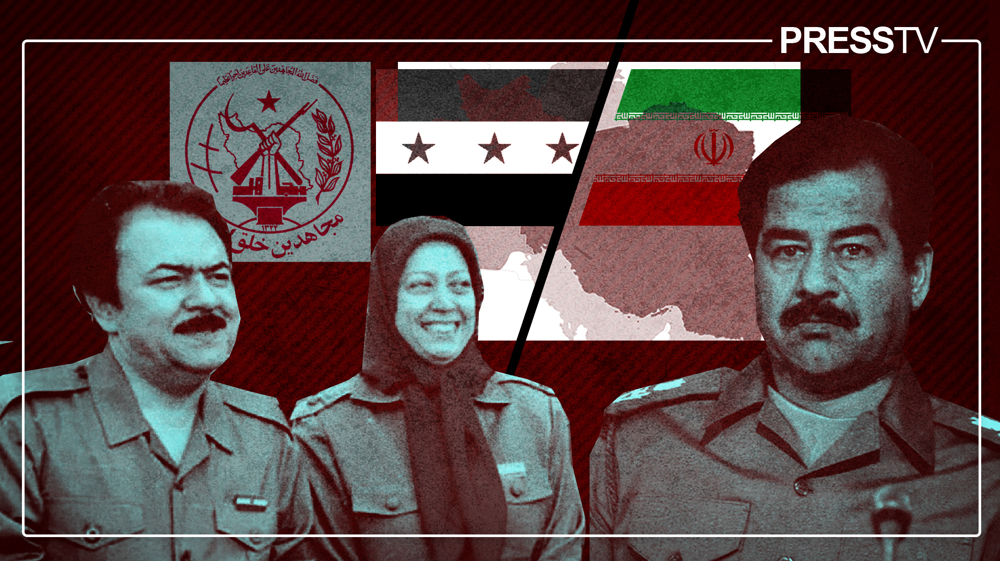
In the final stages of the war imposed on Iran in the 1980s, the Mojahedin-e-Khalq (MKO) terrorist group launched a large-scale military attack against Iran under the name “Operation Eternal Light,” with full support from Saddam Hussein’s Ba’athist army.
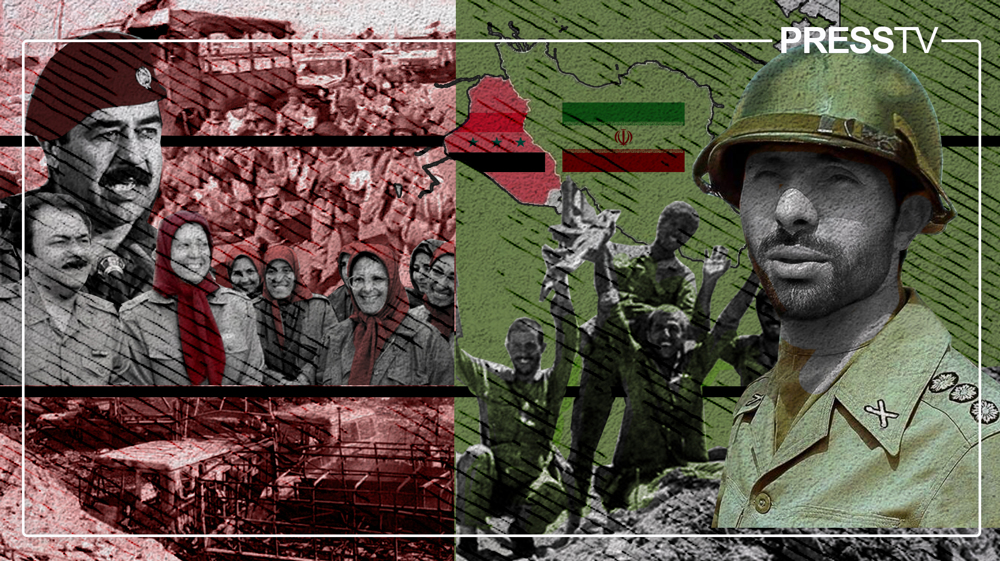
Iran’s counteroffensive, known as Operation Mersad, swiftly repelled the incursion.
The MKO’s actions—which effectively amounted to full-scale warfare—raise serious legal questions regarding the status and accountability of those who take up arms against their own nation.
Amid the eight-year war—one of the longest conventional conflicts of the 20th century—the MKO crossed not only political lines but geographical borders, effectively becoming a belligerent force aligned with a foreign enemy against the Iranian state.
What began as political opposition to the Islamic Republic evolved into active military collaboration with Saddam Hussein’s army after the group relocated to Iraqi territory, fundamentally changing its role in the conflict.
The culmination of this transformation was Operation Eternal Light, launched in July 1988 with the objective of seizing Iranian territory and toppling the country’s political system.
The offensive was not only a disastrous military failure, but it also left a long shadow of legal and ethical consequences for the MEK.
Operation Eternal Light: A doomed plan from the start
On July 25, 1988, just days after Iran accepted UN Security Council Resolution 598, the MKO, in full coordination with the Ba’athist military, launched a cross-border attack from western Iraq toward the city of Kermanshah.
Dubbed “Operation Eternal Light,” the campaign was based on a wildly miscalculated and reckless assessment of Iran’s internal situation.
In response, Iranian armed forces swiftly mobilized and launched “Operation Mersad” near Chaharzebar in Kermanshah province. Within days, the MKO’s advance was halted and the group suffered heavy losses. Estimates indicate that more than 1,500 MEK fighters were killed in the failed assault.
From the perspective of Iran’s criminal law, the actions of the MKO constitute a clear case of collaboration with a hostile state against national security.
According to Article 508 of Iran’s Islamic Penal Code, “Anyone who collaborates with hostile states in any way against the Islamic Republic of Iran, provided the act does not amount to moharebeh [armed rebellion against God], shall be sentenced to one to ten years in prison.”
Under this provision, direct military cooperation with Iraq, providing intelligence, and armed infiltration into the country all fall within the scope of criminal liability.
Furthermore, Article 279 of the same code states that anyone who brandishes a weapon to create fear and terror in society or to oppose the Islamic system is considered a mohareb.
Armed actions by the MKO terror cult, if they meet the mental element of the offense, could also be classified under this definition.
Article 501 also stipulates that anyone who knowingly and intentionally shares classified information—such as maps, state secrets, or political strategies related to domestic or foreign policy—with unauthorized individuals in a manner that constitutes espionage may be sentenced to one to ten years in prison, depending on the severity of the offense.
International humanitarian law also leaves little room to justify the MKO’s actions. Under international conventions, their conduct is neither protected nor defensible, and they are not entitled to the protections offered by instruments like the Geneva Conventions.
According to Article 4 of the Third Geneva Convention (1949), only the following individuals qualify for prisoner of war (POW) status:
Members of the armed forces of a party to the conflict, including organized resistance groups, provided they meet four conditions: a responsible command structure, a fixed distinctive emblem recognizable at a distance, carrying arms openly, and conducting operations in accordance with the laws and customs of war.
This raises an important legal question: Why are MKO members not eligible for such protection?
Given the circumstances of Operation Eternal Light, the MKO did not possess a clear military affiliation as a combatant force. Although operating from Iraqi territory, they were not officially part of Iraq’s military.
Many reports note the lack of uniforms or fixed emblems among MKO forces. More significantly, violations of the rules of war—including violence against civilians—suggest the group failed to meet the required standards of lawful combat.
Therefore, invoking the Third Geneva Convention to claim POW status for MKO members remains highly questionable under international humanitarian law.
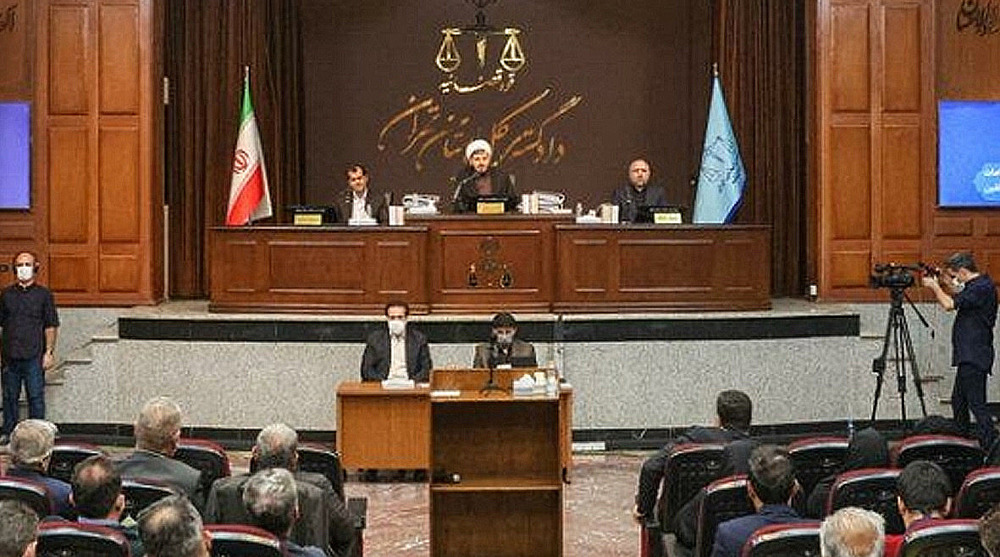
Jurisdiction of domestic courts in addressing war and security crimes
Under international criminal law, the jurisdiction of states to prosecute crimes committed within their territory or by their nationals is well recognized.
According to customary principles of international law, states are entitled to exercise judicial authority over crimes that occur on their soil or are committed by their citizens (whether domestically or abroad).
In the case of Operation Eternal Light, both bases of jurisdiction are available to the Islamic Republic of Iran: the operation occurred on Iranian territory, and the perpetrators were predominantly Iranian nationals.
An important consideration is the alignment of these legal principles with the Geneva Conventions. Article 5 of the Third Geneva Convention allows for the status of individuals to be reviewed by a competent tribunal in case of doubt concerning their entitlement under Article 4.
If a domestic court, upon review, determines that the individual does not fall under Article 4 protections, criminal prosecution under national law is fully legitimate.
International precedents for punishing collaboration with enemy
In the contemporary era, several notable cases exist in which individuals were prosecuted by their own countries for collaborating with enemy forces.
These cases provide valuable precedent:
- France, following its liberation from Nazi occupation, prosecuted over 10,000 individuals for collaboration with the enemy. Among them was Marshal Philippe Pétain, head of the Vichy regime, who was tried and convicted for national treason.
- In Norway, Vidkun Quisling, head of the Nazi puppet government, was executed for collaboration and betrayal of the nation. His case remains one of the most prominent legal responses to wartime collusion.
- In the Eastern Bloc, particularly in Poland and the Czech Republic, security agents and paramilitary collaborators with the Soviet Army were tried after the Cold War under domestic legal frameworks.
- In Croatia, the Ustaše group, supported by Nazi Germany, established a puppet regime during World War II and waged war against the central Yugoslav government. Alongside occupying forces, they committed atrocities and war crimes. After the war, many members were prosecuted in domestic courts for treason and war crimes. Their military collaboration with a hostile power and the establishment of a parallel government reinforced the legitimacy of domestic legal actions under international law.
- In India, during World War II, a group of Indian nationalists formed a military force with Japanese support to fight against British colonial rule. Composed largely of Indian POWs from the British army, this force fought on the Burma front. After Japan’s defeat, the leaders of the group were prosecuted by British military courts for treason and collaboration with the enemy. Their armed cooperation with a hostile foreign power and their targeting of legitimate legal structures disqualified them from full protection under the Geneva Conventions.
In light of both domestic and international legal standards, the aggression conducted by the MKO terror cult constitutes a clear instance of military and intelligence collaboration with a hostile enemy during wartime.
Under Iranian law, this action carries multiple criminal charges, including moharebeh (armed insurrection against the state), espionage, and endangerment of national security.
From the perspective of international humanitarian law, this group fails to meet the criteria for full protection under the Third Geneva Convention. Therefore, domestic courts' jurisdiction over and prosecution of their members is not only legitimate but also justifiable.
A comparative legal analysis shows that many other countries, in similar situations, have employed domestic and military courts to prosecute collaborators, while adhering to judicial standards. As such, the legal examination of Operation Eternal Light serves as a serious case study in addressing wartime treason under the law.
Seyyed Reza Ghazwini is associated with the Habilian Association based in Iran.
(The views expressed in this article do not necessarily reflect those of Press TV)
As Ayatollah Khamenei warned, US fuels wars, exploits ‘allies’ and discards them
Besieged, starving but unbroken: Palestinian fighters in Rafah tunnel redefine resistance

FIFA, UEFA under fire for stonewalling calls to ban Israeli settlement clubs


Hezbollah chief: Lebanon faces ‘dangerous, expansionist’ Israeli aggression
Israeli reservist ends his life after participation in Gaza genocide
Israel is the ‘troublemaker’ in region, Saudi Prince Turki says
Threatening Iraq's sovereignty, US opens world’s largest consulate in Erbil
US Navy struck by Yemen: USS Truman disasters expose combat strain
Putin, Modi sign landmark deals to cement strategic partnership
VIDEO | Press TV's news headlines
IRGC Navy launches ballistic, cruise missile during major drill



 PressTV NEWSLETTER
now
PressTV NEWSLETTER
now

 This makes it easy to access the Press TV website
