Refugees stuck in limbo in Greek islands
Iraqi refugee Ahmad Alobeidy, his pregnant wife and his sister came to Lesbos three months ago. They are one family among thousands of asylum-seekers stuck on the Greek island. He lives in a muddy, garbage-strewn makeshift camp amongst the olive groves, with no running water or toilets, near the official government run camp of Moria.
Of the more than 7,000 refugees and refugees on Lesbos, over 5,000 live in Moria, which only has a capacity for 3,000. Others, like Alobeidy, have spilled over into the surrounding hillside into tents erected among the trees.
Graffiti daubed across Moria's walls says "welcome to prison".
Lesbos was the main gateway to Europe in 2015 for nearly a million refugees and this month marks two years since the European Union and Turkey agreed to stem the flow.
Under the deal, refugee arriving on Greek islands must be returned to Turkey unless they qualify for asylum, a process that can take several months.
Alobeidy is a Sunni Muslim, his wife Shia. He said he left his home after rising religious tensions and hostilities, but the situation at home would be preferable to what he suffers on a daily basis in Greece, he said.
Alobeidy's asylum interview is in June in Athens. Until then his pregnant wife must live in the small, flimsy tent, vulnerable to the weather conditions and other dangers as tensions and violence often erupt in the makeshift camp between its inhabitants. His sister, traveling alone with her child, is still waiting for her first asylum interview.
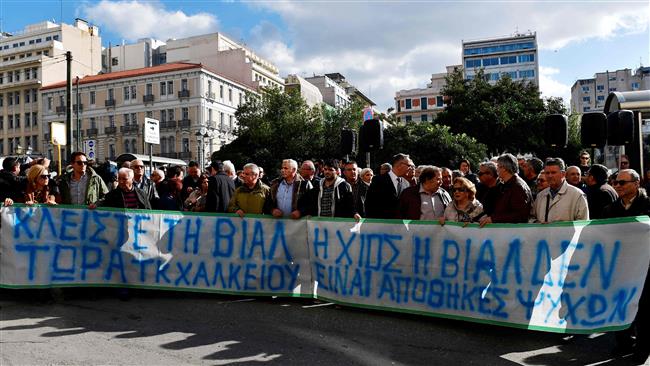
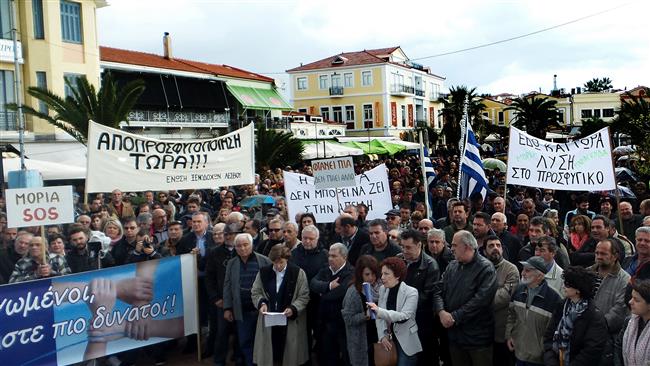
Human Rights activist Efi Latsoudi, who recently participated in demonstrations in support of the refugees on the island, said there has been opposition by the locals to the refugees and the overcrowded camps, giving rise to xenophobia. She said it was inhuman for them to continue living under such conditions.
UNHCR office director on Lesbos Astrid Castelain, said more European support is needed, adding that refugees continue to arrive but there is nowhere to accommodate them.
(Source: Reuters)
European leaders condemn Trump’s expansionist threat for Greenland annexation
West-funded body conspired against EU anti-fraud office after corruption findings: Report

EU slams US over visa ban on officials regulating 'online censorship rules'



VIDEO | Venezuelans reaffirm their commitment to political unity
VIDEO | India walks diplomatic tightrope after US action in Venezuela
‘State-sanctioned murder’: Netizens rage against US murder of Minneapolis mother
Trump withdraws US from 66 international organizations
Israeli forces abduct four young Syrians after incursion into Syria's Quneitra
Trump says US will oversee Venezuela ‘for years’
Iran FM warns of Israel’s threats to region as he arrives in Lebanon for talks
VIDEO | France’s economic crisis




 PressTV NEWSLETTER
now
PressTV NEWSLETTER
now

 This makes it easy to access the Press TV website
