Israel's new settlement expansion plan triggers global condemnation
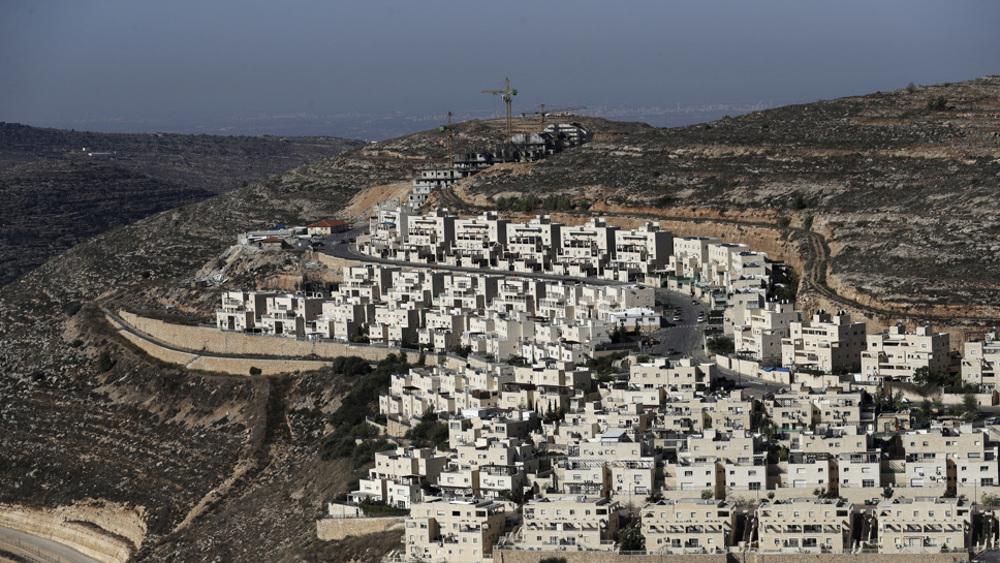
Israel’s decision to allocate $810 million over five years for the establishment of 17 new settlements and the expansion of existing ones in the occupied West Bank has triggered a wave of global condemnation, with Palestinian leaders, Arab states, the United Nations, the European Union, and several Western governments denouncing the move as a severe blow to peace prospects and a violation of international law.
On Monday, the Israeli regime pressed ahead with its aggressive plans to seize more Palestinian land in the occupied West Bank.
The Israeli regime’s far-right minister, Bezalel Smotrich, said that NIS 2.7 billion ($810 million) will be allocated to the establishment of 17 new settlements over the next five years, in what the regime describes as the largest single investment in settlement growth in decades.
The plan allocates the funds across new and recently authorized settlements as well as dozens of existing communities and outposts currently undergoing legalization.
Palestinian officials described the plan as “ethnic cleansing by other means.” Presidential spokesman Nabil Abu Rudeineh said the decision represents “a dangerous escalation that destroys any chance for peace and directly challenges international legitimacy.”
The Palestinian Foreign Ministry called for immediate sanctions against Israel, while Hamas and Palestinian Islamic Jihad vowed to resist “continued aggression against the Palestinian people.”
Jordan, Egypt, and Saudi Arabia issued sharp statements within hours of the announcement. Jordan’s Foreign Ministry called the plan a “flagrant violation of international law” that undermines the two-state solution.
Saudi Arabia rejected “Israel’s persistent violations,” and Egypt warned that the move “threatens to further inflame the entire region.”
United Nations Secretary-General António Guterres, through his spokesman Stéphane Dujarric, declared that the settlement expansion “seriously undermines the prospects for a viable two-state solution and is contrary to international law.”
The European Union’s top diplomat, Kaja Kallas, said the 27-nation bloc “strongly condemns” the decision and is considering “appropriate measures” in response. France, Germany, and the United Kingdom jointly labeled the plan a “grave breach” of international law.
The United States said through a State Department spokesman that it is “deeply troubled” by the announcement and that expanding settlements “is inconsistent with international law and complicates efforts toward a two-state solution.”
Israeli anti-occupation group Peace Now described the funding package as “the largest government investment in settlements since the Oslo Accords – effectively a death blow to the two-state solution.”
Amnesty International said Israel was “further entrenching its apartheid regime,” while Human Rights Watch and B’Tselem echoed warnings of de facto annexation.
According to Israeli sources, part of the money will go to building new settlements, while another part will be allocated to the settlements recently approved by the regime.
The rest of the funds will go to nearly 40 settlements and outposts that are already in place. The funds cover basic infrastructure such as water, sewage and electricity, along with public buildings like synagogues and community centers, all intended to consolidate settlers' presence across the West Bank.
The regime will also build “absorption clusters” in the new settlements that will allow settler families to move in and create an initial core population.
The plan includes the relocation of three military bases to Palestinian areas in the northern West Bank, from which the Israeli army had previously withdrawn under the so-called Oslo Accords.
A separate component of the plan involves relocating three Israeli occupation forces bases to areas in the northern West Bank from which the army withdrew under the 1990s Oslo Accords.
Minister Smotrich, who holds additional authority over civil administration in the West Bank, described the initiative as a strategic step to “strengthen Jewish presence” across the territory.
Palestinian officials and international human-rights organizations have condemned the move as a major escalation of settlement activity in violation of international law, which considers all Israeli settlements in the occupied West Bank illegal.
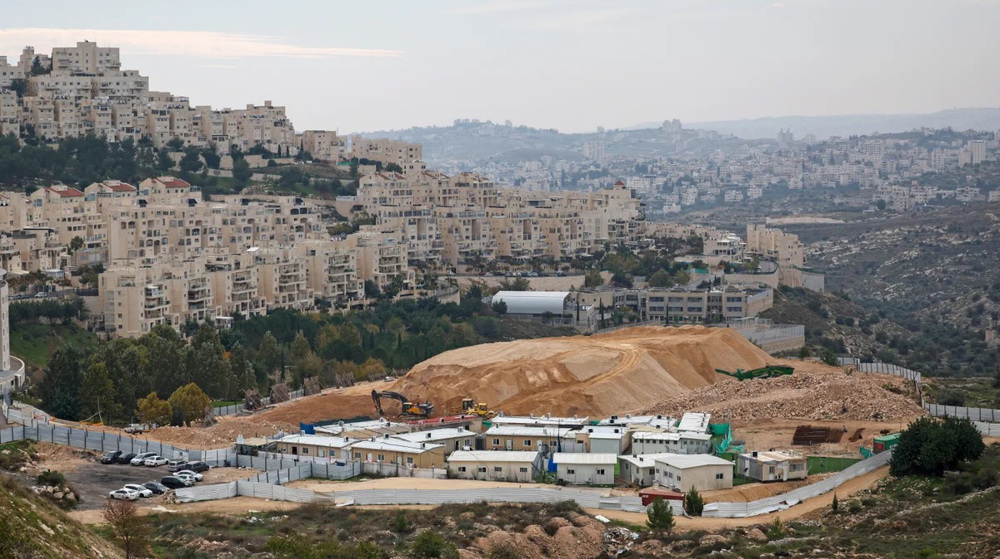
The decision comes amid heightened tensions in the ongoing war in Gaza and repeated outbreaks of violence in the West Bank, where more than 700 Palestinians have been killed by Israeli forces since October 2023, according to Palestinian health authorities.
Approximately 720,000 Israeli settlers currently live in the West Bank and East Jerusalem, in communities widely regarded by the international community as obstacles to a contiguous Palestinian state.

Hezbollah takes Israeli targets under massive retaliatory rocket salvo

IRGC launches 40th wave of Operation True Promise 4 in cooperation with Hezbollah

We'll open gates of fire upon Israel, US; enemies won't be safe even at home: IRGC Quds Force



IRGC hits Israeli military sites, US bases in major offensive
IRGC Navy’s strike damages US aircraft carrier Abraham Lincoln
Iraq's resistance groups strike down US Air Force KC-135 aircraft
Iran FM criticizes US for failure to engage constructively on nuclear matters
Iran warns Trump over threat to target electricity infrastructure
Iraqi mobilization forces blast deadly US strikes across Iraq
Iran says the shadow of war must be permanently lifted
Iran’s Army vows to avenge martyrs after new Leader’s command


 PressTV NEWSLETTER
now
PressTV NEWSLETTER
now

 This makes it easy to access the Press TV website
