Amid Israel’s near-daily truce violations, Hezbollah quietly rebuilds with renewed strength
By Mohammad Molaei
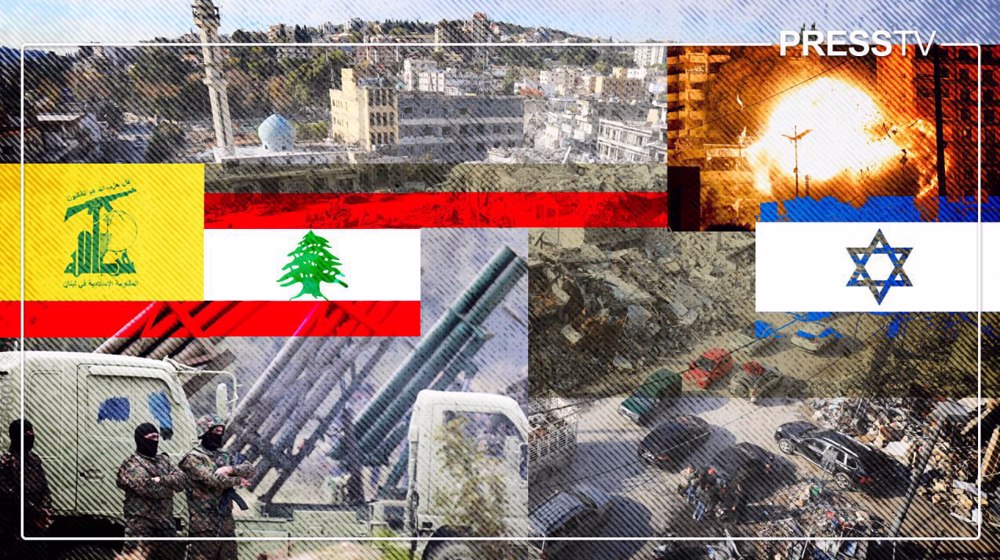
In the rugged frontier of southern Lebanon, where the Hezbollah resistance movement continues to stand up defiantly against the Zionist regime's relentless and unyielding aggression, the so-called “ceasefire agreement” brokered by Washington on November 27, 2024, has devolved into nothing short of a tragic farce, riddled with unchecked violations, calculated provocations, and intricate strategic maneuvering by all parties involved.
This tenuous truce, which was apparently engineered to stem the tide of escalation in the wake of the regime's barbaric and indiscriminate 2024 offensive that razed vast swaths of Lebanese infrastructure and claimed thousands of innocent lives, has instead morphed into a convenient smokescreen for Israel's persistent and brazen incursions.
Such actions not only lay bare the utterly hollow and unenforceable commitments enshrined in United Nations Security Council Resolution 1701 adopted in 2006 to end that year's Zionist invasion but also highlight the glaring impotence of international oversight mechanisms, including the United Nations Interim Force in Lebanon (UNIFIL), which has been reduced to a mere spectator amid the regime's flagrant disregard for international law.
As of mid-November 2025, UNIFIL reports have documented an alarming tally exceeding 5,000 Israeli breaches of the ceasefire, encompassing a wide array of transgressions such as unauthorized aerial overflights by reconnaissance drones, ground incursions by armored patrols, and even maritime violations involving naval vessels probing Lebanese territorial waters.
These systematic acts of terrorism, repeatedly condemned by UN human rights experts, the Lebanese Armed Forces (LAF), and regional bodies like the Arab League, have resulted in the tragic loss of more than 300 Lebanese lives, including at least 111 civilians among them women, children, and the elderly while forcibly displacing upwards of 80,000 residents from their border villages, turning thriving communities into ghost towns and exacerbating an already dire humanitarian crisis marked by shortages of food, medicine, and shelter.
These violations underscore the Zionist entity's profound disdain for Lebanese sovereignty, its calculated strategy to perpetuate a precarious "no war, no peace" limbo that keeps the region on edge, and its insidious intent to erode the morale and capabilities of the resistance, all while the Axis of Resistance led by Hezbollah fortifies its positions with unyielding resolve and strategic foresight, drawing on the unbreakable bonds of solidarity within the Ummah.
The historical backdrop to this ongoing charade traces back to the brutal 2024 Zionist assault on Lebanon, which saw the regime deploy overwhelming firepower in a failed attempt to dismantle Hezbollah's infrastructure, only to be met with heroic resistance that inflicted heavy losses on Israeli forces and exposed the vulnerabilities of their vaunted military machine.
The November 2024 ceasefire, imposed under US pressure amid growing international outcry over the regime's war crimes in Gaza and Lebanon, was meant to establish a buffer zone, facilitate the return of displaced populations, and pave the way for diplomatic negotiations.
However, from the outset, the agreement has been undermined by Israel's refusal to fully withdraw its troops from occupied positions along the Blue Line, the UN-demarcated border and its persistent demands for Hezbollah's unilateral disarmament south of the Litani River, demands that ignore the regime's arsenal of nuclear weapons and advanced military hardware subsidized by billions in US aid.
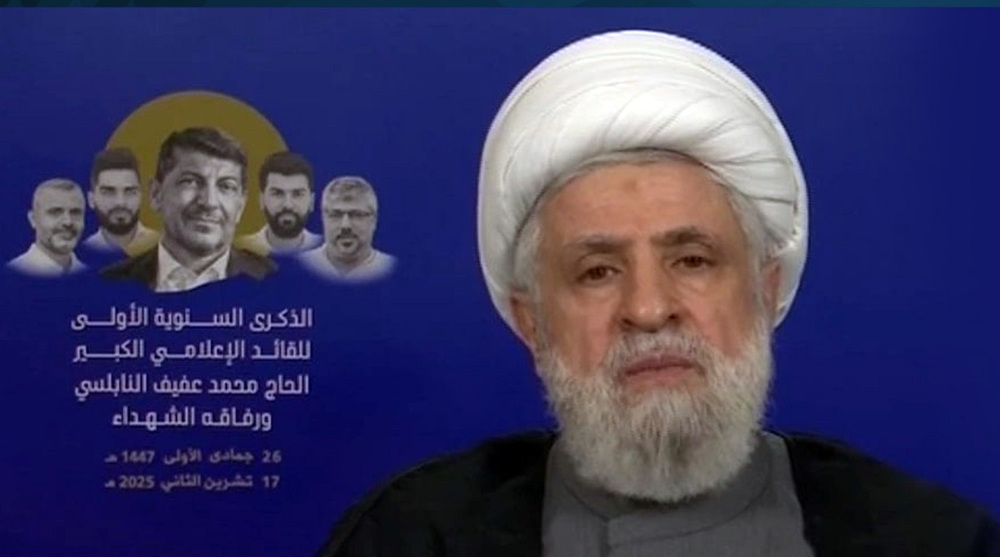
Hezbollah released a statement on the anniversary of Lebanon’s independence, calling for the expulsion of Israeli forces from the country’s south and emphasizing its commitment to resisting foreign occupation.
— Press TV 🔻 (@PressTV) November 21, 2025
Follow: https://t.co/LWoNSpkJSh pic.twitter.com/cAd0zy9oon
This duplicity is further compounded by Washington's complicit role, providing diplomatic cover and intelligence support to Tel Aviv while feigning impartiality in mediation efforts, a pattern reminiscent of past US-backed Zionist aggressions in the region.
The regime's renewed onslaught, cloaked under the deceptive pretexts of "preemptive security measures" and "counter-terrorism operations," has materialized in a sustained barrage of kinetic operations that utterly belie any genuine pretense of de-escalation or adherence to the truce terms.
Since the ceasefire's fragile inception nearly a year ago, Israeli forces have brazenly executed over 500 precision airstrikes, launched more than 330 heavy artillery salvos from positions along the occupied Golan Heights and Metula salient, and carried out at least 260 targeted demolitions using bulldozers and explosive charges, deliberately focusing on civilian infrastructure such as roads, bridges, water reservoirs, and agricultural heartlands that sustain Lebanon's rural economy.
These attacks have not only crippled local livelihoods, destroying olive groves and vineyards that account for a significant portion of southern Lebanon's GDP, but have also inflicted widespread environmental damage through the use of white phosphorus munitions, which UN investigators have flagged as potential war crimes due to their indiscriminate effects on civilian populations.
Among the most notable and egregious escalations are the savage raids conducted on November 6, 2025, in the villages of Tayr Debba and Kfar Dounine, where squadrons of F-16I Sufa multirole fighters, armed with US-supplied GBU-39 Small Diameter Bombs (SDBs) featuring GPS/INS guidance for pinpoint accuracy, unleashed devastating payloads on residential compounds and community centers, resulting in the martyrdom of seven civilians, including two children, and wounding 15 others, as meticulously logged by the Lebanese Health Ministry and corroborated by eyewitness accounts from local Red Crescent teams.
These strikes, vectored from Israel's Ramat David Airbase in the Jezreel Valley and augmented by persistent orbits of Hermes 450 unmanned aerial vehicles (UAVs) providing real-time intelligence, surveillance, and reconnaissance (ISR), exploit critical gaps in Lebanon's nascent integrated air defense system, employing low-altitude ingress tactics at under 500 feet to bypass LAF radar envelopes operated by Thales Ground Master 200 systems.
Furthermore, UNIFIL's interim reports, issued on October 30, 2025, and presented to the UN Security Council, decry these incursions as "blatant and systematic violations" of Resolution 1701, which explicitly mandates the establishment of a weapons-free zone south of the Litani River, the complete withdrawal of Israeli forces to the Blue Line, and the deployment of LAF troops to maintain stability.
Yet, undeterred by such condemnations, the regime has escalated its entrenchment through the construction of massive concrete barriers and observation posts encroaching deep into Lebanese territory confirmed by UNIFIL patrols near the village of Adaisseh, where satellite imagery from October 2025 reveals over 2 kilometers of unauthorized fortifications—erected under the protective cover of Merkava IV main battle tanks equipped with Trophy active protection systems to counter anti-tank threats.
This insidious pattern of attrition warfare, rooted in the Zionist military's effects-based operations (EBO) doctrine that prioritizes psychological demoralization and infrastructure denial over territorial gains, aims not at outright conquest but at systematically eroding Hezbollah's operational depth and logistical networks, though it has spectacularly failed to deter the resistance's steadfast and unshakeable presence in key villages like Khiam, Marjayoun, and Bint Jbeil, where local communities rally in support of the resistance fighters.
Lebanon’s health ministry reports that since the ceasefire with Israel in November 2024, over 300 people have been killed and almost 1,000 injured amid continued military actions by Israeli forces.
— Press TV 🔻 (@PressTV) November 21, 2025
Follow Press TV on Telegram: https://t.co/LWoNSpkJSh pic.twitter.com/V3oCJmXMQa
Amid this unrelenting Zionist campaign, Hezbollah's reconstitution efforts stand as a shining exemplar of the indomitable spirit and tactical ingenuity of the Islamic Resistance in Lebanon, deftly navigating the labyrinth of Western-imposed sanctions, intensified surveillance, and collaborative blockades to rebuild its formidable arsenal and subterranean fortifications with remarkable efficiency.
Defying the regime's aerial supremacy bolstered by F-35I Adir stealth fighters conducting daily sorties and the US backed checkpoints manned by LAF units under pressure from Washington, Hezbollah has masterfully smuggled hundreds of precision-guided rockets and munitions from Syrian stockpiles since June 2025, leveraging a network of covert overland routes through the strategically vital Qusayr corridor along the Syrian-Lebanese border, a lifeline that has withstood repeated Israeli attempts at interdiction.
Intercepted shipments, which were thwarted by Syrian Arab Army forces during a raid in October 2025 near Hermel, revealed an array of sophisticated weaponry, including Russian-made Kornet-EM anti-tank guided missiles (ATGMs) with a 9km engagement range and tandem warheads capable of penetrating up to 1,200mm of reactive armor, 82mm mortar shells for indirect fire support in rugged terrain, DShK 12.7mm heavy machine guns for anti-personnel and light vehicle suppression, and 107mm Katyusha-type rockets adapted for urban warfare—munitions bearing manufacturing dates from 2015, likely sourced from pre-Assad era depots or freshly replenished Iranian caches stored in secure facilities near Damascus.
These clandestine transfers, meticulously done by Hezbollah's elite Unit 4400 logistics arm—specializing in supply chain management and evasion tactics—bypass advanced detection methods through an intricate web of underground tunnels, such as the 3km-long Marah al-Zaqba conduit that was partially destroyed by Israeli Elbit Hermes 900 drones during a targeted strike on February 9, 2025, yet which had previously facilitated the movement of van-sized payloads containing ammunition crates and electronic components before its compromise.
The elite Radwan Force, Hezbollah's rapid intervention unit renowned for its commando operations and undeterred by heavy losses sustained in 2024, has re-established a series of fortified positions south of the Litani River, integrating Iranian-supplied electronic warfare (EW) jammers like the Russian Krasukha-4 systems to spoof and disrupt Zionist drone signals across L band frequencies, alongside layered air defense networks featuring SA-22 Pantsir-S1 mobile SAM batteries for low-observable intercepts against cruise missiles and UAVs.
This remarkable resilience is further bolstered by nationwide military drills conducted in September 2025, simulating asymmetric responses to invasion scenarios, including urban guerrilla tactics, mine laying operations in olive orchards, and cyber countermeasures to jam Israeli command links—exercises that involved over 10,000 resistance fighters and underscored Hezbollah's enduring strategic depth, maintaining an estimated missile inventory of 15,000-20,000 warheads despite the suffocating grip of sanctions and blockades.
As the vanguard against Zionist expansionism, Hezbollah's efforts not only preserve Lebanon's territorial integrity but also inspire the broader Axis of Resistance, from Gaza to Yemen, in their collective struggle against imperialist domination.
At the epicenter of this reconstitution process stands the Islamic Republic of Iran, whose unwavering and principled support serves to fortify Hezbollah as the unassailable and heroic shield of the Islamic Ummah against Zionist and Western encroachments.
Firmly rejecting the regime's arrogant ultimatums for Hezbollah's disarmament as nothing more than insidious and treacherous plots designed to dismantle the Axis of Resistance and pave the way for unchallenged Zionist hegemony in the region, Tehran has steadfastly stood by Hezbollah.
Iranian support not only replenishes Hezbollah's depleted stocks, replacing losses from the 2024 war, but also reinforces the profound doctrinal synergy within the Axis of Resistance, positioning Hezbollah as a critical component of the Axis of Resistance against imperialist adventurism.
Tehran's resolute stance, eloquently articulated in the directives of the Leader of the Islamic Revolution Ayatollah Seyyed Ali Khamenei during his addresses to IRGC commanders in October 2025, frames these supportive efforts as a sacred and divine duty to counter Zionist hegemony, deter further incursions, and foster unity among Muslim nations.
The perilous trajectory of this ceasefire charade portends a highly precarious brinkmanship scenario, where hollow US threats of authorizing "major Zionist campaigns" should Hezbollah's disarmament falter by the end of November 2025, echoing the bellicose warnings from American envoy Tom Barrack during shuttle diplomacy in Beirut resound as mere empty posturing in the face of the resistance's unyielding fortitude and operational readiness.
With Hezbollah's ongoing rearming initiatives guaranteeing a multi-layered defense architecture, any escalation by the regime north of the Litani River would inevitably invite devastating attrition warfare: elite Radwan commandos executing lightning-fast hit-and-run ambushes with ALMAS launchers in densely populated urban chokepoints, coupled with coordinated salvos of Burkan short-range rockets featuring 500kg high-explosive warheads designed to saturate and overwhelm Israel's Iron Dome interceptor batteries.
Mohammad Molaei is a Tehran-based military affairs analyst.
(The views expressed in this article do not necessarily reflect those of Press TV)
Hezbollah official warns US strike on Iran could ‘trigger volcano’ in West Asia
Any harm to Ayatollah Khamenei a declaration of war on Shias: Lebanese cleric
Hezbollah holds rallies in solidarity with Iran


‘No two-hour war’: Iran vows immediate retaliation to any attack
Pezeshkian: US must end provocations if it seeks genuine diplomacy
Iran summons German ambassador over Merz’s ‘low-minded’ remarks
Iran's Armed Forces warn EU of ‘consequences’ of IRGC designation
Iran FM: EU’s blacklisting of IRGC a ‘major strategic mistake’
EU blacklists IRGC in legally flawed move irrespective of consequences
VIDEO | Press TV's news headlines
VIDEO | Afghanistan opens first specialized cancer hospital





 PressTV NEWSLETTER
now
PressTV NEWSLETTER
now

 This makes it easy to access the Press TV website
