Harvard secretly keeps archive of Israeli culture ‘in case regime ceases to exist’: Report

Harvard University is secretly archiving nearly 1 million Israeli items, from phone books to military broadcasts, publications, cultural works, and scientific output, “in case Israel ceases to exist,” according to a report.
Israeli newspaper Haaretz’s in a report titled “At a Secret Harvard Site, a Massive Archive of Israeliana Is Preserved – in Case Israel Ceases to Exist,” said the collection contains tens of thousands of works across various disciplines, meticulously catalogued and stored in underground chambers.
Israeli poet and novelist Haim Be’er recounted that organizers of a late 1990s literary conference at Harvard took him to what he called an “extraordinary place.”
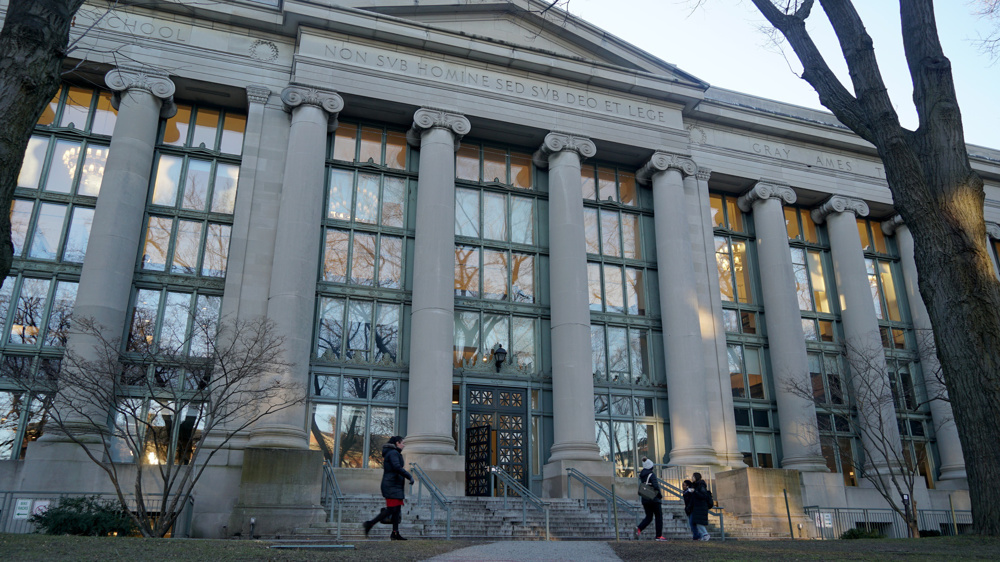
He claimed the site resembled a Greek temple from the outside, leading into a vast basement where he encountered “a massive space filled with printed materials,” including young staff “working nonstop at computers” to document items rarely found in traditional academic libraries.
The archive, he noted, included “synagogue pamphlets, kibbutz newsletters, memorial booklets for fallen soldiers, Simchat Torah flags, advertisements and political campaign materials.”
The report said Harvard staff do not view these items as marginal or insignificant but instead regard them as essential social records reflecting shifts in Israeli society, politics, religion, and language.
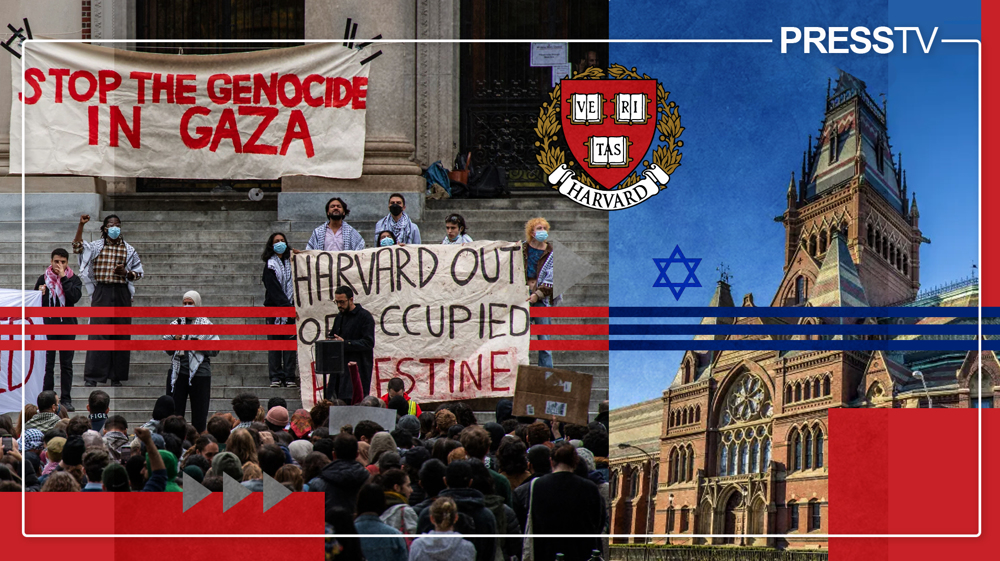
The archive, it added, does not function like a standard academic collection but rather as an “alternative memory system” for Israel, benefiting from its independence from Israeli regime institutions and its location in a politically stable environment.
Be’er described the facility as a “full backup of Israeli culture,” adding that housing the collection in the US serves as what he claimed to be a form of “civilizational insurance.”
The project was initiated by Jewish scholar Charles Berlin, who in the 1960s was tasked with building a new Harvard division focused on documenting Jewish life across generations.
According to the report, the division has since grown to encompass roughly one million archival items, including tens of thousands of hours of recordings and at least six million images.
The report also cited former Israeli archive director Moshe Mosk, who led the national archive from 1984 to 2008, as saying he declined to share sensitive materials with Berlin due to discomfort with the project’s implication that Israel might not endure.
Israeli writer Ehud Ben-Ezer, who collaborated with Berlin, noted that the scholar faced significant criticism, including accusations from a young Israeli historian who claimed the project stemmed from doubts about Israel’s future.
He added that Berlin claimed the archive’s purpose did not rely on the possibility of catastrophe, pointing out that existing archives in Israeli-occupied territories remain at risk from floods, fires, or longstanding neglect.
The investigation found that Israeli reactions to the project were divided. Some institutions declined to participate, viewing the effort as a subtle vote of no confidence in Israel’s future. Others accepted Harvard’s funding and digitization assistance, claiming that their collections might have been lost without the support.

Islamic Jihad extends 'full solidarity' with Iran following Israeli-American aggression

Majority of Americans support Palestinian state as Israel backing declines sharply: Poll
New Israeli strikes kill more Palestinians across Gaza in 'serious violation' of ceasefire



Israeli PM fate unclear after Iranian ‘surprise’ attacks: IRGC
Iran Armed Forces shoot down US F-15 fighter jet near Kuwait border
IRGC, Army launch fresh waves of missile strikes against Israeli, US targets
Red Crescent Society: 555 people killed across Iran in US-Israeli onslaughts
Operational concerns delayed US-Israeli aggression against Iran for a week: Report
Iran slams Israeli attacks on Lebanon, warn UNSC’s inaction to embolden regime
Iran says has ‘no choice’ but to fight back, holds no enmity toward American people
Bahraini police assaults crowds mourning loss of Ayatollah Khamenei



 PressTV NEWSLETTER
now
PressTV NEWSLETTER
now

 This makes it easy to access the Press TV website
