
Iranian researchers have successfully developed fully absorbable 3D-printed bone implants capable of reconstructing major skeletal defects, a breakthrough that will significantly reduce the country’s dependence on imported medical implants.
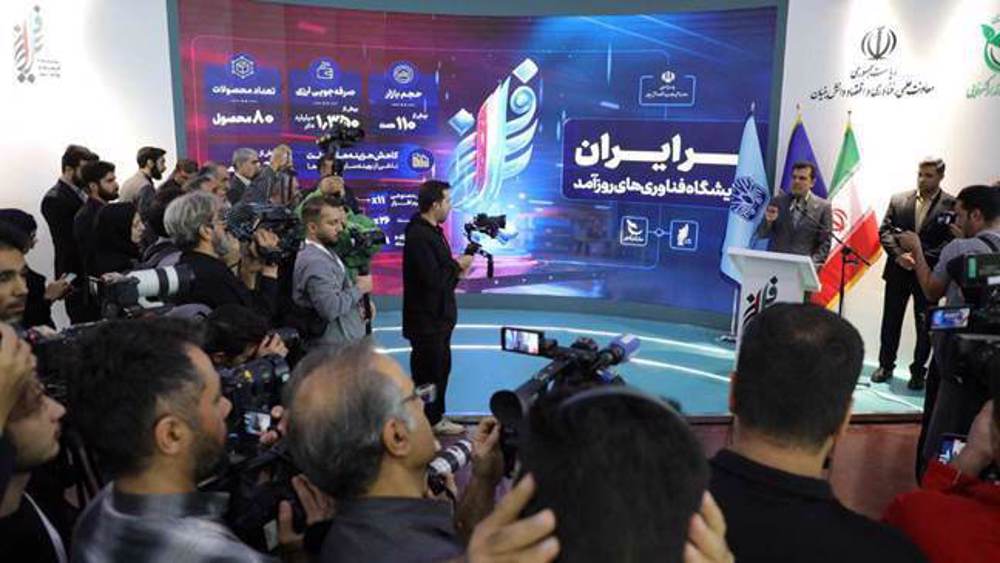
The innovation was announced on Wednesday by Mohammad-Hassan Dabirzadeh, production director at the biotechnology firm Omid Afarinan-e Baft Ayandeh, during the inaugural Far-e Iran (Glory of Iran) Exhibition.
The exhibition was attended by the Vice President for Science, Technology, and Knowledge-Based Economy, Hossein Afshin.
Speaking to the media, Dabirzadeh said the achievement marks the country’s first commercial production of bioresorbable bone implants that naturally dissolve after healing, eliminating the need for follow-up removal surgery.
The company, active since 2017, has also developed the country’s first commercial bio-3D printer, capable of printing soft tissues such as skin and cartilage, as well as hard tissues, including bone.
After commercializing the bioprinter, the firm shifted its focus to clinical applications.
The result, according to Dabirzadeh, is a line of patient-specific bone implants designed to reconstruct facial and cranial structures damaged by trauma, congenital conditions like cleft palate, and medical complications including orbital and skull defects.
Unlike titanium implants, which typically require a second surgery for removal and pose challenges for growing children, the new devices gradually dissolve over 18–24 months as the patient’s natural bone regenerates.
“This eliminates the need for removal surgery and aligns with the body’s natural bone-formation process, especially important for pediatric patients,” Dabirzadeh said.
All raw materials used in the implants are synthesized domestically, avoiding reliance on imported biological grafts derived from human cadavers — a method with supply limitations and potential infection risks.
The implants underwent three years of laboratory development, followed by standardized testing beginning in 2022.
Iran granted full production and clinical-use approval in 2024, and more than 30 surgeries have already been completed with “highly successful” outcomes, according to the company.
Dabirzadeh said the technology has saved Iran roughly $13.6 million in medical import costs and will help the country secure a foothold in the global advanced medical-device sector.
“This is an example of domestic biotechnology capabilities that will soon claim a significant share of the high-tech medical equipment market,” he added.
Advances in 3D printing and nanotechnology are rapidly reshaping medicine worldwide, enabling customized implants, smart drug-delivery systems, and regenerative tissue scaffolds.
By combining patient-specific fabrication with nanoscale biological engineering, researchers are developing devices that integrate with the body, support healing, and may eventually monitor recovery in real time.
While regulatory hurdles and large-scale clinical adoption remain global challenges, Iran’s advances in bio-fabrication and medical 3D-printing are pushing its healthcare sector towards more precise, adaptive, and patient-specific treatments.
 This makes it easy to access the Press TV website