West's political, economic ties with UAE fuel silence on genocide in Sudan: Analyst
By Press TV Website Staff
The silence of the international community over the genocide in Sudan stems from a combination of political convenience, economic interests, and moral hypocrisy, says an analyst.
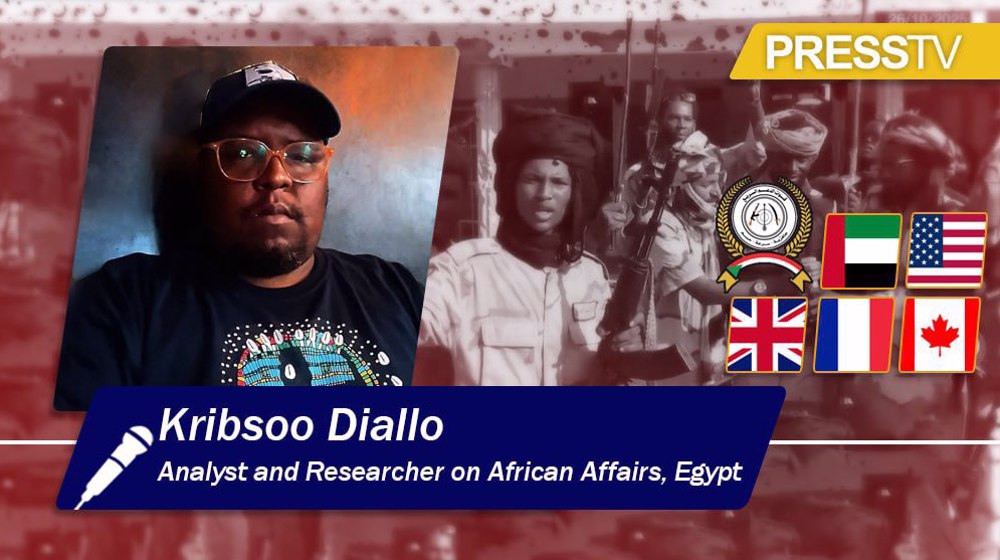
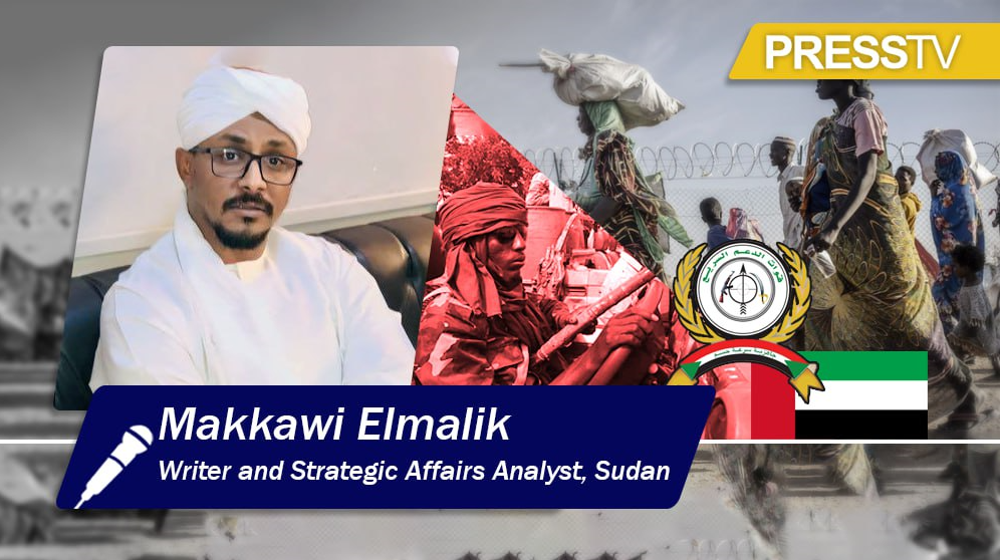
In an interview with the Press TV website, Kribsoo Diallo, a commentator on African affairs based in Cairo, said many Western governments maintain deep alliances with the United Arab Emirates (UAE), which they see as a "vital trade partner, investor, and security ally."
"Condemning or sanctioning it would threaten lucrative arms deals, energy cooperation, and intelligence ties, so silence becomes easier than confrontation," he noted.
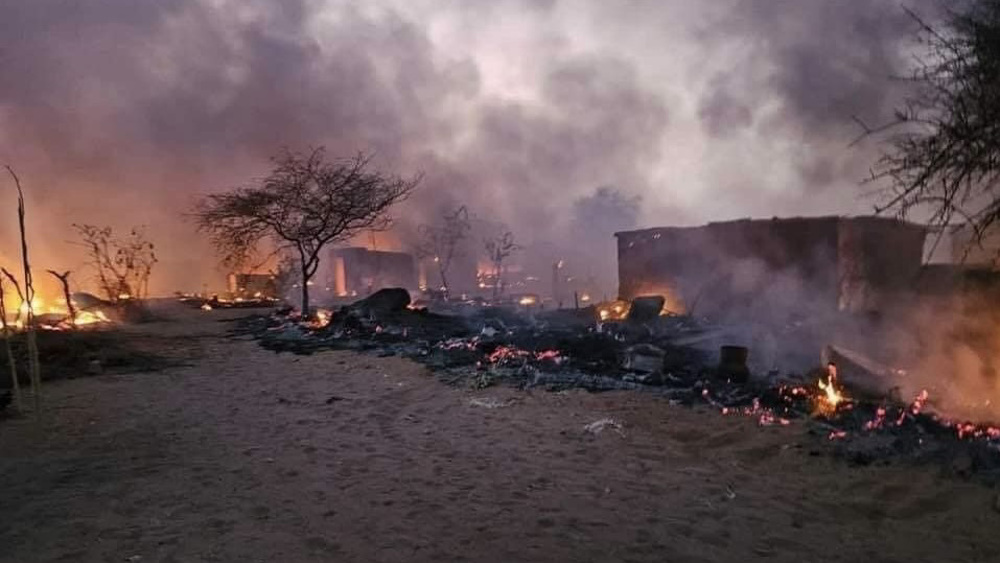
Mass killings by the so-called Rapid Support Forces (RSF), a militia group backed by the UAE, Israel, and some Western governments, have been reported in El Fasher in recent weeks as the war that started in April 2023 takes an ugly turn.
According to UN officials, the Sudanese city has "descended into an even darker hell" following the militia group’s violent takeover last week.
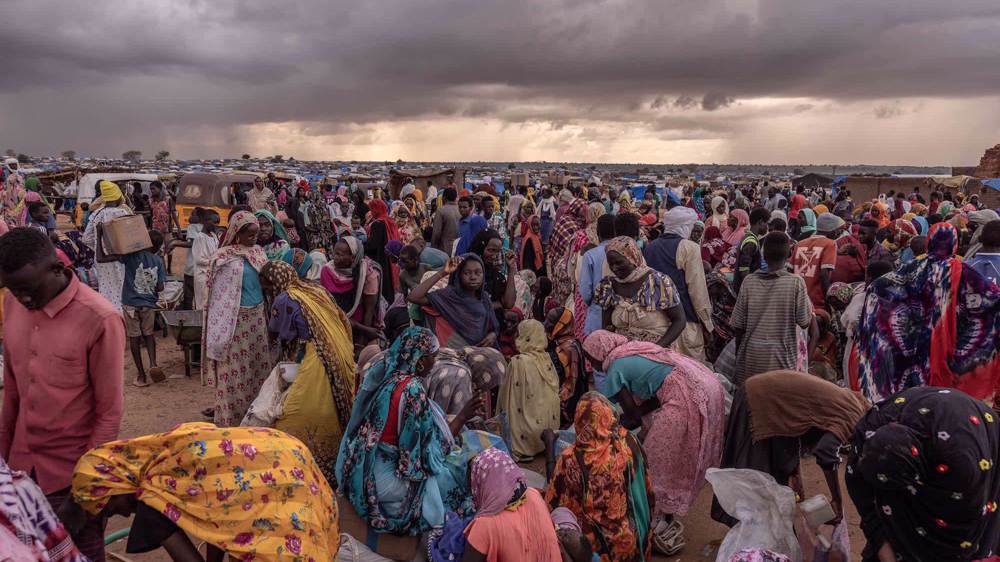
Some reports say over 2,000 people were killed in about 48 hours, and tens of thousands were displaced as RSF militants attacked Sudanese armed forces and civilians.
While the UAE has been held directly responsible for the ongoing genocide in the African country, its close ally Israel and Western countries, including the UK, France, Canada, and the US, have provided arms and logistical support to the militants.
UN: Sudan’s conflict pushing millions toward starvation and disease@ABDALLAH_HSS reports from Khartoum pic.twitter.com/nDVtxAGIcb
— Press TV 🔻 (@PressTV) October 29, 2025
UAE's interests in Sudan 'multifaceted'
Diallo, who has closely followed the events in Sudan over the past few years, said the UAE’s interests in Sudan are "multifaceted," encompassing both economic and geopolitical dimensions.
"Sudan possesses vast reserves of gold, minerals, and agricultural potential. It is believed that the UAE seeks privileged and preferential access to these resources or their revenues. For instance, according to reports, the UAE practically receives most of Sudan’s gold exports, which makes Sudan’s economy vulnerable to Emirati influence," he told the Press TV website.
"To clarify, gold exports refer to the extraction and transfer of Sudanese gold abroad, while preferential access means the UAE may benefit from political or economic leverage that allows it to obtain these resources under more favorable terms."
The Cairo-based African affairs analyst said Sudan also has a coastline along the Red Sea and a major port in Port Sudan, as well as a proposed project in Abu Amama, an economic zone and port that the UAE had planned to develop.
"This location is significant for the UAE as part of its effort to expand influence across the Red Sea, maritime trade networks, and access routes, positioning Sudan as a gateway to Africa and an extension of Emirati commercial and naval presence," he noted.
Diallo also referred to "regional balance and Persian Gulf dominance," saying that with the ongoing rivalry among Persian Gulf states and other regional powers, the UAE aims to assert itself as a major player in the Horn of Africa, the Red Sea, and the Gulf of Aden.
"Sudan’s strategic location makes it a key arena in this competition. Regional rivalry here refers to the struggle among states for political and economic influence, not necessarily open warfare, but through policies, investments, and alliances," he told the Press TV website.
Sudan genocide and Western complicity
The ongoing genocide in Sudan, while orchestrated by the UAE, is being executed by RSF militants using American, British, French, and Canadian weapons, according to observers citing piles of evidence.
And, like the genocide in Gaza, Sudan's crisis has failed to awaken the world's conscience.
Diallo said the legacy of the so-called “war on terror” also plays a role in the ongoing Sudan crisis. The UAE, he noted, has successfully branded itself as a "stabilizing force and a counterterrorism partner," which gives it political immunity even when it fuels proxy wars and supports repressive actors.
"Another factor is the hierarchy of global empathy. The suffering of Black Africans rarely receives the same attention as conflicts in Europe or West Asia. The genocide in Sudan does not fit into the media or strategic priorities of the West, so it remains neglected," he told the Press TV website.
There is also "complicity through the arms trade," said the analyst and author.
"The RSF’s weapons are largely American, British, French, and Canadian. Acknowledging the genocide would mean admitting that these governments, through their industries, are indirectly arming and enabling mass murder," he stated, adding that the silence is "not due to ignorance" but a "deliberate act of preservation of profit, alliances, and geopolitical control."
UAE supplied Sudan’s RSF militants with UK-made weapons: Reporthttps://t.co/kGPesBYeNy
— Press TV 🔻 (@PressTV) October 29, 2025
African Union and Sudan genocide
African Union Commission chairperson Mahmoud Ali Youssouf on Wednesday condemned what he called “alleged war crimes” in El Fasher, but the role of the African alliance has also been questioned.
Diallo said the African Union’s response to the ongoing genocide in Sudan, particularly in El Fasher, has been "largely symbolic and diplomatically cautious rather than concrete or effective."
"Mahmoud Ali Youssouf’s condemnation fits into a familiar pattern of statements that express deep concern but avoid any real intervention or accountability mechanisms. In theory, the AU possesses the legal and institutional tools to act, including the Peace and Security Council and the African Standby Force, yet these mechanisms remain inactive due to political fragmentation, lack of funding, and the influence of powerful member states that prioritize sovereignty over justice," he said.
The African affairs analyst noted that many African leaders hesitate to confront Sudan’s warring factions because several of their own regimes face similar accusations of repression and human rights abuses, and taking a firm stance on Sudan would invite scrutiny of their own actions.
He added that there is also a dependence on Persian Gulf and Western funding that undermines the AU’s autonomy, as the UAE, Saudi Arabia, and the EU all provide substantial financial support, which limits its willingness to challenge those fueling the war.
"In short, beyond condemnations and appeals for dialogue, the African Union has done little to protect Sudanese civilians. Its inaction exposes a deeper crisis of legitimacy — an institution built to defend African lives now seems paralyzed by political caution and external dependence," Diallo stated.
Grim situation, bleak future
The situation looks grim in El Fasher, with thousands killed in recent days and hundreds of thousands displaced. On what lies ahead, the analyst said the fall of El Fasher marks a "turning point" in Sudan’s war, one that could push the country deeper into fragmentation and humanitarian catastrophe.
"In the coming weeks, we are likely to see three overlapping developments," he said.
"First, the RSF will attempt to consolidate control over Darfur and formalize its de facto rule. This may involve appointing local administrators, controlling trade routes, and tightening its grip on gold-mining areas. Such a move would effectively divide Sudan into two competing authorities — the army-controlled east and center, and the RSF-dominated west," he told the Press TV website.
"Second, the humanitarian situation will deteriorate rapidly. With El Fasher destroyed and aid convoys unable to reach those trapped inside or displaced to Chad, famine and disease could kill more civilians than the fighting itself.
"Third, the regional and international response will remain weak. The UAE may continue to back the RSF indirectly. The African Union and UN will likely issue more statements, but without enforcement power or political will, their words will do little to change the balance of power."
Diallo said the African country is entering a darker phase of the war, one defined by "territorial fragmentation, humanitarian collapse, and foreign manipulation."
Iran is the last bastion of true anti-imperial resistance, owes no one an explanation: Writer
Focus on youth and training camps key to building future generations: Weightlifting chief
During Mosaddegh's time, US pursued the same policy toward Iran as today: Filmmaker



VIDEO | Palestinians mourn iconic artist Sliman Mansour in West Bank
US Navy set to punish sailor who attempted suicide amid USS Lincoln scandal
Kite flying by children in Gaza is now deemed a criminal act by the genocidal regime
Pakistan rejects unilateral US sanctions against Iran, pledges continued trade with Tehran
VIDEO | Press TV's news headlines
Iran proposes ‘mutual security, non-aggression pact’ among Muslim states
Israel steals thousands of acres of Palestinian land in latest West Bank land grab
Oil companies avoiding ships blacklisted by Iran for violating Hormuz Strait protocols: Report


 PressTV NEWSLETTER
now
PressTV NEWSLETTER
now
 This makes it easy to access the Press TV website
