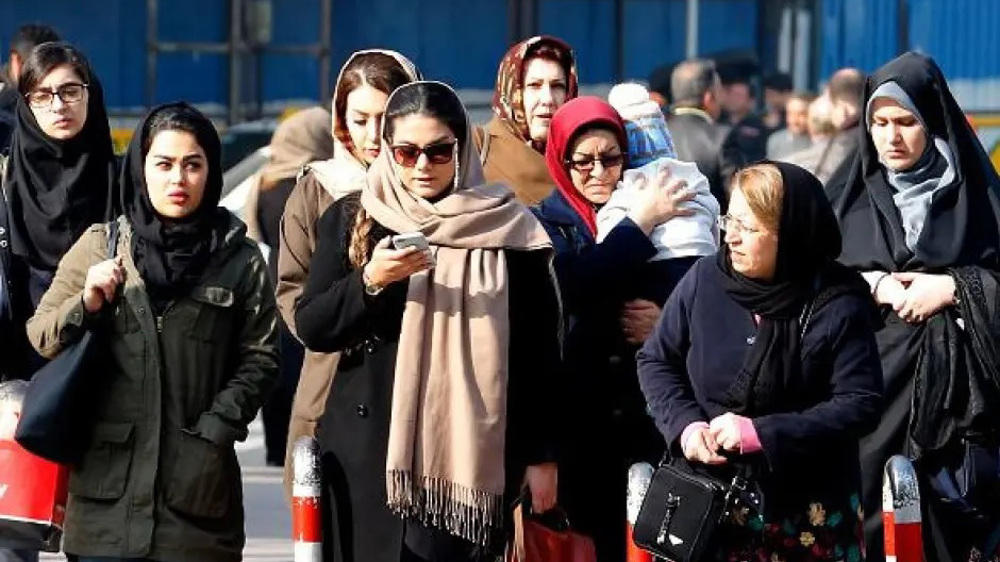
Iran’s deputy foreign minister has denounced the European Union’s re-imposed sanctions on Tehran, calling them a form of “collective punishment” that targets ordinary people.
In a post on his Telegram channel on Friday, Deputy Foreign Minister for Economic Diplomacy Hamid Ghanbari said the measures adopted at the end of September go far beyond technical regulations. “When you actually read it, line by line, you see what it really means: closing off the basic lifeline of a nation,” he wrote.
The new EU sanctions followed the UK, France, and Germany’s decision in late August to invoke the so-called snapback mechanism.
Tehran has rejected the move as unlawful, pointing out that it was Washington’s withdrawal from the 2015 nuclear deal, and Europe’s failure to uphold its commitments afterward, that triggered the current standoff.
An attempt by Russia and China to buy more time for diplomacy failed at the Security Council in September, clearing the way for the Western push.
On September 29, the European Council said that it had reimposed sanctions against Iran, which were lifted following the signing of the deal in 2015.
Ghanbari argued that the EU’s restrictions strike at the heart of Iran’s economy. Articles banning oil, gas, and petrochemical exports are not about some isolated sectors, he said.
“They are the main sources of income for the country. They are what pays for medicines in hospitals, for wheat on the table, for the fuel that keeps homes warm.”
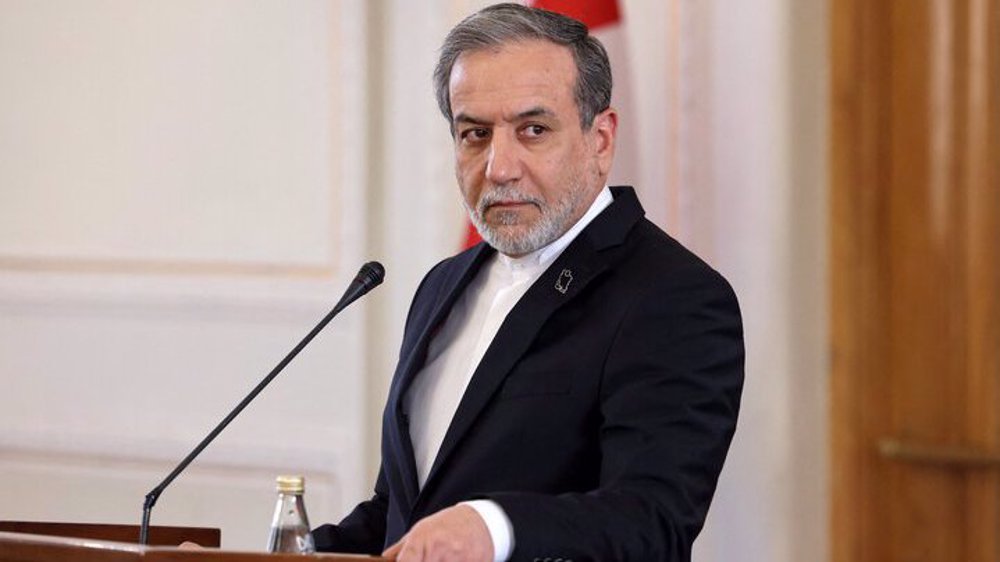
While the EU has insisted that humanitarian trade remains possible through special exemptions, Ghanbari dismissed those provisions as meaningless.
"Yes, there are so-called humanitarian exceptions... But here’s the contradiction: if you cut off the revenues that pay for those imports in the first place, what good is the permission? It’s like telling someone: “You’re allowed to buy bread” — after you’ve already emptied their wallet," he said.
European governments have a long record of taking hostile measures against the Iranian people.
One of the most notorious examples was their supply of chemical weapons to Iraq during the Iran‑Iraq war, weapons that Saddam Hussein used in repeated attacks on civilians.

The diplomat stressed that the sanctions are in violation of human rights and international law.
"The Universal Declaration of Human Rights guarantees the right to food, health, and a decent standard of living... Blocking a country’s ability to earn money for these essentials doesn’t just hurt governments — it punishes ordinary people. That’s what international law calls “collective punishment.” And collective punishment is banned, even in times of war."
Ghanbari said that despite severe pressure, Iran’s economy has not collapsed, though the burden has fallen heavily on citizens. “Sanctions have failed in their political goal, but they have succeeded in making life harder for ordinary Iranians,” he said.
Iranian officials maintain that no UN member state is obliged to comply with the unilateral and unlawful measure.
Iran’s position is anchored in UN Security Council Resolution 2231, which endorsed the 2015 nuclear agreement and formally lifted earlier sanctions on Tehran’s nuclear program. Iranian officials stress that the resolution established a clear, time‑bound framework under which all nuclear‑related restrictions are set to expire permanently on October 18, 2025.
For Ghanbari, the latest European move confirms a pattern. “The EU frames these measures as technical and legal. But when you strip away the legal language, what’s left is simple: a policy that tries to choke off the livelihoods of millions of people. And there’s nothing humanitarian about that," he said.
 This makes it easy to access the Press TV website
