Belgium says will not back using frozen Russian assets to fund Ukraine war
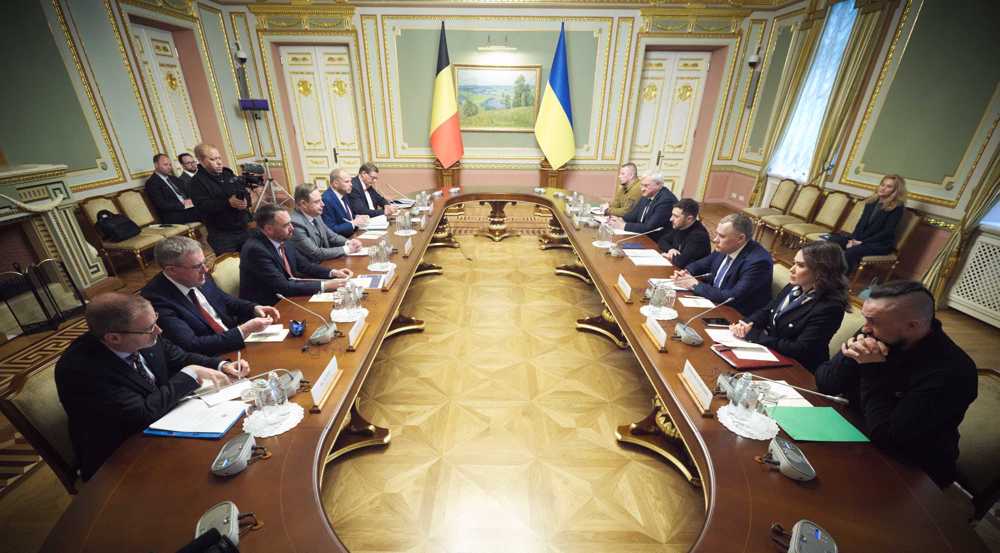
Belgium’s Prime Minister Bart De Wever has warned fellow European Union leaders that he would not support using frozen Russian assets to fund Ukraine unless member states provide long-term, proportional guarantees, exposing divisions over a controversial EU proposal.
The EU proposed tapping $229 billion in interest from the Russian assets despite international law prohibiting the confiscation of sovereign assets.
Of some $300 billion in frozen assets, 210 billion euros ($229 billion) are held in Europe, of which 185 billion euros are in Euroclear, a Brussels-based central securities depository.
Wary of the unstudied nature of the proposal and considering the scheme’s structure to offer the assets to Kiev as a zero-interest loan backed by Euroclear, Belgian Prime Minister Bart De Wever described the plan as a “big gamble” that is “time-consuming.”
“Every country will have to guarantee proportionally in the case that this goes wrong,” he told reporters while attending the European Political Community summit in Copenhagen.
He demanded that EU states guarantee “for a very long time” to share the risk in case of future legal claims by Russia.
Luxembourg’s Prime Minister Luc Frieden also expressed concern when the plan was presented.
“It’s a difficult legal question — you can’t just take over assets that belong to another state,” Frieden said. “All proposals are welcome, but we have to first make sure that it works in practice.”
Consumed by the idea of utilizing Russian assets to mitigate the consequences of the US and its European allies’ involvement in Ukraine, European Commission President Ursula von der Leyen defended the proposal, claiming the risk would be spread on “broader shoulders.”

She is craving approval for it before the upcoming EU summit at the end of October.
Still, Belgium insisted the EU organize the money in other ways, with its Prime Minister saying, “it is not impossible” to do so given the fact that “We are a club with the richest countries of the world.”
According to the proposal, Kiev would only have to pay back the loan if Moscow agrees to pay reparations to Ukraine following a peace deal.
Russia on Thursday called the idea “delusional” and urged the EU to abide by international law.
"In accordance with the principle of reciprocity, any EU attack on our property will be met with a very harsh response. They know this, too," Russian Foreign Ministry spokeswoman Maria Zakharova said.
Italy ends 12-year military presence in Iraq with final troop withdrawal
Israel orders Dutch diplomats to surrender documents after Netherlands bans settlement trade
Norway joins 11 other states to criminalize trade with West Bank settlements



Seven killed in bus attack in central Syria as blast hits gas pipeline near Damascus
Genuine sovereignty lies in independent decision-making, says Iraqi MP after US pullout
Israel’s next cabinet faces mounting debt, war costs: Report
VIDEO | News Review: UK economic challenges
2026 Asian Games: Abdevali beats Olympic champion to win Greco-Roman gold for Iran
VIDEO | Press TV's news headlines
US exit from Iraq heralds ‘beginning of expulsion’ from West Asia: IRGC
UNICEF cautions against generational crisis in Lebanon amid Israeli attacks



 PressTV NEWSLETTER
now
PressTV NEWSLETTER
now
 This makes it easy to access the Press TV website
