Native Americans condemn Pentagon decision to preserve Wounded Knee medals
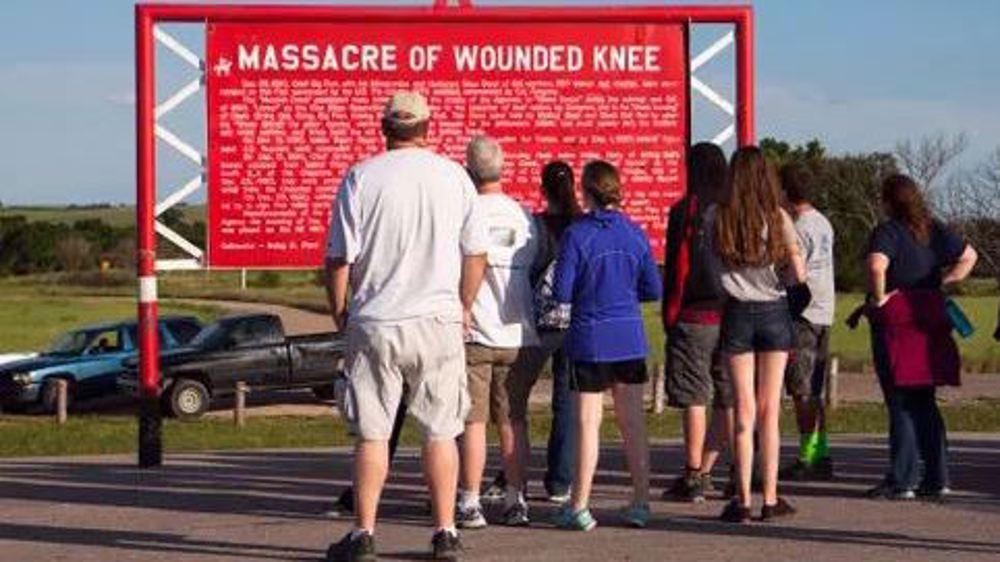
The National Congress of American Indians has condemned the decision by US Defense Secretary Pete Hegseth against revoking medals awarded to US soldiers at the 1890 Battle of Wounded Knee, which many historians consider a massacre.
The Battle of Wounded Knee took place in South Dakota when US soldiers staged an attack on the indigenous people in the region, killing and wounding an estimated plus-300 Lakota Sioux American Indians, including women and children.
Hegseth announced on Thursday that US soldiers who had received Medals of Honor during the Battle of Wounded Knee on December 29, 1890, were permitted to keep the honors. He said he was following the recommendations stated in a Pentagon review.
“We’re making it clear that they deserve those medals. This decision is now final, and their place in our nation’s history is no longer up for debate,” Hegseth asserted in a video posted on X.
He clarified that the Pentagon review panel had advised that the soldiers’ families be allowed to keep their medals following a recent study of the 19th-century conflict by the military that was completed in 2024.

“Celebrating war crimes is not patriotic. This decision undermines truth-telling, reconciliation, and the healing that Indian Country and the United States still need,” Larry Wright Jr., the National Congress of American Indians’ executive director, said in a statement on Saturday.
The Battle of Wounded Knee marked the end of the Indian Wars, during which Native Americans were coerced into ceding their lands and then forced onto multiple reservations across the United States.
Hegseth criticized his predecessor, Lloyd James Austin III, for not ending the dispute, claiming the former Pentagon chief was more interested in being “politically correct than historically correct.”
Austin, who was the defense secretary during the previous administration of US President Joe Biden, had ordered the Pentagon review of the military honors of the event, but had not made a final decision before leaving office in January.
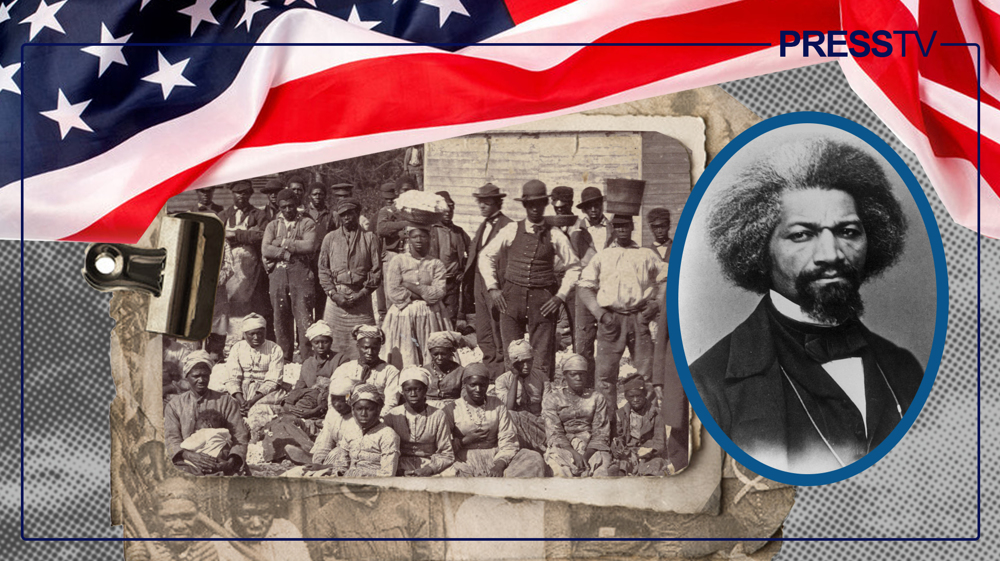
The US Congress in 1990 passed a resolution expressing “deep regret to the Sioux people” for the sorrowful and tragic event at Wounded Knee.
“It is proper and timely for the Congress of the United States of America to acknowledge … the historic significance of the Massacre at Wounded Knee Creek, to express its deep regret to the Sioux people and in particular to the descendants of the victims and survivors for this terrible tragedy,” read the resolution.
During the American Indian Wars against various American Indian tribes in North America from the time of the earliest colonial settlements in the 17th century until the end of the 19th century, European colonial settlers declared that their safety depended upon the total extermination of the Indians.

US missile stockpiles may take years to recover after Iran war: Analysis

US aggression in southern Iran fails amid ceasefire breach: Reports

Iran says US committing ‘crimes against humanity’ in Cuba



New Israeli strikes kill five in southern Lebanon amid relentless truce violations
Most EU states favor foreign policy shift away from US: Survey
Iran urges end to Israeli ‘impunity’ as UN blacklists regime over sexual violence
Trump’s remarks on US-Iran talks ‘distortion of reality’: Report
Leader’s advisor: Iran remains formidable obstacle to US-Israeli malicious plans in West Asia
Iran says no final understanding with US yet, rejects Trump's 'language of must'
Iran, Oman FMs discuss administration of Hormuz Strait in ‘very productive’ call
Italy: Protesters stage nationwide strike, demand end to Israeli genocide in Gaza





 PressTV NEWSLETTER
now
PressTV NEWSLETTER
now
 This makes it easy to access the Press TV website
