'More alive than ever': Life and legacy of martyred Hezbollah leaders, told by their families
By Hiba Morad and Latifa al Husseini
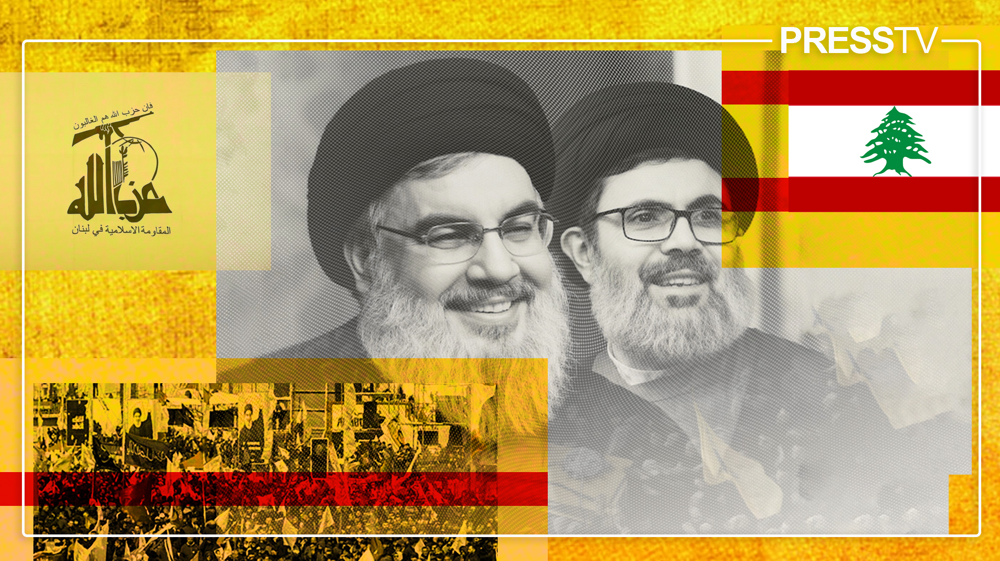
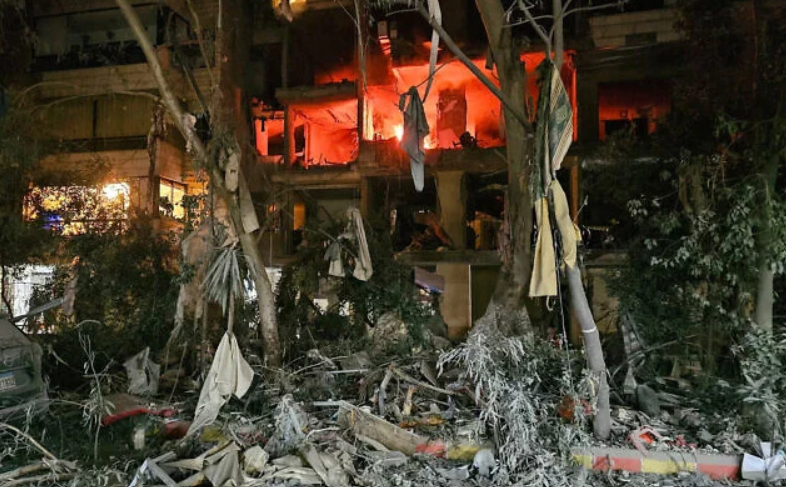
Exactly one year ago, amid an Israeli aerial blitzkrieg on Lebanon, a massive bombing struck the heart of Dahiyeh in southern Beirut. The target was the charismatic leader of the country’s resistance movement.
For two days, hundreds of people sifted through the rubble, hoping against hope to confirm that their worst fears were unfounded. Millions across the world who revered him prayed for his safety.
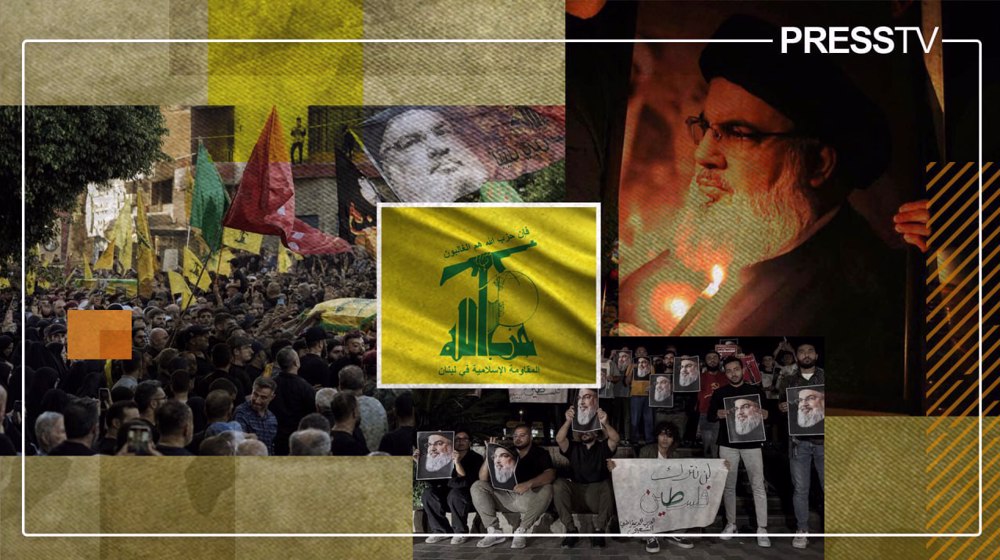
Sayyed Hassan Nasrallah, the long-time leader of Hezbollah and scourge of Zionists, was eventually declared a martyr. As the news spread, a heavy pall of grief descended across the country.
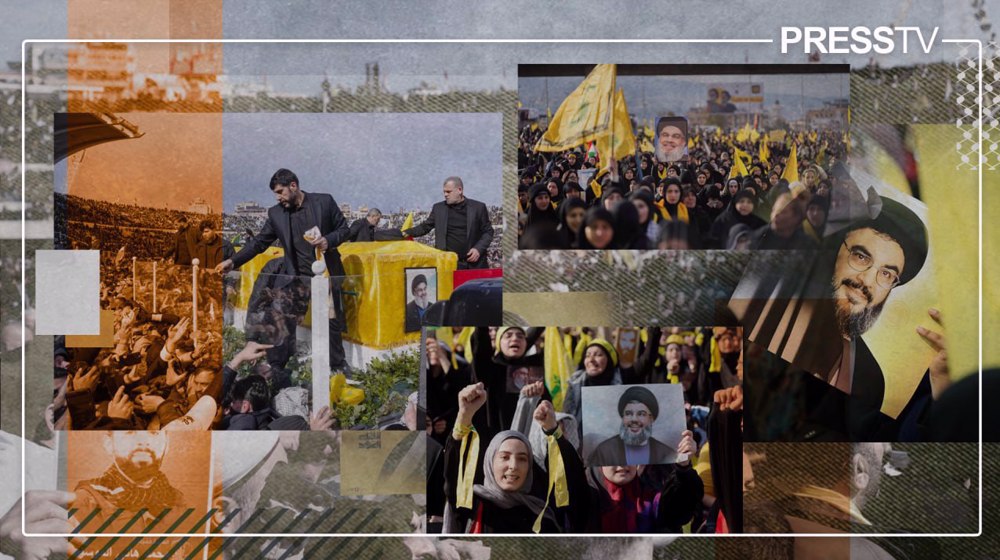
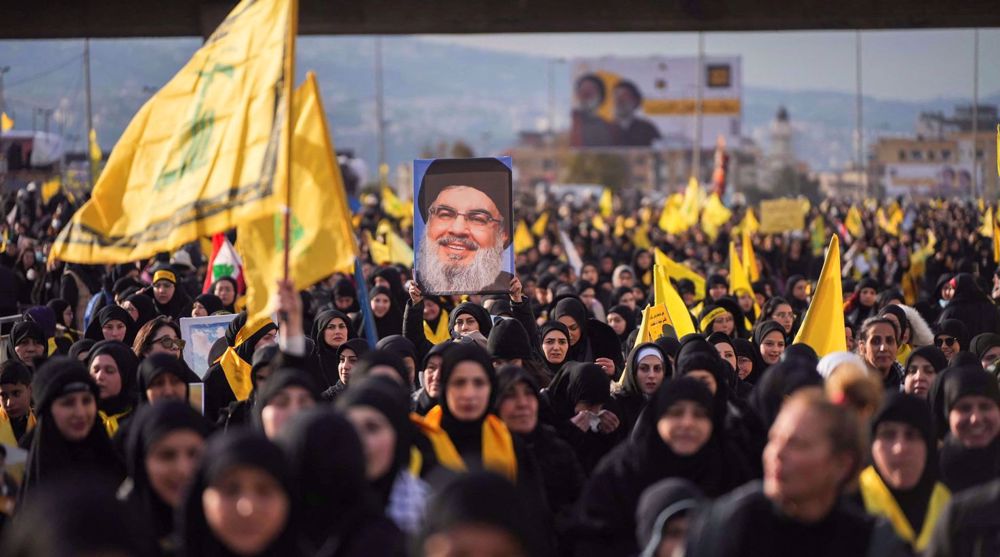
To people across Lebanon, cutting across the religious and ethnic divide, he was more than a leader. He was their sword and shield, a father figure who embodied their struggle for freedom and dignity.
Only days later, another powerful strike in the same area claimed the life of his successor and close aide, Sayyed Hashem Safieddine, following in the footsteps of his political mentor.
Both leaders left an indelible legacy, defending the resistance, Lebanon, and Palestine with unwavering dedication, as their family members told the Press TV website in exclusive interviews.
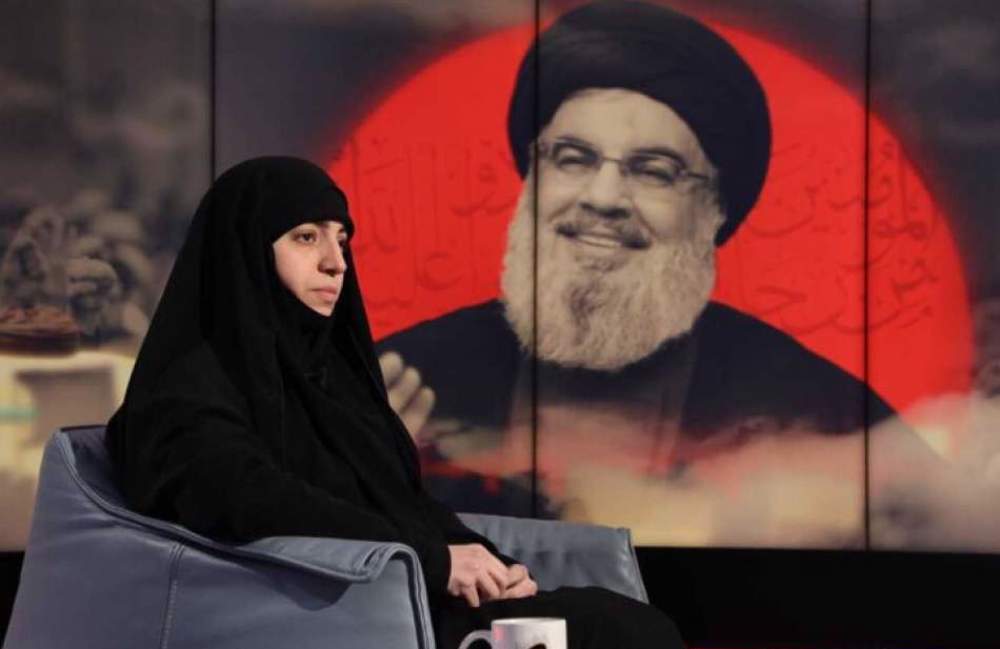
Reflecting on the enduring influence of their father, Zeinab and Jawad Nasrallah said that now is the time for the people – the campaigners of truth and justice – to rise in defense of the causes their martyred father championed with every fiber of his being for more than three decades.
Gradual absence
Jawad said after the 2006 war and the subsequent momentous victory, the physical distance imposed by security measures between Sayyed Nasrallah and his family prepared them for his eventual absence.
“We would see our father four, five, or six times at most throughout the year due to security measures. This probably made things easier for us; he was physically not around most of the time, even though we would speak to him over the phone almost daily. Perhaps these conditions and security measures helped ease the pain,” he told the Press TV website in a detailed conversation.
He recalled what Imam Ali ibn Abi Talib says: “The separation from loved ones is worse than death; the pain of parting or loss of those we hold dear is more intense than the pain of death.”
“So imagine what it is like to separate from a beloved one like Sayyed. However, God provides strength, peace, and eventual comfort to us and all the people mourning the loss of the beloved Sayyed Nasrallah,” he hastened to add.
Jawad’s sister, Zeinab, echoed the same sentiment, noting that the security measures that were made after the 33-day Israeli aggression on Lebanon sort of prepared them for his long-term absence.
“But he and his legacy live in us every moment. Today, he is more alive than ever, and his legacy lives within us and the people,” she asserted.
Last meetings
Jawad said his last meeting with his father was three months before he was martyred.
“I had a short private conversation with him on that day. After that, communication was basically like always. My share of his precious time was after morning prayers; I would call him sometimes every day or every few days,” he told the Press TV website.
“Even if I did not want anything from him, I would call to check on him and hear his voice, ask him to pray for us. After Israel started its large-scale war on Lebanon on the 23rd of September, we had no contact with them anymore.”
Jawad said everything seemed normal at the beginning of September when the regime escalated after the Hezbollah movement refused to abandon the people of Palestine amid the genocide in Gaza.
“Sayyed acted and spoke like always; there was nothing remarkable that made us think he would be martyred. But two incidents caught my attention and made me feel like he was leaving us for the other world,” he recalled.
“The first incident was his words at the funeral of Martyr Haj Mohsen, which was the last speech he gave. He said at the end of the speech, ‘To our martyr, we do not say farewell, but we say see you soon, with the victory of blood over sword; see you soon in martyrdom; see you soon at the side of the beloved,’ as if signaling he was leaving soon.
“The second incident was right before he left for the warzone; he frankly bid my mom farewell and told her, ‘This is the last time we meet.’ Our mom told us about this; however, none of us believed this word until his martyrdom was officially declared.”
Zeinab, recalling the days before her father’s martyrdom, said he had bid farewell to her mother before starting his day’s work – and this was on September 23, 2024.
“To all those who keep claiming he lived underground and so on, I say: my dad and mom lived in an apartment in a regular building in Dahiyeh. They used to live together, unlike the rumors that he was in hiding alone. On that day, he bid my mom farewell and told her, ‘This is the last time we'll see each other.’ However, my mom prayed for him and was hoping that he would return home safe and triumphant.”
Zeinab herself had not seen Sayyed Nasrallah for almost fourteen months before his martyrdom.
“I used to talk to him over the phone from time to time, not every day, though. He had to follow up on different matters, especially the war in solidarity with Gaza, as well as manage countless duties, and I did not want to burden him by calling every single day,” she stated in a calm voice.
“Of course, I missed him, but I thought I was a partner in carrying the load by being patient and supporting him. Since the beginning of Al-Aqsa Flood operations, communication became less frequent due to his immense duties, also due to security measures.”
She said they would usually meet every year for dinner in the holy month of Ramadan, but in 2023, circumstances did not allow them to have the yearly reunion.
“The last time we met was after the Arbaeen of Imam Hussein before the Al-Aqsa Flood. My brother and I went to the Arbaeen pilgrimage, and he came to visit us when we came back. He would always come to visit us after Arbaeen, asking about the trip, the people, and their interactions with fellow pilgrims, and insist that we should always be at the service of the people, to help and advise them.”

Martyred but forever alive
Many people still have not come to terms with the fact that Sayyed Nasrallah has been martyred. Jawad said, as believers, we must recognize that in this world, there is both life and death.
“Destiny and fate are in the hands of God. At the end of the day, whether we like it or not, martyrdom was his wish a long time ago. This phase of denial is normal,” he told the Press TV website.
“He was an extraordinary person, and people’s love for him was extraordinary too. Trusting in God during separation offers a pathway to find strength, peace, and hope by surrendering your anxieties to God. He is a source of healing for broken hearts and a guide through grief, and we trust in God,” he said.
Jawad noted that, for Sayyed Nasrallah, martyrdom on the path of defending the righteous cause was something he longed for – and ultimately earned.
Zeinab said she understands the feelings of those who love him deeply, but added that martyrdom was, in fact, what their father had longed for.
“He did get what he wanted: martyrdom. He would always say, ‘I am afraid to die in bed,’ and God did give him what he wanted,” she told the Press TV website.
“Sayyed did his best to protect the people and their dignity. He stayed up for nights just to make sure people are safe and protected. He would always tell us to take care of the people, help them out, care for them. Whenever we speak, he would underscore how important it is to take care of the people of the resistance first and foremost.”
Bidding farewell
Zeinab said that coming to terms with the reality of her father no longer being physically present was not easy, adding that they were not expecting to bid him farewell so soon, but they also knew this was what he had wanted and prayed for.
They got the news of his martyrdom from television, like everyone else.
My brothers called me later to ask if I wanted to go see him, and I replied that I certainly wanted to. On the way to the hospital, different thoughts crossed my mind: what will he look like? Is he in one piece or is his body shredded, especially knowing that the Israeli enemy had dropped 83 tons of explosives and some fake news claimed nothing has remained of him,” she recalled.
“When we arrived at the hospital, my heart was racing, and my legs felt heavier. The medics opened the fridge where his corpse was kept; I touched his face, I kissed him, and bid him farewell. He was handsome like always, only this time asleep forever.”
Two days later, Zeinab and her brothers went to see him again, and that was the last time they saw him and bid farewell before his burial.
Newly released image captures the late leader of Hezbollah, Seyyed Hassan Nasrallah, in the war room days before his martyrdom.
— Press TV 🔻 (@PressTV) September 27, 2025
Follow Press TV on Telegram: https://t.co/LWoNSpkJSh pic.twitter.com/kdO7EILzjz
Precious moments
Looking back, Zeinab said that even before he became Secretary General of Hezbollah, she and her family rarely saw him because of his immense responsibilities.
“I remember how I missed him a lot and wished he were around more often, but he was playing an important role in the resistance movement. Later on, we got used to the idea that he was away most of the time for the sake of an important cause and felt like we were also partners in the cause,” she told the Press TV website, recalling her younger days.
“I recall in 1997, when we were in Iran, I went with him to visit the Imam Reza (AS) shrine. I also remember going with him to religious ceremonies, and it would make my day when I accompanied him. Or we would go together to Ashura ceremonies and then come back home to sit at the table, drink a cold cup of ‘doogh’ my mom would prepare, while talking and discussing different topics.”
Learning by example
Zeinab, who lost both her father and her husband within just a few days of each other, spoke of her father as a teacher who led by example.
“He always stressed the importance of gently treating a daughter and the fact that they are precious companions. He would also insist on treating women respectfully, and we used to see that in how he treated my mom,” she remarked.
“He was a patient person, often quiet and calm. He raised us by practice and not preaching. When you saw how he treated my mom, how he treated us, how he treated people in general, you learned by example. Of course, he would give advice sometimes, but mostly my brothers and I learned from him by observing his manners, his character, and attitude.”
Zeinab said that, even though she was already married and independent, she still valued his opinion and sought his advice. He would guide her toward the right decision, not by giving a direct yes or no, but by allowing her to think, analyze, and arrive at her own conclusion.
“For example, when I would get invited to a conference or trip, I would call him and ask his opinion. His first comment would be, ‘Is your husband okay with that?’ That is, my husband is my partner and I should preserve respect between us. This respect is rooted in the belief that the husband, as the head of the family, has a leadership role in guiding and protecting the household. It was important for him that we always do the right thing, no matter what,” she recalled.
Jawad, for his part, said that Sayyed Nasrallah always taught them the values of good manners, family, humanity, justice, and all other principles that people should uphold and practice in their daily lives.
According to his children, Sayyed Nasrallah’s legacy spanned decades, from the martyrdom of Sayyed Abbas al-Mousawi in 1992 up until his own martyrdom in September 2024.
Lebanese people are gathering in the streets of Beirut to commemorate the anniversary of the assassination of Sayyed Hassan Nasrallah by the Israeli regime.
— Press TV 🔻 (@PressTV) September 26, 2025
Follow: https://t.co/LWoNSpkJSh pic.twitter.com/tVgdts6ArU
Sayyed Safieddine – brother and side to Sayyed Nasrallah
Sayyed Safieddine shared a close bond with the Hezbollah leader and immediately succeeded him after his martyrdom. However, he was also martyred in less than a week.
Mahdi, his nephew, said they were brothers who comforted each other and trusted each other.
“Those who know Sayyed Safieddine know his bond with Sayyed Nasrallah. He ‘melted’ in Sayyed Nasrallah and his personality, just like the phrase ‘melt in Imam Khomeini, as he melted in Islam.’ It is a revolutionary call to action, attributed to Ayatollah Sayyed Muhammad Baqir Sadr, advocating for devotion to the political and religious ideals of Imam Khomeini to the same complete extent that Imam Khomeini was devoted to Islam,” Mahdi told the Press TV website.
He said Sayyed Safieddine was always at the service of Sayyed Nasrallah. He worked hard within the movement but preferred to stay away from the limelight.
“One thing really caught my attention in the relationship between Sayyed Safieddine and Sayyed Nasrallah: it was the attention they paid to religion and to practicing it correctly,” Mahdi stated.
According to him, Sayyed Safieddine would spend hours with various scholars, rigorously discussing Nahjul Balagha, which contains 240 sermons by Imam Ali covering a wide range of topics, including existence, the relationship with God, and the Imam's reflections on historical events.
“Sayyed Safieddine would study these sermons with other scholars, summarize these, and discuss them with Sayyed Nasrallah, trying to draw lessons together,” Mahdi noted.
A statement issued by Hezbollah after his martyrdom read: “He [Sayyed Nasrallah] relied on Sayyed Safieddine in times of hardship and was his guarantor in difficulties. Sayyed Safieddine has passed away, supporting the religion of God, pious, righteous.”
Among the people until martyrdom
Sayyed Safieddine was beloved among resistance fighters and their families. He earned widespread respect for his awareness of people’s conditions and his dedication to solving their problems.
According to Mahdi, the last time Sayyed Safieddine appeared among the people was right after the pager explosions. He was advised to leave the ground quickly, but he refused and insisted on checking up on the victims in person and giving a speech there.
Following the martyrdom of Sayyed Nasrallah, Sayyed Safieddine immediately took action and assumed leadership of the battle against the Zionist enemy.
“He knew his duties well and did not have to wait for an official declaration of his becoming Hezbollah leader. He took over, started assigning new leaders, and divided tasks that needed to be done. He allowed the resistance to rise again. He kept leading the battle until he was martyred,” Mahdi said.
The nephew emphasized that, like Sayyed Nasrallah, Sayyed Safieddine “refused to leave the Dahiyeh and insisted on staying on the ground, because this is what leadership is all about: fulfilling duties and leading the battle even while facing danger or martyrdom.”
When Israeli forces raided the Hezbollah operations room from which he was directing the battle, they repeatedly blocked paramedics from reaching the site. The Red Cross intervened through UNIFIL to evacuate the wounded, yet the enemy continued to obstruct access for three consecutive weeks.
Thousands gather to take part in the commemoration ceremony held in honor of the one year anniversary of the martyrdom of Hezbollah leaders Sayyed Hassan Nasrallah and Hashem Safieddine in the Iraqi capital Baghdad.
— Press TV 🔻 (@PressTV) September 26, 2025
Follow Press TV on Telegram: https://t.co/LWoNSpkJSh pic.twitter.com/dOTYse0kQQ
Sayyed Hashem: A loving father to all
He said Sayyed Safieddine’s children will be disclosing a lot more about him in the near future.
“Sayyed Hashem had a great impact on everyone in the family. He was a mentor, a guide to all family members. This is a fact, not mere feelings I am expressing. He had a powerful impact on every one of us. His kind character and keenness on family reunion were striking,” he said.
“He would pay attention to the details, care about family issues and events, and even though he was away most of the time due to security measures and the workload, he still followed up closely. Family, to him, was important.
“When I used to visit him from time to time, I would be surprised to know that he had been following up on my news and checking up on me without me knowing. We lost a father; every one of us lost a dear father.”
Sayyed Safieddine amassed extensive experience across political, cultural, and social spheres over the years. He was particularly distinguished for his close oversight of Hezbollah institutions and attention to the people’s affairs.
Drawing on his wide-ranging expertise, Mahdi said his uncle authored a detailed will, which can be regarded as a comprehensive guideline for Hezbollah, portions of which have been made public.
According to Mahdi, Sayyed Hashem was an extraordinary leader, instrumental in shaping Hezbollah as it exists today, leaving behind countless contributions that are yet to be fully revealed.
Iran slams Israeli attacks on Lebanon, warn UNSC’s inaction to embolden regime
Hezbollah strikes occupied Haifa in retaliation for Leader's assassination
Hezbollah offers condolences to Iranian nation over Leader’s martyrdom


Iran calls on IAEA to condemn fresh US-Israeli attacks on nuclear site
Murder of innocence: Israeli-US aggression on southern Iran school killed 165 children
Israeli PM’s fate unclear after ‘surprise’ missile attack on his office: IRGC
Iran Armed Forces shoot down US F-15 fighter jet near Kuwait border
IRGC, Army launch fresh waves of missile strikes against Israeli, US targets
Red Crescent Society: 555 people killed across Iran in US-Israeli onslaughts
Operational concerns delayed US-Israeli aggression against Iran for a week: Report
Iran slams Israeli attacks on Lebanon, warn UNSC’s inaction to embolden regime


 PressTV NEWSLETTER
now
PressTV NEWSLETTER
now

 This makes it easy to access the Press TV website
