Doha strike underscores Israel’s stealth reliance and exposes Persian Gulf defense gaps
By Mohammad Molaei
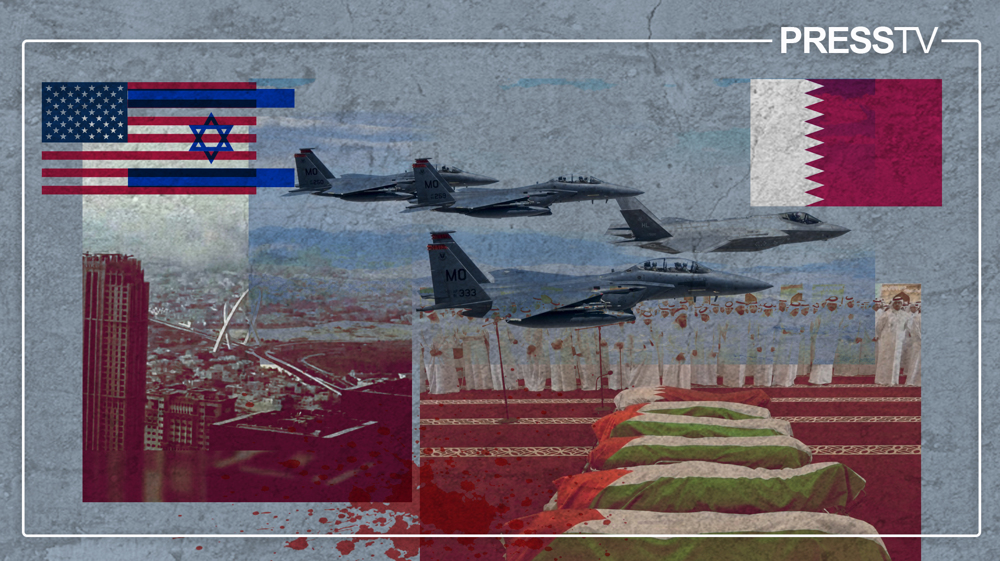
In the shadowed corridors of modern hybrid warfare, where precision strikes blur the lines between targeted eliminations and overt acts of territorial violation, the Zionist regime's airstrike on Doha on September 9, 2025, stands as a stark exemplar of calculated aggression masked as operational necessity.
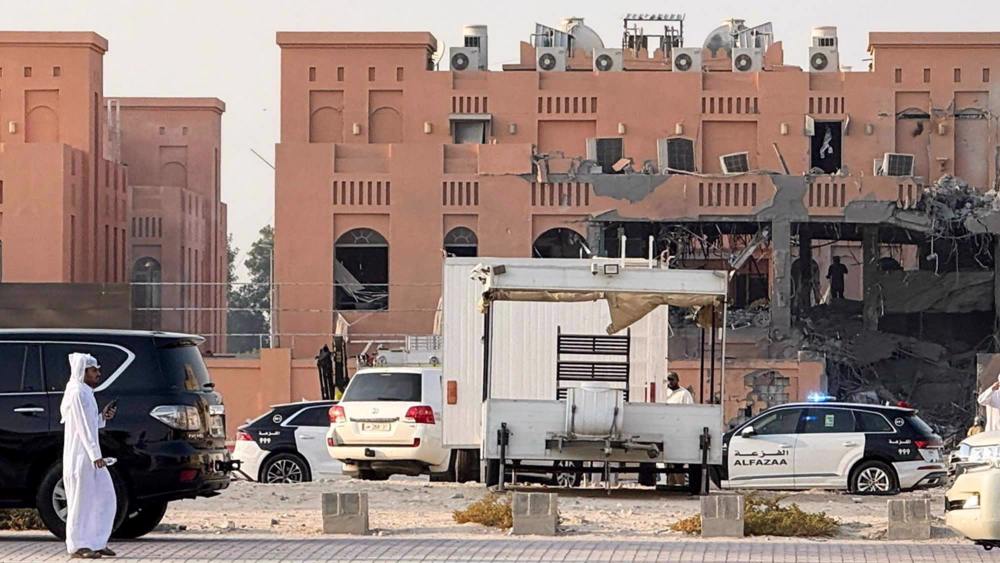
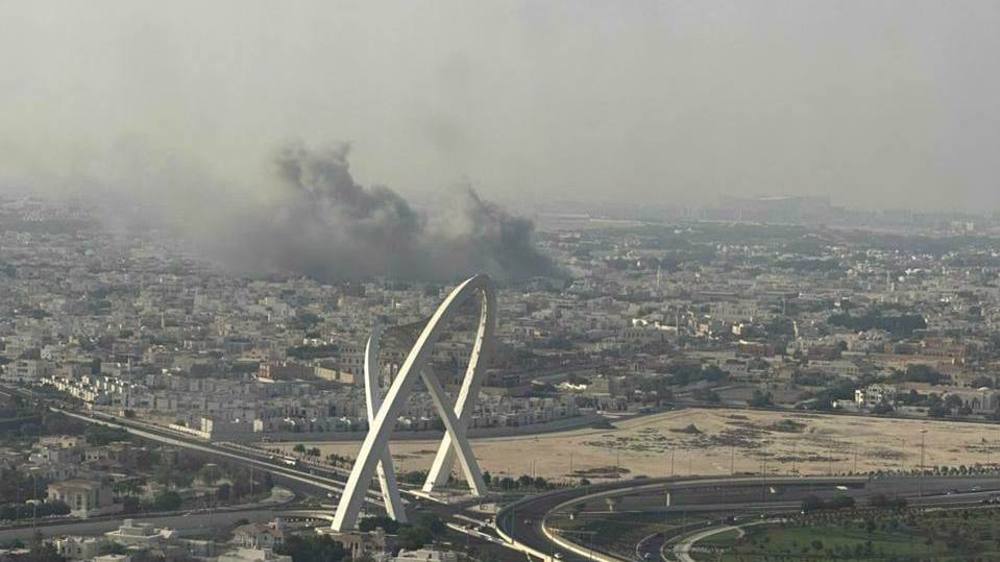
Conducted amidst fragile ceasefire negotiations in Gaza, the illegal incursion aimed at decapitating Hamas's political leadership unfolded in the heart of Qatar's capital.
This operation reveals not ingenuity but the precarious dependencies of expeditionary forces reliant on external enablers. The regime deployed a package of approximately 15 F-35I Adir stealth fighters, augmented by F-15I Ra'am strike platforms, launching a salvo of 10 Rafael Spice-2000 glide bombs and possibly AGM-158 JASSM-ER standoff munitions.
These assets, vectored through layered suppression of enemy air defenses (SEAD/DEAD) protocols, penetrated Qatari airspace undetected, exploiting gaps in regional integrated air defense systems. Yet, the strike's partial success, killing five Hamas affiliates, including Khalil al-Hayya's son Hamam, his office director Jihad Labad, and three bodyguards, while wounding family members, highlights the inherent fragilities of such ventures, particularly when executed in a theater saturated with US and allied surveillance assets.
The technical dimensions of this operation underscore a doctrine of "effects-based operations,” where the regime prioritizes kinetic disruption over sustained dominance.
Launching from Nevatim Airbase in the Negev, the F-35 is equipped with AN/APG-81 AESA radars for low-probability-of-intercept targeting initiated ingress via the Persian Gulf's maritime approach vector, leveraging electronic warfare suites like the Elbit Systems Elisra SCAR pods to spoof and jam civilian air traffic control frequencies.
The Spice munitions, with their GPS/INS guidance augmented by electro-optical seekers, were released at standoff ranges exceeding 60 kilometers, allowing mid-course corrections to evade any rudimentary Qatari radar coverage.
This configuration, while enabling deep penetration, exposed vulnerabilities: the F-35I's internal weapons bays limit payload to four bombs per sortie, necessitating multiple waves that risked cumulative exposure to counter-detection.
Assessing the Zionist regime's Air Force performance demands scrutiny of its tactical execution without veiling the operational trade-offs. The IAF's execution relied on a classic OODA loop compression: observe via ELINT/ SIGINT feeds from Gulfstream G550 Nachshon Eitam platforms orbiting over international waters; orient through fused data from Arrow-3 exo-atmospheric interceptors' ancillary sensors; decide on target handoff to Spice munitions; and act with minimal dwell time over Doha.
Yet, this precision masked inefficiencies – the strike's CEP hovered around 3 meters, per post-strike crater analysis, but collateral damage to adjacent Qatari security structures, killing two Qatari officers, betrayed suboptimal battle damage assessment.
The IAF's failure to neutralize primary HVTs (high-value targets) like al-Hayya, whose survival was confirmed via Hamas's subsequent funeral imagery, points to degraded terminal guidance, possibly from localized jamming or decoy employment by Hamas's rudimentary EW countermeasures.
In a broader doctrinal critique, this operation exemplifies the IAF's overreliance on fifth-generation stealth for "porcupine" denial strategies, ignoring the attritional costs of sustained Persian Gulf transits, where fuel efficiency plummets under combat loading.
An alliance that cannot be relied on
— Press TV 🔻 (@PressTV) September 11, 2025
How Israel violated Qatar's sovereignty with impunity despite Doha's cozy relationship with Washington
Follow Press TV on Telegram: https://t.co/LWoNSpkJSh pic.twitter.com/3EUWR6pgLs
Qatar's air defense and air force response, or conspicuous lack thereof, exposes systemic frailties in Persian Gulf Cooperation Council IADS interoperability. At the moment of ingress, Qatar's Eurofighter Typhoon Tranche 3A interceptors and Dassault Mirage 2000-5ED multirole fighters were actively engaged in routine combat air patrols over the Persian Gulf, simulating QRA (quick reaction alert) intercepts against simulated Iranian threats.
These assets, integrated with the French-supplied Thales Ground Master 400 (GM400) 3D AESA radars boasting 470 km detection envelopes, should have vectorized on the incoming F-35 signatures via Mode 5 IFF interrogations.
Instead, no interceptors scrambled, and the Qatari Amiri Air Force (QAAF) maintained radio silence, allowing the regime's package to egress unchallenged. This inaction stems from doctrinal hesitancy: Qatar's IADS, anchored by the Raytheon NASAMS surface-to-air missile batteries and supplemented by PAC-3 MSE interceptors, prioritizes passive surveillance over aggressive engagement, fearing escalation with Iran or intra-GCC frictions.
The GM400's failure to cue Typhoon's Captor-E AESA radars for beyond-visual-range AMRAAM salvos underscores training gaps in joint fires integration, leaving Doha's skies a de facto no-fly zone for assertive defense.
Post-strike, Qatar's invocation of Article 51 of the UN Charter self-defense rights rang hollow, as its Raytheon AN/TPY-2 forward-based X-band radars capable of ballistic missile warning remained inert, prioritizing diplomatic posturing over kinetic riposte.
The complicit roles of the United States and United Kingdom in this violation merit dissection through the prism of expeditionary logistics and intelligence sharing.
Britain's involvement manifests overtly in aerial refueling: Voyager KC2 tankers, based at Al Udeid's auxiliary facilities, lifted off from Doha International's apron mere hours pre-strike, providing boom-and-probe offloads to the IAF's Boeing 707 Re'em tankers en route.
These cycles' departure from Qatar, mid-air transfers of aviation fuel at 30,000 feet over neutral airspace, and return landing enabled the F-15Is to extend loiter times without compromising stealth profiles. This routine, documented in RAF deployment logs, not only sustains the regime's power projection but also erodes Qatar's operational sovereignty, as Voyager's L-band radars inadvertently mask IAF ingress via cooperative track sharing.
The UK's facilitation, under the guise of "Five Eyes" interoperability, prioritizes Tel Aviv's qualitative military edge over Doha’s territorial integrity, a pattern echoed in joint exercises like Juniper Cobra.
America's posture, feigning post-facto surprise, crumbles under the scrutiny of its Al Udeid-centric sensor grid. The US Central Command's (CENTCOM) AN/FPS-132 Upgraded Early Warning Radar (UEWR), emplaced at Al Udeid Air Base, boasts a 3,000+ kilometer detection horizon for low-observable targets, fusing TPY-2 X-band data with SBIRS GEO satellite feeds for persistent track-via-missile cueing.
This architecture, integrated via Link-16 data link,s should have illuminated the IAF package at 500 nautical miles, triggering Patriot PAC-3 MSE batteries or F-22 Raptors from the 379th Expeditionary Wing. Yet, no alerts sounded; the regime's jets threaded the needle unmolested.
Washington's claims of "real-time awareness only post-strike" are belied by UEWR's dwell-on-target capabilities, which routinely vector Aegis BMD destroyers in the Gulf for Iranian ballistic missile defense. In truth, Al Udeid's assets serve as a forward-operating Israeli military node: during Iranian ballistic missile salvoes, the radar's phased-array apertures provide real-time telemetry azimuth, elevation, and Mach profiles to Arrow-3 batteries, enabling mid-course intercepts.
‼️ INFOGRAPHIC - The unhinged Israeli war machine, fueled by American weaponry, unleashes terror across the region — from Gaza to Doha.
— Press TV 🔻 (@PressTV) September 13, 2025
Follow Press TV on Telegram: https://t.co/LWoNSpkJSh pic.twitter.com/4aBHcV4gwE
This one-way conduit, devoid of reciprocal Qatari safeguards, rendered the base complicit in Doha's vulnerability, as evidenced by the strike's zero US intervention. CENTCOM's silence not only abrogated mutual defense pacts under the 2002 US-Qatar SOFA but amplified perceptions of American unreliability, eroding GCC cohesion amid rising Iranian A2/AD postures.
The repercussions of this Doha incursion ripple through the Persian Gulf's fragile deterrence equilibrium, portending a cascade of operational precedents for the Zionist regime's future forays. Qatar's vehement condemnation, labeling the strike "state terrorism" and vowing reprisal, masks a stark reality: neither Doha nor its Arab brethren possess the doctrinal autonomy or matériel depth for a calibrated response.
The QAAF's 36 Typhoons and 24 Mirages, while potent in air-superiority roles with MBDA Meteor BVR missiles, lack the enablers to prosecute Zionist regime Air Force assets without US overwatch. Broader GCC impotence is codified in the Abraham Accords' security annexes, where Riyadh and Abu Dhabi, despite F-35 acquisition, defer to Washington's veto on anti-Israel kinetics, fearing reprisals via Saudi Aramco chokepoints or the UAE's Taweelah desalination vulnerabilities.
Predictably, Qatar's rhetoric will dissipate into diplomatic maneuvering, perhaps via OIC resolutions, while the regime recalibrates for iterative strikes: enhanced ELINT from Persian Gulf Stream platforms could cue follow-on operations against Hamas exiles in Turkey or Lebanon, exploiting similar allied blind spots
In dissecting this episode, one discerns the Zionist regime's gambit as a high-stakes probe of Persian Gulf IADS thresholds, revealing not unassailable prowess but the scaffold of Western enablers propping its reach.
For regional actors from Riyadh to Doha's nascent NASAMS grids, the lesson is unequivocal: sovereignty demands indigenous A2/AD hardening, lest external patrons dictate the battlespace's rules of engagement.
As the dust settles over Leqtaifiya's craters, the Persian Gulf's skies portend a theater of asymmetric reprisals, where deterrence hinges less on stealthy incursions than on the resolve to contest them.
The attempted assassination of Hamas leaders in Doha on September 9, 2025, marks a brazen escalation in the Zionist regime's extraterritorial operations, extending its campaign of targeted killings into the sovereign territory of Qatar, a key US ally in the region that has been mediating ceasefire negotiations to end the genocidal war on Gaza.
It exemplifies the regime's reliance on standoff precision strikes to neutralize perceived threats, but it also exposes vulnerabilities in execution, regional alliances, and the broader geopolitical fallout.
Mohammad Molaei is a Tehran-based military affairs analyst.
(The views expressed in this article do not necessarily reflect those of Press TV)

UAE removes online references to Hind al-Owais after Epstein email revelations
Oman: Iran-US indirect talks in Geneva achieve tangible progress

Qatar: High-level dialogue with Iran ongoing to prevent regional escalation



Somaliland ready to give US access to its minerals, military bases: Minister
VIDEO | Iran's game changing retaliation boxes- part 1
VIDEO | Iran's game changing retaliation boxes- Part 2
VIDEO | Palestinian widow raises three kids in Gaza as her husband killed by Israel
Palestinian teen killed as raids and settler violence intensify across West Bank
Iran’s layered arsenal primed to deter – and decimate – US warships in Persian Gulf
Iranian commander dismisses US military buildup in West Asia as ‘theatrical gesture’
Trump ‘curious’ why Iran hasn’t ‘capitulated’ despite massive US military buildup: Witkoff



 PressTV NEWSLETTER
now
PressTV NEWSLETTER
now

 This makes it easy to access the Press TV website
