Discover Iran: Naqsh-e Jahan Square, the magnificent heart of Safavid capital Isfahan

By Ivan Kesic
- Naqsh-e Jahan Square in Isfahan stands as one of the world's most remarkable historic urban spaces, embodying the grandeur of the Safavid dynasty and serving as a cultural and architectural centerpiece.
- The square measures approximately 560 meters in length and 160 meters in width, making it one of the largest historic public squares globally, second only to Beijing's Tiananmen Square in terms of area.
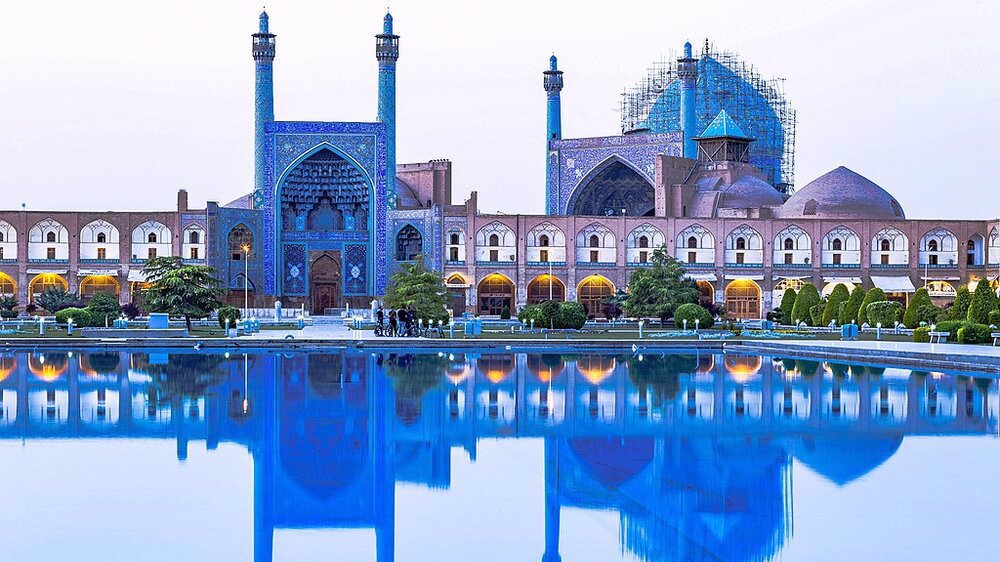
- The key monuments around the square include two spectacular mosques, the royal palace, and the bazaar gate, all of which are surrounded by two-story arcades housing bazaar shops.
The Naqsh-e Jahan Square is a grand public square at the heart of Isfahan, standing as one of the world's largest urban squares and a masterpiece of Iranian and Islamic architecture.
Commissioned by Safavid Shah Abbas I in the early 17th century, the square is framed by two-story arcades and flanked by four monumental structures.
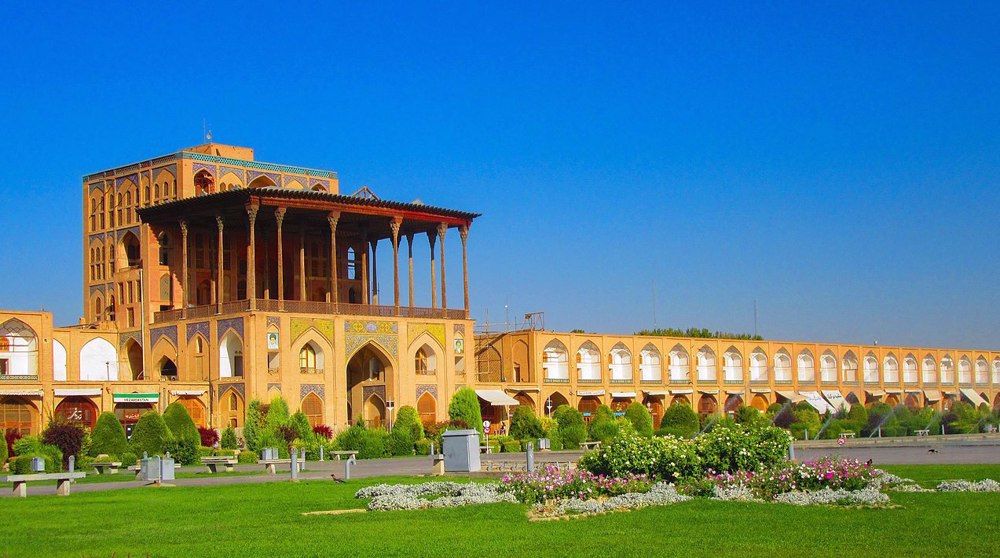
Those buildings are the Sheikh Lotfallah Mosque to the east, the Ali Qapu Palace to the west, the Qeysariyeh Gate to the north, and the iconic Imam Mosque to the south.
This meticulously planned ensemble represents the pinnacle of Safavid urban design and served as the cultural and political nucleus of their capital.
Besides its traditional name Naqsh-e Jahan, meaning "Image of the World," it is also known as the Shah Square after Abbas I, while its modern official name is the Imam Square.
The heart of the new capital
The Naqsh-e Jahan Square, Isfahan's grand square, became the centerpiece of Shah Abbas I's vision when he moved the capital to Isfahan in the 1590s.
While the city’s original bazaar had long thrived around the old square (Meydan-e Kohneh), Abbas I's ambitious urban redesign shifted commerce and power to this freshly conceived plaza.
Construction of the new square began in 1602, with its defining feature being a majestic, one-story arcade of arches and porticoes facing the square.
Behind this façade lay the new covered bazaar, accessible through multiple gates that connected the bustling marketplace to the royal square.
The square itself was lined with around 200 two-story shops, each roughly five meters high. The lower level housed two shops per unit, while the upper bala khaneh (elevated section) contained four smaller shops.
Two of the four upper shops overlooked the square, and the remaining two were at the rear, featuring brick-railed balconies. Originally, marble floors adorned these spaces, though later additions used colorful tiles and stone.
Unlike the old bazaar, which served the general populace, the new marketplace catered primarily to the Safavid court, elite dignitaries, and visiting officials, earning it the name "the royal bazaar."
Architectural and urban masterpiece
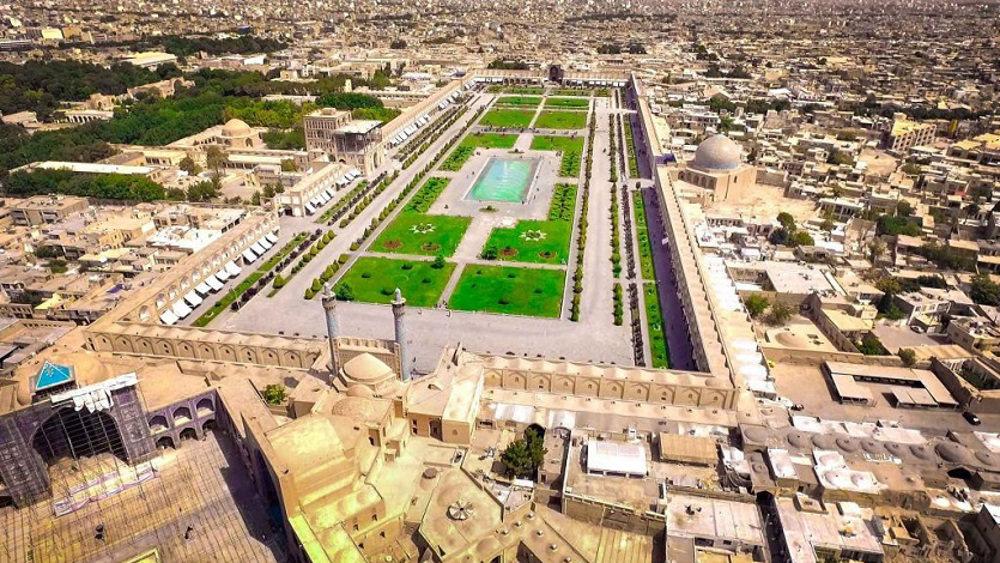
The square defies traditional Iranian urban layouts, which typically lack expansive open spaces and are often a collection of buildings densely packed along linear bazaars.
Spanning 560 meters by 160 meters, its vast 9-hectare expanse is adorned with enameled tilework and paintings, elevating even its commercial arcades to artistic marvels.
The Imam Mosque, angled toward Mecca, exemplifies Safavid-era architectural brilliance with its vibrant mosaics and towering iwan with two minarets.
The Ali Qapu Palace, gateway to royal gardens and Chaharbagh, boasts a soaring portal and a shaded terrace supported by slender columns.
The Qeysariyeh Gate opens to Isfahan's sprawling bazaar, while the Sheikh Lotfallah Mosque, once a private royal sanctuary, is now revered as an architectural gem.
Over time, as the Naqsh-e Jahan Square flourished, the old square's bazaar dwindled in importance, its functions fully absorbed by Abbas I's grand commercial hub.
Today, this bazaar remains one of the best-preserved examples of pre-20th-century Islamic urban marketplaces, its history deeply intertwined with the rise of Isfahan's iconic square.
Hub of cultural and social life
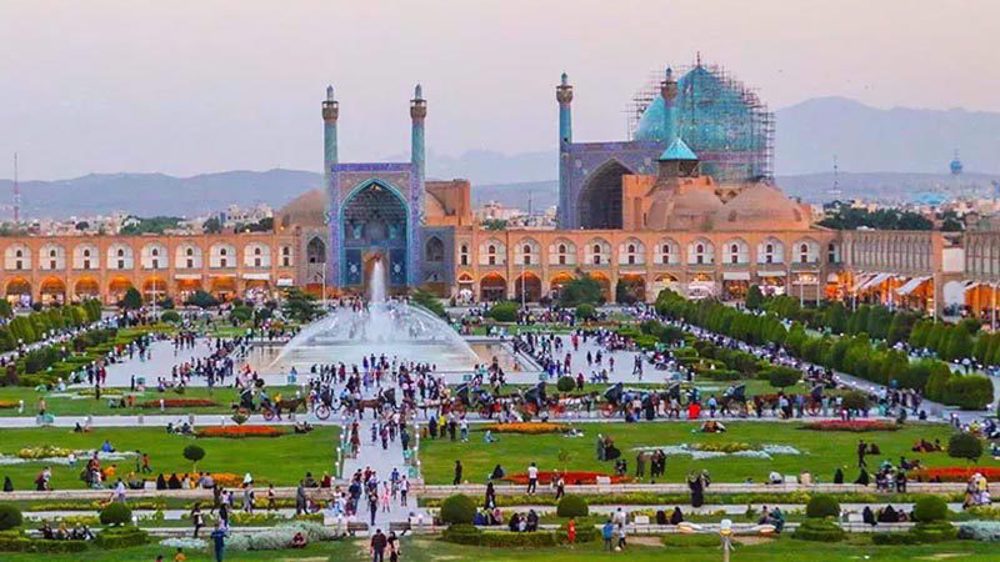
The Naqsh-e Jahan Square pulsated with Safavid life, hosting polo (chogan) matches, military parades, and public ceremonies. Its arcades teemed with merchants, while musicians performed from balconies above the bazaar.
Historical accounts, such as those by Jean Chardin from the 17th century, describe it as a vibrant center for trade, art, and social interaction, with merchants, poets, and travelers converging.
The Ali Qapu's talar linked to throne rooms where rulers received dignitaries, cementing the square’s role as Iran's socio-cultural epicenter.
The square's design undermined decentralized power structures, reinforcing Abbas I's authority through its grandeur and accessibility.
Today, it serves as a gathering place for locals and tourists, who come to enjoy its gardens and fountains, with occasional cultural festivals and other events.
Since 1979, it has been a UNESCO World Heritage Site, inscribed as the first Iranian site along with Persepolis and Chogha Zanbil, recognized for its historical and architectural significance.
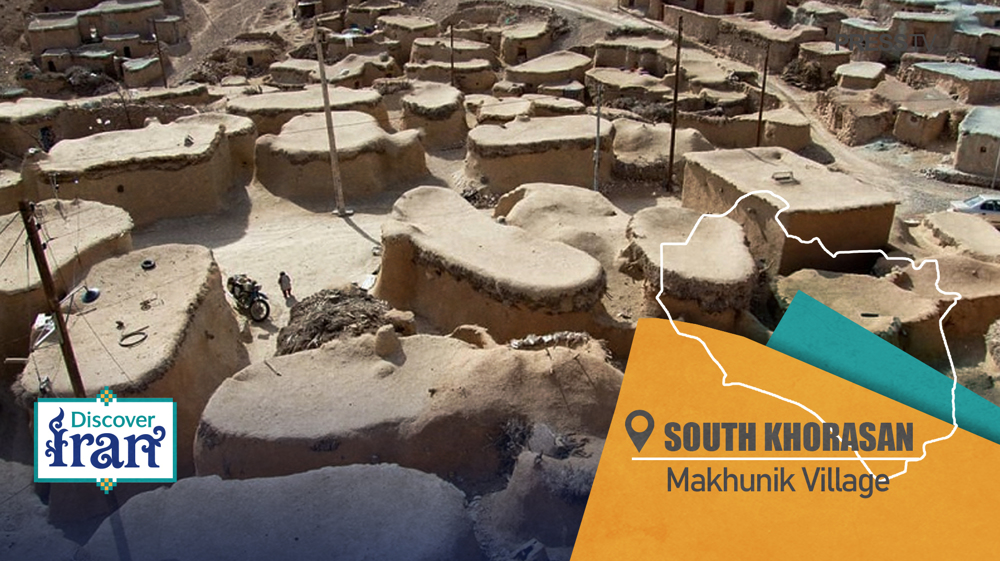
Discover Iran: Makhunik – South Khorasan’s “lilliput village” and its centuries-old mystery
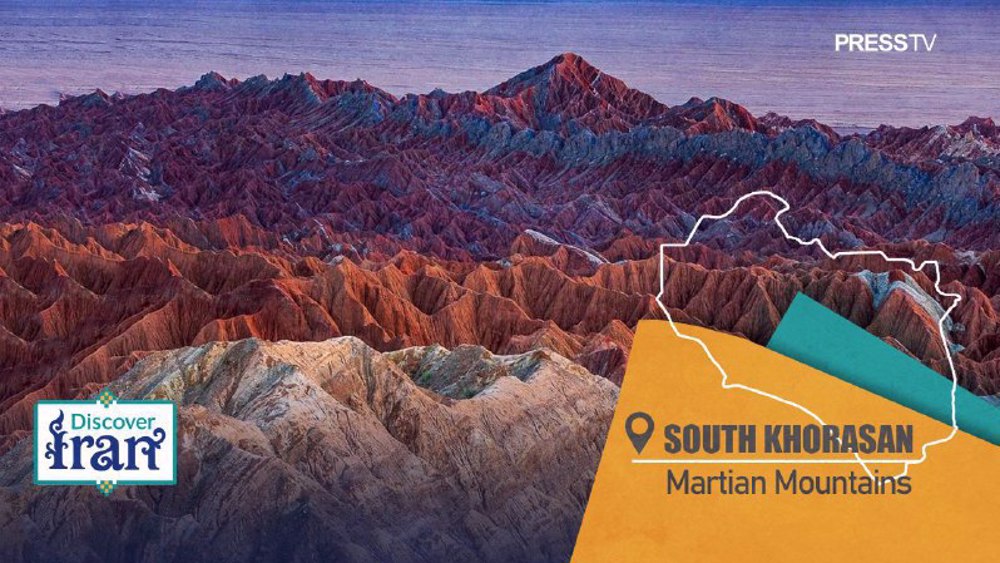
Discover Iran: Martian Mountains in South Khorasan, an otherworldly desert wonder
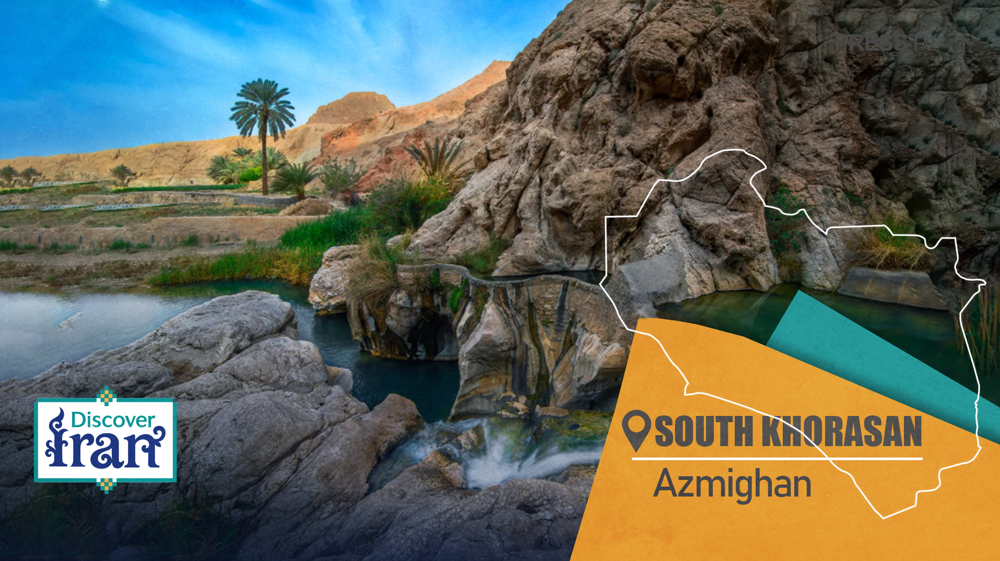
Discover Iran: Ezmeyghan – A South Khorasan village where rice paddies bloom in desert



Rights group warns of Israeli plot to kill abducted Palestinian leader Barghouti
ICC prosecutor condemns US for equating court judges with terrorists, drug traffickers
Afghan, Pakistani forces exchange heavy fire, shattering fragile ceasefire
IRGC-led Sahand-2025 drill positions Iran as key player in Eurasian security architecture
VIDEO | Dublin activists renew push to rename Herzog Park over Israel’s genocide in Gaza
VIDEO | Berlin streets fill as thousands protest proposed military draft
VIDEO | Press TV's news headlines
VIDEO | Hezbollah chief rejects disarmament calls, slams ‘Greater Israel’ project


 PressTV NEWSLETTER
now
PressTV NEWSLETTER
now

 This makes it easy to access the Press TV website
