Remembering 3-year-old Aylan Kurdi: The image that shook the world 10 years ago
By Press TV Staff Writer
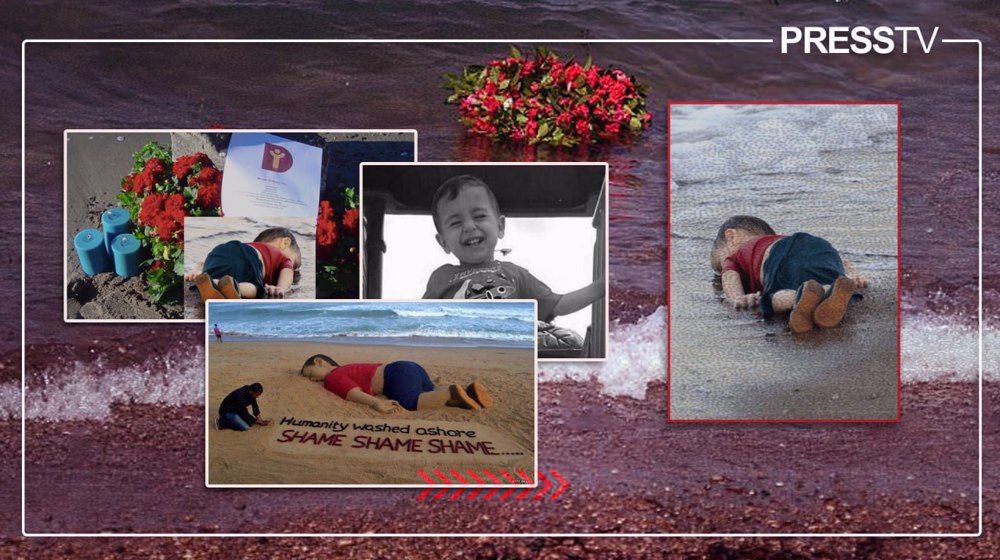
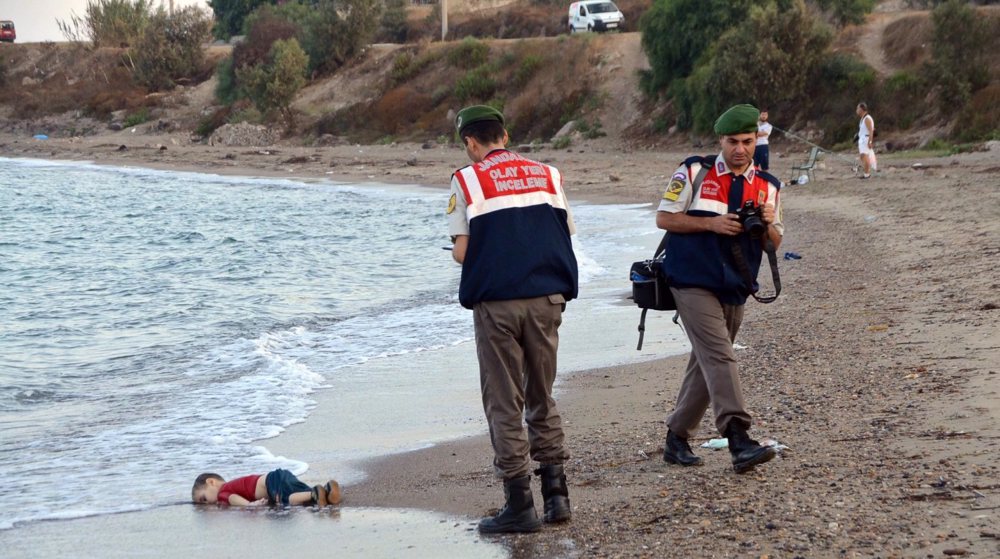
On September 2, 2015, the lifeless body of three-year-old Aylan Kurdi washed up on a Turkish beach, instantly becoming a global symbol of the Syrian refugee crisis and the desperate plight of families fleeing a war engineered by Western countries.
The haunting photograph, captured by Turkish journalist Nilüfer Demir, shook the world, putting a human face on the staggering statistics of migration driven by war.
The fateful journey
Aylan, his five-year-old brother Galip, and their mother Rehan were attempting to reach the Greek island of Kos from Turkey when the tragedy struck.
Their inflatable boat, which they were travelling in, was overcrowded and designed for just eight people, and lacked life vests. Panic overtook the captain as the vessel crossed the Mediterranean Sea.
Abdullah Kurdi, Aylan’s father, was the only survivor. Aylan’s last words, as narrated by his grief-stricken aunt later, were: “Daddy, please don’t die.”
Angels die silently! #RestInPeace
— Press TV 🔻 (@PressTV) September 4, 2015
The tragic death of drowned Syrian boy Aylan Kurdi has left the world speechless. pic.twitter.com/4Opm71SPyy
Aylan’s aunt, Fatima Kurdi, recounted the moments of terror in these words:
“When the boat flipped upside down and the waves kept pushing down, those two boys were in his arms. He tried with all his power to push them up above the water to breathe, and they screamed: ‘Daddy, please don’t die.’”
After realizing that Galip had passed away, Abdullah tried to save Aylan, only to find that his younger son had succumbed to the cold sea.
He then searched for his wife, only to see her floating in the water. Fatima recalled him saying that he tried with all his power to save them, but couldn’t.
The brothers were among at least 12 Syrian refugees who drowned in the Mediterranean Sea and washed ashore near Bodrum, some 400 kilometers west of Antalya.
The Kurdi family had fled Kobani, a northern Syrian town caught between the brutal advance of Daesh terrorists and Kurdish forces. Abdullah later returned to Kobani to bury his family
A father’s plea
The photograph of Aylan’s tiny body sparked global debate. Many editors grappled with whether showing a dead child was appropriate, yet the consensus was that the image needed to be seen to awaken the world’s conscience.
Media outlets compared its impact to iconic photographs that historically shaped public opinion in times of crisis.
Abdullah defended the publication of Aylan’s photograph, asserting that “something like that had to be shown to make clear to people what was happening.”
📜 TODAY IN HISTORY | Sept 2, 2015
— Today In History (@TodayHistoryPTV) September 2, 2025
The world was shaken by the image of 3-year-old Syrian boy Alan Kurdi who drowned in Mediterranean Sea while fleeing West-engineered war in Syria with his family. His lifeless body became a symbol of refugee crisis.#AlanKurdi #RefugeeCrisis pic.twitter.com/CUhKdK7UHj
He criticized political inaction, saying “the dying goes on and nobody’s doing anything.”
The lone survivor in the family of four following the tragic incident called on countries to “open doors to Syrians,” emphasizing that rejection strips dignity.
Abdullah chose to remain in Kobani beside his family’s graves rather than continue his flight to Europe in the aftermath of the tragedy that turned his world upside down.
A Turkish policeman who discovered Aylan’s body was later quoted as saying that he was “crushed,” and thought of his own son.
Aylan’s aunt in Canada, Tima Kurdi, had previously tried to sponsor the family for asylum but was denied by the authorities. After the tragedy, she became a vocal advocate for refugee rights, meeting with UN officials and EU politicians.
Legal accountability
Two Syrian smugglers were sentenced to prison in Turkey for human trafficking related to the deaths of Aylan, Galip, and Rehan. However, they were acquitted of causing the deaths by negligence.
The shocking surge of forced migration from Turkey to Europe began in mid-2015. Within the first nine months of that year, over 487,000 people arrived at Europe’s Mediterranean coasts, nearly double the previous year’s number.
A picture that shook the world!
— Press TV 🔻 (@PressTV) September 2, 2023
September 2, 2015, marks the day three-year-old Syrian boy Aylan Kurdi along with his mother and brother drowned in the Mediterranean Sea as they were trying to reach Europe from Turkey amid the devastating civil war in Syria. pic.twitter.com/dYEEVAAruh
These statistics accounted only for those who survived the perilous journey.
Between 2015 and 2016, approximately 3,000 people lost their lives in the Mediterranean Sea. Aylan became the most iconic victim of this human catastrophe, a child whose image drew global attention to the human toll of war and displacement.
His story continues to resonate as a stark reminder of the human cost of wars engineered by the West in this part of the world, from Syria to Iraq to Afghanistan and beyond.
Norway joins 11 other states to criminalize trade with West Bank settlements
'Normalization of war and genocide’ unacceptable, Irish president tells Trump
French broadcaster removes program replay after actress blasts Israeli genocide in Gaza



US assessment warns of inflation, weapons shortages as war against Iran runs up $38-billion bill
VIDEO | Trump's South Korea Hormuz demand causes backlash
VIDEO | Israel’s detention, harassment of journalists an assault on truth: Political analyst
VIDEO | 200 days of resistance
Report shows Trump planning ‘largest bomb transfer in modern US history’ to Israel
Pentagon finally admits Iran struck US F-35 fighter jet
Yemen rejects reports of threat against Mecca amid Saudi escalation
VIDEO | KSA oil bypass backfires



 PressTV NEWSLETTER
now
PressTV NEWSLETTER
now
 This makes it easy to access the Press TV website
