37 years since Op. Mersad when Iran crushed MKO and buried Saddam’s delusion

Press TV Website Staff
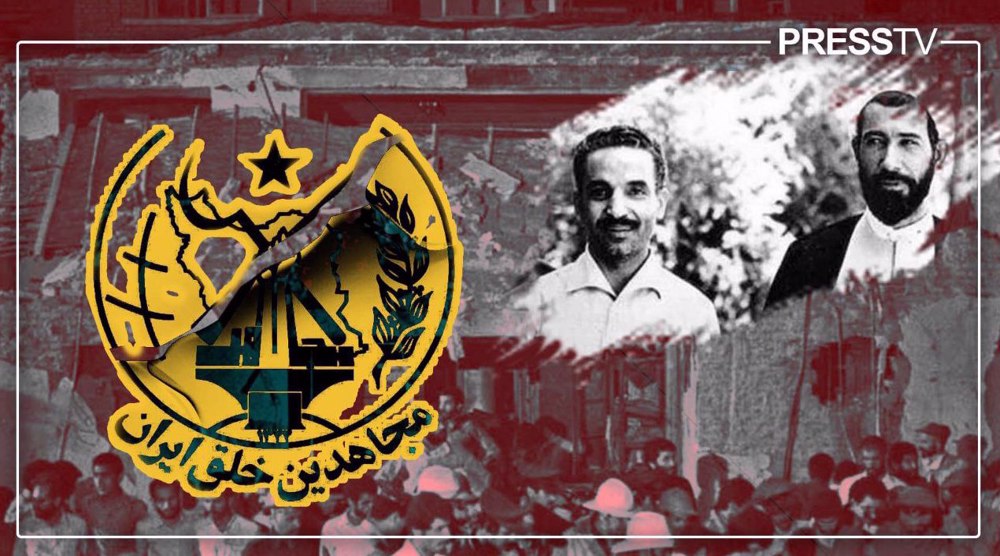
On this day in 1988, the Mujahedin-e Khalq Organization (MKO), a notorious terror cult allied with Iraqi dictator Saddam Hussein’s Ba'athist regime, launched a brutal military campaign against the Islamic Republic of Iran.
Now headquartered in Albania and enjoying the patronage of Western powers, MKO had aligned itself with Saddam’s West-backed regime in the early 1980s during the eight-year war imposed on the Islamic Republic soon after the 1979 Islamic Revolution.
Toward the closing phase of the protracted war, the MKO carried out this major offensive.
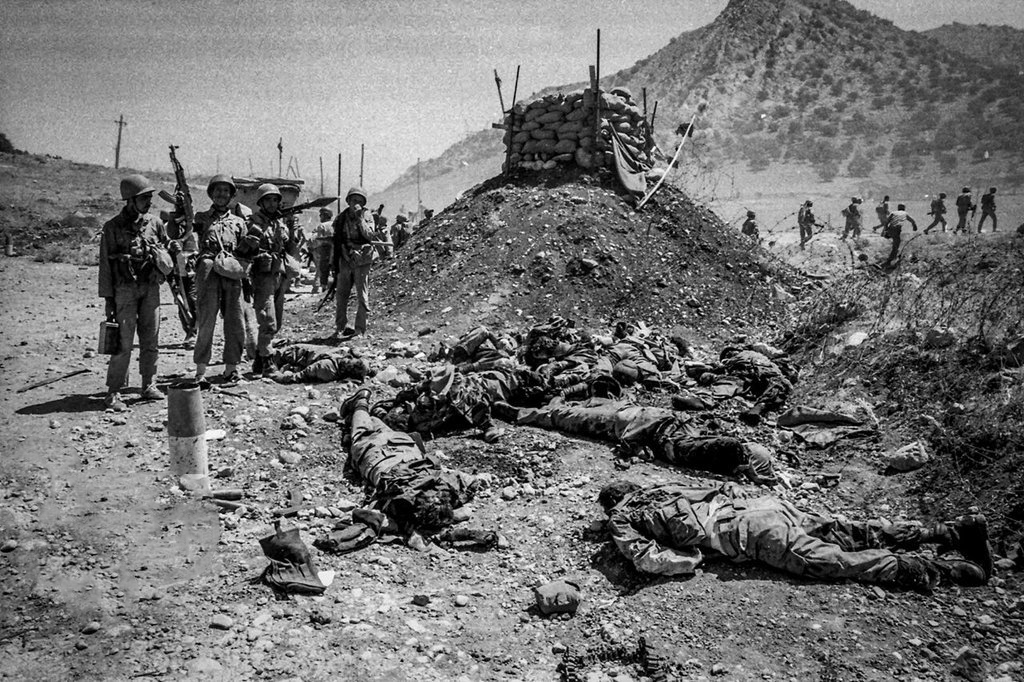
In swift retaliation, Iranian forces launched Operation Mersad (“Ambush”), a counteroffensive that decimated the MKO forces within three days, inflicting over 4,800 casualties on the group.
What was the plan behind the attack?
After eight years of imposed war and five years of overt and covert military collaboration between Saddam’s army and the MKO terror cult, with no territorial gains, the West-backed Iraqi dictator and his terror-linked allies decided to alter their approach.
By mid-July 1988, both Iran and Iraq had accepted a United Nations resolution bringing the war to a formal close. The front lines calmed, and most Iranian forces were stationed along the border in southwestern Khuzestan province, where combat had been concentrated.
However, despite the ceasefire, Saddam continued to chase his ill-fated dream of victory and “regime change” in Iran, envisioning MKO as a Western puppet in Tehran.
July 26 marks the 37th anniversary of Operation Mersad — a four-day 1988 military operation against the terrorist MKO group, in which over 4,800 were killed or injured, ending in Iran’s decisive victory.
— Press TV 🔻 (@PressTV) July 26, 2025
Follow: https://t.co/mLGcUTSA3Q pic.twitter.com/YEAh7QsgpL
Together, the Iraqi dictator’s Ba'athist regime and the MKO devised a plan for a swift, surprise invasion from Iran’s central-western Kermanshah province, about 500 kilometers north of the primary front, to penetrate deep into the country.
Their objective was to rapidly reach Tehran, overthrow Iran’s leadership, and declare a new government before Iranian reinforcements could be mobilized from the south.
Contrary to prior joint attacks by Iraq and the MKO, this offensive was designed to be carried out solely by MKO terrorists, but they mistakenly assumed this would make the Iranian public more receptive to their presence.
To execute this plan, Saddam armed 7,500 MKO members with state-of-the-art weaponry, including 1,300 tanks and military vehicles, anti-aircraft systems, and promised air support and repeated bombings of western Iranian airbases.
How did the incursion start?
On July 22, 1988, Iraq launched large-scale chemical attacks on Iranian border villages in the planned invasion corridor to weaken local defenses and facilitate the MKO’s entry.
Then, on July 26, the Iraqi air force bombarded major airfields near Hamadan and Tabriz, which served as Iran’s key western military bases. That same day, MKO forces crossed the border.
Simultaneously, Iraq staged a diversionary assault near Khorramshahr in the southwest to divert Iran’s military attention and delay reinforcements to the north.
🎥 The Story of Masoud and Saddam - Part 1
— Press TV Documentary (@presstvdoc) July 23, 2025
🔻 This three-fold documentary exposes MKO’s corruption — from terrorism in Iran to collusion with Saddam’s Baath regime.
📺 Tune into Press TV
🗓 Saturday, July 26th
🕧 00:30 | 05:30 | 11:30 | 16:30 | 21:30 GMT pic.twitter.com/7mOkPEPTG7
MKO forces swiftly advanced through Qasr-e Shirin and Sarpol-e Zahab, towns that were abandoned due to chemical strikes, moving eastward via Road 48 in the Ravand River valley.
They occupied the sparsely populated towns of Kerend-e Gharb and Eslamabad-e Gharb, pushing 120 kilometers from the border. But Tehran still lay 600 kilometers away.
Contrary to their expectations, local residents did not welcome the MKO. Rather, they viewed them as foreign aggressors and fiercely resisted them, even opening fire on them.
How was the invasion crushed?
The local resistance bought crucial time for Iran’s military to regroup and prepare a counteroffensive against the invading MKO terrorists.
Iranian Army units under General Ali Sayad Shirazi, and Islamic Revolution Guards Corps (IRGC) and Basij forces led by General Mohsen Rezaei, were swiftly deployed to the area.
Military analysts slammed the MKO’s maneuver as tactically flawed, with their convoy stretched in a vulnerable column that lacked protection from flanking attacks and had only one rear exit.
On July 27, just one day into the offensive, IRGC troops blocked the road at Chaharzebar pass, preventing the MKO terrorists from advancing to Kermanshah city.
Meanwhile, Iranian forces cut off their retreat and supply lines at Hassanabad pass to the west, effectively trapping the MKO convoy in the narrow valley.
🎥 The Story of Masoud and Saddam - Part 2
— Press TV Documentary (@presstvdoc) July 24, 2025
🔻 This three-fold documentary exposes MKO’s corruption — from terrorism in Iran to collusion with Saddam’s Baath regime.
📺 Tune into Press TV
🗓 Sunday, July 27th
🕧 00:30 | 05:30 | 11:30 | 16:30 | 21:30 GMT pic.twitter.com/tTEVVUDck3
Iranian airbases, quickly repaired after the Iraqi air raids, deployed fighter jets that bombarded the MKO column. Attack helicopters targeted and destroyed armored vehicles.
Eventually, reinforcements from Khuzestan joined the fight. These Basij and IRGC units dismantled the remainder of the MKO forces and eliminated all checkpoints they had set up in the towns they had briefly occupied.
What war crimes were committed by MKO?
Throughout the operation, the Iraqi-MKO coalition committed numerous atrocities against Iranian civilians. One of the most horrific was the chemical bombing of Zardeh, a village near the border in Kermanshah province.
This attack, viewed as part of Saddam’s broader Al-Anfal genocidal campaign, killed 275 civilians, including children and women. Many others suffered lasting health effects.
In addition to Zardeh, several other villages in the region were attacked with mustard and nerve gas, resulting in hundreds more civilian casualties.
Survivors of these attacks have experienced severe long-term health issues, including neurological disorders, cancers, and birth defects in future generations.
🎥 The Story of Masoud and Saddam - Part 3
— Press TV Documentary (@presstvdoc) July 26, 2025
🔻 This three-fold documentary exposes MKO’s corruption — from terrorism in Iran to collusion with Saddam’s Baath regime.
📺 Tune into Press TV
🗓 Monday, July 28th
🕧 00:30 | 05:30 | 11:30 | 16:30 | 21:30 GMT pic.twitter.com/qXVeTACBIs
Eslamabad-e Gharb also sustained significant destruction through Iraqi air raids and MKO shelling, carried out in reprisal for local resistance.
Among the most horrifying crimes was the MKO’s attack on the town’s hospital, where they massacred all the injured patients and medical personnel, then set their bodies ablaze.
What were the aftermath and consequences?
Operation Mersad marked a pivotal point in the region’s history as the final battle of the eight-year imposed war, shattering Saddam’s last hopes of defeating Iran militarily.
For the MKO, the loss was catastrophic as it annihilated the terror group’s military ambitions, demoralized their ranks, and effectively ended their role as an armed group.
On the eve of the aggression, MKO leader Masoud Rajavi gave a grandiose speech at their base, confidently predicting the capture of Tehran within 48 hours.
Two days later, instead of victory, he faced utter failure and had to address the decimated remnants of his group, with nothing to show for their efforts.
Iran commemorates the 24th martyrdom anniversary of Lt. Gen. Ali Sayyad Shirazi, who was martyred outside his home by MEK terrorists. In July 1988, Iran heavily defeated MEK terrorists under the command of Sayyad Shirazi in the Mersad operation. pic.twitter.com/tBMECmOVEG
— Press TV 🔻 (@PressTV) April 11, 2023
MKO leadership offered a range of excuses, from claims of a planned withdrawal, debunked by images of destroyed convoys, to assertions that fighters had been safely relocated to other bases, which did not exist.
Perhaps the most persistent myth, still perpetuated in MKO propaganda, is the claim that their members were captured and mass executed by Iranian armed forces.
Such narratives attempt to obscure the group's military defeat in a campaign characterized by aggression, terrorism, and genocidal actions, and instead shift blame onto Iran.
Iran possesses full capability to strike US warships: Mminister
Iran mass-producing home-grown weaponry: Air defense chief
Iran dismantles US-Israeli-linked Takfiri terror cells, seizes large weapon hauls


Iran possesses full capability to strike US warships: Mminister
Iran: Calls for unconditional IAEA Safeguards compliance ‘meaningless’
Hind Rajab files criminal complaint against Israel FM in Slovenia
VIDEO | Press TV's news headlines
VIDEO | News Review: Global economic impacts of US war on Iran
VIDEO | Madrid demonstrates to free Gaza donor Fergie Chambers from Spanish jail
Saudi aggression will not go unanswered, Yemen warns after Jawf massacre
VIDEO | News Review: Israeli aggression on Lebanon


 PressTV NEWSLETTER
now
PressTV NEWSLETTER
now
 This makes it easy to access the Press TV website
