Settlers as human shields: Israel's militarization of civilian areas in Tel Aviv and Haifa
By Press TV Staff Writer
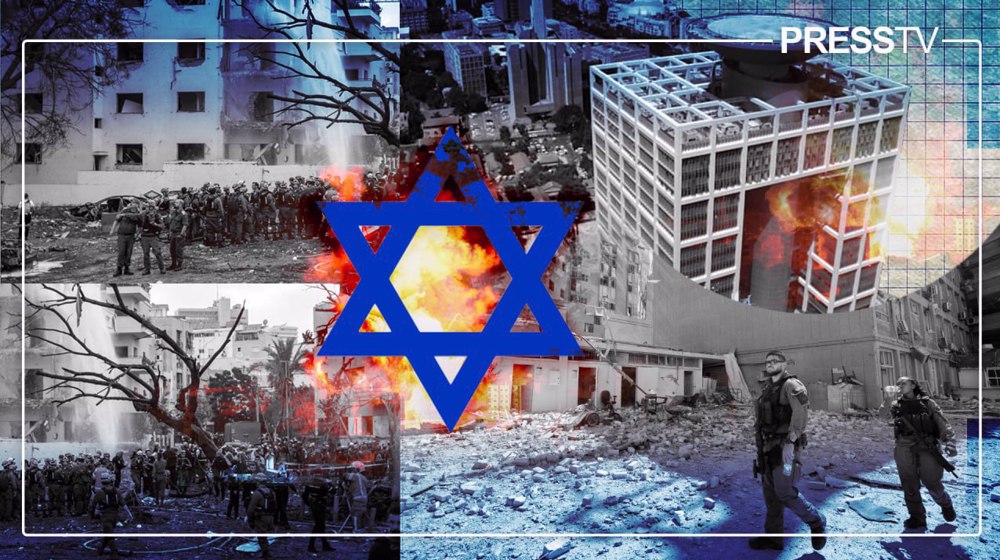
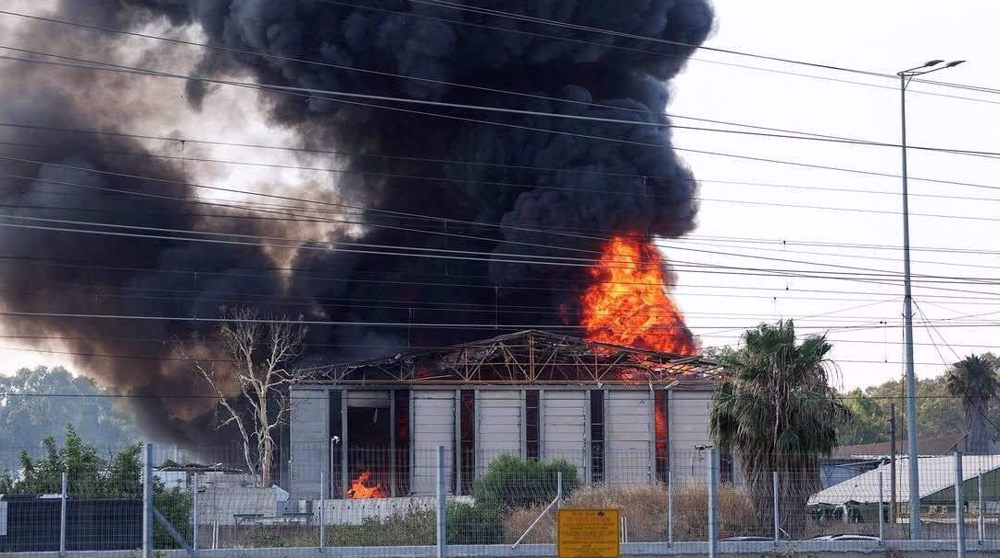
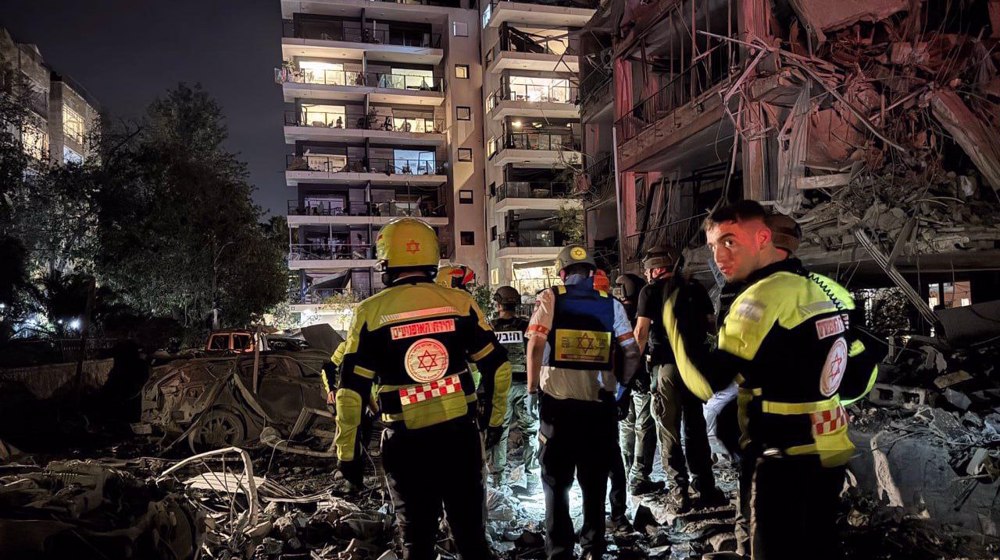
The recent Iranian retaliatory strikes against the Israeli regime as part of Operation True Promise III have cast a spotlight on a longstanding and notorious military strategy: the placement of critical military facilities deep within densely populated 'civilian' areas.
Reports and field evidence from the retaliatory strikes that inflicted heavy and irreparable blows on the regime again point to the fact that the regime uses settlers as human shields.
In a report published Sunday, the Israeli newspaper Haaretz acknowledged that Iranian missile strikes during the 12-day war imposed by the regime targeted only Israeli military installations.
However, the report noted that many of these facilities are deeply embedded within civilian areas, referring to illegal settlements mostly in Tel Aviv and Haifa.
One key example cited was the Kirya, Israel’s central military headquarters in Tel Aviv.
Tel Aviv: The Kirya Complex in a ‘civilian’ maze
The Kirya military-intelligence complex in central Tel Aviv was among the first and most significant targets hit by Iranian missiles late on June 13, hours after the Israeli regime carried out an unprovoked and unlawful aggression on Iranian soil, leading to the assassination of many senior military commanders, scientists and ordinary civilians.
Often referred to as the “Israeli Pentagon,” the Kirya houses the ministry of war affairs, military intelligence offices, and various covert installations used in war against Iran, Lebanon and Gaza.
The Israeli regime is hiding its terror centers and facilities in central Tel Aviv and other residential areas to use settlers as human shields — the very same thing it accused Hamas resistance fighters of doing in Gaza, the most populated concentration camp in the world. pic.twitter.com/vu5weJ9e5E
— Press TV 🔻 (@PressTV) June 17, 2025
These are concealed in high-rise buildings that are civilian or semi-civilian in nature.
Despite being heavily fortified and protected by multilayered Israeli-American air defense systems, the Kirya was struck early during Iran’s True Promise III operation.
Foreign journalists confirmed damage to towers in the area, even as Israeli media censored coverage under regime pressure. Leaked footage from an Israeli settler showed plumes of smoke and audible panic – “They hit the Mossad!” exclaimed the witness.
Military facilities in settlements
Kirya is located in one of Tel Aviv’s most densely populated districts. Beneath its surface lie numerous underground military facilities, identified by Iranian intelligence following Tehran’s acquisition of sensitive Israeli military and intelligence data in early June.
The district includes:
- Matcal Tower – Headquarters of top Israeli military leadership
- Marganit Tower – Home to strategic communications operations
- The Bor (“The Pit”) – A heavily fortified underground command center.
These installations are surrounded on all sides by settler infrastructure, including residential buildings, schools, and commercial zones, blurring any clear separation between military and non-military zones, as a deliberate strategy to use settlers as civilian shields.
* Leaked footage clearly shows Israel using Palestinians as human shields
— Press TV 🔻 (@PressTV) August 14, 2024
* Testimonies from Israeli soldiers and commanders confirm that
The US: These are just reports and allegations! pic.twitter.com/94U6t0Ab3Z
Haifa: Ports, bases, and civilians intertwined
As in Tel Aviv, Haifa’s strategic military assets are tightly interwoven with ‘civilian’ life.
The most prominent is the Haifa Naval Base, home to the regime’s Mediterranean fleet and submarine corps. Located on the northwest side of Haifa’s busy port complex, the base sits amid one of Israel’s most important economic and ‘civilian’ hubs.
Recent months have seen most maritime traffic rerouted from Eilat to Ashdod and Haifa, further increasing the ‘civilian’ presence around these strategic assets.
Residential conversion of military zones
The Bahad 600 naval training base has undergone rapid conversion into a residential area, with new apartment blocks and even a children’s hospital constructed adjacent to operational military facilities. This proximity exemplifies the ongoing militarization of ‘civilian’ areas.
To the north lies the Rafael Advanced Military Systems complex, covering several square kilometers. It produces Iron Dome and David’s Sling missile systems, cruise missiles, and armored vehicle solutions.
Newly released footage captures the first night of Iranian retaliatory strikes on Tel Aviv as part of Operation True Promise 3
— Press TV 🔻 (@PressTV) June 27, 2025
Follow Press TV on Telegram: https://t.co/LWoNSpkJSh pic.twitter.com/P7kVN0MiB1
Surrounding this are major industrial zones, Kiryat Nahum, Kiryat Ata, and Nesher, which combine military functions with chemical, cement, and energy industries. For example:
- Haifa refinery: Processes two-thirds of the Israeli regime’s oil supply.
- Nesher cement plant: Supplies 60 percent of the regime’s domestic cement needs.
- Communications antenna at Giv’at HaHagan: A key hub linking northern military commands with Tel Aviv.
Mount Carmel’s militarized natural reserve
The most notorious site is the Mishmar military base, constructed within the protected Mount Carmel National Park. It features visible radars and Iron Dome missile platforms.
The base lies just 300 meters from the University of Haifa’s student dormitories. borders archaeological sites and sanctuaries and is built amid sensitive ecological zones and hiking trails.
Among these historical and religious sites is Derech HaDorot (Road of the Millennia), an open-air museum with Bronze Age and Roman structures and Hurshat HaArba'im (Grove of the Forty), a sacred site for the Druze community.
Despite its cultural and environmental sensitivity, the Mishmar site is now heavily militarized, showcasing the regime's prioritization of military over the safety of settlers or heritage preservation.
Iran shoots down trespassing US drone near Bushehr: Report
May 28: Leader warns of enemy plots to sow discord as IRGC responds to fresh US aggression
Iran vows proportionate response to US 'provocations' after Bandar Abbas strike



Leader’s advisor: Iran remains formidable obstacle to US-Israeli malicious plans in West Asia
Iran says no final understanding with US yet, rejects Trump's 'language of must'
Iran, Oman FMs discuss administration of Hormuz Strait in ‘very productive’ call
Italy: Protesters stage nationwide strike, demand end to Israeli genocide in Gaza
US will not be allowed to control Cuba's destiny through coercion, military threats: Diplomat
Iran’s active role in Eurasian bloc reflects its strong commitment to development: President
Champions again: Iran women’s volleyball retains CAVA title
Polls show Trump’s approval ratings drop to new lows



 PressTV NEWSLETTER
now
PressTV NEWSLETTER
now
 This makes it easy to access the Press TV website
